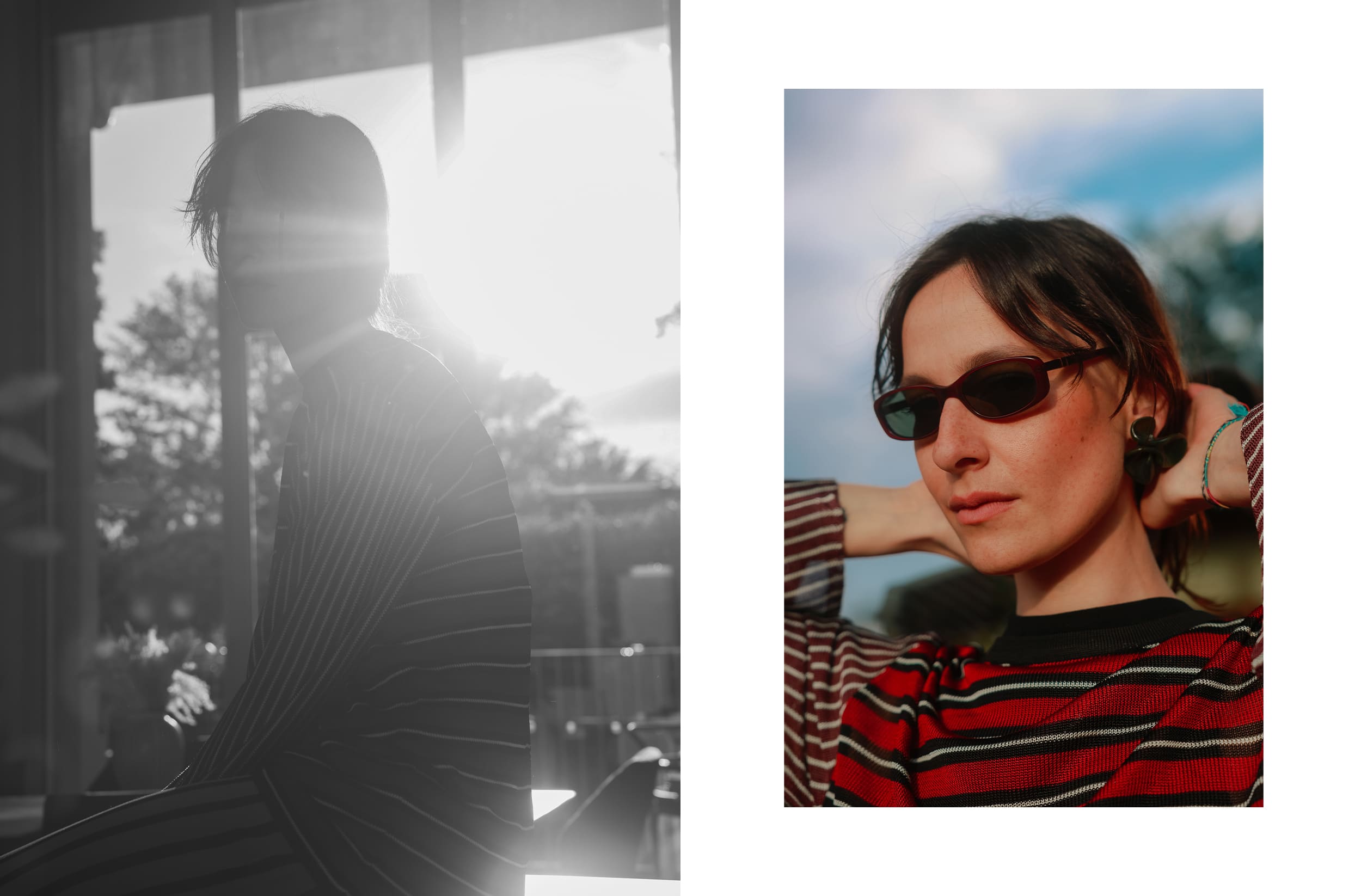
There is a tennis court at the center of “La Mancina”, but that is not really where the match is played. The second novel by Giulia Della Cioppa, published by Bompiani, tells the story of Aleni, a left-handed girl who grew up in the shadow of a father who has already decided her future. A book about talent as a cage, about family as a field of forces, about the body carrying what words cannot say. During our conversation, Giulia spoke to me about tennis and discipline, about fathers and impossible alliances, about what it means to write while staying sincere. And about how a novel, when written well, never runs out — not even after the last page.
Your book, “La Mancina”, I loved it so much. You have truly stunning writing. My copy is full of notes, of underlined sentences.
I was afraid it would only be perceived as a book about tennis and that the literary aspect would be overshadowed by the sporting theme. But it seems to be receiving a good reception.
Well, tennis in the book is often meant almost as a parallel to life — how to face life and how to face tennis on the court. What is tennis to you, personally? And what did it mean to write about it so extensively?
I played tennis for 12 years. I started at 7 or 8 years old and played until the end of my adolescence; between 18 and 19 I stopped, so the reworking involved the entire period of growth and formation. I did not experience the adolescent confusion that teenagers go through when they have to grow up, figure out who they are, and also disobey in order to do so. I was somewhat under this glass bell jar, busy training, learning discipline. Tennis meant for me above all this: a displacement onto something else. I did not have to question who I wanted to be, what I wanted to become, because in some way I already knew. It was a symbolic and physical place in which I measured myself, but always within boundaries, always within certain parameters that were the same ones my father had indicated to me.
That is the value I attributed to tennis some time ago. Obviously everything that the relationship with tennis generated allowed me to measure myself: I discovered what failure is, sacrifice, ritual, discipline.
The father of Aleni often says that her path is written, as if everything were already decided. I think this can be an enormous weight for her to carry, almost like a premonition rather than a destiny, as if she could do nothing about it, because that is simply how it is. Did you ever have the feeling that your path was already written?
Looking back, I would say yes. I think the idea of the premonition is true, because it is the same word moving beneath the surface. A premonition is something that is felt, but that is not visible — it is hidden, secret. I think this is how the desires projected onto children function, the wishes of parents for which we are held responsible; this is also how the ambivalences between children and parents work.
The relationship between Aleni and her father is built on the concept of alliance: Aleni cannot escape this promise, because her father is the only one who recognises her uniqueness, the only one who sees her as a special being. That is why Aleni does not intend to give up this one gaze, because on the other side she has her mother who not only does not recognise her, but does not see her at all — she ignores her. Yet within this promise there is a blackmailing dynamic.
There is something I understood after writing this book: it is far easier to distance oneself from parental figures with whom there is conflict than to distance oneself from an allied figure, because in that case it truly means disappointing someone, it means withdrawing from someone who believes in you. I think that is the relationship the two of them have, and if I had not known it in my own skin I would not have been able to write it.
“There is something I understood after writing this book: it is far easier to distance oneself from parental figures with whom there is conflict than to distance oneself from a figure who is your ally…“
I think that, as children, the hardest thing — which was a revelation for me many years ago — is realising that parents are also people. Sometimes it is difficult, given how life was explained to us when we were small, or because of how we imagine things, to understand that a father is not only a father, but a person who makes his own mistakes, who causes damage, who makes exactly the same mistakes we do. At the same time I wondered whether Aleni was coming to understand this or not. Because sometimes she calls her parents mum and dad, and other times she calls them by their names. Sometimes she seems almost cold, very direct, she sees things exactly for what they are, she does not use many flourishes when she describes her mother — she does it in a dry way, as if she were used to it, as if she were saying: “that’s just how it is.” And yet she has this relationship with her father, these moments of tenderness when they are face to face — things that make you understand that in some way she too, even if with awareness, idealises him, because of this alliance you were speaking about.
Thank you for noticing all of this, because indeed there is a double level: on one hand innocence, on the other awareness. The novel begins with Aleni at nine years old, yet you can feel that the voice is not that of a nine-year-old. There is this alternation between innocence, tenderness, and a lucid gaze — but also an unaware one, because she observes what is there.
I think that in this book emotions pass through bodily language. I often recount how she feels physically, and all the emotionality is expressed through the body. And so there is this overlapping of two levels: the present time relating to childhood, the relationship with her more childlike side; and on the other hand awareness, this lucid gaze that seems to belong to someone reflecting on things. This came in the writing — it is not something I chose to integrate: I needed both gazes.
On the other hand, I think that Aleni — who speaks in the first person, but it is a first person that does not plunge into things, that does not fall into what she experiences, but is always “I see, I do, I feel” — is an I that is distant from what is there. I did not need the third person, an omniscient narrator: I wanted the point of view to be hers. I needed a first person that nonetheless placed a distance. In the novel there is all this part of withdrawal: she is subdued, she seems to observe things not only with distance but also with avoidance. She is a character who, at her first menstrual cycle, discovers modesty, discovers that this is the moment when her relationship with her cousin — constrained in any case and destined to change — shifts. Through her cousin she explores sexuality in an almost animal way, not erotic, curious. Then, as she grows, she goes to the academy, meets people, and rejects desire, keeps away from it. A girl who protects herself from desire is a girl who needs to process, who is suffering.
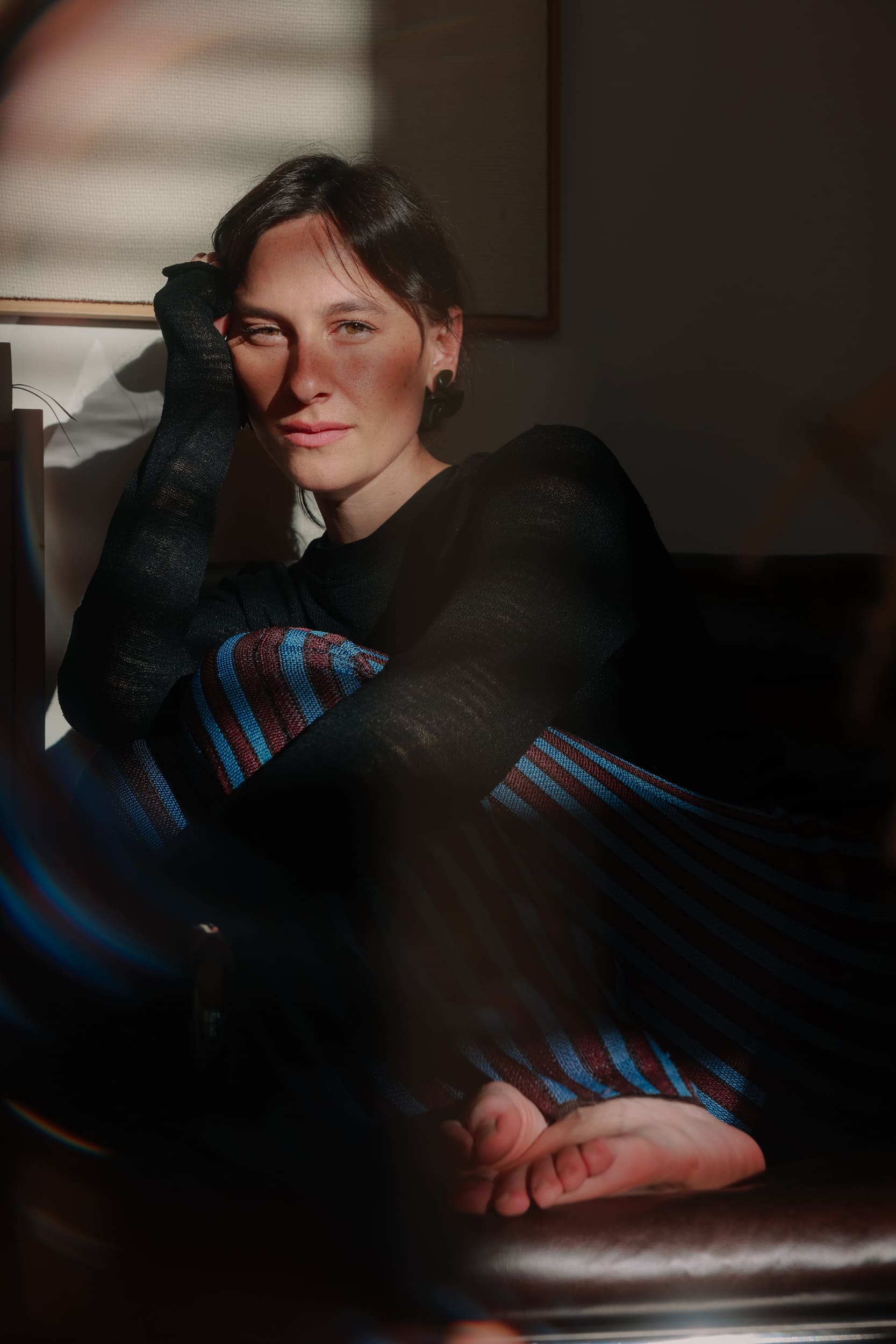
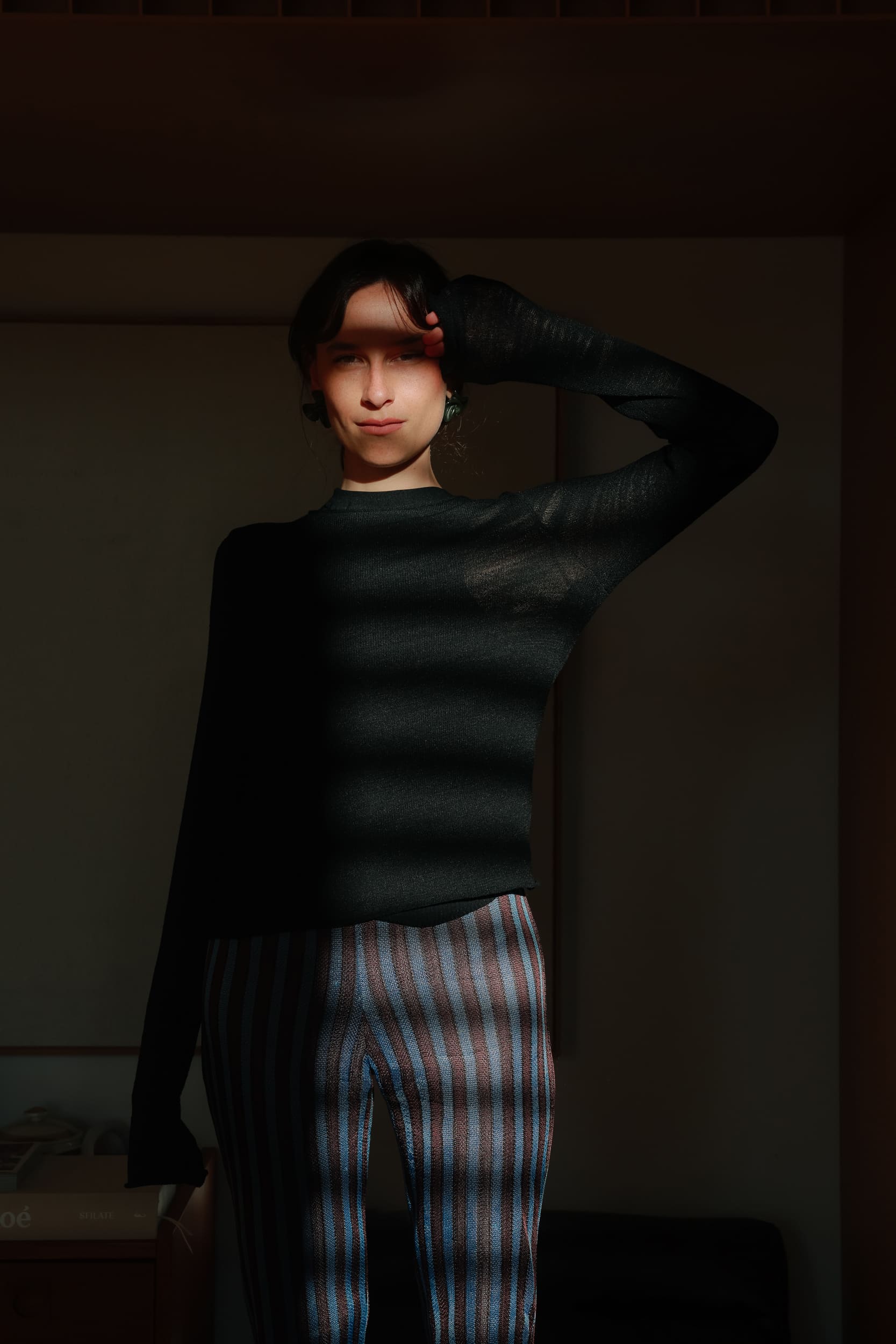
Earlier you said something that made me think: you said that her father is the only one who sees this thing in her. I thought — correct me if I’m wrong — that perhaps the reason the mother is so angry with the father is that he chose to believe in his daughter’s talent rather than in her own talent, her painting.
What I love very much about books, and then about discussing them with people, is that as the characters take shape and come alive, they behave in ways that are not necessarily the “right” ones. I really like that you say this, because you offer the story another interpretation.
I honestly do not know, because the relationship of subordination between the two — in which the mother is profoundly domineering and the father is very submissive — could also contain the nostalgia for something missed. But it seems to me that the opposite is more true: that the husband longs to be recognised by his wife in some way, even just appreciated for what he is — which is precisely what she does not do, and does not do with her daughter either. Marina wants what is right for her daughter, while Nico fights with the mother for what he himself desires. In the end, I think that when you write a book, you leave the story in our hands, and so it transforms into a thousand other things as well.
That’s right. In fact, it’s the thing I prefer most.
I am always surprised when I talk to people and they tell me “but he did this, that’s why.” That means the text leaves enough space for the reader to imagine and to create their own world, their own imaginary. Bidimensional narratives do not allow for this. Instead, it is necessary to leave space for the reader.
I was reading articles about how much our way of reading has changed and how reading is in fact a private thing, one that requires a very different order of time from what we are used to now. Information is fast, depth is lacking, the way of reading is deeply changing our capacity to sustain attention. In this sense, reading a novel completely breaks the temporal order that society is accustoming us to — it is a moment of great revolution for readers, for the new generations who must relate to the book as a physical object. In my view, it is a responsibility and also an act of protection.
We shall see in which direction literature will go, whether there will be new forms. The book continues to require a private space. Perhaps that is also why I love reading so much. I need to find the time and space to do it — sometimes there are things I read on the metro too, but most of the time I love reading at home.
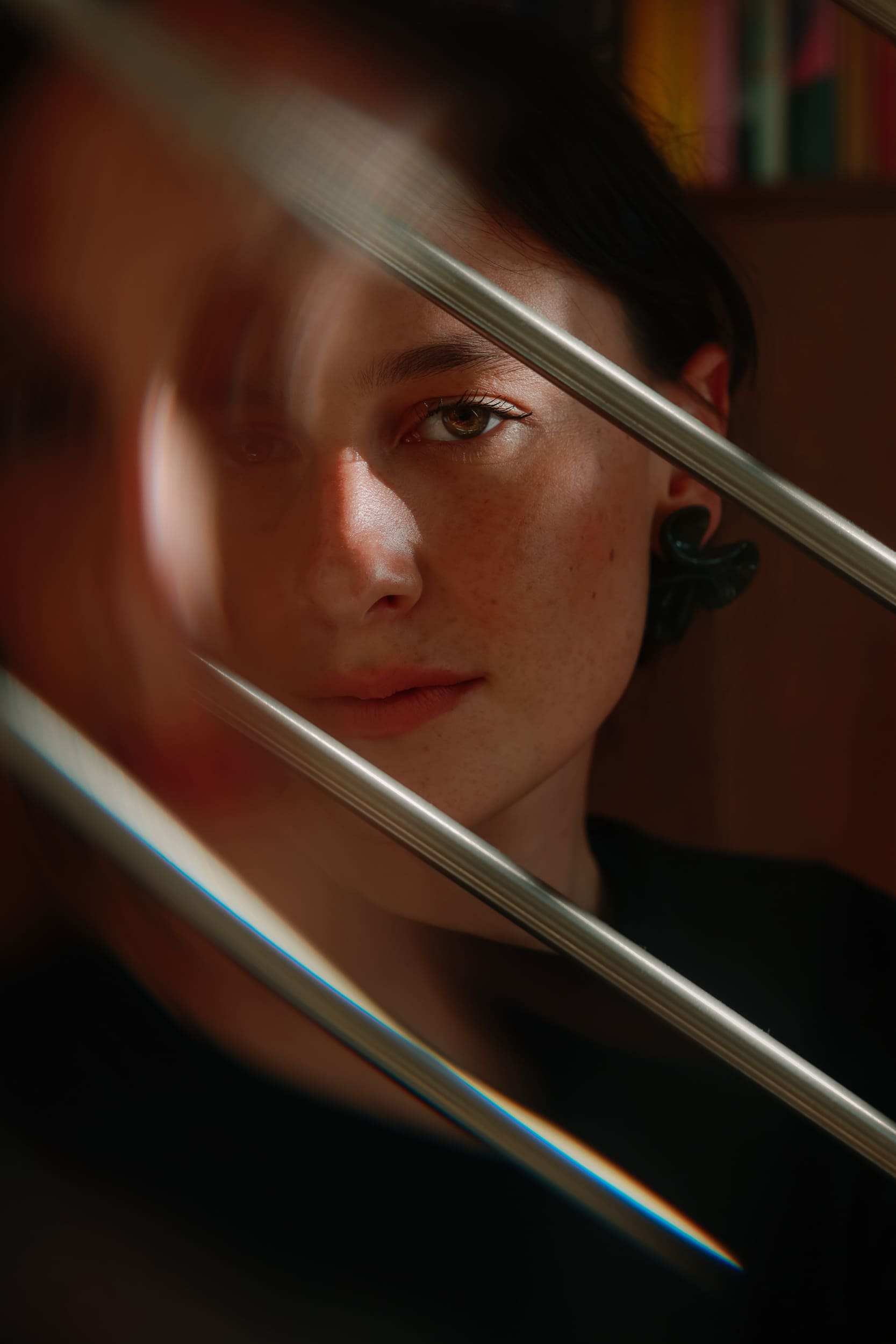
“We shall see in which direction literature will go, whether there will be new forms. The book continues to require a private space.”
I love reading in bed: it makes me feel even more shut out, more protected from everything. And this thing you told me made me think of that festival in Canada where they screened films at x1.5 speed. This terrified me.
Incredible to go against the natural pace we are inclined to! Because why does no one ask to slow down? In voice messages, you cannot go to x0.5 — you can only go from x1 upward. It seems to me that the direction we are heading in is clear. These are dark, difficult times. I am reading the notebooks of Simone Weil, a philosopher I greatly admire who rethinks the sacred and attributes great importance to work and its logics. She says: “You could not have been born in a better era than the present, in which we have lost everything.” I have thought a great deal about this sentence — it is a difficult moment and therefore also one of revolution, and fertile too.
When I wrote the book, we chose to title it La Mancina not only because Aleni is left-handed — which means she is recognised for a simply technical talent — but because this aspect of left-handedness concerns all marginality in the world. It is a novel about domestication and the subsequent reappropriation of wildness. Left-handedness, in short, concerns above all this sinister aspect: being on the margin, the use of animal characteristics. The fact that the opponents Aleni faces are all described with animal features was a fairly natural choice, because I absorbed a great deal of what I read from Anna Maria Ortese. Magical realism and all the animal symbolism for me represent the undefended categories; so they fall within that sinister aspect of the world, within that marginality, within that a-centric dimension that I want to represent as an author, and by which I feel represented.
In fact, that is something I wanted to ask you. At a certain point she says that the gift of metamorphosis in people is the thing she most loves to watch. Do you think it is also because she herself would like to change but never quite manages? Or do you think that in the end she did manage, in her own way, to undergo this metamorphosis?
I think so — I think she probably feels this way, that there is a nature in evolution, that she feels herself to be a person capable of change. I think there are people who are inclined toward change and they are the people I prefer, those with whom I have the deepest relationships. People I saw at one moment and who, six years later, were completely new: they had different passions, they had changed their appearance, they had revolutionised themselves. They are also people I fear more, in some way. There is this line by Joan Didion that I often think about: “I feel estranged from many of the people I have been.”
And this idea of metamorphosis, of becoming, of always dwelling in mutation is very dear to me. I followed a course of study that investigated precisely this: my thesis concerned becoming-animal.
Then, as you also mentioned earlier, when it comes to Aleni there is a great deal about physicality, about pain, about moving forward in spite of everything — which is something we know about athletes, but seeing it written and really thinking it through is even more striking, in my view. Something that made me smile, because I thought about it too, I felt it too as a child, is that at a certain point she says: “I don’t think it’s all that tragic to get hurt.” I remember simple pains, how sometimes it is almost “nice” to get hurt and to know where the pain you are feeling is coming from. Maybe you’ve broken a finger and from that pain comes a cuddle, a little extra attention. Sometimes my sense was that for Aleni it was almost reassuring to suffer: “I know where this comes from, it’s not something I need to go looking for, the cure is this, and love is this.” I thought that was very beautiful.
Physical sacrifice is exactly like that. Physical sacrifice and controlled exhaustion within the space of the court enact precisely this process: sacrifice, pain, then the fulfilment that comes from rest. I think that physical fatigue gratifies us, in some way.
I find discipline to be something virtuous — not because there are things we must learn since they will lead us to our goals. No: discipline is detached from all of that. Doing things repeatedly becomes gratifying. At least it was for me. Now that I am 30 and have not played tennis for a long time, I do nothing different from what I did when I was training. I have simply changed the place and the object. I wrote La Mancina over two and a half years, the first draft in almost a year. I would wake up at 7 in the morning and write until midday, every day. I would take care of the body a little, then in the afternoon I would do some editing. This idea of ritual is something that belongs to me, that I perhaps learned from tennis.
On the subject of embodiment: the other day I was listening to a workshop by a writer who spoke about the mind-body dualism, about the fact that scientists have still not managed to fully resolve this Cartesian vision of life. We are used to thinking of emotions as something that has nothing to do with embodiment — emotions, thoughts, feelings, we separate them from running, eating, walking. But the body is the first channel, the only channel we have to feel all of this. Thought is something that cannot be separated from walking, from living, from encountering, grasping, touching. The body is the only thing we have.
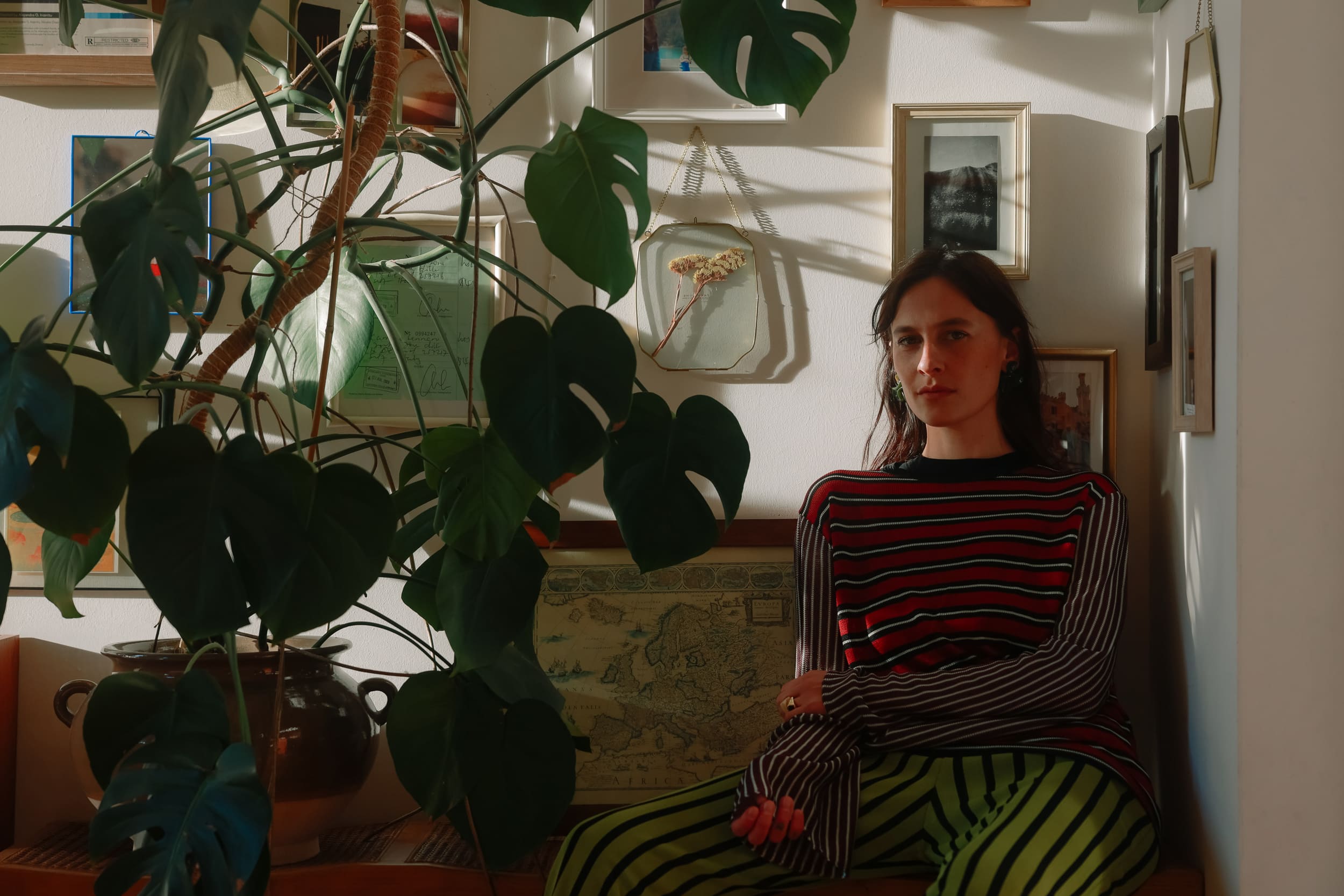
“The body is the only thing we have.”
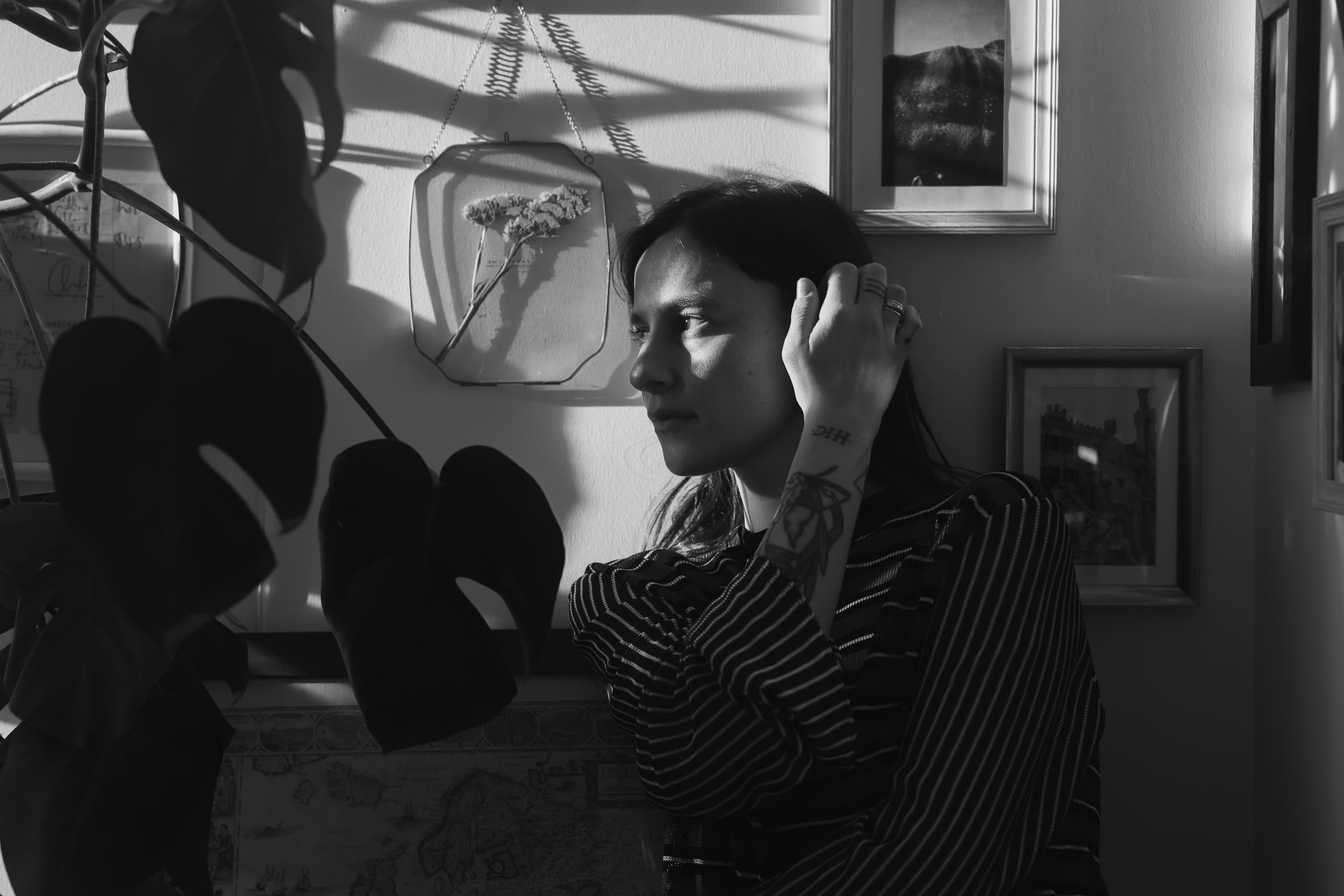
Another thing I am very curious about is the relationship with God, with religion. It almost seems like a character in the book — from her cross, to the episode in which the mother tells the father to seek help, by which she meant psychological help, while he said he had found that help in God. There is almost a letting-go in all of this, and then there is also a recognition that it is almost madness to hope to resolve anything by relying on God alone. I was very curious.
I know this type of relationship with religion from personal experience. I grew up in a village of 1,800 inhabitants where a Catholic imposition hung over our heads, in the form of religious conformism — a profoundly bigoted worldview.
In writing the novel, I observed the relationship my father had with religion — obviously what I wrote did not actually happen, but it could have happened. I changed things and invented scenes, but I know the nature of the characters. It is a fatalistic and also superstitious approach, this use of religion to get something out of it, making it a utilitarian relationship. Aleni’s father makes use of this — he says God has chosen, Jesus has chosen. And she questions it, but at the same time occasionally believes in it. This ambivalence is the same one that governs her relationship with her father: she criticises him, observes him from a distance, and yet she cannot say no to him, cannot stop herself from cleaning his back, from going toward him, from giving him the trophy…
In this book I think religion takes on, in certain respects, the form of predestination, but also assumes the role of a punitive, normative power. These are the aspects most difficult to combat culturally: normativity, the aspect of punishment, of the sense of guilt in which we were raised.
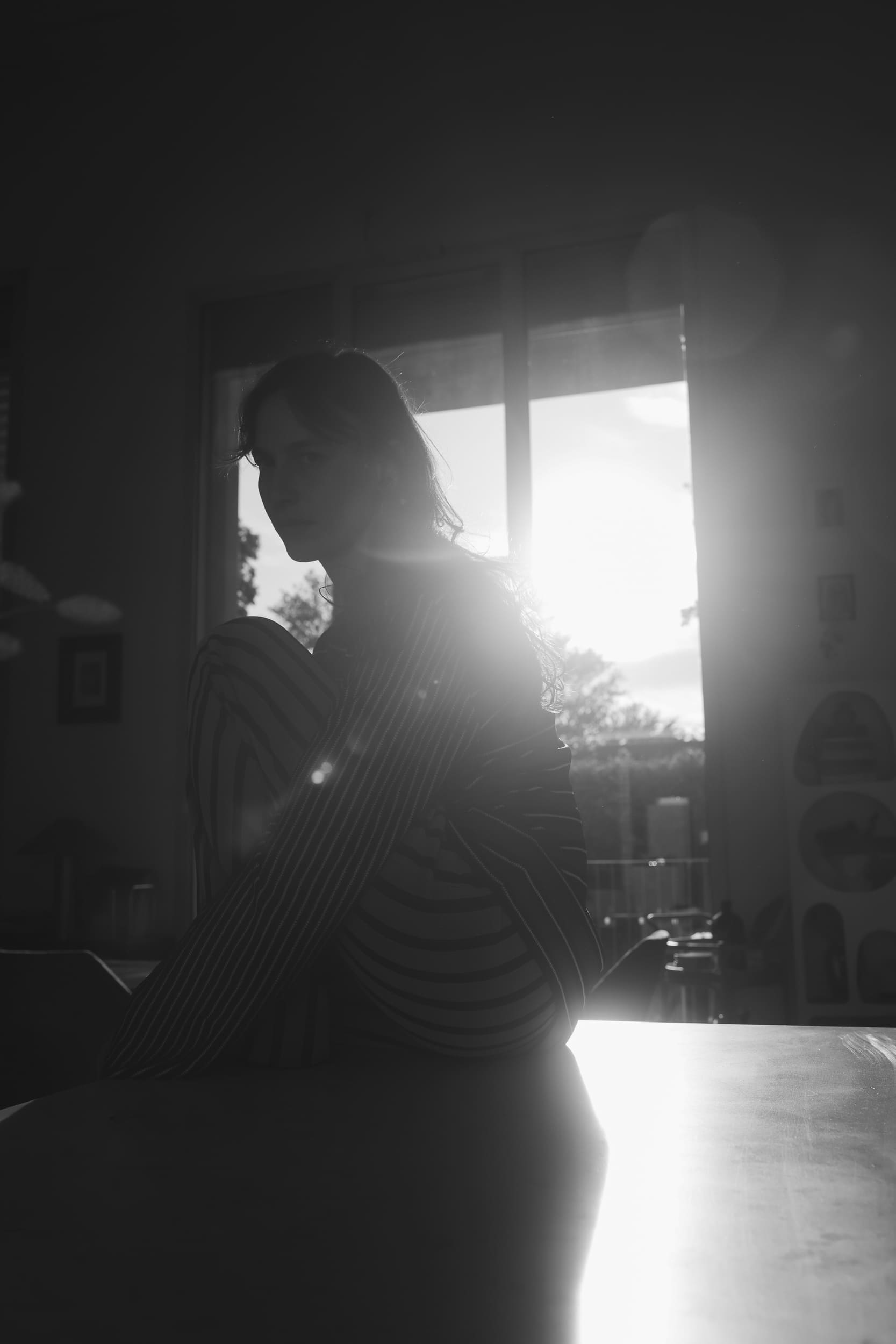
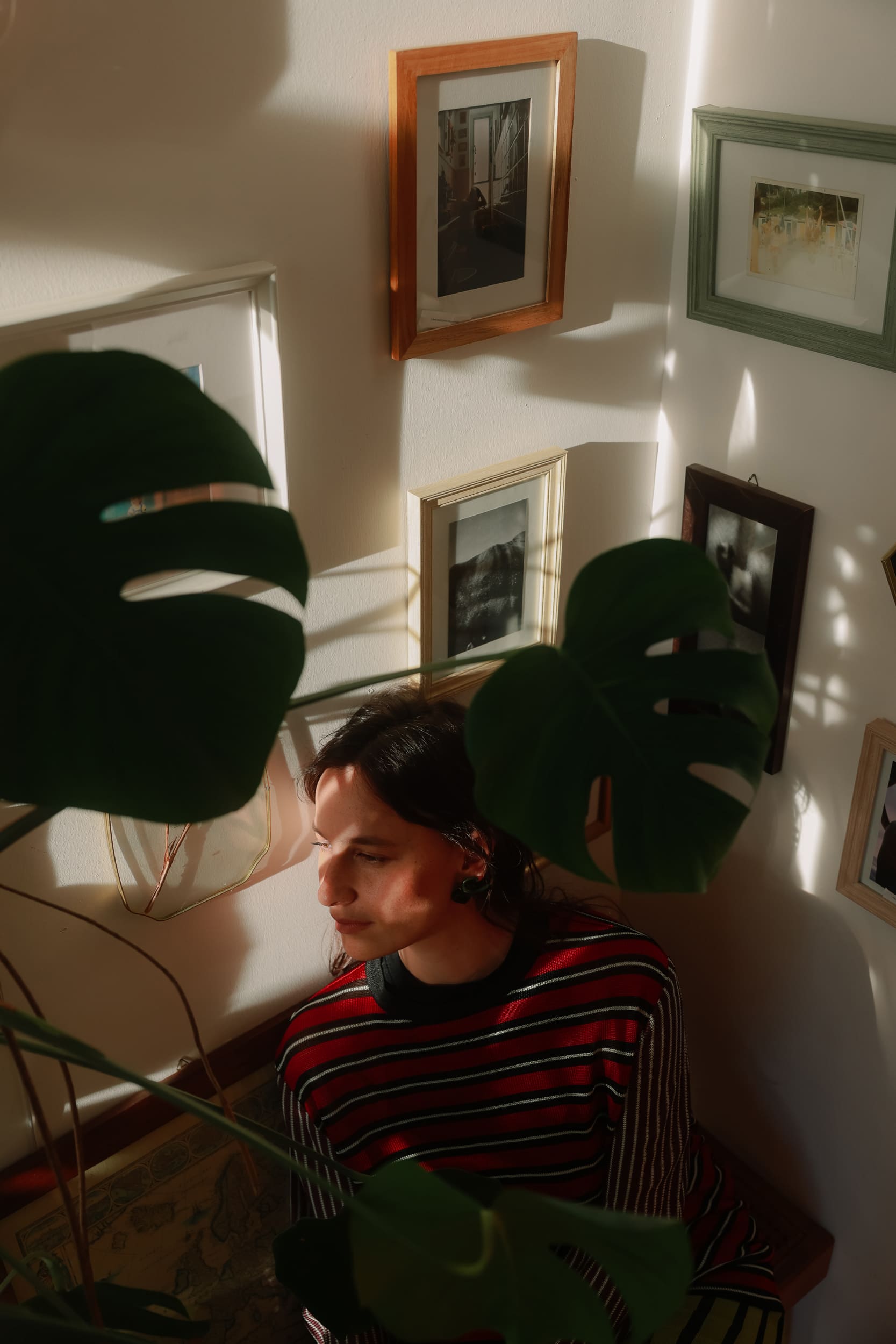
Earlier we said that Aleni struggles to speak about her emotions — she does not lay herself bare very much, and leaves a great deal of space to us as readers. And yet there is a point where she lists things she is afraid of, things that do not strictly belong to the realm of emotions, but fear is there. Was there something you were afraid of while writing the book?
A good question. Yes — first of all I was afraid of not always being sincere, of things not flowing from an authentic source. And I know that to understand this you need distance, clarity, and trusted people who can tell you.
It was my first experience with a long novel, so I was also afraid of the length, of the breath. On the other hand I knew I wanted to tell this story. I have a fairly free approach to writing, at least for now — I hope that does not change. To write this novel I started from symbols: I started from an enclosure and from the characteristics associated with tennis — the lines, the angles, the geometries, the symmetries, everything that fell within that order. That is where I started from; I had not thought through anything, I did not know the story, I did not know where it would take me, I did not know in what direction I wanted to go. I thought I wanted to write about tennis, but I was writing about my father — I could not have done it except through tennis.
Returning to my fears, the greatest fear was precisely not knowing in what direction I was going. But that was also the thing that allowed me to keep writing, with joy and also with pain, because writing is a bodily investment, a physical experience. And then of course I had fears tied to how the book would fare — it was my second novel, I was no longer so young, I was afraid it would go badly.
What matters to me is that someone guarantees me a contract so I can write what I want, because that means legitimising me, recognising me as an author. And I think that recognition passes through others.
I believe that when a person approaches a book they know what they are getting into. From the moment I had the book, I understood very well what I had in my hands. And indeed it is not a book I read by devouring it. I read it more slowly, I would stop to think. I read it with more attention than usual, because I felt there were so many things to dwell on and that it was not one of those books to read on the metro. And now talking to you it is as if I had done a second reading: you have brought into focus certain things that I had only glimpsed, or had not noticed.
I am very glad. Every time I talk about it new things emerge, even for me. In the encounter with readers new ideas are always born. I find other threads, and it seems to me that the book never runs out. Which is, after all, the desire of any author.