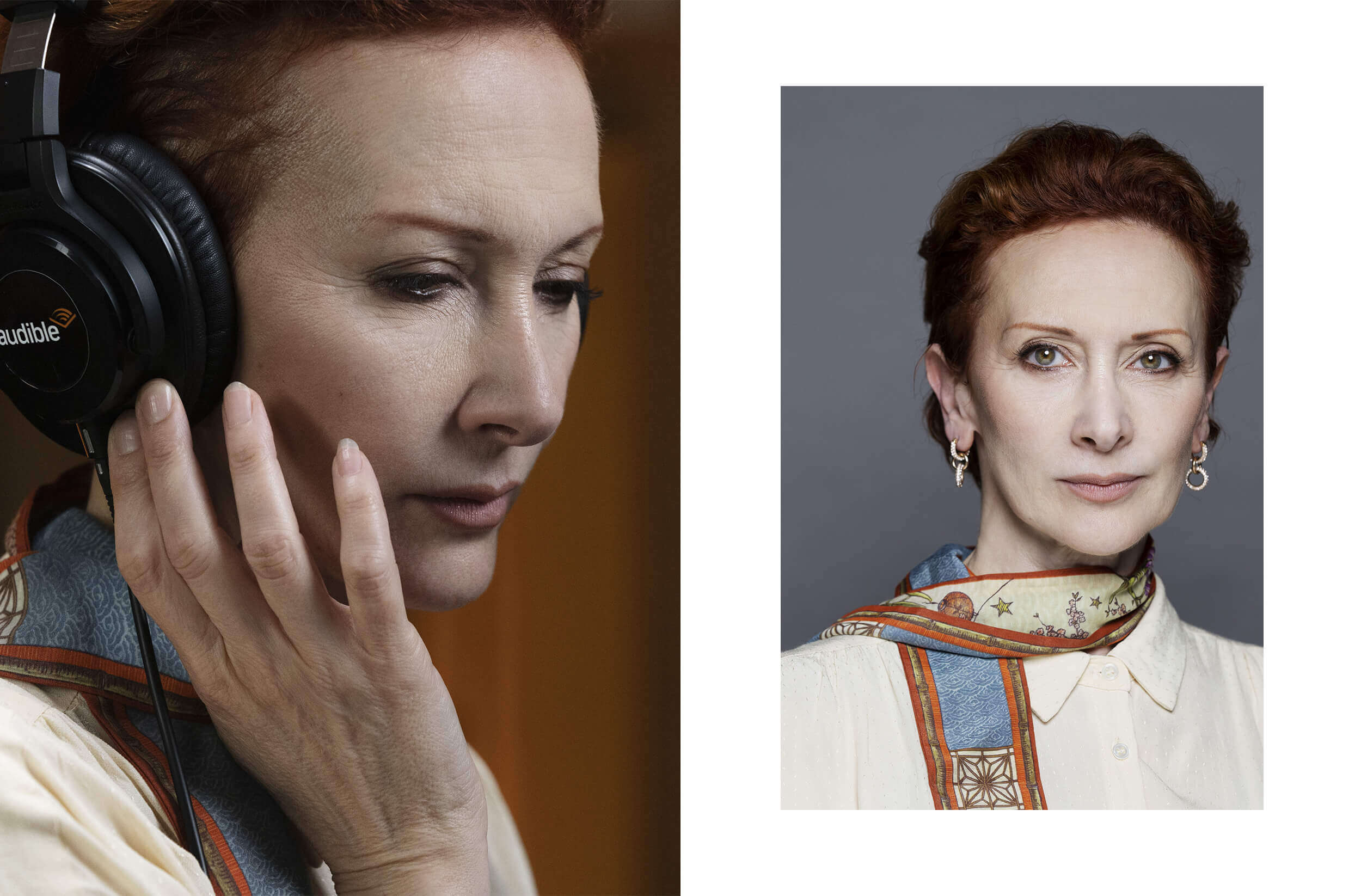
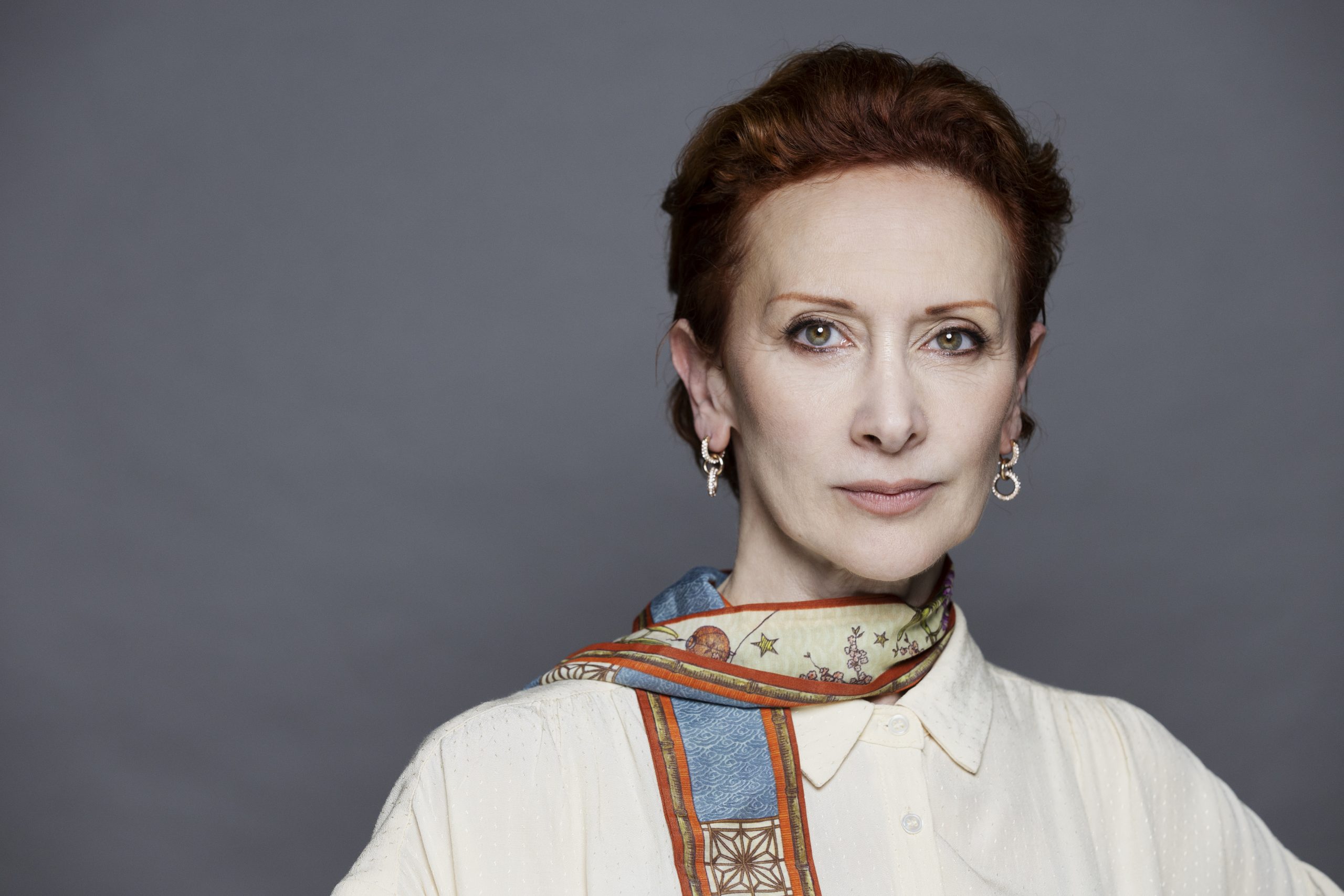
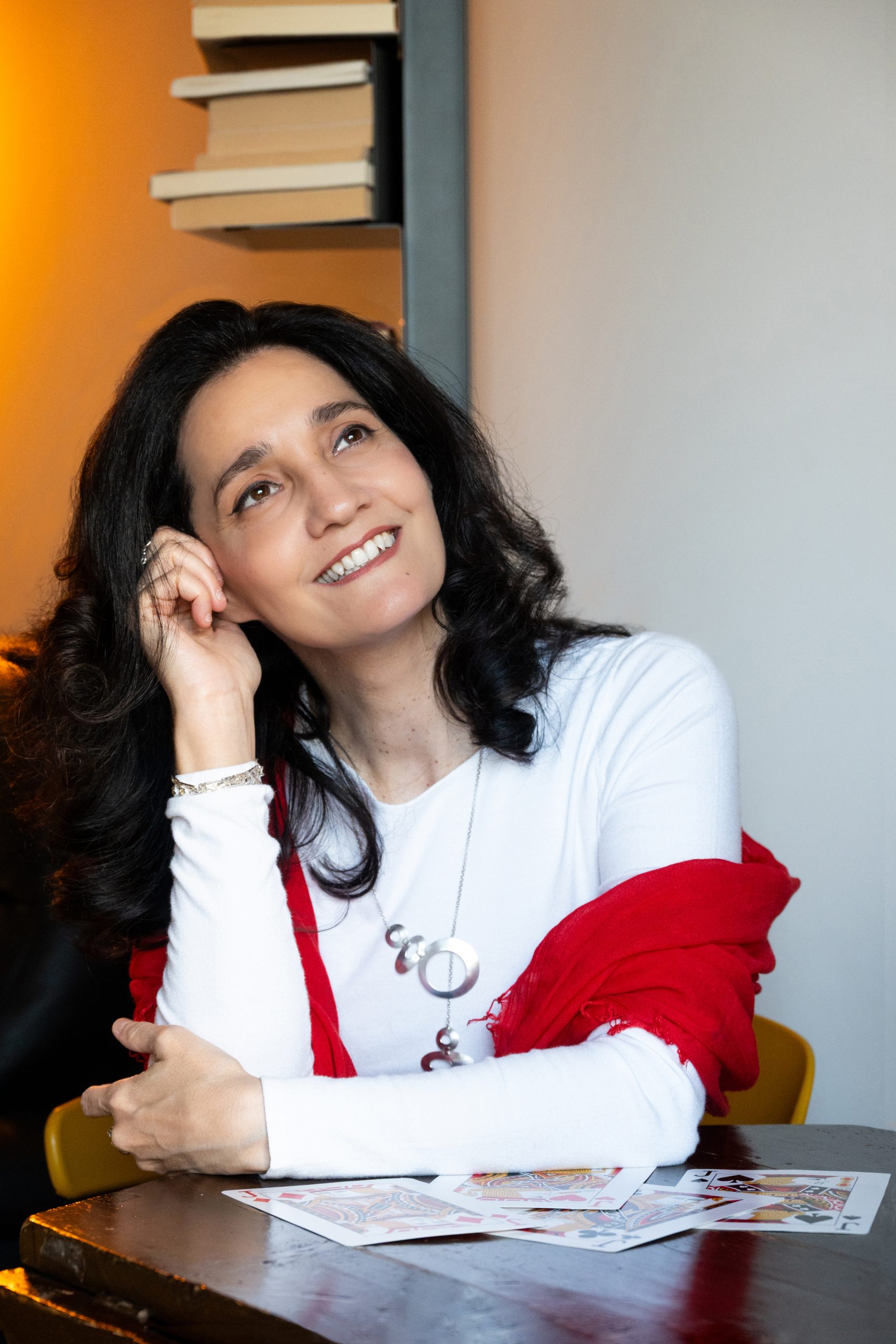
A theater, film, and television actress, Pia Lanciotti brings to her audiobook readings the same search for truth that she has refined over years on stage and set. After several titles read for Audible, she took on “Catarsi”, the new Audible Original written by Valentina Cambi, an author and screenwriter here signing her first psychological thriller for audio.
I met her to talk about her relationship with the text, the craft of giving voice to a character, and what it means for her to enter (and leave) a story.
When you first read “Catarsi,” what was your instinctive reaction? Was there a moment – a scene, a line – when you understood it was a text you wanted to interpret?
The moment you decide to do it, to embark on a project like this, there is evidently an underlying rightness. You’re always doing the right thing, and in the end, you recognize the sense of direction. What happens to me when I read is that I clearly retrace what happens, so there will be irritation, and there will be emotion among the feelings I experience. In certain books, at the ending, I can’t even speak because I get so moved, and we have to redo the recording. Or, when I manage to, I use that emotion right while I’m speaking.
So you behave more as a reader than as an interpreter?
Exactly. Or maybe instead as an interpreter, because in the end what we have to do – even in theater or film, despite rehearsals – is to be there, in those instants, and make it seem true.
The protagonist, Giulia, goes on a journey that takes her from Milan to Norway, to Tuscany: quite a journey, one that gradually reopens wound after wound. How does this progressive inner crumbling translate into your voice? Did you find a different way to render Giulia at the beginning and at the end of the book?
For an actor, this is entirely natural. If you are present, it’s like in life: right now, as we’re talking, the atmosphere is calm, and you can hear it. If something were already bothering me, I’d probably have a different flow of thought and therefore a different delivery. What you can’t do in an audiobook is: if I have a thought, I need to realign my ideas, but that mustn’t be perceptible to the listener. You have to find a middle ground, a balance that lets you be true while still remaining believable. Because truth doesn’t always have the right timing, the right pacing for listening.
“Catarsi” plays a great deal on the tension between guilt and innocence, victim and perpetrator – boundaries that in the story seem to grow increasingly blurred. How did you handle this moral ambiguity in your vocal performance?
By always trying not to judge the character. Even in theater and film, what you have to do – even when you’re playing a terrible character – is try to have no judgment. It’s fundamental, because every action, even the most brutal, has a deep reason, comes from something; usually it’s a pain that can’t name itself and has no voice. The manifestation will then be more or less ferocious, more or less violent. So, without judgment, even if you know from the start that a character is bad, you can’t give him “the bad guy voice” – that’s not possible even in a film. Think of a great masterpiece like Tarantino’s “Inglourious Basterds”, or Anthony Hopkins himself in “The Silence of the Lambs”: you have to consider the deep reasons behind his actions. A villain doesn’t know he’s a villain: in his own eyes, he’s carrying out just actions to heal wounds. Whether he’s aware of this or not doesn’t matter – actually, adding awareness would be a mistake, because it distances you from the truth and from understanding the character, from embracing him.
Performing an audiobook is a fairly solitary job, isn’t it? It’s just you and the text, no audience, no colleagues, no eyes to respond to. How do you experience this solitude compared to your long theatrical and film experience? Is it emptiness or freedom for you?
It’s lovely, it’s fun, because finally you don’t have that fear circling around that you nonetheless know how to tame and use. Here instead you’re protected, so you can play, you can start, you let yourself be swept clean by a flow that arrives, and you’re not afraid of anything: worst case, you redo it. It’s a bit like film or television compared to theater.
Theater is the art form I find most wonderful and terrifying at the same time. I think about it often when I watch a play: if someone makes a mistake, I feel bad as if I had made it myself.
Mistakes actually almost never happen, because rehearsals especially let you learn to handle the scene and any unforeseen events. But to give you an example of a powerful emotional arc: it happened to me with “Death of a Salesman”. She starts out a certain way and arrives at the end in absolute silence, over her husband’s death, where she keeps saying she can’t cry, and apologizes because she can’t cry. Reaching that ending with authenticity is an inhuman effort. Afterward you’re overjoyed, but there’s a completely different management of your energy and your resources: it’s an almost unbelievable effort.

You’ve lent your voice to several titles for Audible. Every story, every book carries its own universe. How do you enter a new narrative world, and how much of it stays with you once you leave it?
There’s a book I fell in love with enormously, “Mariani e il peso della colpa”, about 300 pages, where for the first 250 not much happens, yet it moves forward; then in the last 70 pages everything happens, and for me those 70 pages alone are worth the whole book. But what I truly adored is “The Forgotten Garden” by Kate Morton: a story that captivated me because it spans time, it’s a story about finding oneself again. It’s beautiful – I even bought it in print and gave it as a gift to everyone, because to me it’s a wonderful book. I listened back to the entire book read by me, which I never usually do, precisely because the story captivated me so much I hardly perceived that it was me speaking. I kept telling myself: I know perfectly well what’s about to happen, and yet I’m completely elsewhere.
Reading some of your interviews, you’ve often spoken of the feminine as a cosmic energy, not just a matter of gender. In “Catarsi” you took on a female protagonist who carries the weight of a secret and is gradually unmasked. Did you rediscover this dimension, and in what form?
Actually, oddly enough, I found myself dealing more with masculine energy. The ending – that release, that acceptance – is a feminine energy, but the whole trajectory of the story is absolutely masculine: I must hide, I must go, I must try, I must speak, I must leave. It’s all very practical, a decisive, calculated action. The feminine, on the other hand, is a different page altogether: it’s a dance, a wave.
Straight lines, then.
Straight, but also labyrinthine.
Last question: what do you hope listeners of “Catarsi” carry with them after the final word? And you – what did you leave in this book, and what did the book leave in you?
Like all stories, the most important thing is that whoever encounters that last word carries with them, inside themselves, the book they will have written. Same stories, different directions and interpretations. What did I leave in this book, and what did I take away? Perhaps a character I like a lot: the friend. I loved her youthful impudence, in which I found a lot of myself.
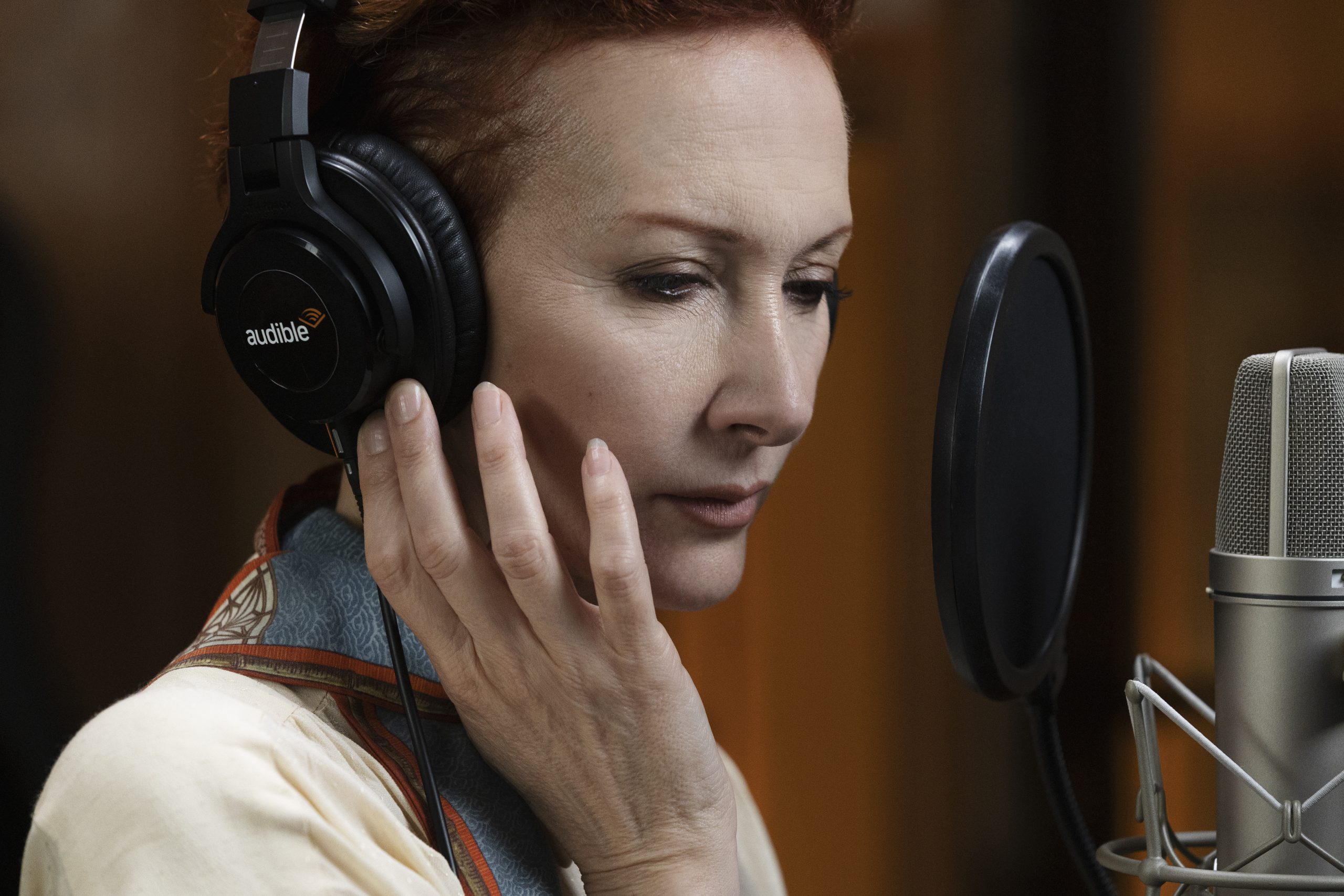
Thanks to Audible.
Thanks to Community Group.