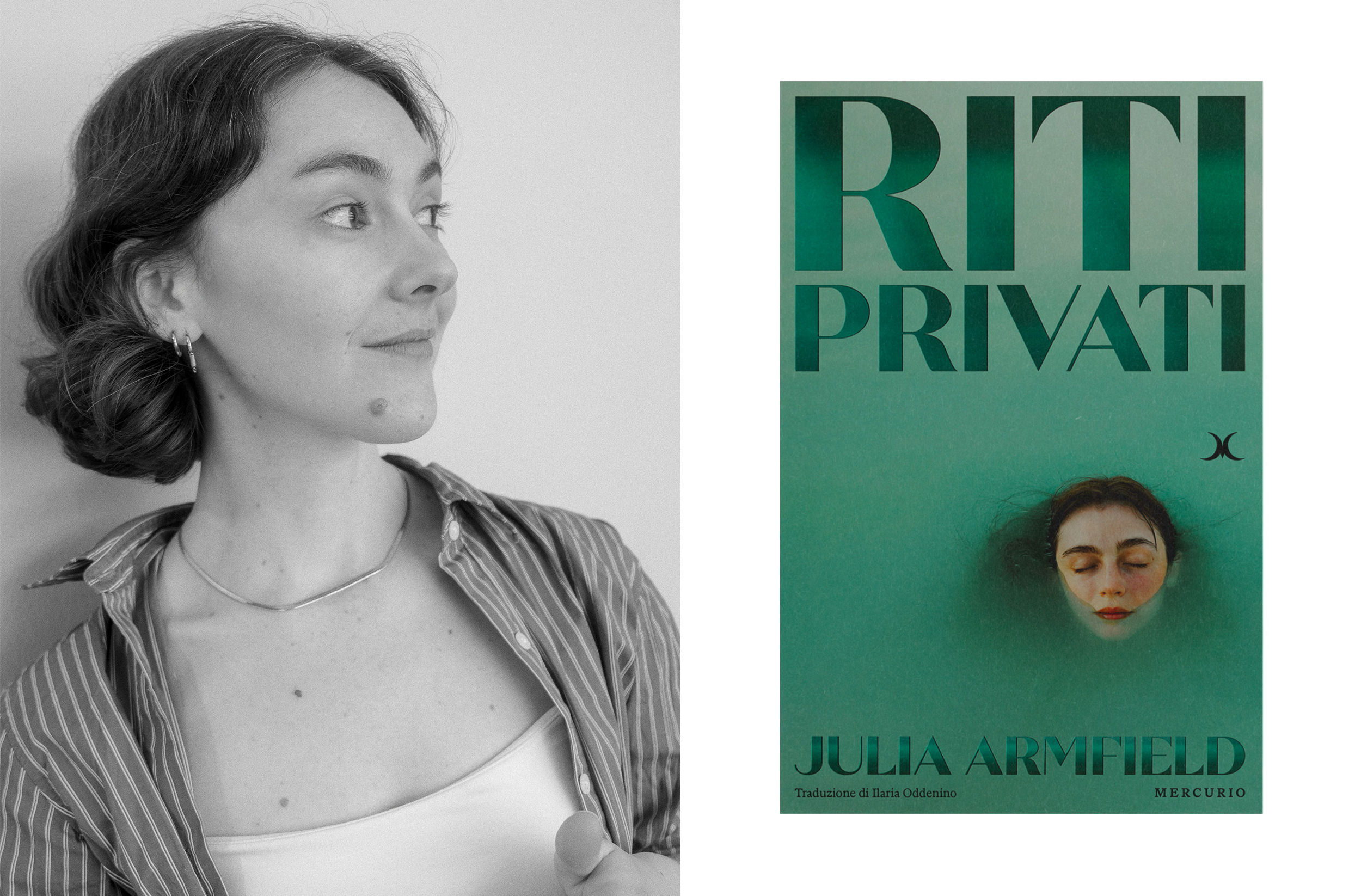
There is a particular kind of writer who builds worlds not from the outside in, but from the inside out: Julia Armfield in particular begins with a feeling, a texture, an unease, and lets the architecture of fiction rise around it.
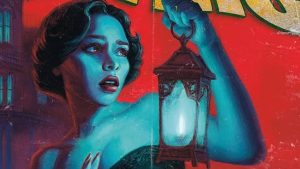
After her debut novel “Our Wives Under the Sea”, her haunting story about love, loss, and the fathomless depths that open between two people, Julia returns with “Private Rites” published by Mercurio Books, a novel as relentless as rainfall. Set in a near-future Britain slowly submerging beneath incessant rain, it follows three estranged sisters reunited by their father’s death – itself a quiet, almost incidental event against the backdrop of a world quietly ending. What’s extraordinary is that Julia is not interested in apocalypse as spectacle. She is interested in what people do in the meantime: how they go to work, argue over inheritance, fail each other, love each other poorly, and keep the television on.
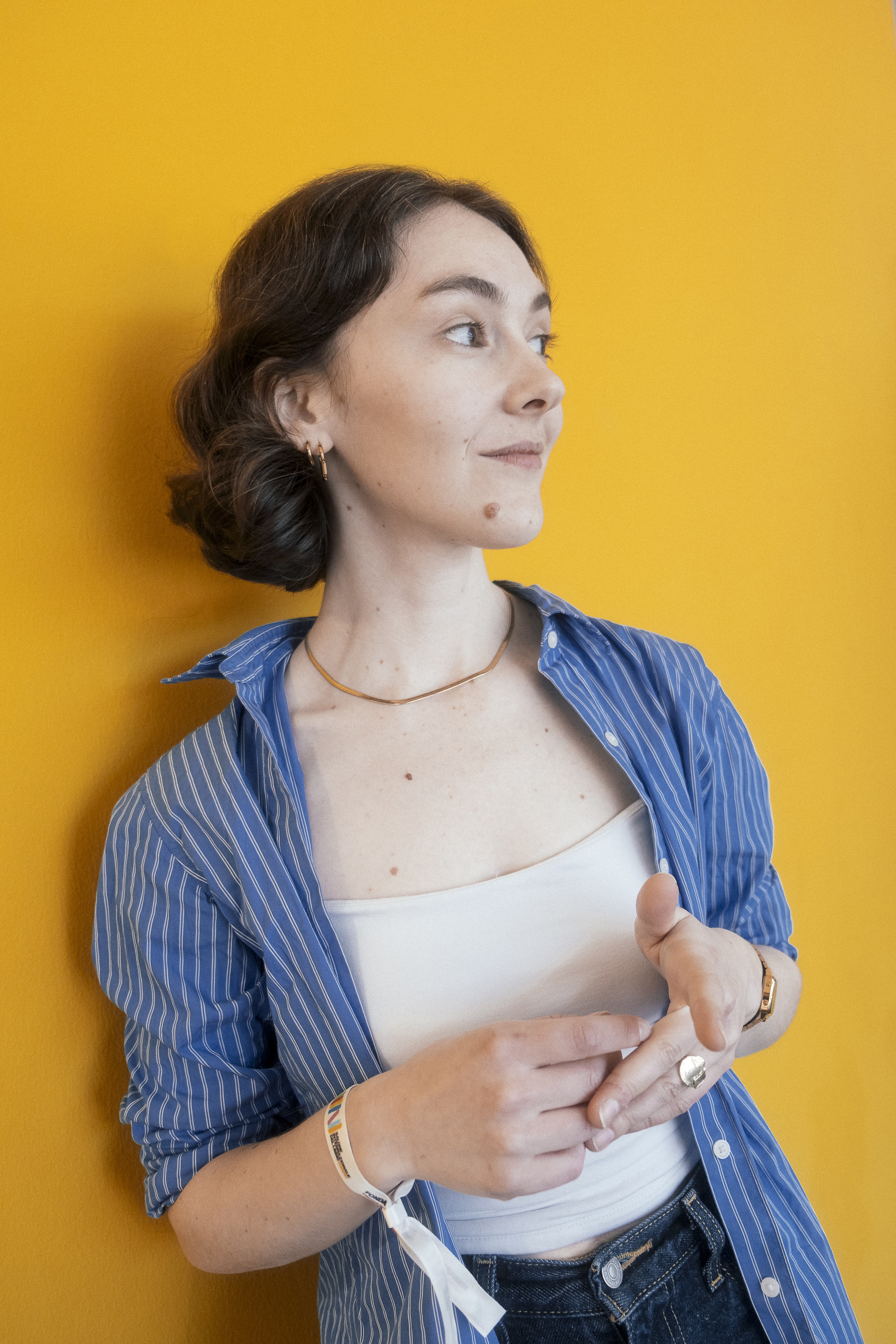
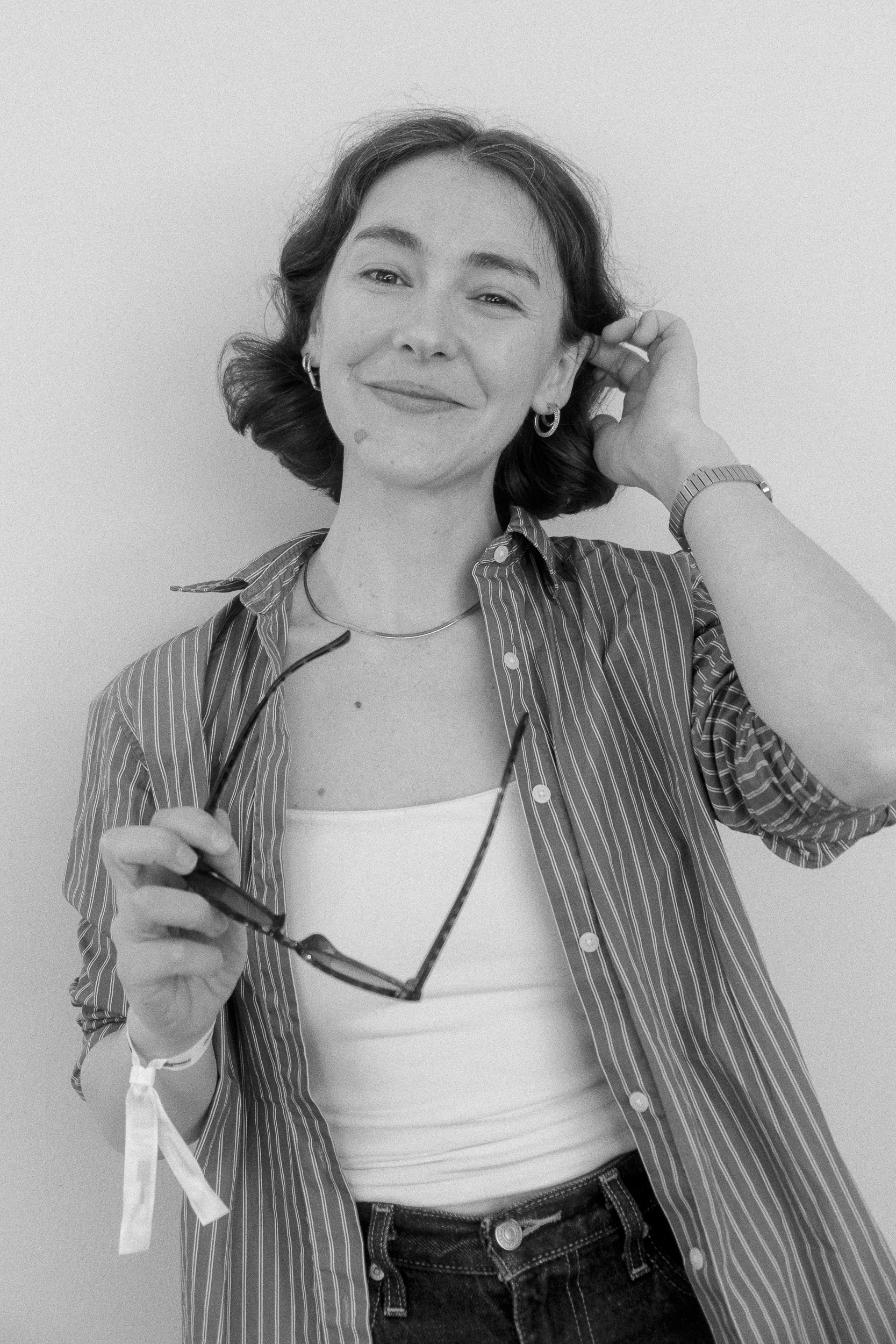
At 2026 Turin’s International Book Fair, we spoke with her about symbols and silences, about the ever-present element in her stories – water – and houses that feel like creatures and clocks that run ahead of the living. Julia turned out to be warm, precise, and quietly funny – very much, guess what, like her books.
Water is clearly an important element in your books, usually representing destruction or some kind of ending. What does water represent for you as an element?
I get asked this question a lot, which is entirely my own fault – people point out that I’ve written two books about it, and quite a lot of the short story collection deals with it too. It wasn’t something I was doing entirely on purpose, but once it had been pointed out to me enough times, I started thinking about what I was actually doing with it, where it came from, and what it symbolised.
I realised that a lot of the formative lesbian media of my youth features water heavily. The Sarah Waters novels, many of them are set by the sea – it’s not always central, but it’s tangentially there all the time. The Céline Sciamma films: Portrait of a Lady on Fire is set by the sea, Water Lilies is about synchronised swimming. And even some of the more problematic texts in UK lesbian life, like this terrible TV show called Sugar Rush that we all watched, was also set by the sea. So, there’s a lot of that when you look at it. Whatever you inhale, you will subsequently exhale, I suppose.
But I also started thinking about what I was actually doing with water as a tool. On a purely practical level, it’s a very useful symbol for the things I’m most interested in: instability, liminality, and the idea of being one thing on the surface and something else entirely underneath, which I think is central to the queer experiences I want to write about. So, it became quite useful to me in that respect. That said, if I do it again, people are going to start asking if I’m okay [laughs]. Something different will be vital next time.
Fire?
Exactly! Snow next, then fire. But there’s no “at the end,” so you can’t tell people that. Though this is all off the record, obviously, it’s very much a trailer for my next book, because I’m writing about mountains and snow now. I feel like I accidentally embedded a preview of it in the ending of this one.
On the first page of the book, you write about a grey stain left by an object, “the ghost of that object,” first questioned and then discarded. What is the latest object you questioned and then got rid of?
God, that’s a great question, I’ve never been asked that before. We just moved, so in a sense: all of my objects. But there’s something interesting in there, isn’t there? Objects vibrate with purpose and meaning a lot of the time, and you don’t always know why.
When we were moving, I found this shoebox of things I’d cut out and stuck on my walls at various points in my life, from a period when I was concertedly not being a lesbian. It’s just full of images of fashion things, always images of women. What I’d essentially done was cover my walls in pictures of women. I haven’t actually thrown that box out, because I couldn’t bring myself to. But yes, it’s interesting.
Still in the introduction, you say that sometimes darkness can be kinder than light. Do you sometimes wish to look at things through the barrier of darkness?
I think so. Too much light is what we have all the time now, we’re required to look at everything constantly. We’re living in a state where every piece of news is being thrown at us without pause, and I don’t think too much light is the same as too much clarity. We’re always pressed so close up against everything that’s happening that we have no space for context or reaction. So yes, not necessarily darkness, but certainly space is what we sometimes need.
“We’re living in a state where every piece of news is being thrown at us without pause, and I don’t think too much light is the same as too much clarity.”
You often describe houses as if they were people or creatures. What is your own house like? What kind of creature would it be?
We moved in December, so my house now is… a very, very tall man with a cold head. That’s what he’s like. We live at the very top of a Victorian building, and most buildings in the UK were constructed in the 19th century when the climate was very different – so they’re boiling in summer and freezing in winter. We have all these beautiful original windows, and I’m cold all the time because they let all the air out. That’s him, just perpetually losing heat.
I found it really interesting that Agnes goes swimming and seems to be the only character who can find something good in water. What do you think she sees in it?
I think particularly in that early swimming section, Agnes is having very much the reaction I have to water and to swimming specifically – the idea of accessing a different train of thought. I don’t know if you find this, but a lot of people describe it with running. For me, swimming gives me complete access to a different channel in my brain. I think it has something to do with your body being so completely divorced from ordinary reality – you’re in a state that has nothing to do with being on solid ground. I can actually think about my novels in the pool in a way I can’t in most other places. I can plan things and work through ideas past the hard barrier of having to be in the present. So, with Agnes, at that point in the book, I was putting a lot of my own experience into her.
Usually when I think of water I think of something calm and infinite, but with this book I felt claustrophobic. When I read the first two chapters I had to put it down, it really anguished me. If I imagine a world of constant rain, of houses slowly sinking… The atmosphere is extraordinary.
Thank you. I love that.
I was also really moved by the city becoming a kind of protagonist, with its own voice. The moment where the city says “remember the world as it once was” – have you ever found yourself thinking about the world as it once was?
Yes. I grew up in the 90s, so I think that’s what we all do. It’s very difficult not to, because as a generation, we’ve lived on the cusp of so many things. There’s something peculiar about being perhaps the last generation that remembers pre-internet times, pre-phone times – all of that.
And yet, I think in some ways it’s quite a regressive way of thinking, because it’s very easy to imagine that any time before us was better, and I don’t think that’s ever necessarily the case. Rights always move forward. Things always move forward. But it is so strange to have lived through what people called the end of history – that idea in the 1990s, after the Cold War, that a new global order had arrived and everything would be calm. And then 9/11 happened, and it turned out that was never true, of course. I think gay people always knew the end of history didn’t really exist. Marginalised people always knew that the end of conflict and oppression was a fallacy. So, it’s very easy for us to look back on the 1990s as this storied, beautiful time where everything was fine – and actually it wasn’t fine for most people. But it’s interesting how we as millennials are conditioned to think that way.
The city describes living as something exhausting – as if the world, even in its final moments, had become too much. It says: “we are either bored or too busy, but in reality, there is no time left for either.” So, what do you think there is still time left for?
This is a very self-serious answer, but I think there still has to be time for solidarity with one another. Despair is such a privilege – I understand why people feel it, particularly given how it feels to live now, which I think the book is really just an exaggeration of. But there is still so much time for solidarity and community, and I think that has to be the whole point of continuing to try.
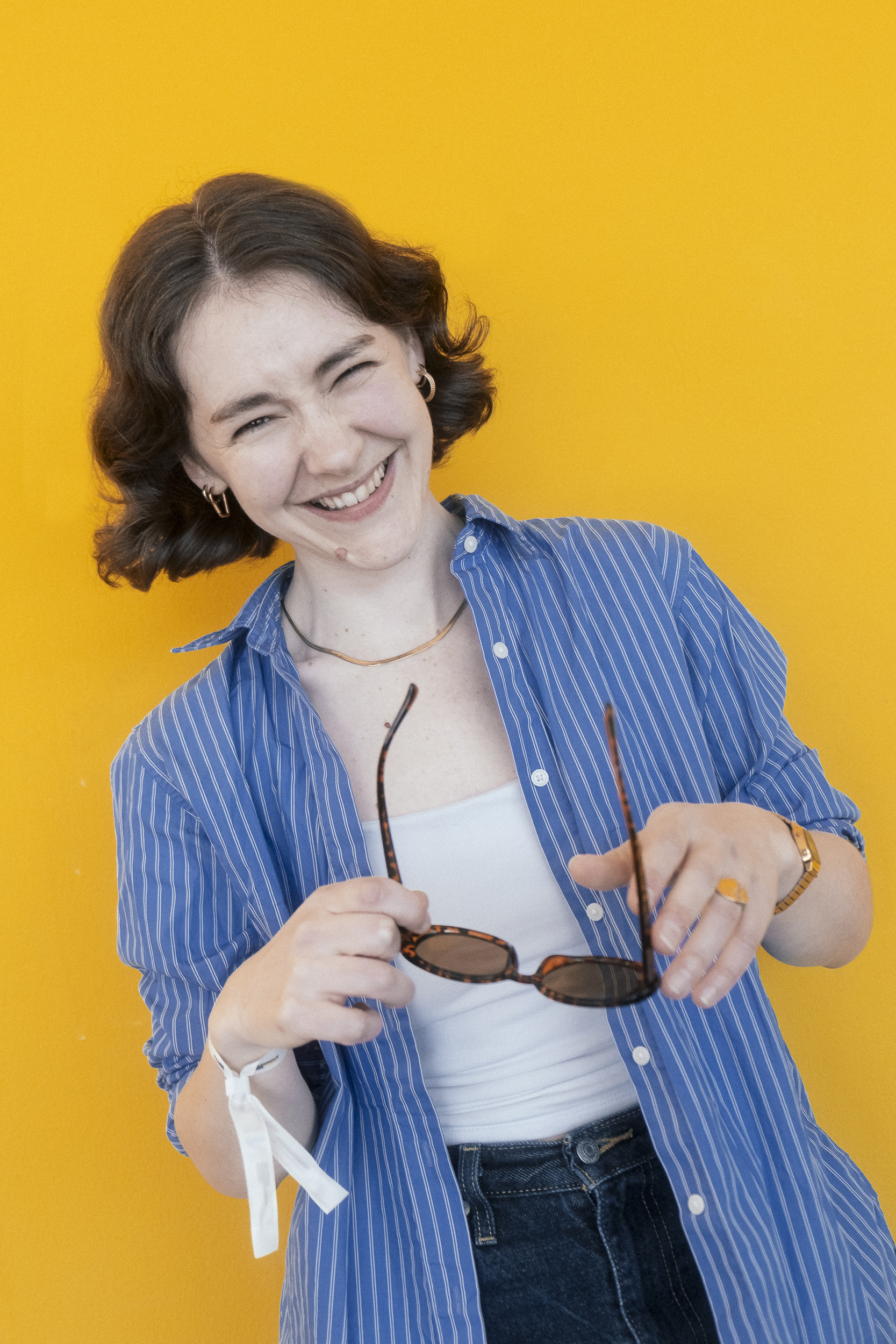
“I think there still has to be time for solidarity with one another”
When they are at the morgue, Agnes notices that the clock in the room is running ahead. Is that a metaphor for death always being one step ahead of us – or does it mean that death simply doesn’t care about time, because it takes what it wants anyway?
My God, you’re such a good reader. You know, this is what I find so wonderful about writing: once a book has left me, it’s no longer entirely my responsibility. And there are things in it that I genuinely didn’t intend, but I find it so generative to see what readers discover, because that’s a really smart reading of something I didn’t consciously put there. That’s the whole point, I think. Reading and writing have to be collaborative. I’ve never understood the type of writer who insists that what the reader found isn’t what they meant – obviously with certain limits, if someone is taking something terrible from something you didn’t intend, that’s different, but for me it’s always so interesting. No, I didn’t intend that. I was just… vibing.
You were vibing – but it works.
It does! And I think that’s the whole point.
Sometimes when people die in the book, there’s a sense of indifference – as if the world has become used to hearing only bad news. Do you think we are gradually losing empathy?
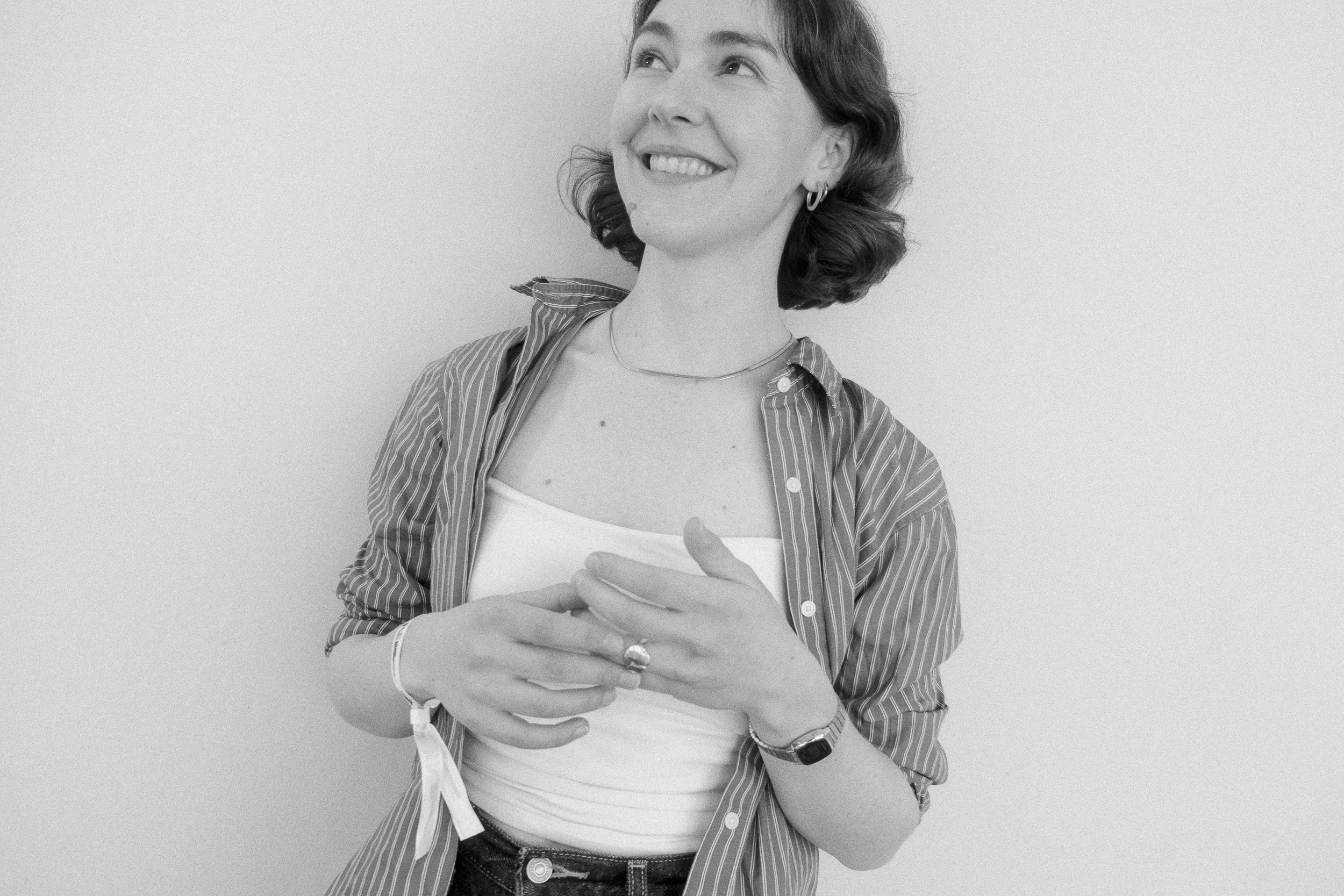
I think we’re losing time and space. One of the things this book has always been centrally about, for me, is the extreme pressure of late-stage capitalism – the idea that no one has time to react to anything. No one has time to react to catastrophe, to disaster, to death, because everyone has to go to work and pay their rent. It traps you in a space where there is no time to resist anything, and that is ultimately the goal: to trap you in a completely individualistic place where you care about yourself, maybe your family, and that’s it. It bars you from being able to react to the catastrophe happening all around you. I think what I was writing was an extension of that.
There are many moments I love with the three protagonists alone – but as soon as two of them are together, they become almost hateful to each other. Maybe family brings out the worst in us, or perhaps we become who our families tell us we are when we’re around them.
Yes, I think the nuclear family is a trap. A torture nexus that requires people to repeat the same behaviours with each other forever. It takes a very brave and specific kind of person to break out of that. This is a novel about imposed structures – the structure of capitalism, the structure of the family, all these boxes you find yourself in. Which is why the image of the house matters too: it’s something you’re inside, which purports to keep you safe, but is actually going to drag you down with it into the water.
There’s quite a lot in it about how family freezes you at a certain age forever – how you remember your sibling as they were at a particular age, how parents want to treat you as though you’re still younger because it makes the family feel safer, it makes everyone feel more controllable. It flattens people. And yeah, that’s very much what I was exploring.
At one point Irene talks about the simple things she had to give up because of the end of the world – like going to see the latest film at the cinema. What is the one simple thing you think you would miss the most?
It’s going to see the – film at the cinema. Exactly the same. I was actually thinking about this the other day — my favourite moment, the moment I’m happiest in my life, is oddly not while watching the film but while watching the trailers beforehand. Because I can imagine that every single one of those films is going to be the best one. I’ll be there with my wife and I’ll just think: I have made so many good life decisions.
I remember this very vividly from COVID – so many things were terrifying then, but I remember thinking: if cinemas close, so much of community life, so much of how I organise my life and where I live it, would simply be gone. And that felt very frightening.
I really love the question the book raises: when do we stop being products of our parents, and when does it become our own responsibility? It sometimes feels like almost an excuse for how we behave.
I hugely agree. Families do require you to repeat certain behaviours, and trauma and the treatment you received from your parents – all of that is an excuse up to a point. But the second you start inflicting pain and trauma on other people, it is not an excuse. It is a reason, certainly – but we all bear responsibility for ourselves as adults, and you have to try, at the very least. That’s quite a lot of what this book is about too – the varying degrees to which the sisters do and don’t manage to escape from that.
“I think we’re losing time and space.”
The absence of things in this book is so strong it almost becomes a presence. Have you ever missed something so deeply that its absence became a presence?
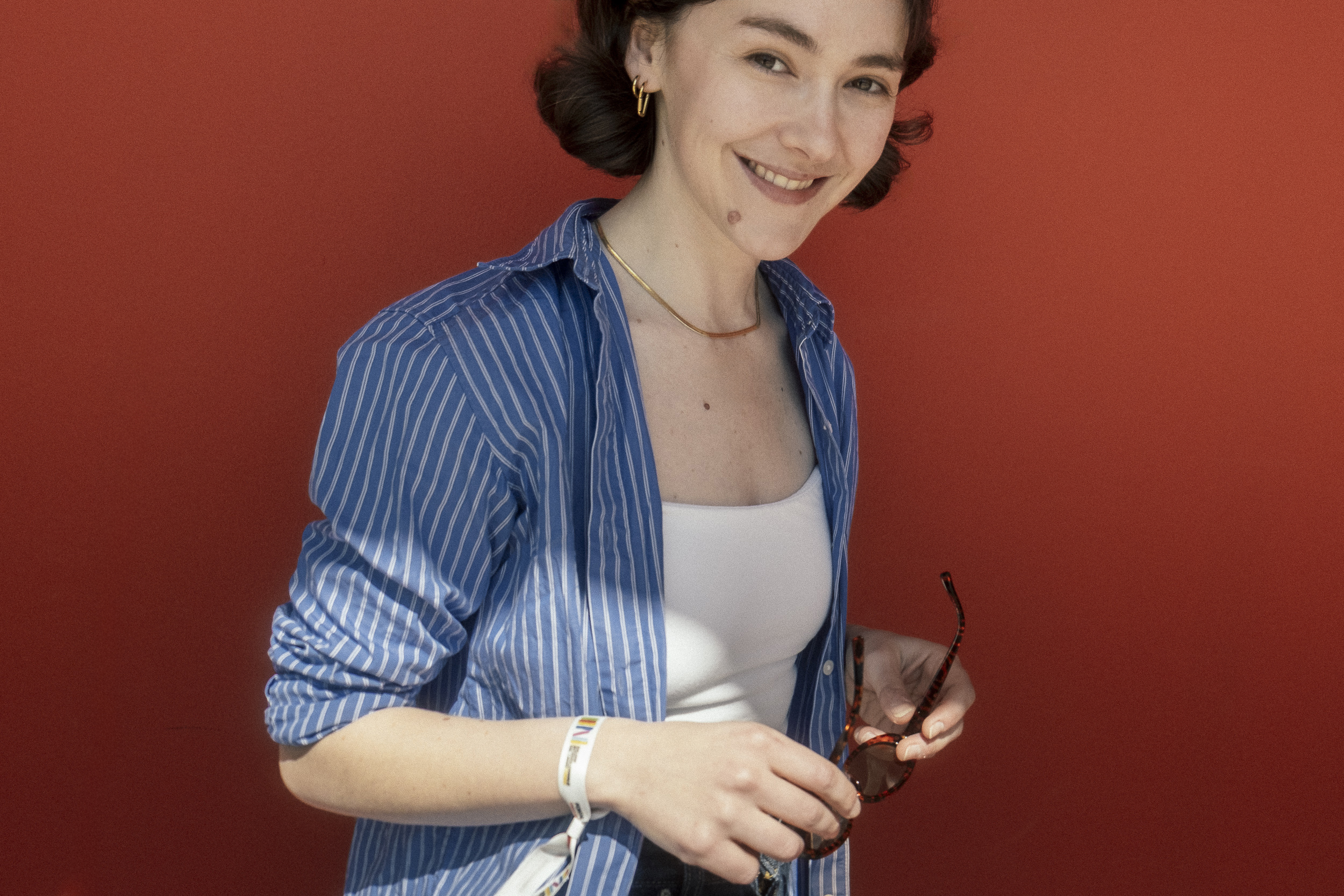
That’s a good question. At the moment – probably my cat. I have a cat, my daughter. She’s white, she’s beautiful, she’s gross, she’s my baby. Whenever my wife is away, she sleeps under the duvet next to my leg as she always does. Whenever I’m away, she thinks the house isn’t safe, so she sleeps on the pillow outside the covers, keeping watch over the door – because she clearly has no faith in my wife’s ability to protect the flat.
But for a more serious answer: I’m reading Siri Hustvedt’s memoir, “Ghost Stories” at the moment, about Paul Auster’s death, and she talks about how after he died she kept smelling cigar smoke, without knowing where it came from. She doesn’t quite believe in ghosts, but she believes in the physical manifestations that the brain creates when you want something badly enough. I find that really interesting – I don’t believe in ghosts either, but I do believe that the brain and body are capable of generating extraordinary things.
At one point Irene says she thinks too much and can’t wait for it to stop. Do you ever wish you could stop thinking?
Yes, always. Irene is my favourite – you can tell, because she’s the worst one. But I love her. Her rage, and then suddenly these moments of unexpected sweetness. And it was important to me to give her a good partner who loves her anyway, because I think it’s so important to show that very unloveable people can be very loveable – they always have their reasons.
The short story that more or less launched my career – it’s in my collection — is about what would happen if you couldn’t sleep anymore. It’s a vaguely fantasy, vaguely horror story about sleep stepping out of people’s bodies and becoming these separate figures, and everyone just having to live awake. The horror isn’t really the supernatural element — it’s the idea of never having time off from your own thoughts. Never getting those eight hours of respite from yourself. That is such a genuine horror to me, and I think it runs through all my work. I tend to write about very insular, neurotic people, and the brain as a kind of trap.
When you write a book, you go deep into yourself. Is there something you discovered about yourself while writing this one?
I think this book was a lot about how being an older or younger sibling shapes everything about you. Quite a lot of what I became more aware of came through Isla, the older sister – because I’m an older sister, very much so, with that sense of having to do everything myself because no one else can be trusted. And as I was writing her, I realised that this is actually a way of not extending grace to other people. You’re not giving people the opportunity to surprise you, to look after you, to do the things you claim they can’t do. So, I became very aware of my own behaviour through her.
What’s the last book you read that stayed with you for days after you finished?
Technically it’s the Hustvedt I just mentioned, but I haven’t quite finished it yet so that’s a cheat. Let me think – I read The French Lieutenant’s Woman by John Fowles in January, and it ruined me for the rest of the year. I put it down thinking: there’s no point reading any more books. It’s stunning. And here I am treating it like some incredible discovery, when it was a massive bestseller in the 1960s, and everyone around me is like, “yes, we know, we’ve heard of it.” But it’s astonishing – a perfect novel. Written in the 1960s, set in the 1860s, and it’s this insanely strange book about Marxism and about what we are to each other, the kind of book that simply couldn’t be a bestseller now. It was a real window into what the literary world was like then versus today.
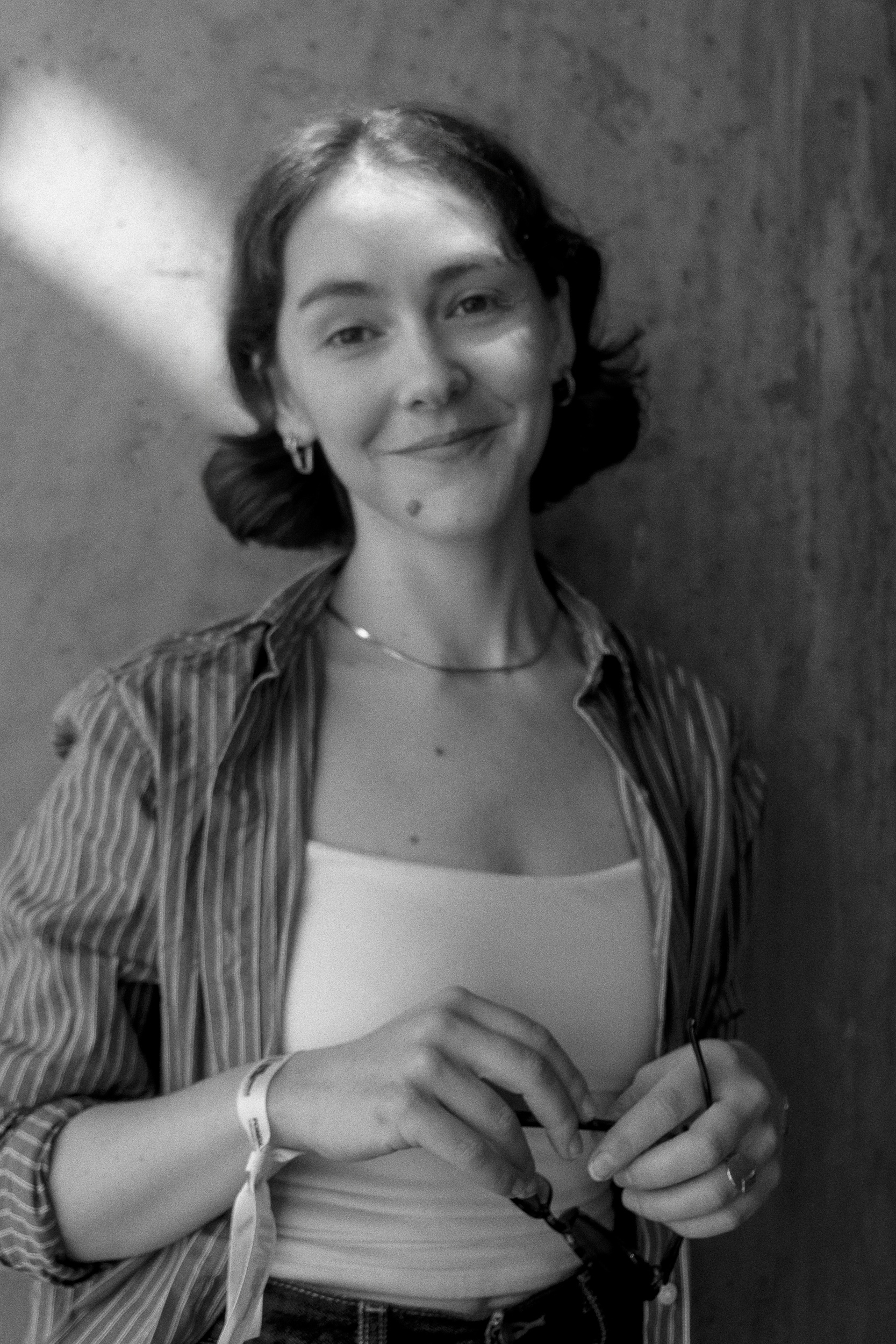
How do you balance reading and writing?
It comes and goes. When I’m deep in a project I tend to return to the same few things over and over, because I’m quite imitative. There’s a scene in “Private Rites” where for about two pages I suddenly become really funny — that’s because I’d just read “Greta & Valdin” by Rebecca K. Reilly, a writer from New Zealand, which is extraordinarily funny. And then you can tell exactly when I stopped reading it, because I stop being funny. So I tend not to read new things while I’m writing, because I start imitating them badly.
What I do read, when I’m deep in it, is things that help me with rhythm – because if the rhythm isn’t there, I can’t write. I read a lot of Joan Didion, over and over. I sound nothing like her, but the rhythm carries me. Sometimes I revisit “The Virgin Suicides”, sometimes “The Secret History” – though less often now. Clean, rhythmic prose is what gets me through.
I think your prose is stunning. I read this book in a day and a half – and “Our Wives Under the Sea”, which I didn’t have to read for work, is completely underlined.
That’s really lovely. Thank you.
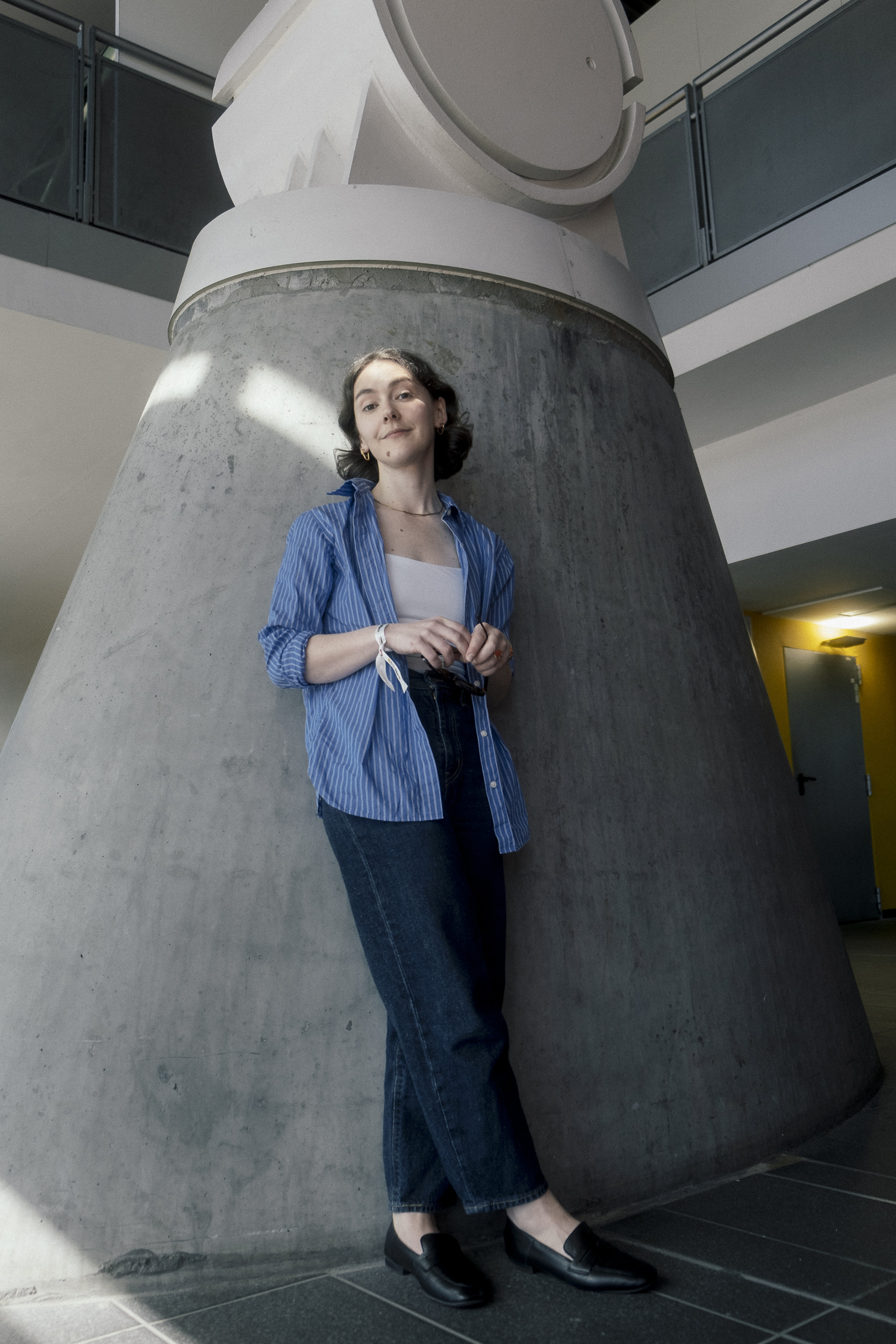
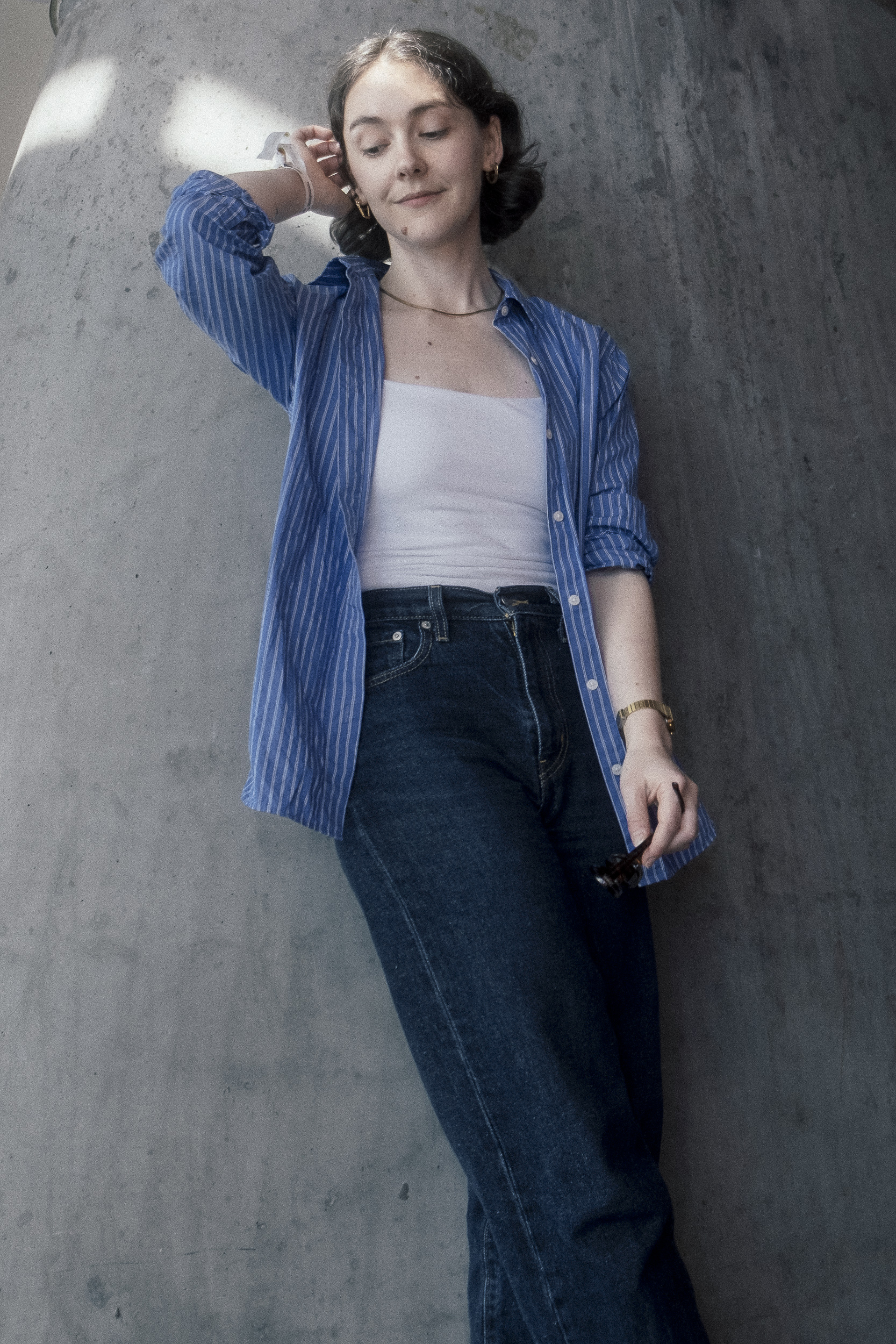
Last question: what’s your happy place?
I think I’ve already answered this – it’s the trailers at the cinema. That’s my happy place. Me, my wife, the trailers, and the cat in a bag. That’s it.
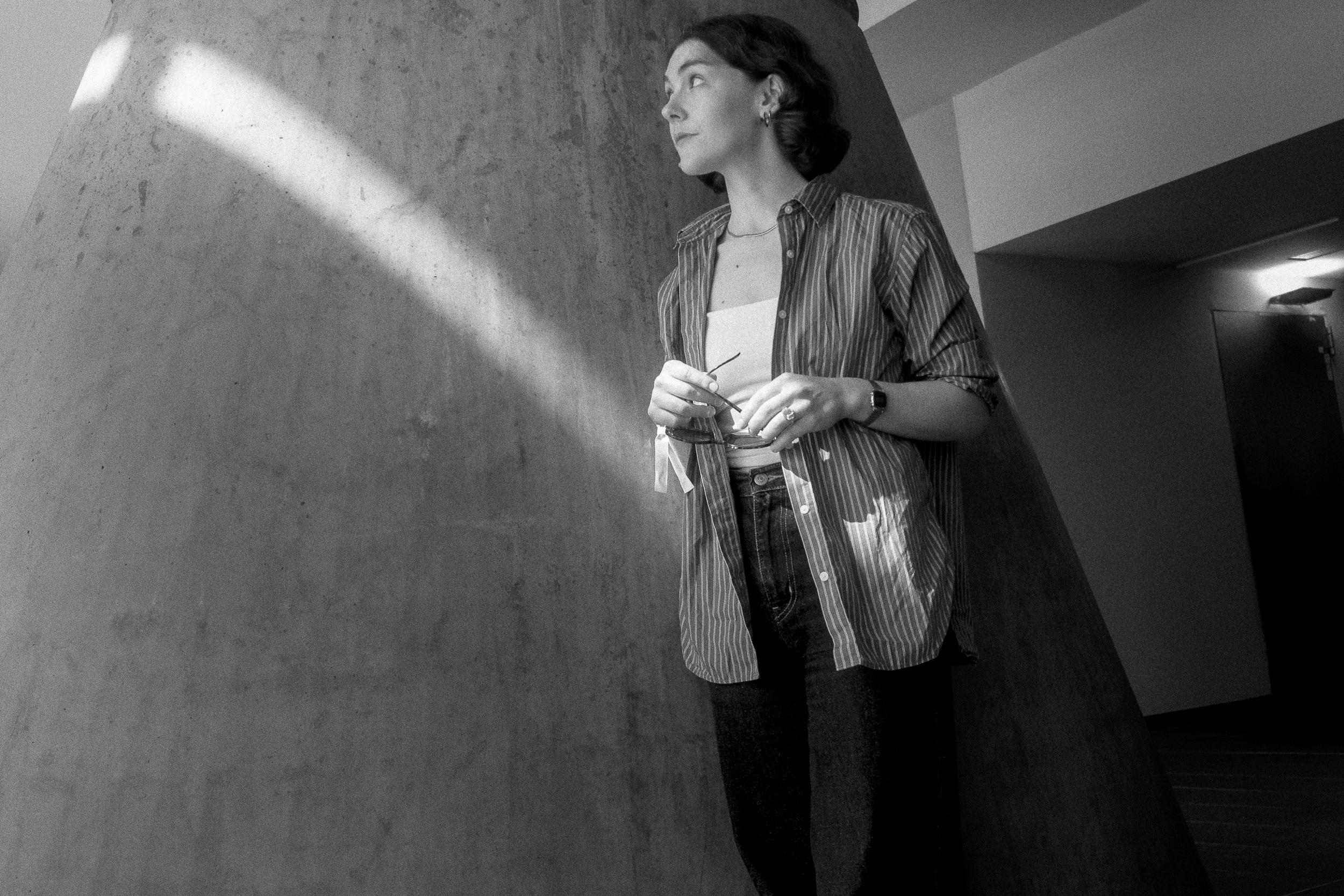
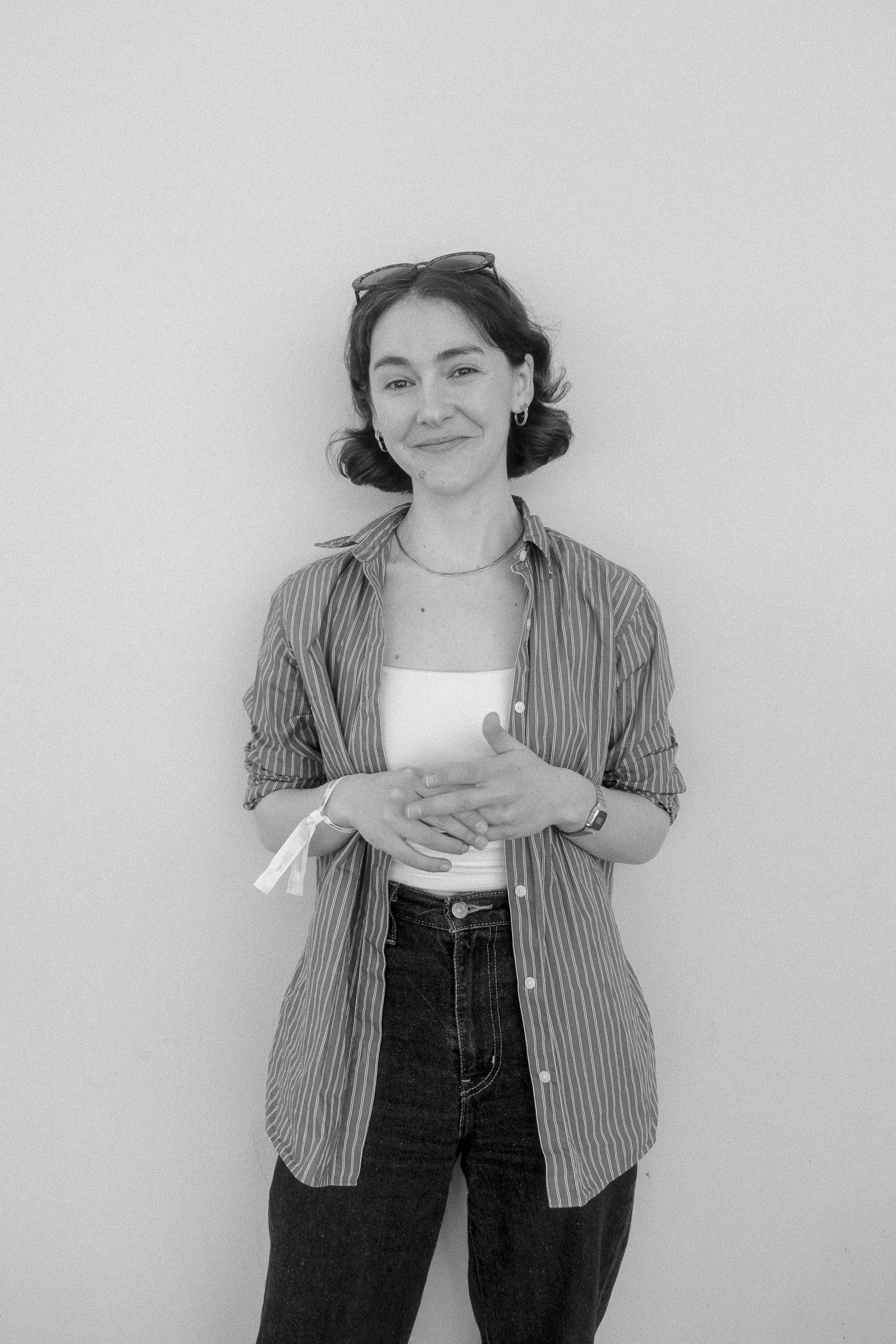
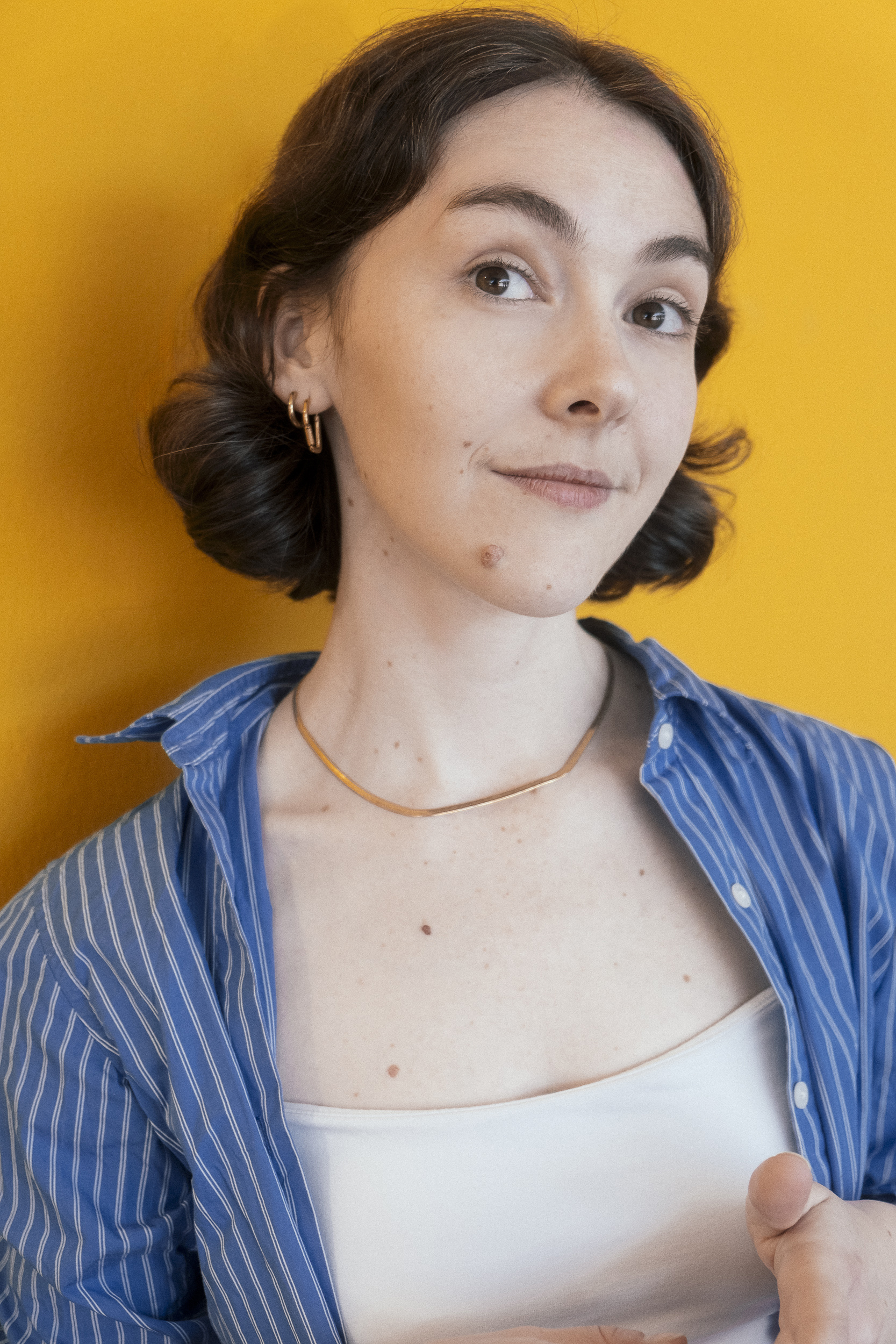
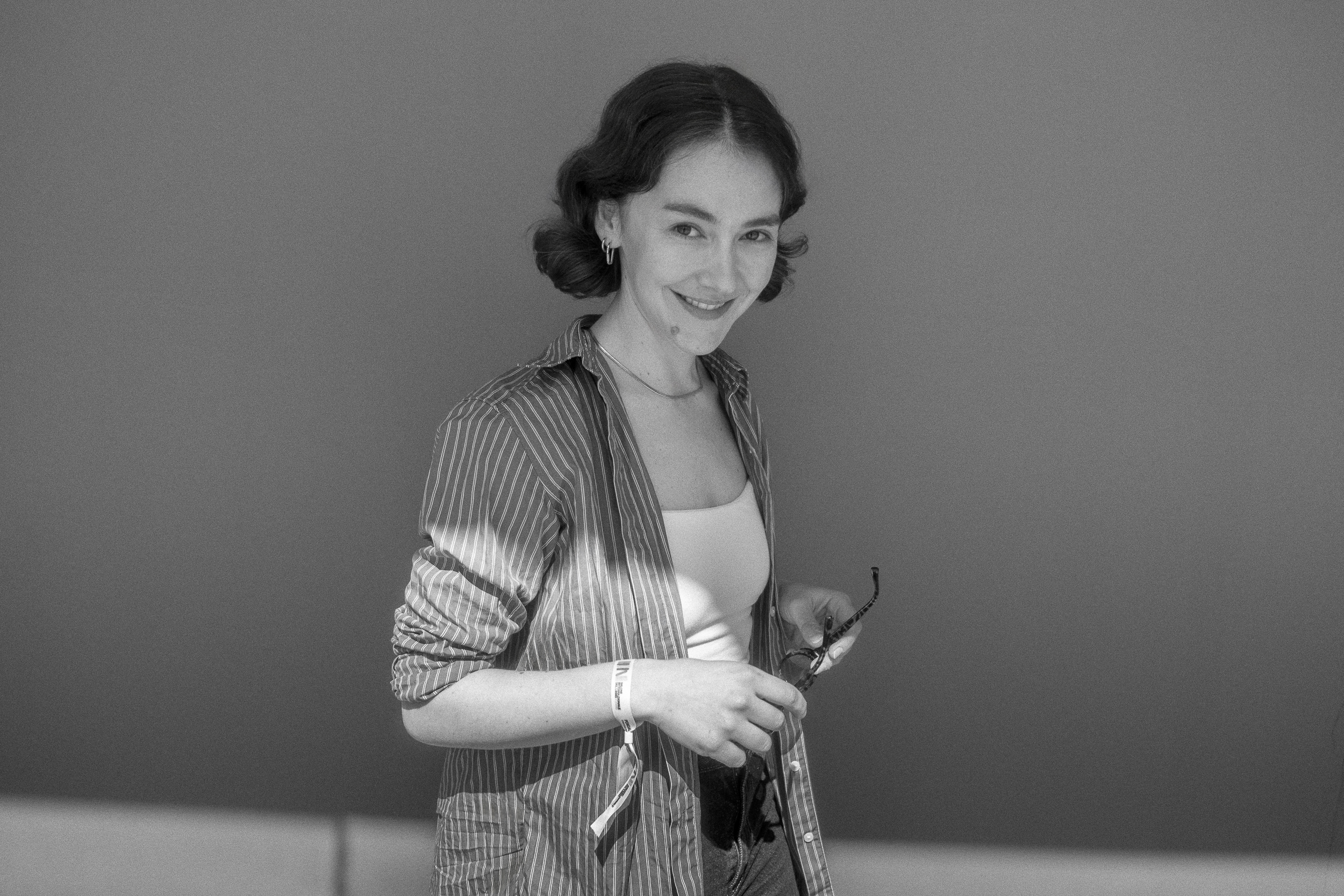
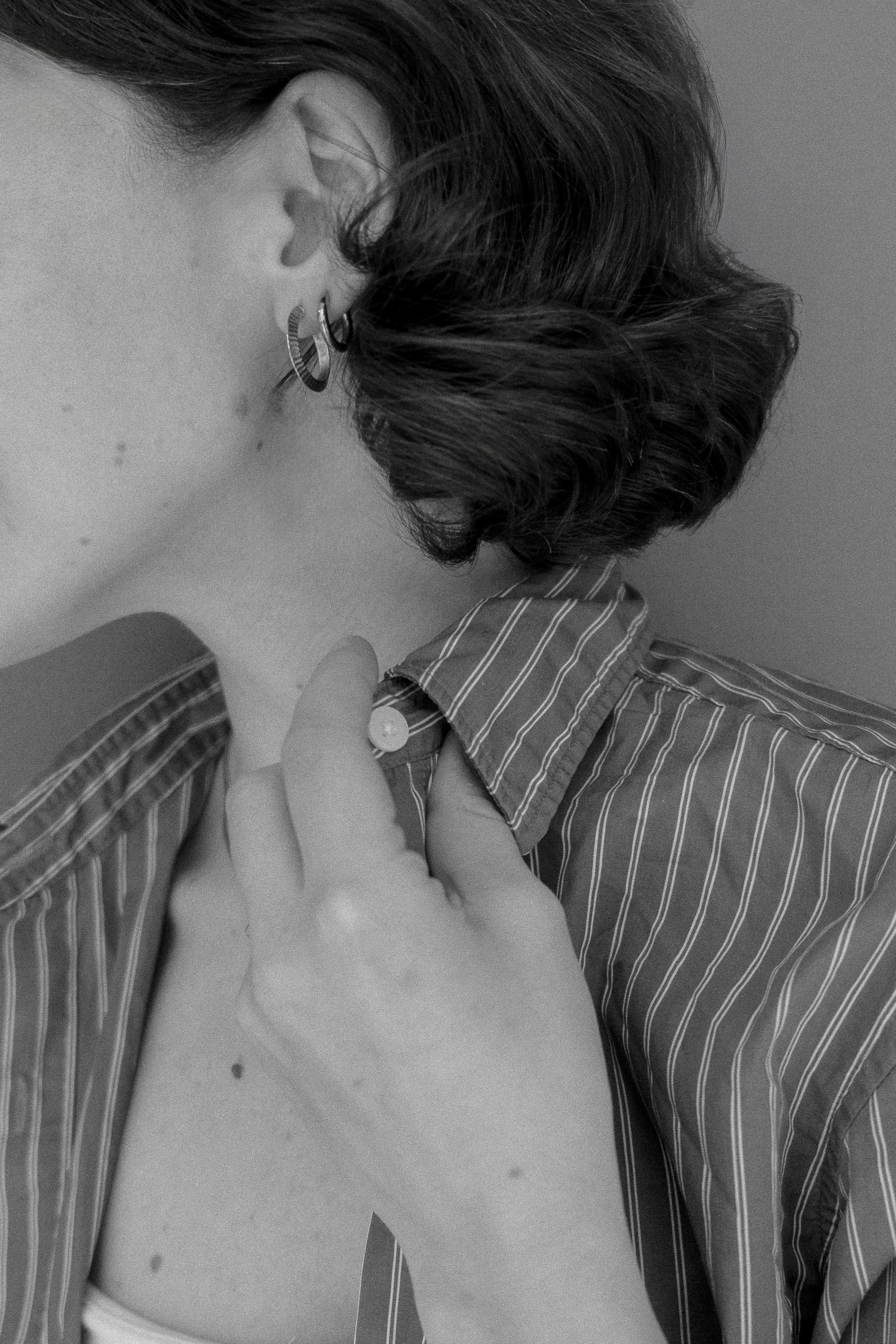
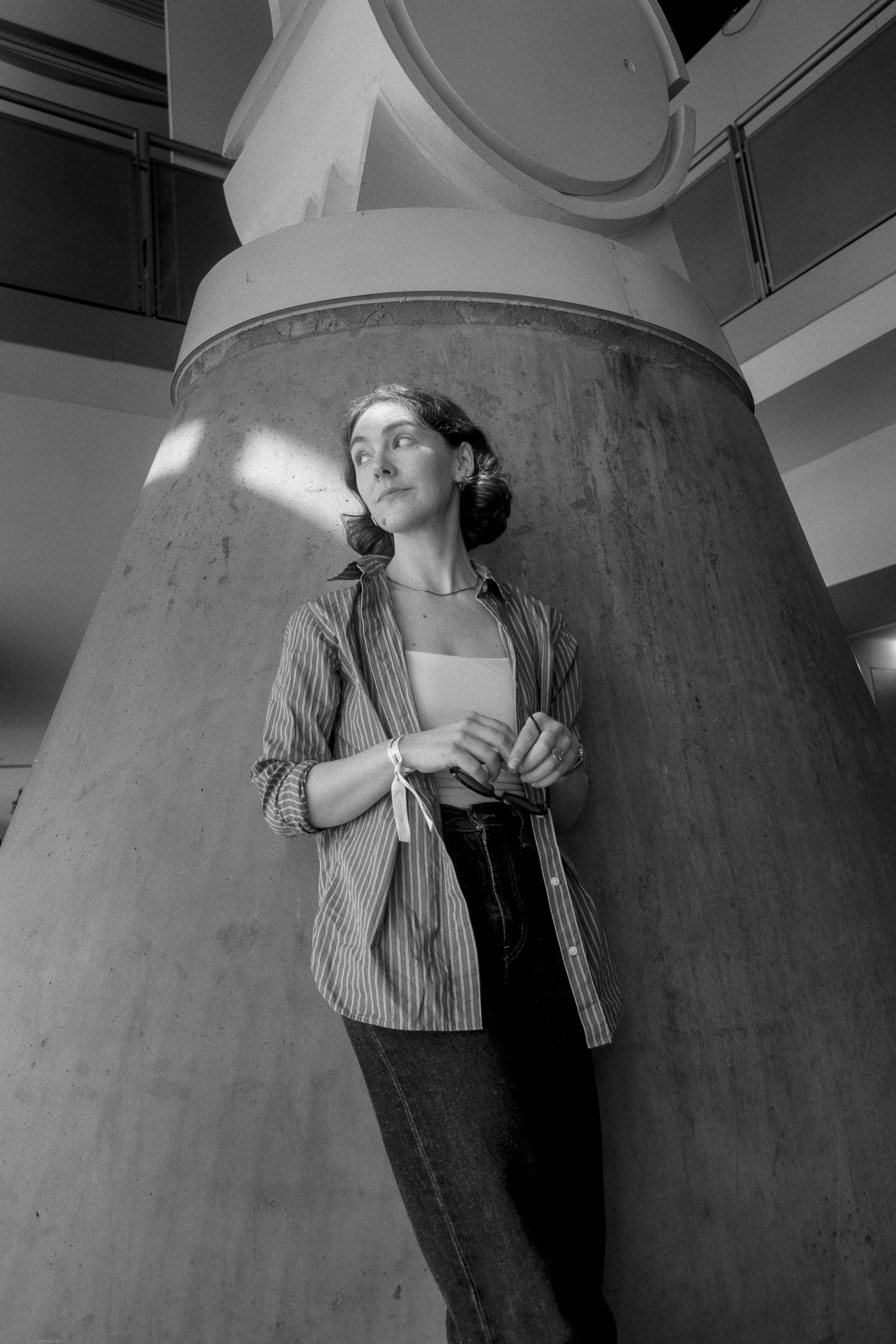
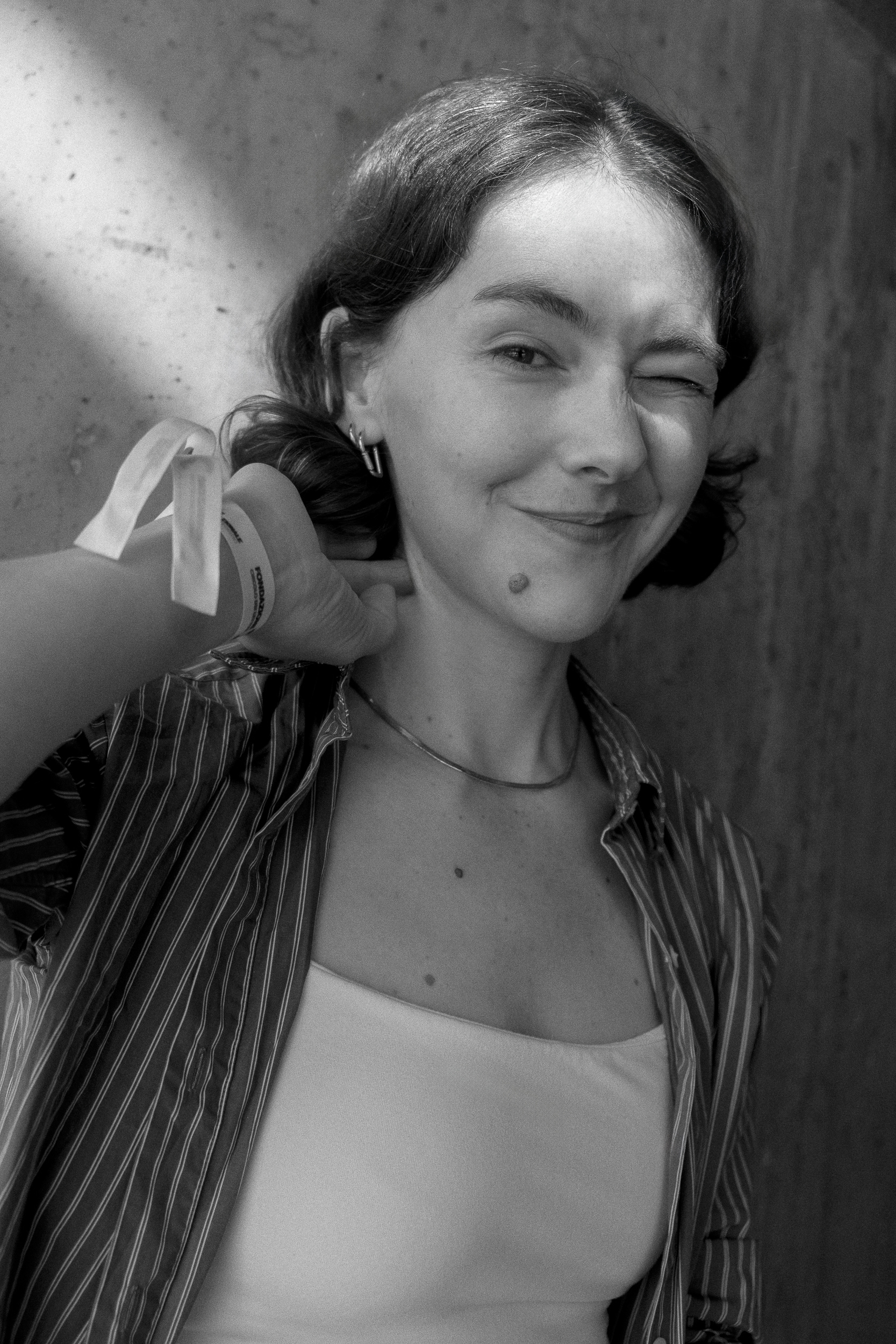
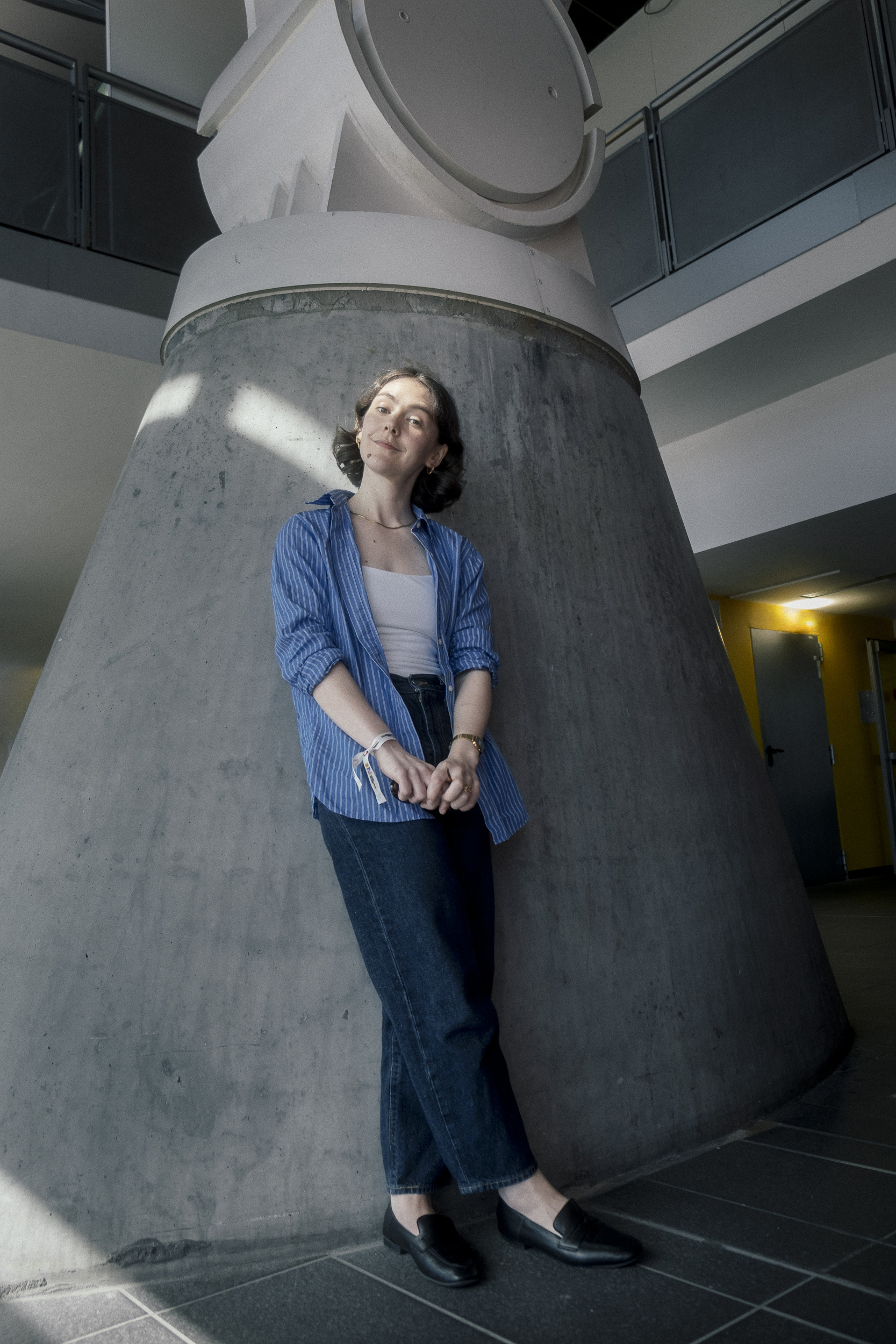
Photos by Luca Ortolani.
Thanks to Mercurio Books.
Book Cover: Art direction by Francesca Pignataro, photo by Francesco Ormando.