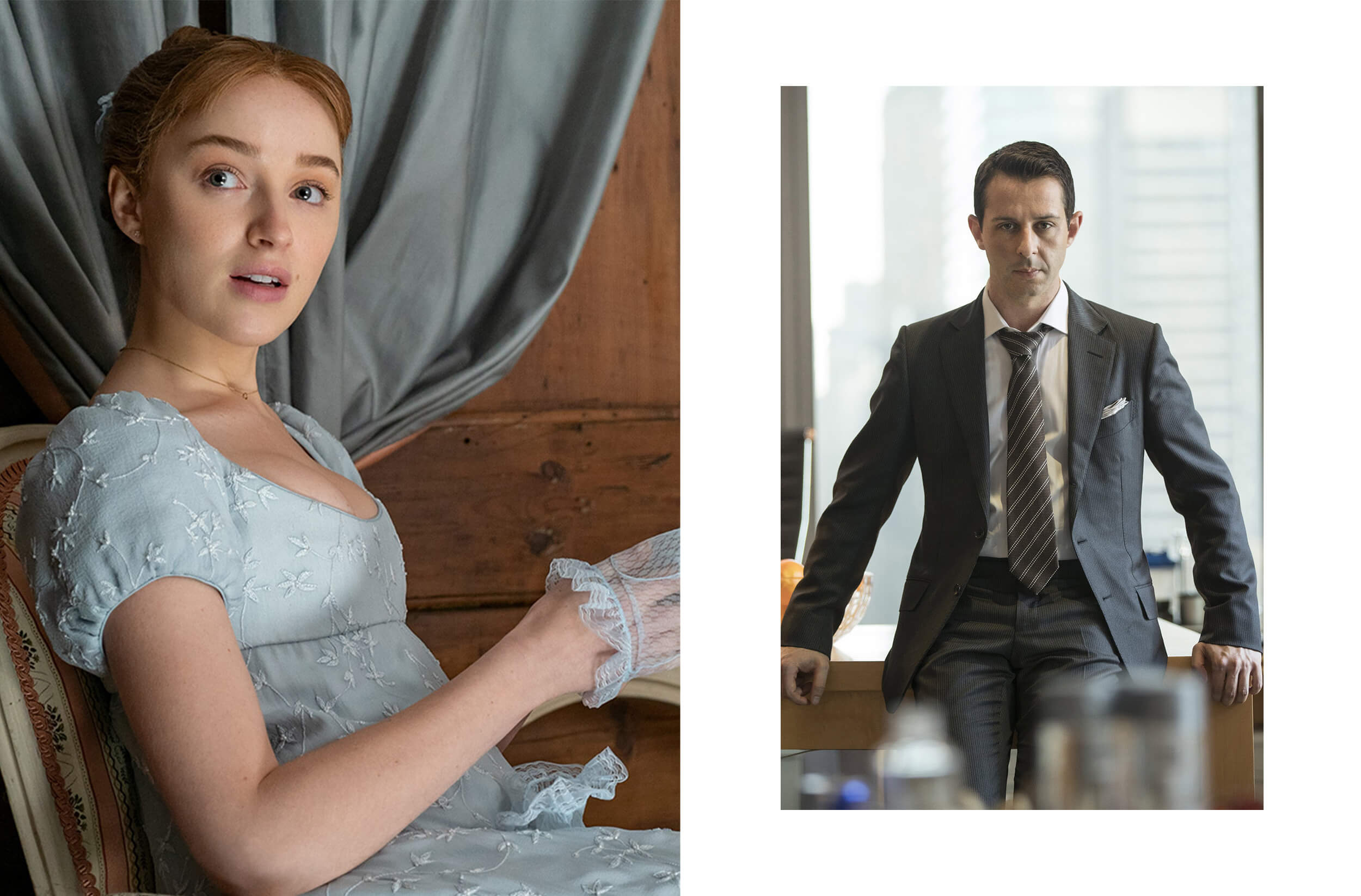
When someone photographs the cover of the book they’re reading next to a cup of tea, a cardigan or a bunch of flowers, the stakes change: we no longer read only to find out how a story ends, but also to resemble that world, or to find a personal way of inhabiting it. From there, it’s a short step to a moodboard, a hashtag and a capsule collection.
“Fashion aesthetics” are the lingua franca of social media: labels that condense an atmosphere, a wardrobe, a playlist, a way of decorating, an inspiration that is also a passion. Almost all of them, on closer inspection, have a narrative origin: they are born not on the runways but from books, films, TV series and, more and more often, cartoons and music videos. The question, then, is whether a story that becomes a trend lasts only one season or genuinely broadens our style vocabulary.
Regencycore: the Bridgerton effect (and Jane Austen, long before)
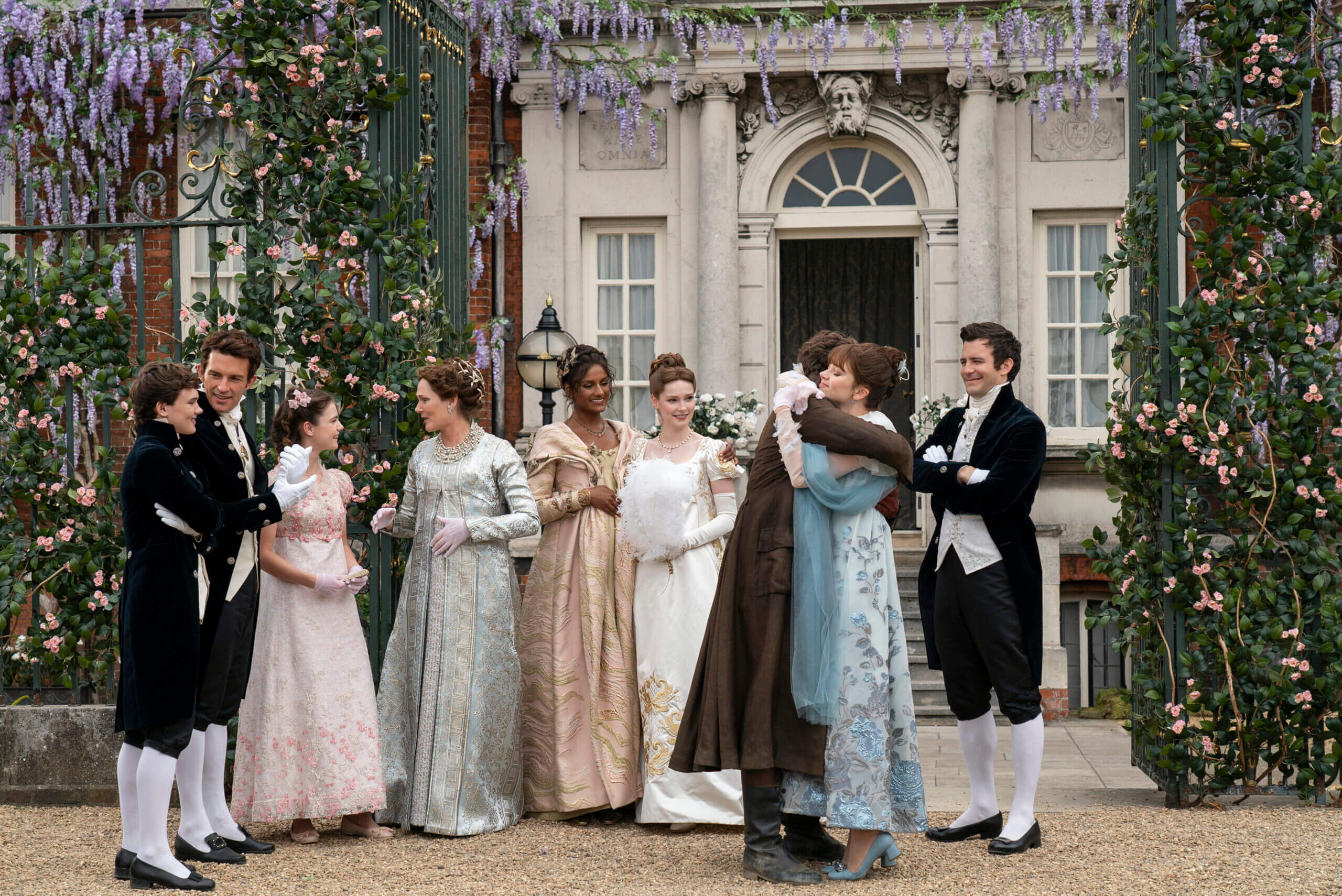
It is the clearest case of how a screen can rewrite a wardrobe: “Bridgerton” debuted on Netflix in late 2020, with the world shut indoors and a huge need for escape. The series, based on Julia Quinn’s novels, takes early nineteenth-century England and reinterprets it in a pop key: candy-colored palettes, tiaras, a deliberately inclusive cast and a soundtrack that turns Ariana Grande and Billie Eilish into string quartets. The regencycore that emerged is a set of recognizable signs: empire-line high waists, puff sleeves, bateau necklines, pastel ribbons and embroidery, pearls, long gloves, fans, hair clips… And then the corset, already in orbit for some time, but here consecrated as a garment to wear over clothes rather than hide beneath them.
The phenomenon, however, is not a Netflix invention. The Regency vein has run through culture for centuries: just think of Jane Austen’s “Pride and Prejudice” and “Emma” and their most iconic adaptations. “Bridgerton,” though, went a step further: it made the style of the era desirable and, above all, wearable. The fashion houses were quick to notice: the romantic, slightly gothic sensibility of designers such as Simone Rocha, Erdem or Molly Goddard has long been in dialogue with this vocabulary of volumes, tulle and tailored details. Fast fashion did the rest, filling every collection with high-waisted dresses and voluminous sleeves. We are willing to venture that “costume” regencycore will pass, but part of its influence will still be found in future wardrobes.
Dark academia: the university of secrets
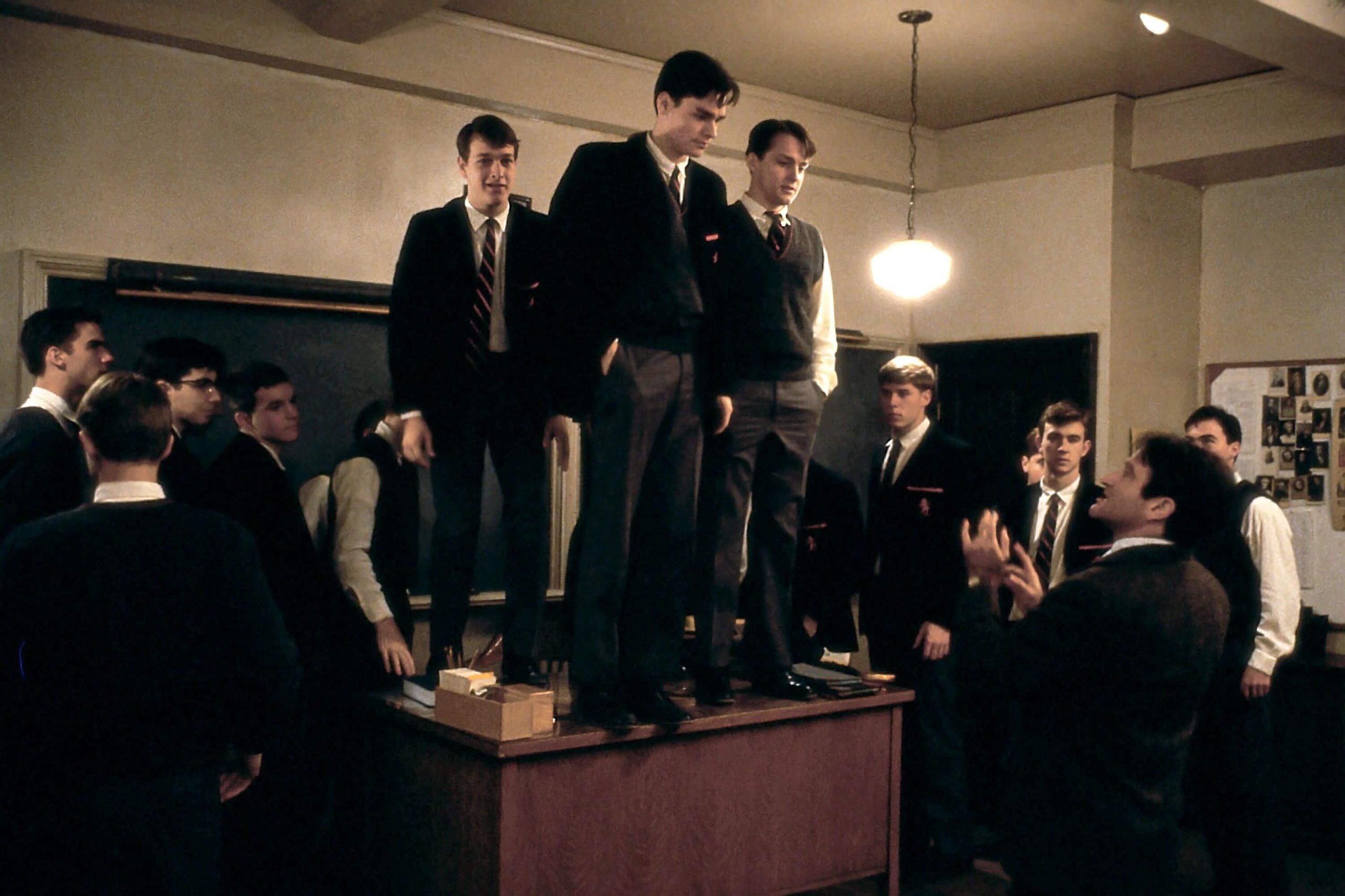
If regencycore is light and sugar, dark academia is shadow and ink. The term was already circulating on Tumblr in the mid-2010s, but it exploded between 2020 and 2021, when lockdown pushed millions of people toward books, libraries (even if only imagined) and piles of volumes on the nightstand. The foundational text, in the collective imagination, is Donna Tartt’s “The Secret History”: a group of classics students at a Vermont college, obsessed with ancient Greek, with beauty and with a murder that shatters their equilibrium. Alongside it are other by-now canonical references, such as the film “Dead Poets Society” (1989) with its carpe diem, and M.L. Rio’s “If We Were Villains,” much loved on BookTok.
Aesthetically, it is a library wardrobe: tweed blazers, vests, cardigans, turtlenecks, pleated skirts, collared shirts, loafers and Oxfords, long coats, plaid scarves. The palette is made of brown, forest green, burgundy, cream and black, while the accessories are scholarly: worn-leather crossbody bags, round glasses, a fountain pen. Ralph Lauren’s preppy look, Chanel’s tweed, and the school uniform reinterpreted by Miu Miu and Prada all tell the same story of fascination: the uniform as identity, culture as status. The legacy is twofold: on one hand, an intelligent wardrobe, made of pieces that existed before and will continue to exist after; on the other, a cultural phenomenon: dark academia has brought reading, the classics and independent bookshops back into fashion, albeit in a romanticized version. With a paradox: the aesthetic celebrates intellectual depth, at the risk of reducing it to décor.
Cottagecore: the countryside lockdown, even in the city
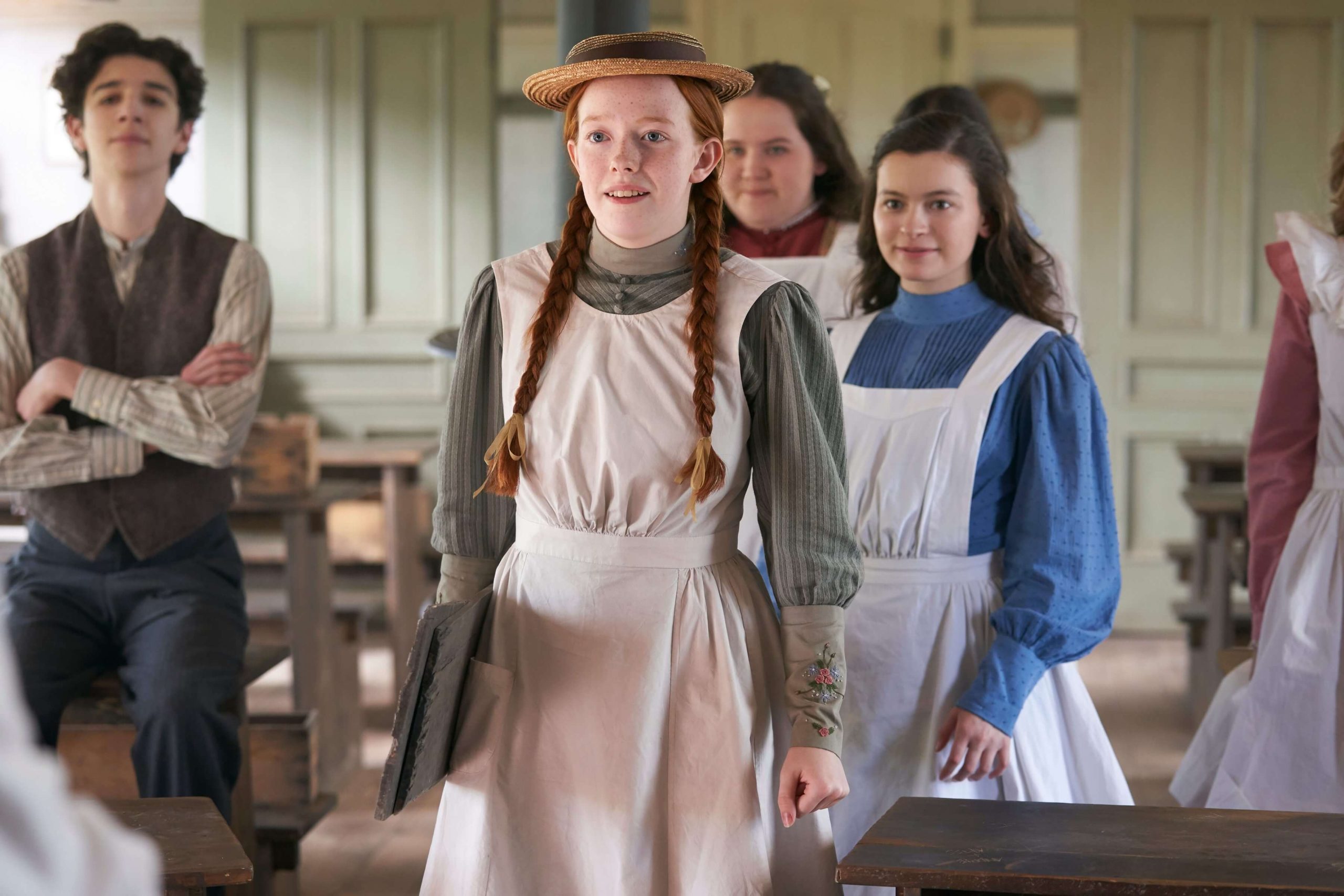
If dark academia is the library, cottagecore is the meadow. The term has been around on Tumblr since 2018, but the peak came in 2020, when millions of people shut indoors dreamed of sourdough bread, gardens and a slow life. The imagery is literary and pictorial: “Little Women,” “Anne of Green Gables” (relaunched by the Netflix series “Anne with an E”), Pre-Raphaelite paintings… Pop culture also gave it an enormous boost, starting with Taylor Swift’s album “Folklore.” The wardrobe here is made of dresses with puff sleeves and high waists, lace collars, aprons, floral prints, straw baskets and knee socks, with a single garment reigning supreme: Lirika Matoshi’s strawberry dress. Nostalgia is more evident here than elsewhere, and also more selective: the countryside of cottagecore has no toil, mud or loneliness. Its characteristic stylistic elements, moreover, have already merged into regencycore, confirming that these labels constantly overlap.
Coastal grandmother and quiet luxury: elegance that doesn’t need a logo
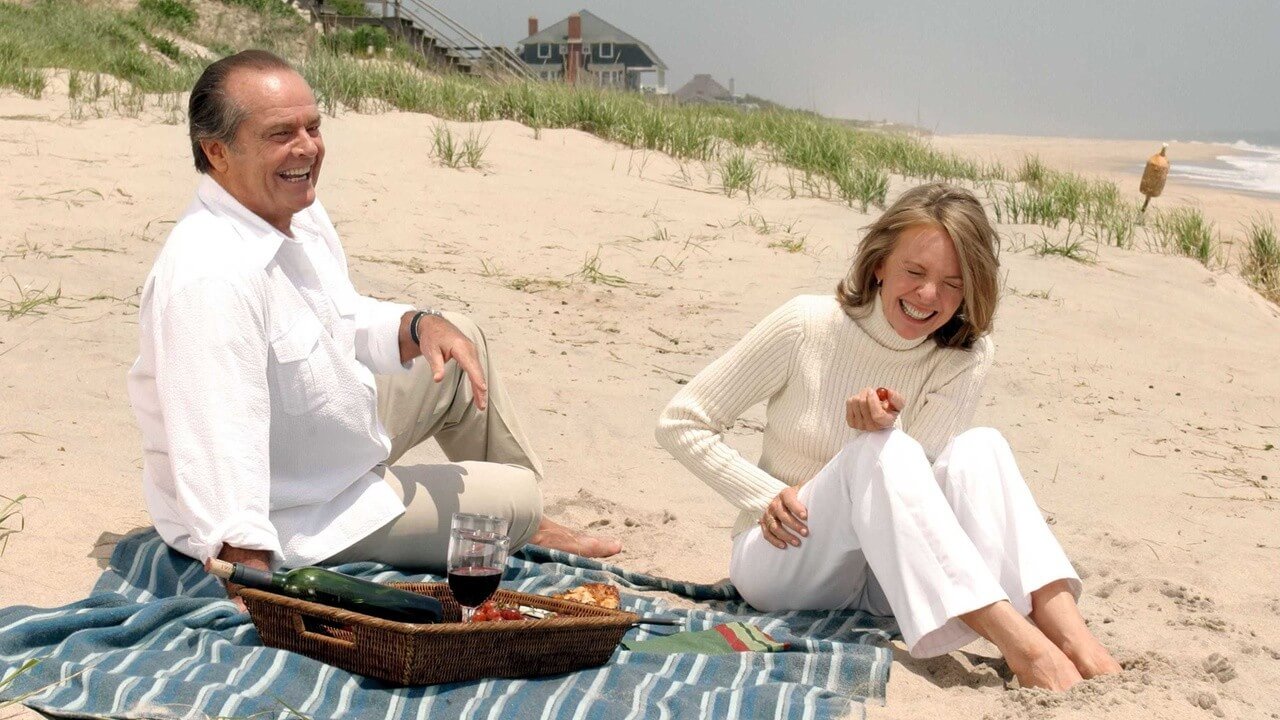
More recent, and perhaps more surprising, is the coastal grandmother. It was named in March 2022 by the creator Lex Nicoleta on TikTok, who described the style of a mature, elegant and relaxed woman, with a house by the sea, a glass of white wine in hand and a basket of freshly picked flowers at her feet. The reference is not a single series but an entire cinematic universe, that of Nancy Meyers’s films: think of “Something’s Gotta Give” (2003), with Diane Keaton in the whitest of kitchens in a Hamptons house, and “The Holiday” (2006). The constant here is the adult woman who lives, works and loves without apology, and Diane Keaton, with her hats, vests and oversized shirts, is the absolute muse. The wardrobe is all about subtraction: linen and cotton in white, ecru, light blue and beige, oversized shirts, wide trousers, cashmere knotted over the shoulders, straw hats, loafers or flat sandals, delicate jewelry and pearls. For us Italians, all this has a familiar flavor, because it is the American version of what on the Riviera or the Amalfi Coast is simply called “holiday style”: the lady in white linen, the hat, the coffee on the terrace. Perhaps for this reason it is the most solid trend, because it is grafted onto an idea of quiet luxury that has found new fortune with the collections of Zegna, Loro Piana and Brunello Cucinelli. But we also recognize a cultural merit in it: for once, maturity is the aesthetic goal, not the problem to be hidden.
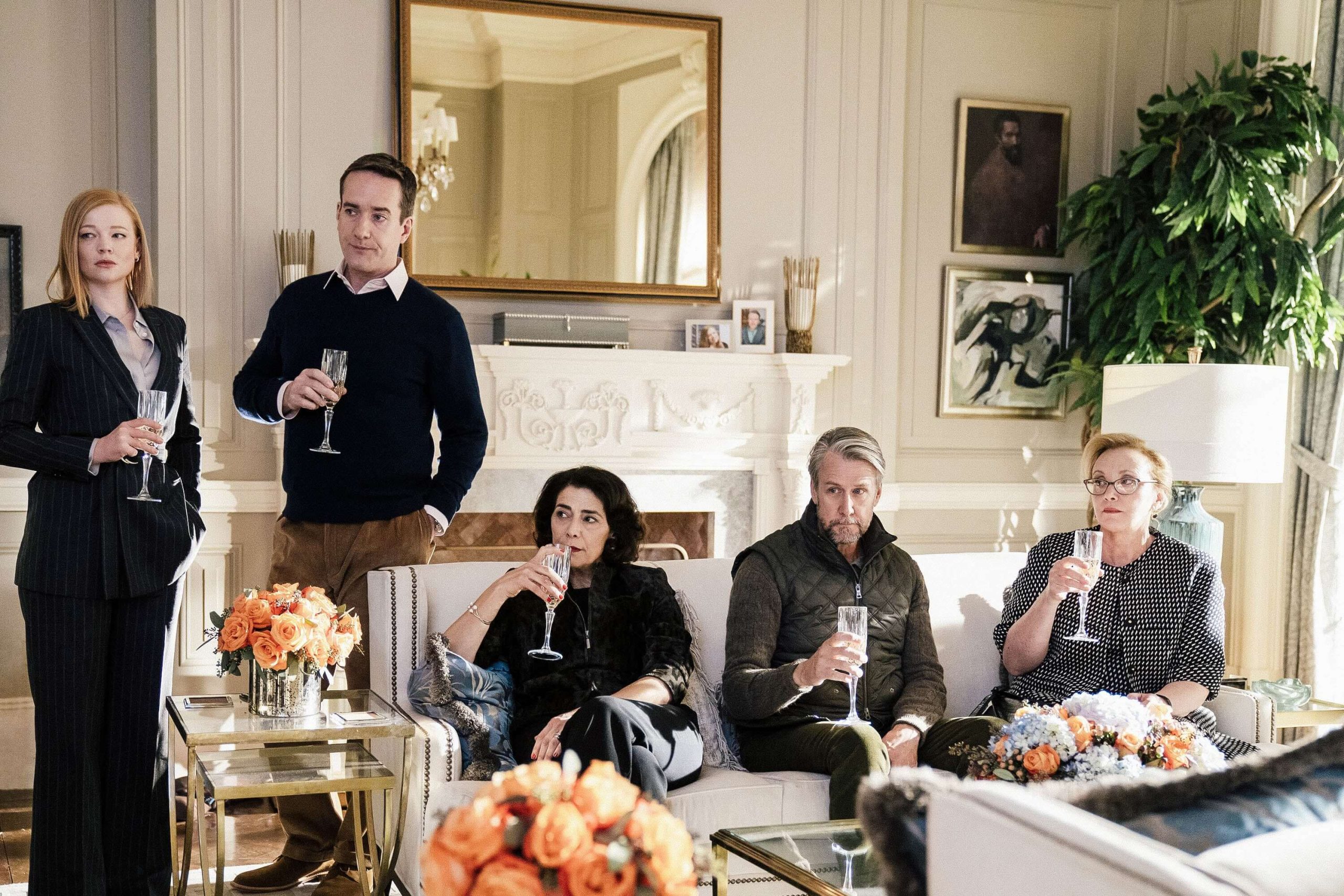
The coastal grandmother falls under the broader label of quiet luxury, which exploded with “Succession” (2018–2023): the Roys wear no logos, but camel-colored cashmere and caps that cost as much as a salary. The imagery, however, is much older: “The Great Gatsby” has been telling it for a century (the 1974 film had costumes by Ralph Lauren), while “The Talented Mr. Ripley,” from Patricia Highsmith’s novel, bequeathed the Riviera, linen and loafers without socks. Old money thus becomes the other face of dark academia: not the love of culture, but the privilege that guards it. And there is a paradox: the aesthetic of discretion has become as visible as the others, because dressing as if there were nothing to show is now a sign of belonging. Hence an uncomfortable question: do we want to imitate the style, or the wealth that makes it credible?
Hallyu and K-pop: when the aesthetic is already in the shops
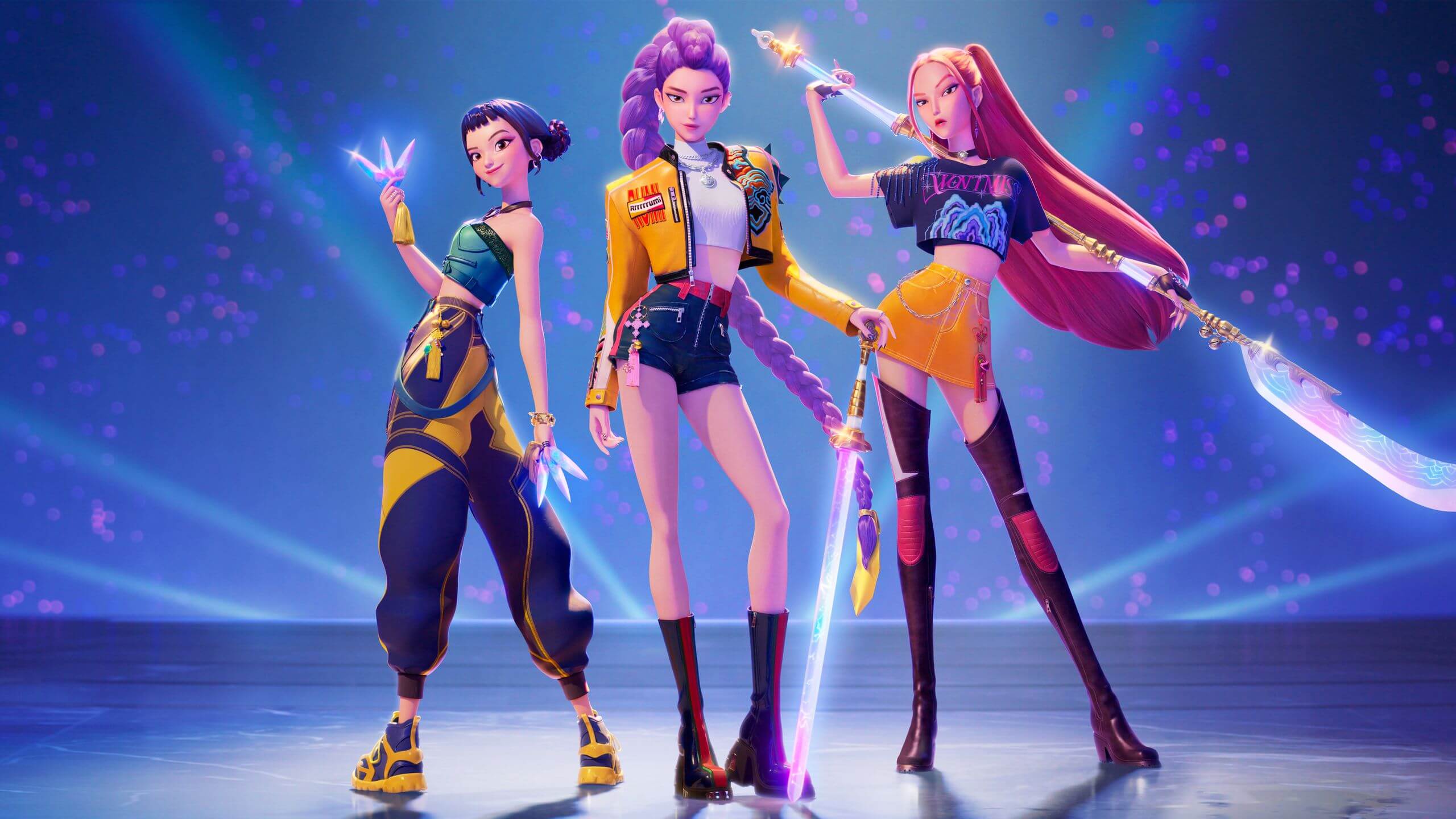
Up to here, the imagery came from the past. With the Korean cultural wave, the Hallyu, the mechanism changes: the aesthetic is born in the present, already ready to be bought. In K-dramas such as “Crash Landing on You” or “Business Proposal,” what the characters wear, eat and use is often on sale, and fans know it. “Squid Game” provided the proof: the green tracksuits and white Vans became Halloween costumes within a few weeks. It is a hyper-curated present, in which it is hard to say where the story ends and the shop window begins. K-pop is its most powerful engine: idols are living mannequins, their stage outfits end up in shopping carts within hours, and every comeback is also a collection.
The most recent and interesting case is “KPop Demon Hunters,” a Netflix animated film released in summer 2025 that within a few weeks became one of the most-watched titles in the platform’s history. Its success is explained not only by the plot, but also by the precise aesthetic that makes Korean culture “exportable.” In the details one recognizes the traditional gat hat, the norigae ornaments, the tiger and the magpie inspired by Korean folk painting, and the reference to the mythology of the saja, the messengers of death. Not to mention Seoul, its markets and its street food, treated as characters. For fashion, the result is something a wardrobe cannot invent: a complete, immediately wearable imagery made of saturated colors, bold accessories and streetwear looks. What remains? Probably, more than an outfit, a precedent: proof that an Asian story doesn’t need to pass through a Western filter to become a global aesthetic.
Anime and manga: the aesthetic born on the drawn page

If Korea is the most recent pipeline, Japan is the oldest reservoir. Anime and manga have taught the world that a wardrobe can be drawn before it is sewn, and that a character can be a style model as much as an actor. Think of the Japanese school uniform, the seifuku, made immortal by “Sailor Moon,” which converses from afar with the uniforms of dark academia and the pleated skirts of the runways. Harajuku street fashion (lolita, gyaru, decora) has given shape to subcultures where getting dressed is an almost theatrical act of belonging, while cosplay has turned fidelity to a character into a global creative practice, somewhere between artisanal tailoring and performance.
Recent examples are numerous: Akira’s red jacket is a classic of manga-inspired clothing, the checkered pattern of Tanjiro’s haori in “Demon Slayer” has become a fabric recognizable at first glance, and mass-market brands like Uniqlo, with collections dedicated to manga and anime, have brought these signs into everyday wardrobes, while luxury houses like Loewe have collaborated, for example, with Studio Ghibli. And it is precisely Ghibli that bridges to the rest of this discussion: the meadows, the wooden kitchens, the lovingly drawn meals are cottagecore avant la lettre. The nostalgia for slow time that unites Totoro and the lockdown trends shows that aesthetics do not have a single homeland.
What do these worlds have in common?
- They offer a story to wear: a tweed blazer is a tweed blazer, but a tweed blazer together with an Oxford classroom, a dangerous friendship and a Greek text is an identity.
- They are (almost always) nostalgic: many look to an idealized past, like Regency England, and clean it of whatever was uncomfortable. Regencycore has the corsets but not the inequalities of the era; dark academia has the books but not the toil of exams. The exceptions are K-pop and the most recent Asian stories, which look to the present or the future.
- They spread mostly through images: algorithms reward what can be recognized in a second, and aesthetics are made for exactly this.
- They are increasingly global: for decades the dominant imagery was Anglo-Saxon, whereas today the flow is multidirectional: Korea and Japan are no longer “exoticisms” but leading sources, and an animated film can count as much as a novel.
The risk, of course, is real. The microtrend cycle has shortened drastically: an aesthetic rises, saturates the feed, is replicated at rock-bottom prices and deflates within a few months. In this sense, many labels are already old, adding to the gigantic problem of consumerism and fast fashion. But there is a second level: if you look beneath the label, what survives is surprisingly stable; think of the corset from regencycore, tweed from dark academia, minimal elegance from the coastal grandmother, or the strength of the drawn line from anime and manga. The label is short-lived, the archetype remains. Then there is the cultural legacy, harder to measure but perhaps more interesting: these trends, in fact, have led thousands of people, the very young in particular, toward Donna Tartt, Jane Austen, Evelyn Waugh, Nancy Meyers’s films and, on the other side of the world, toward the music, comics and animated cinema of East Asia. If a series makes us discover a classic, or a film leads us to listen to K-pop for the first time, then fashion has, for once, done culture a good service.


What do you think?