
In “Victorian Psycho”, Virginia Feito twists the conventions of Victorian literature into something grotesque, darkly comic, and disturbingly contemporary. What begins as a seemingly familiar gothic setting quickly becomes an absurd descent into violence, death, and social hypocrisy, guided by the unforgettable voice of Miss Winnifred Notty. In our conversation, Virginia reflects on the origins of the novel, the allure of Victorian horror, the role of fear, femininity, and darkness, and the unsettling pleasure of writing from inside a psychopath’s mind.
“Victorian Psycho” is a sort of absurd journey, a “perfect” Christmas story. How did this idea come about? Do you remember if there was a specific moment that sparked it, or is it one of those stories you always wanted to tell?
No, this one was specific. It all came from the voice of the character – the tone of the book came with a sentence from the character that I thought of, which is still in the book at the beginning, when she says that her breasts are moving in her corset, but in a very specific way. From there I understood what the tone of the novel was going to be and how it was going to be a bit absurd and how the character was also kind of aggressive, sarcastic, funny and “Fleabag-ish”.
The whole story was built around that sentence. And then I gave her a job as a governess and a problem as a psychopath.
I’ve always loved Victorian literature, but I never thought I would write anything set in Victorian times, maybe because it felt like too much research. But this time, I really wanted to go into the character, into the voice.
In the prologue you write that death is everywhere, in everything. Even in living things?
Well, yeah. Think of dead skin, for example. Think of viruses, or the microbes in our skin. There’s death everywhere. Of course, there was more death in the Victorian era, they died when they were 20, if they were lucky. But yeah, to answer your question, I absolutely think there’s death in living things.
Do you believe there is also the death of hope, metaphorically, these days?
Yeah, there’s a lot of death of any kind everywhere. Plus, I’m a hypochondriac, so I think I could be dying at any minute all the time.
You talk about the deadly nature of hair, as well, in the book, I found that very interesting.
Oh, yeah, the wig part. Yeah, if you think about it, a wig is cut-off (therefore dead) hair.
You know, I have a friend with a teeth condition: basically, her tooth fell once, and so she had to have flesh put in, and apparently it was a dead person’s flesh in her mouth because she didn’t have enough of her own, I guess, or something like that. This sounds scary to me, but obviously Victorian times were scarier, you know what I mean. They had arsenic everywhere, for example, so even the dresses they wore could threaten to kill them. I wouldn’t have made it back then. And lots of babies died all the time, too.
Yes, in the book you also describe how babies were thrown away in the fire.
Yeah, in the fire, in the rivers, in the trains. There was a problem with infanticide, because in the big cities the mothers couldn’t be single mothers as it was frowned upon, but they had to work if they wanted to live, so either they kept the child hidden, or they killed them. And then if they didn’t have money for the funeral, they would put their baby in another person’s coffin.
“There was a problem with infanticide, because in the big cities the mothers couldn’t be single mothers as it was frowned upon, but they had to work if they wanted to live”
Absurd. Did you find this out specifically from researching for the book?
Yes, although when I was in university I had already read (and loved) “The Suspicions of Mr. Whicher”, which is about the Constance Kent trial where they found a dead baby with its neck slashed in the toilet. Eventually her sister confessed, although, I’m not sure that’s all true and fair because I believe the brother helped her get rid of the baby and he got away with it and she didn’t, but whatever. We’ll never know. Anyway, that struck me a lot, the image of a dead baby with their neck cut in the toilet. It’s all very epic, isn’t it? But also really silly at the same time.
I kept reading all of this and I was getting more and more in a weird mood and then I just started laughing because I think it’s ridiculous, all those stories are. I read, for example, about a woman who strangled her child and put him in a box and sent him to her sister in the country with the purpose of having her bury him. But the sister didn’t know, so she opened the box and there was a dead baby in it, and so she called the police who found and accused the mother and hanged her soon after. I find it so funny.
In the first chapter the protagonist describes Ensor House as a face with arched eyebrows and a double chin. I really liked this idea of giving a house a face. How would you describe the face of your own home?
Oh, interesting. It’s very posh: she has chai lattes and she wears yoga pants, I think. But then she has a detail that is cool, something that’s a little different. But she’s bored and she has a lot of money. I think that’s what my building is like.
From the beginning, we understand that everyone in the house will die, but I don’t know why, when reading, I kept thinking it would be something happening only inside her mind, in her imagination. Was this your intent, to try and make us believe that everything was only in Winnifred’s imagination?
Absolutely. I wanted you not to trust her, maybe. Sometimes she says things and then she’s like, “No, it was a joke”. And sometimes it’s like, “There’s no way that could possibly happen and she would have been caught”. I wanted the reader to wonder, “Is it really happening?”. And I also wanted to mix it up so that when it finally maybe does happen, you’re like, “Oh, now I think it maybe has happened”.
Miss Notty says she feels no fear, and that living with fear would be the worst thing in the world. Do you think this is part of why she manages to be the way she is? Because she’s unable to feel certain emotions?
Absolutely. Fear of consequences is a big part of why we don’t kill each other all the time. I think we would all have killed probably our children and our parents many times, if we weren’t afraid. So, I think fear is a big part of why she is the way she is. The lack of fear, for me, as someone who is afraid of everything, is very liberating.
She follows her intrusive thoughts.
Exactly. She thinks it’s a good idea to follow them. She doesn’t care, which is very joyful. But she’s also hurting people.
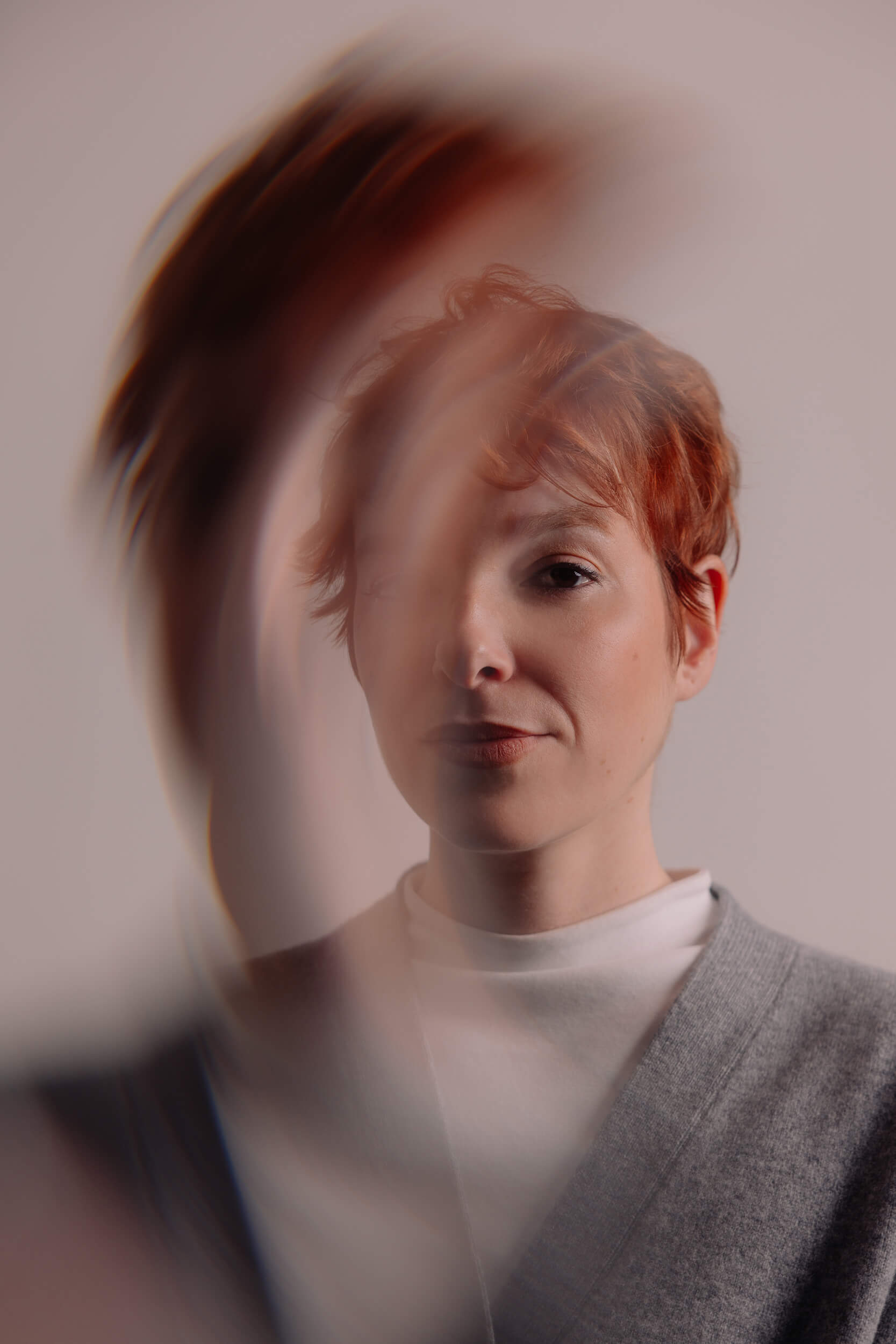
“The lack of fear, for me, as someone who is afraid of everything, is very liberating.”
There’s a passage in the book that made me think a lot – it’s when she says there’s no point in worrying about people when they’re young, if no one is going to worry about them anymore once they grow up, as if kids are capable of everything and automatically fine. I find that very true; many times, I think there’s this feeling of being a bit abandoned, by the society specifically. Have you ever felt like this in any way?
Yes. When I reached a certain age and realized I was no longer a child. People talked to me differently and I felt like it was over. And now, seeing children get all the attention, there’s a part of me that’s annoyed. Like, “What about me?”. It took two hours for me to put makeup on this morning – do you like my face? And I think I’ll feel it even more as an older woman with no children. Who’s going to love me? Who’s going to pay for my residence? For my funeral? I want an expensive one [laughs].
The protagonist keeps talking about this Darkness inside her, and we almost perceive it as the real main character of the book. Do you think that, in one way or another and with different nuances, we all carry this darkness within us?
Yeah, sure. It depends how you define it, though. It can be addiction, destructive habits, negative traits we try to control, when sometimes they control us. Obviously, if you’re a psychopath who likes killing children, that’s extreme. But it can also be sugar, selfishness, neglect. Yeah, we all have darkness within.

Miss Notty is brilliant, a manipulator, charismatic, but also fragile. And she kind of makes us, readers feel uncomfortable. Is there a part or aspect of her that made you feel uncomfortable to write about?
Yeah. Writing violence in first person. You can’t be shy and that was hard. Bodies do awful things when murdered and I don’t like that. The humor helped, though. And I think she would use humor to manipulate the reader.
Are there characters that changed significantly through the writing process or compared to the first writing phase? Anyone who didn’t want to “act like you wanted them to act”?
Yes, Drusilla. She was totally different at first. No arc, she was boring – I realized I was treating her like we always treat teenage girls. But teenage girls are scary, complicated, manipulative. So, I rewrote her completely. She changed the most.
Miss Notty is definitely a feminist, the only one in that house, at least. I really liked the passage where she talks about how men always try not to talk about violence in front of women because it might disturb them, when in reality women are the ones who bleed and suffer, even during childbirth. Is there a specific message you wanted to convey by tackling these themes?
I don’t think Miss Notty cares about feminism. I don’t think she’s doing it for women. It’s accidental. The passage about men avoiding talking about violence in front of women, even though women experience physical violence constantly, came from her confusion about contradictory social rules. Women bleed, suffer, give birth, but are considered too delicate. That’s nonsense. I was also trying to convince the reader that these body horrors are real and traumatic. Menstruation has been traumatic for me since I was eleven – we should all go to therapy for that, for instance.
If you had to describe Miss Notty in one word, if possible, what would it be?
Uninhibited. Or outrageous.

“Women bleed, suffer, give birth, but are considered too delicate. That’s nonsense.”
Are there books or authors without whom “Victorian Psycho” couldn’t exist?
“American Psycho”; Joyce Carol Oates; “The Secret Garden”, Dickens, and “Bleak House”. Especially the ending.
Did you learn anything new about yourself while writing this book?
I learned that I need to chill out with editing and criticism. I spiraled, this time, I rewrote everything dramatically, fell into depression. It hadn’t happened before. I hope not to do it again.
Last question: what’s your happy place?
My home, my apartment. Wherever my home is. I like controlling the environment, in the sense that aesthetics matter to me so much. I need my books, my couch, my TV to feel safe. That’s my happy place.

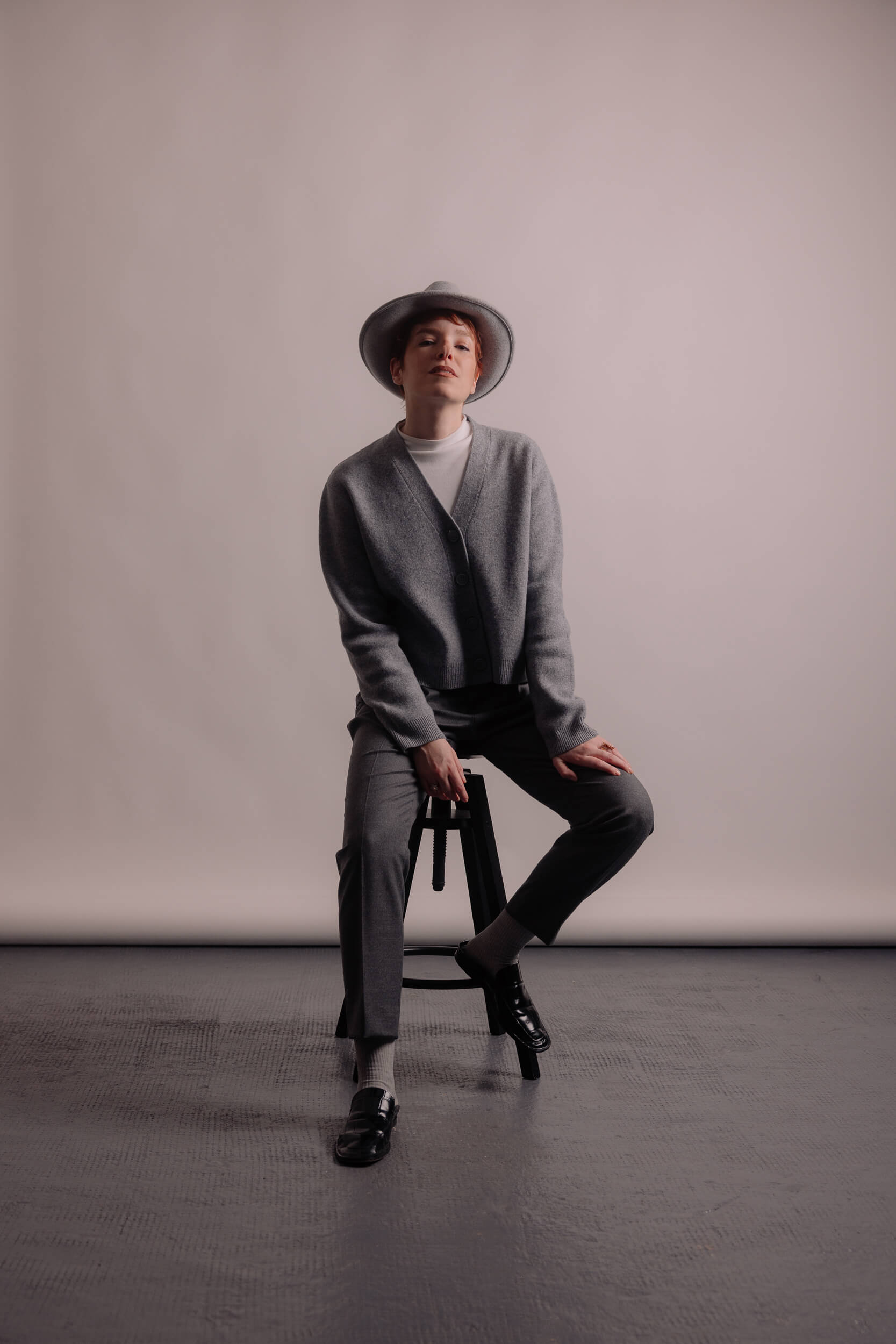
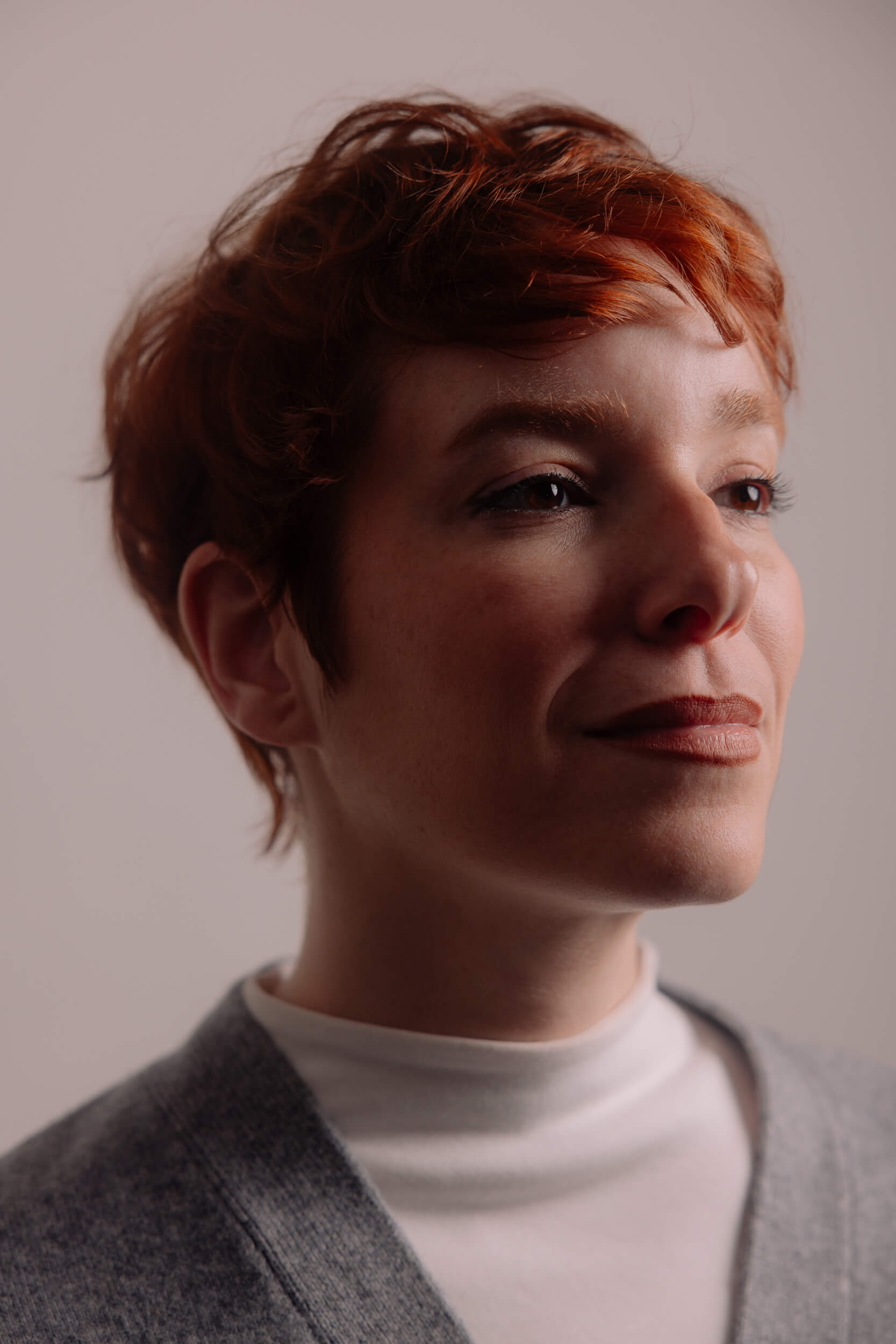
Photos by Johnny Carrano.
Thanks to Mercurio.