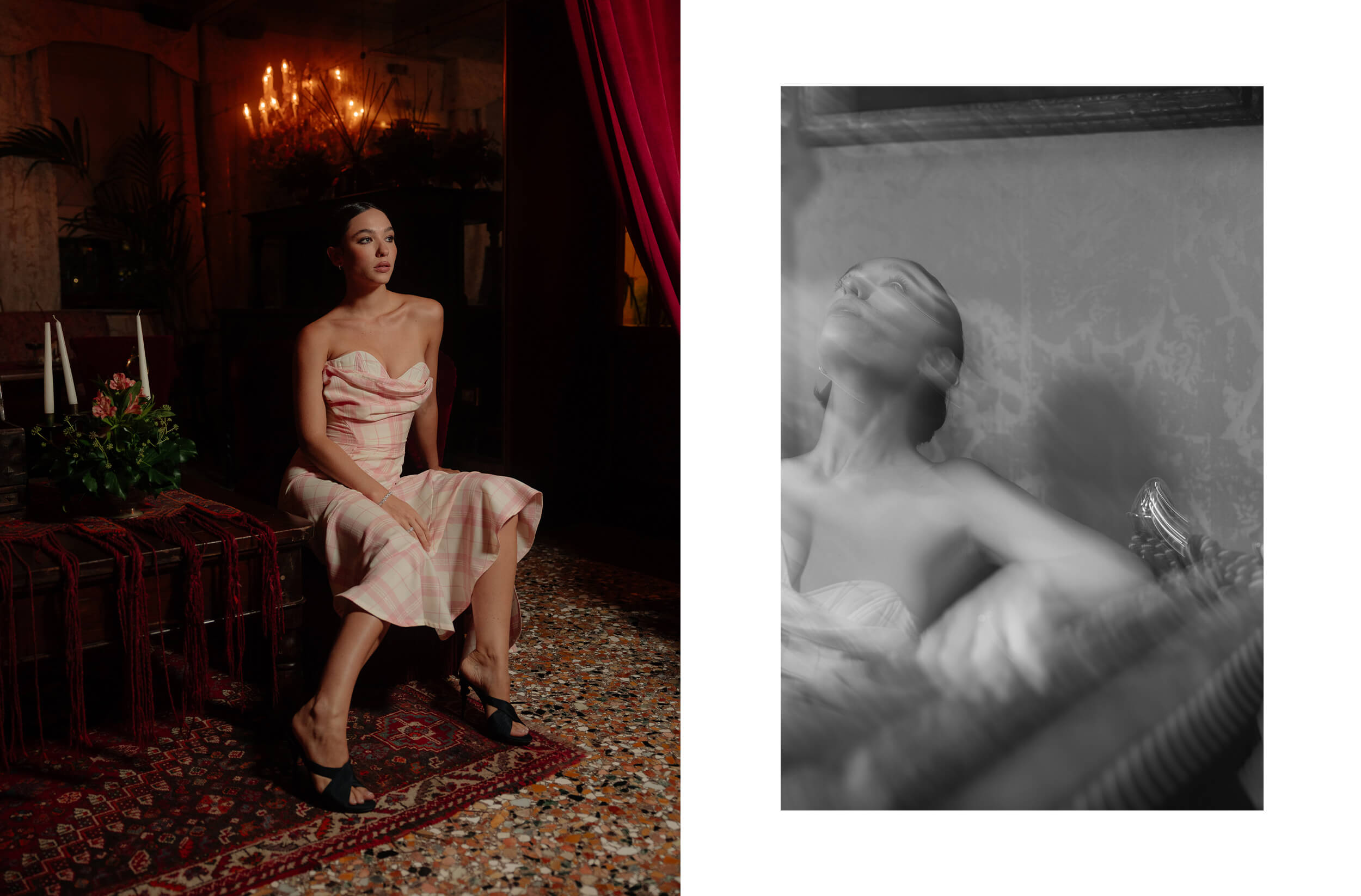
Some films end when the lights come up in the theater, and others follow you outside and sit down next to you while you go about your daily routine. “Balcanica,” which premiered at the Venice Film Festival, belongs to the second kind: it makes no noise and never raises its voice, yet it stays with you. It begins with the simplest of desires and becomes the story of a nightmare that almost none of us know: that of the Balkan route, less talked about than others because its numbers have, for years, made less of a stir. As if it were the figures that made the news, and not the people. As if freedom, for some, were not a right but something to be won at the cost of everything.
The film chooses the harder path: gentleness. Little dialogue, many silences, and a camera that, in the face of violence, seems to look away, and in doing so hands our own indifference back to us. Amid landscapes that are both boundless and claustrophobic, a limbo that seems frozen in the 1960s, there is Greta, the doctor played by Matilda De Angelis. Greta is also a little bit us: the gaze of someone who arrives from outside and at some point has to decide which side to stand on.
Matilda speaks about it with the voice of someone who has made that journey herself: she says she set her ego aside for an entire month, because only that way did she feel she could show respect for what she was portraying. She tells of a night, a single continuous shot filmed only three times, and of tears. And she tells of the question that stayed with her from beginning to end: what would I have done?
During our conversation, we talked about indifference and music, identity and dignity, and helplessness that turns into power. About what it means to protect a film for the first time as a producer, too. And about an idea that lingers like a small revolution: that the border, perhaps, should not be a line that separates us, but a place where we end up together.
I watched “Balcanica” at the Venice Film Festival, and it really struck me. It’s one of those films that stays with you long after you’ve watched it. One of the reasons is that it told me something I didn’t know: an apparently simple story, the desire to travel somewhere to play a concert, that turns into the story of a nightmare endured in pursuit of a freedom that we almost take for granted. What did you think when you first read the script?
I had a very similar reaction to yours. First of all, I was surprised that I didn’t know about the Balkan route, because it’s a route that receives less attention, less media coverage, partly for purely numerical reasons. In 2015 and 2016, it recorded the highest number of crossings, and then those numbers dropped dramatically. And in a world where these people are considered nothing more than numbers, it’s the numbers that make the news, that cause a stir. That was the first thing I noticed: the fact that I didn’t know. And whenever something catches me unprepared — not that I know everything, quite the opposite — I immediately want to learn more about it.
Then I was struck by the lightness and grace with which such a complex and delicate subject was approached. The fact that Nicola managed to do it without sentimentality, without privileging one perspective over another: the Western, white perspective of the doctor over that of Janine and her father. I felt there was such a beautiful balance. I think these stories are rarely told with the delicacy, respect, and grace that Nicola brought to this one. That was my first thought when I read the script.
That’s one of the things that struck me the most, too. Stories like this are often told through drama — understandably, because these are dramatic situations — whereas here there’s an incredible delicacy. There are so many silences, which sometimes feel even more powerful than showing violence directly. Even the camera, when certain acts of violence take place, almost seems to turn away. I felt that, in some way, it also represented our own indifference. Do you think indifference is part of the problem?
Absolutely. Obviously, it’s not the cause, it’s not the root of the problem, but it’s a consequence and, at the same time, almost like its armed escort. Historically, it’s always been this way: silence, complicity, and indifference reinforce certain phenomena. They aren’t the cause, but they can amplify them. Indifference towards migration is like pouring gasoline on a fire.
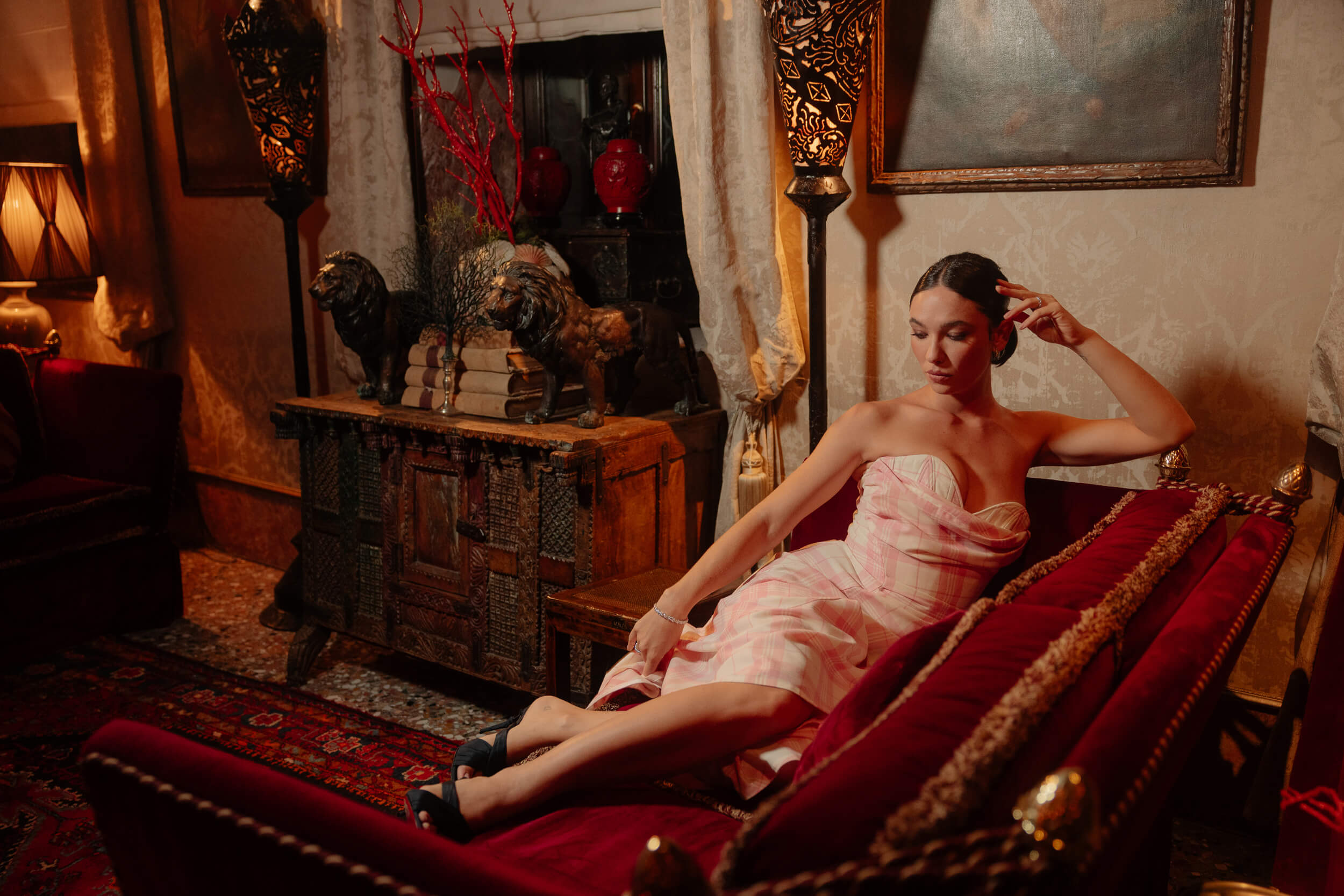
“Silence, complicity, and indifference reinforce certain phenomena. They aren’t the cause, but they can amplify them. Indifference towards migration is like pouring gasoline on a fire.”
Even the places and landscapes we see in the film seem endless, yet at the same time they give me an almost claustrophobic feeling, as though the characters were trapped in a limbo they couldn’t escape. How did you relate to these places, which almost become part of the story themselves?
The beautiful thing is that we actually filmed in those places. Nicola chose to shoot almost the entire film in a small village near the border with Montenegro, in southern Serbia. It’s a truly forgotten place, where it feels as though the world stopped sometime in the 1960s. On the one hand, it was wonderful for me, because I love being surrounded by nature. Put me somewhere where there’s nothing but nature for miles, and I’m a happy child. So it was complicated to reconcile the happiness I felt as a person being there with what those places represented within the story.
At a certain point, I managed to start looking at them through different eyes. I realized that this endless landscape, which for me represented a break from my city routine for a month of my life, could become a limbo, a kind of hell, if I were trapped there for some reason. I started seeing it that way. It wasn’t easy, because those places were beautiful, and when you put me in an uncomfortable situation, in remote places surrounded by nature, I’m actually at my happiest.
It was almost funny because people would often ask me, “Are you okay, Matilda? Are you comfortable?” And I’d think, “Guys, I’m the happiest person in the world. This is my ideal situation.” Greta, on the other hand, had to move through those same places with enormous fear and uncertainty. But nature also gives you this sense of how small you are. You really feel tiny.
And eventually, I managed to find that fear.
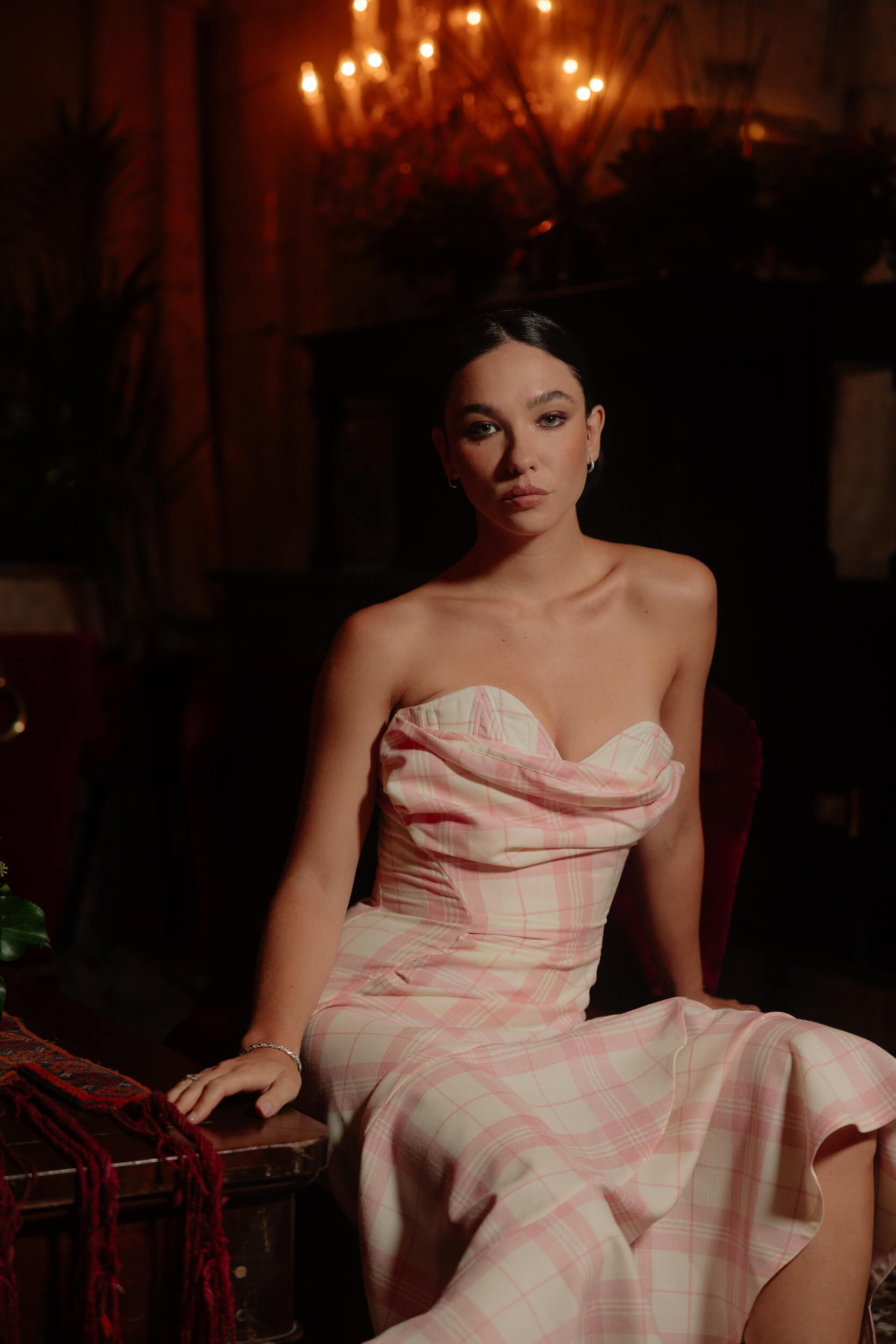
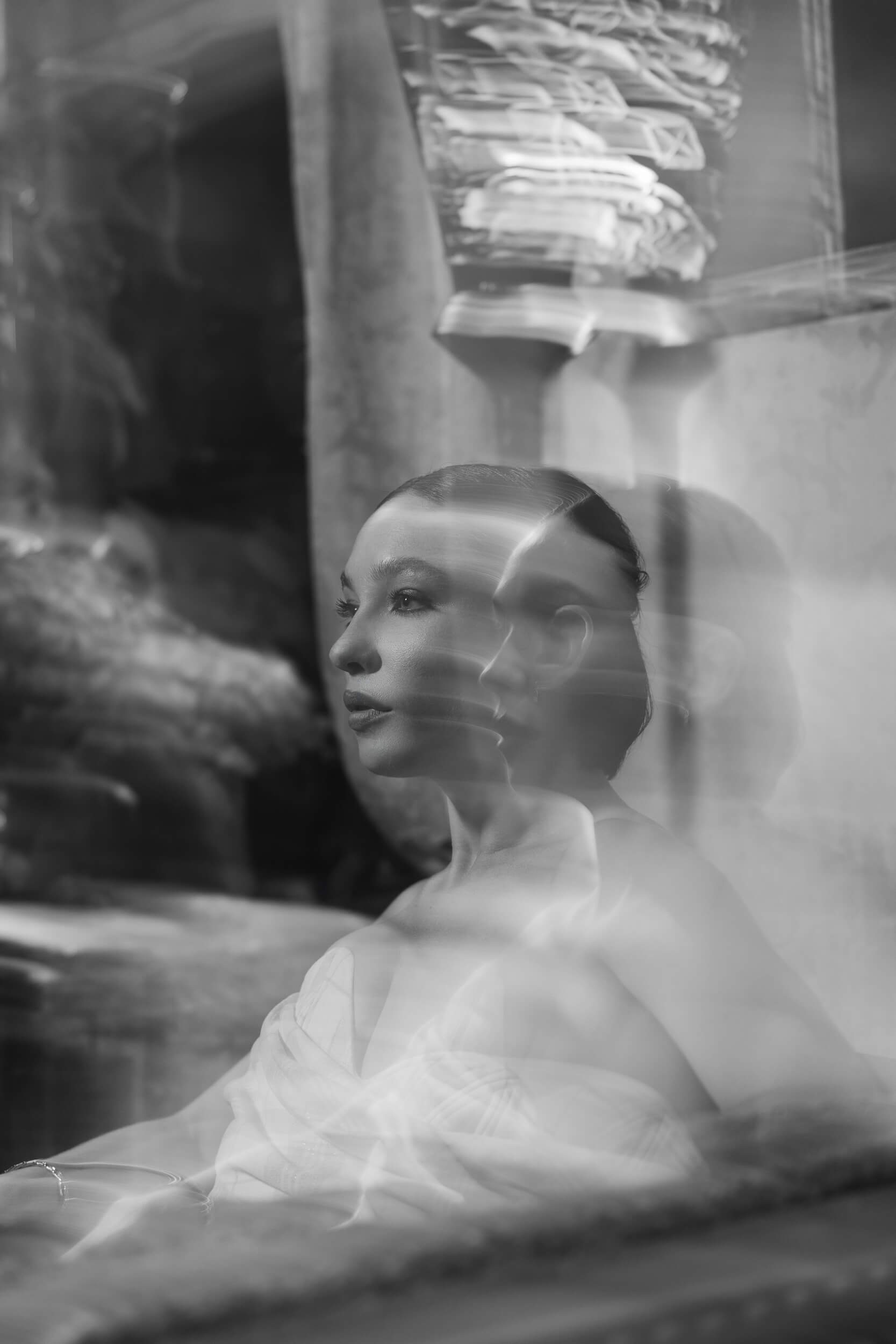
One of the main themes of the film is freedom — or perhaps, even more so, the lack of it. We see the word “Freedom” written on the walls. The protagonists aren’t simply looking for a place where they can have a better life economically, but somewhere they can go back to being who they are. And a fundamental part of their identity is music. How much of our identity do you think is connected to the things we create?
It’s a very subjective question, I realize that. But generally speaking, taking away an artist’s form of art — or even simply a creative person’s, because not all creative people are artists — is like taking away their life, their oxygen, their creative outlet. I believe we live somewhere between the creative force and the destructive force within ourselves. Sometimes one takes over the other. Without necessarily making it sound tragic, they’re two opposing forces that should exist in balance, and in some way, both are okay. But completely taking away the creative force from someone who’s used to living through it and feeding off it means depriving them of something fundamental. For some of us, that thing truly becomes part of our identity. It becomes an extension of ourselves, a way of expressing who we are. So yes, it means taking away a huge part of our identity, something we might then have to find somewhere else.
There’s a scene that really struck me: while they’re rehearsing, the father, instead of worrying about how terribly he’s feeling, gets angry because they’re not playing in time. As viewers, we’re worried about something completely different, while they return to music, to who they are.
Yes, because I think Nicola was very good at portraying the strength, the restraint, the resilience, and the determination that belong to the people who undertake this journey. Of course, we’re deeply shocked by what we see, because for us it’s almost unimaginable. Fortunately, we have a less direct relationship with death and with these kinds of tragedies, so it’s only right that they affect us so deeply. But on the other hand, there’s also a sense of pride in continuing to be alive, in continuing to be human, in continuing to fight. You hold on to what you have, because you can’t simply sink into absolute despair. I really loved that dignity, that restraint, especially in the character of the father.
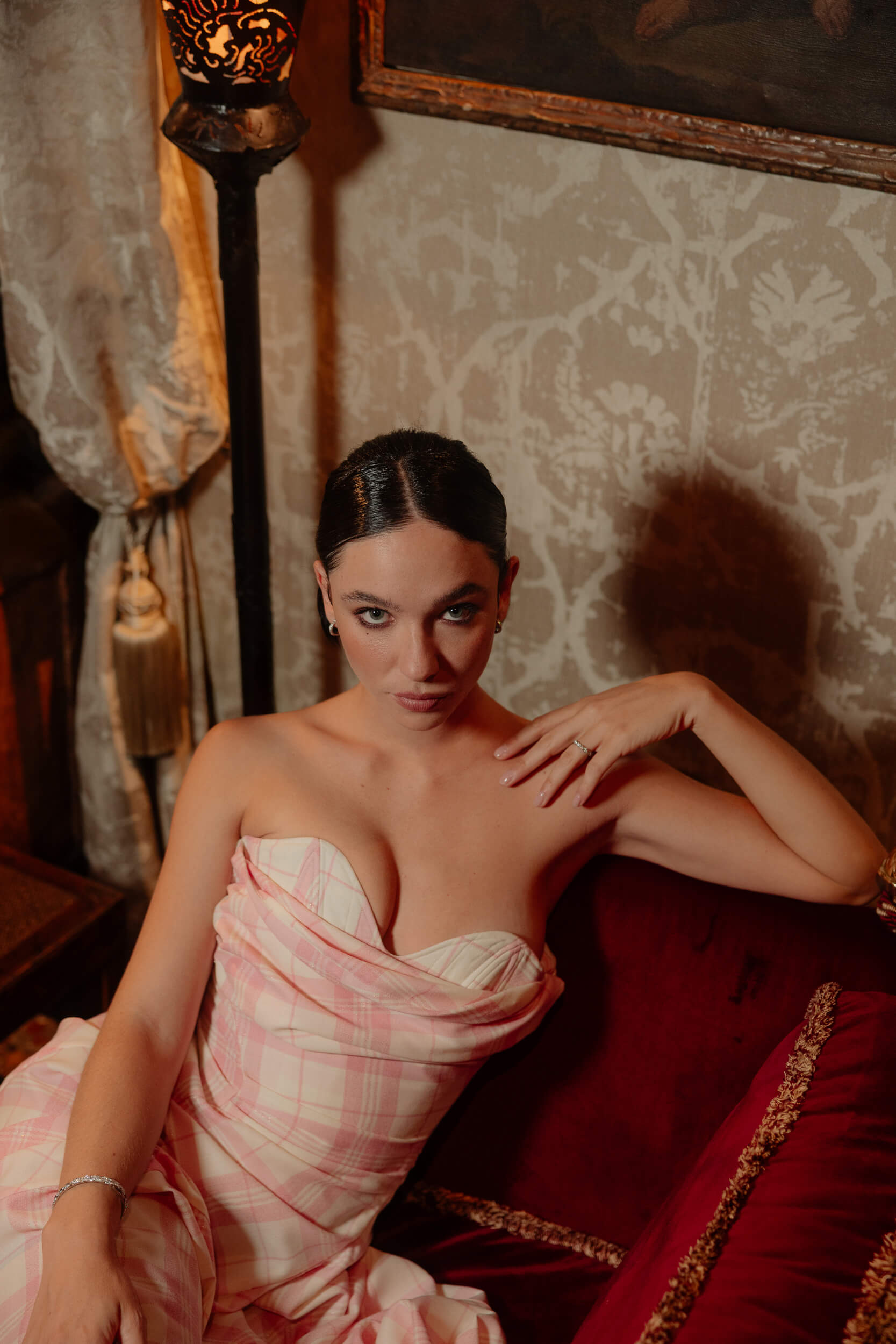
“We live somewhere between the creative and the destructive force within ourselves.”
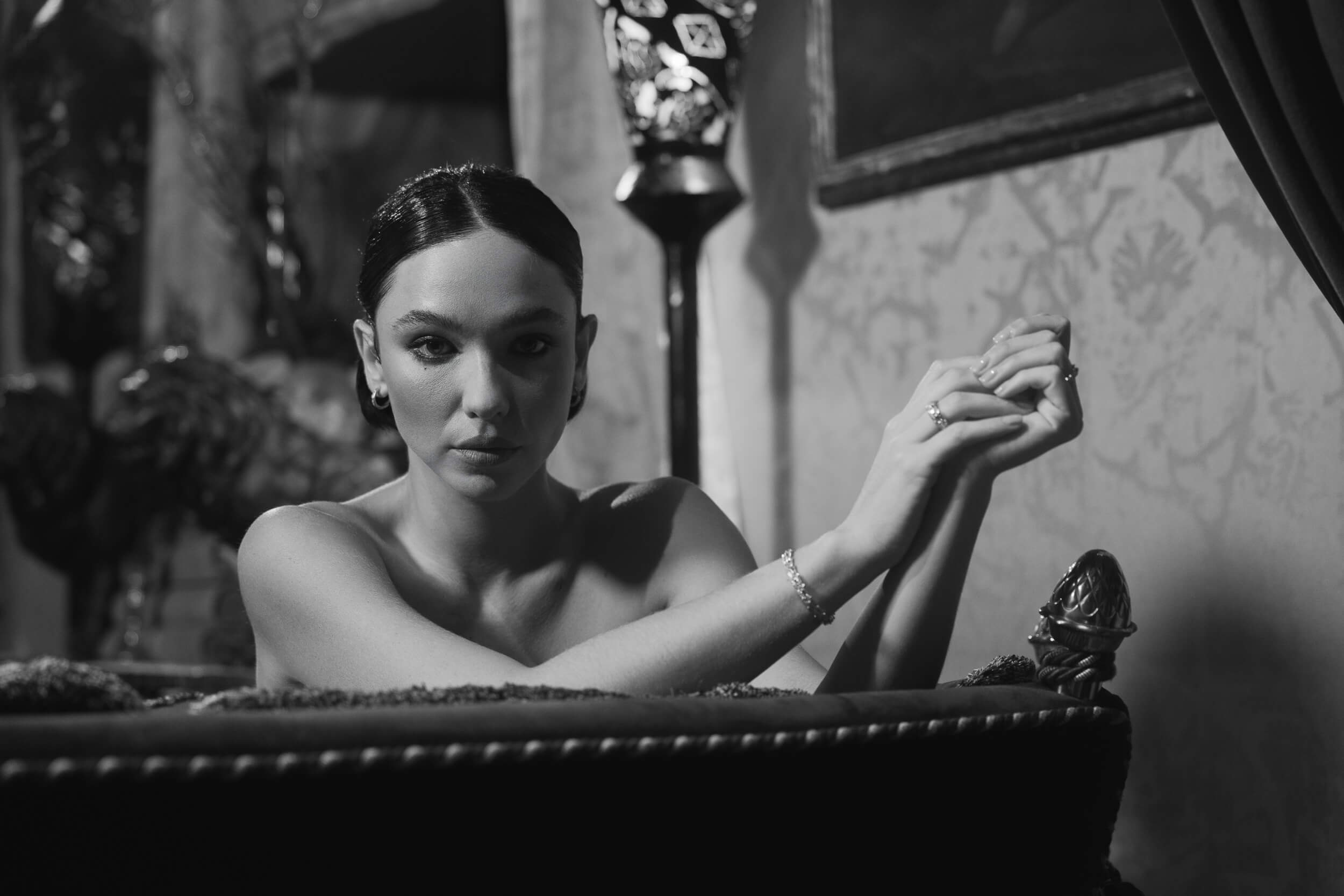
At one point, Giovanni tells Greta, “Whatever you do, don’t get attached.” Where do you think the boundary between empathy and responsibility lies? And where does Greta draw that line?
I think Greta chooses a boundary in the literary sense of that word. If we moved away from the idea of a border as an imaginary line that metaphorically divides one territory from another, and therefore some human beings from others, and instead started thinking of it as cum-finis, a place where, metaphorically, we come together as humanity, I think that would be the meaning of Greta’s boundary.
At a certain point, for her, that limit no longer exists. That line breaks, and the border becomes a place where they have to come together. Of course, in real life, someone might consider her decision completely reckless, with enormous consequences. The film ends on an unresolved note, and we have to imagine what happens next.
But I think that, metaphorically too, it was important for Nicola, and therefore for us, to ask a question: what would happen if we truly decided to act as one humanity? If we recognized others first and foremost as human beings? If the border were a place where we came together, rather than a place where we killed each other, exterminated each other, fought wars, and destroyed one another? I think Greta’s choice is very metaphorical in that sense.
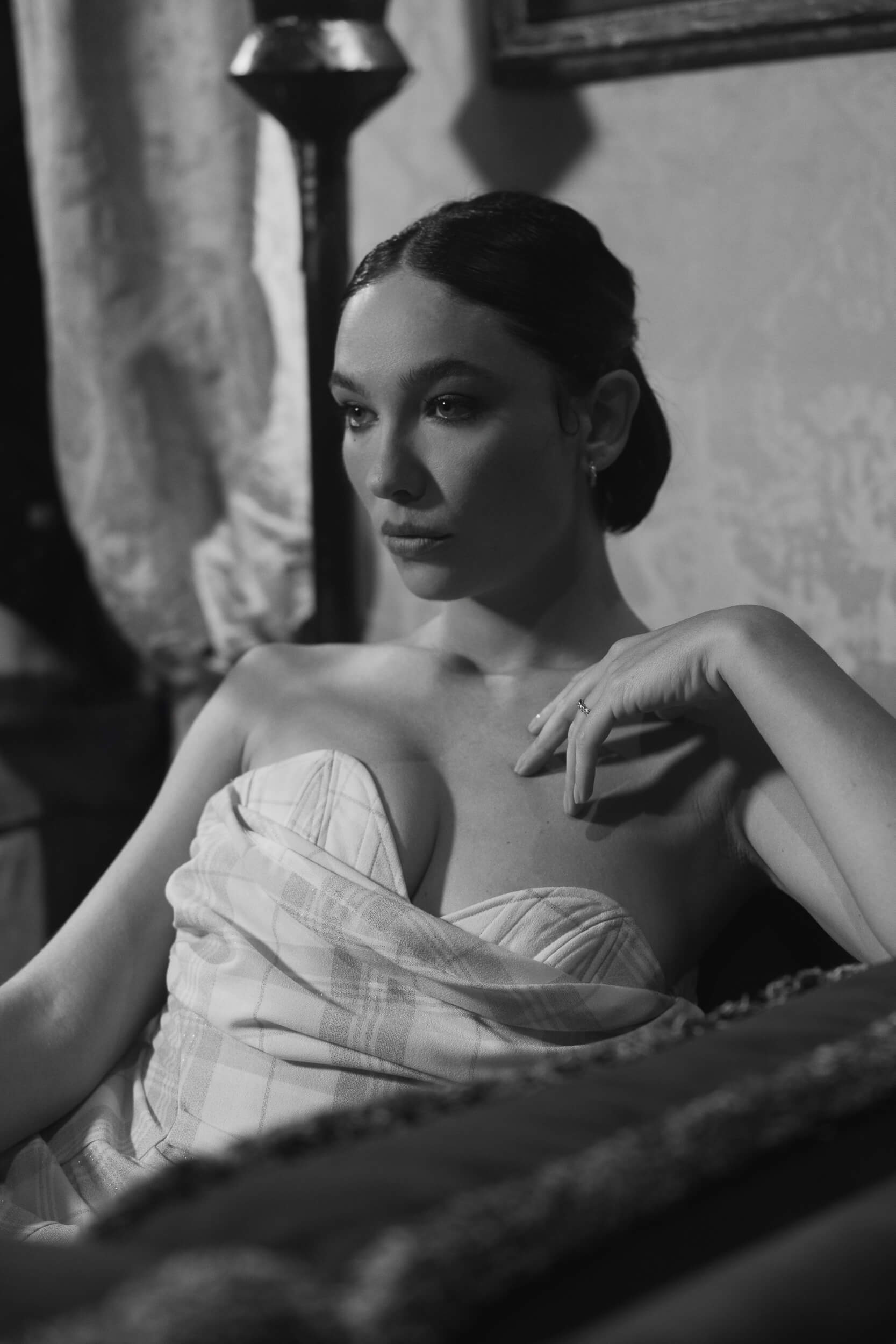
“What would happen if we truly decided to act as one humanity? If we recognized others first and foremost as human beings?”
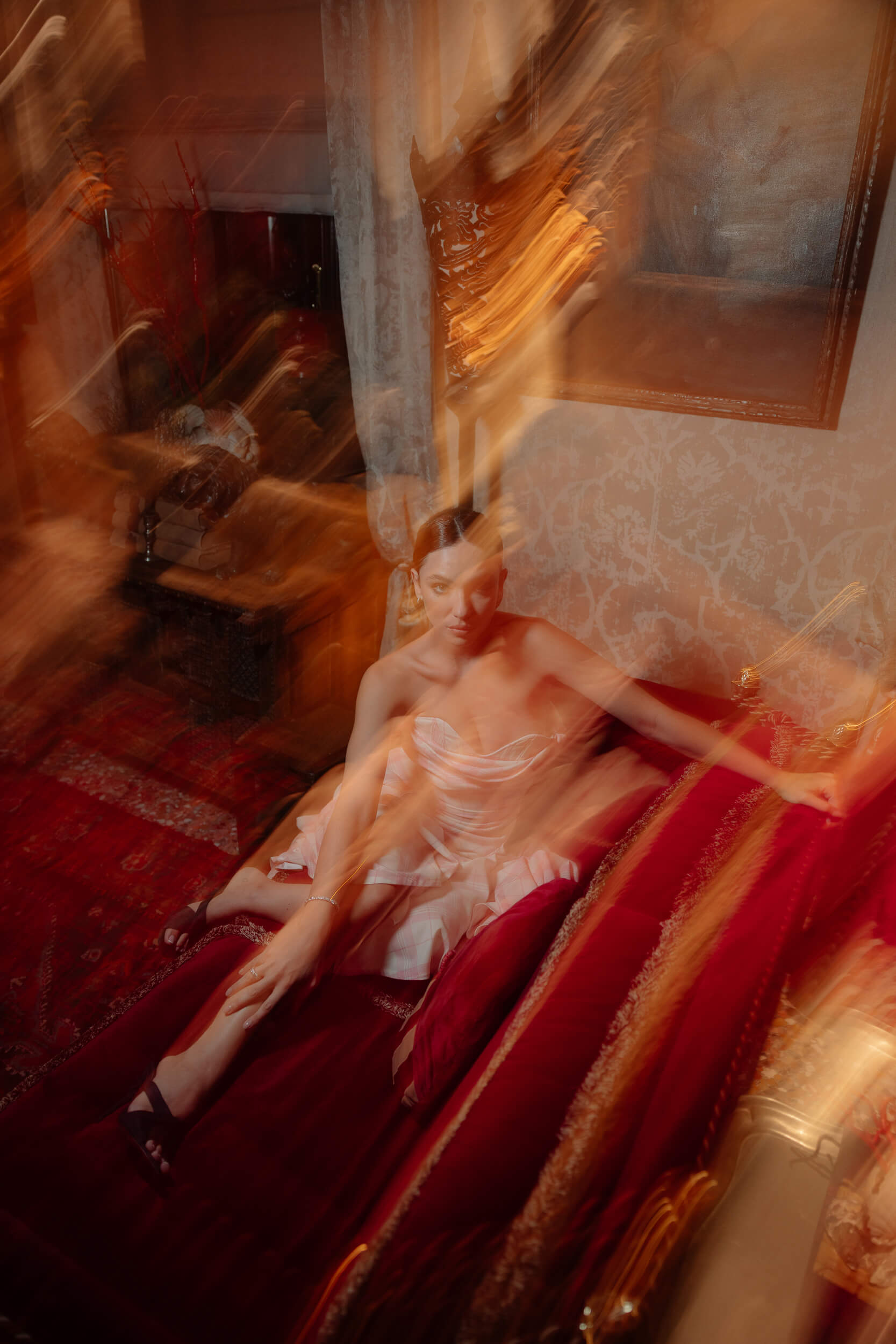
There’s a moment when Greta says, “I’ve never felt so powerless in my entire life.” It’s such a delicate film, made up of silences too, and yet it manages to convey an enormous amount of anger. To me, Greta almost represents something trying to move in the opposite direction. While you were filming, did you feel that same powerlessness?
I can tell you a behind-the-scenes story about that exact scene. It was a confrontation between Greta and the other doctor, and at one point she says, “I’ve never felt so powerless in my entire life. I’m putting Band-Aids on open wounds and handing out energy bars.” That’s the only contribution she can make to people who are hanging between life and death, who are simply trying to live. At a certain point, that feeling of powerlessness started living inside me too. So much so that the scene ends with me crying, even though that wasn’t written in the script. Something happened inside me, almost like something suddenly rising to the surface. I felt it so deeply. Not that I hadn’t felt it before making the film, but being able to say it out loud…
That’s also one of the things I love about my job: allowing myself to truly experience certain things, to say them out loud. Nicola decided to keep the scene that way, not to stop it, to let me experience whatever I was experiencing in that moment. It was an important day — actually, an important night — for me. We shot that scene only three times. It’s a long take, without cuts or interruptions, and I think that’s one of the film’s greatest strengths: it lets people live, it lets them express what they’re experiencing in that precise moment.
It’s an unrepeatable act of life, and precisely because of that, it’s unique.
Nicola mentioned that when you watched the finished film, you almost forgot to look at yourself and simply enjoyed the movie. For an actress who knows every movement, every line, and every choice, how rare is it to truly forget about yourself?
Very, very rare. In this case, I think I’d already done a lot of work beforehand, while I was still on set. I’m not a doctor. I don’t go to the border to help migrants, and I have enormous respect and an almost boundless admiration for the people who do. What I felt I could do, as Matilda and as an actress, was to try to always be at the service of what was happening on set: the other actors, the director, the crew. I worked on eliminating my ego. I took it and threw it in the trash. And I lived like that for a month, because I felt it was the only way I could even remotely show respect for what I was portraying and bringing to life. I think that process, which had started months earlier, had really worked its way into me.
When I went to see the film, I continued to have that same attitude: I’m not important. It doesn’t matter what I look like, how I appear, whether I’m good or not, whether I’m beautiful or ugly, whether my hair looks good or not. I don’t give a fuck about any of that, because I’m at the service of something else, something more important. I probably managed to carry that feeling with me even when I watched the film. For me, it was incredibly liberating. Unfortunately, you can’t always apply the same process, because there are characters I approach in completely different ways. But in this case, I think it was all part of one continuous flow, from the preparation to the set, all the way to what happened afterwards.
“I worked on eliminating my ego. I took it and threw it in the trash. And I lived like that for a month, because I felt it was the only way I could even remotely show respect for what I was portraying and bringing to life. I think that process, which had started months earlier, had really worked its way into me.”
You’re also a producer on this project. So you weren’t only responsible for a character, but also for protecting the film itself. Did being a producer make you look at the project differently from how you would have experienced it solely as an actress?
Yes, although in a very simple way. I realized that I wanted to protect something. On the one hand, selfishly, that was also good for my work as an actress. There was always this sense of protection that I wanted to bring into the project. I’d also often wondered when I would take that next step, one that felt organic to my career and to the way I’ve evolved over these thirteen years of work.
I thought this was the right film to start with, because it felt extremely natural, not forced. It definitely gave me a different level of involvement and an even greater sense of protection towards the project. It was really beautiful to have this experience for the first time with this particular film.
“There was always this sense of protection that I wanted to bring into the project.”
Greta, beyond being the doctor in the story, almost seems to represent all of us, or at least the position we, as viewers, might find ourselves in. What was the biggest question you asked yourself while playing her?
“What would I have done in her place?” I asked myself that constantly. What choice would I have made? What kind of human being would I have wanted to be at the end of the story? For me, the answer is still very much unresolved. Now it almost comes naturally to say that I would have done what she did, because in some way I became part of her. But that was probably the question that stayed with me the most throughout the entire film. I held on to that doubt because I think it’s the same conflict Greta carries within herself, and that, in the end, she decides to act on. That feeling of powerlessness becomes, in some way, a sense of power. It’s something unspoken, something not yet done, but something that exists as a possibility. And in the end, she acts. She makes that decision. For me, it was really beautiful to go through that journey.
Since “Balcanica” is also about losing and searching for a home, I’d like to end by asking you: what does home mean to you?
In this case, I’ll quote one of my favorite poets, Chandra Livia Candiani, who ends one of her poems with the words: “Home is where you can sleep.” And I think that’s the truth. Home is where you can sleep.
“That feeling of powerlessness becomes, in some way, a sense of power. It’s something unspoken, something not yet done, but something that exists as a possibility.”
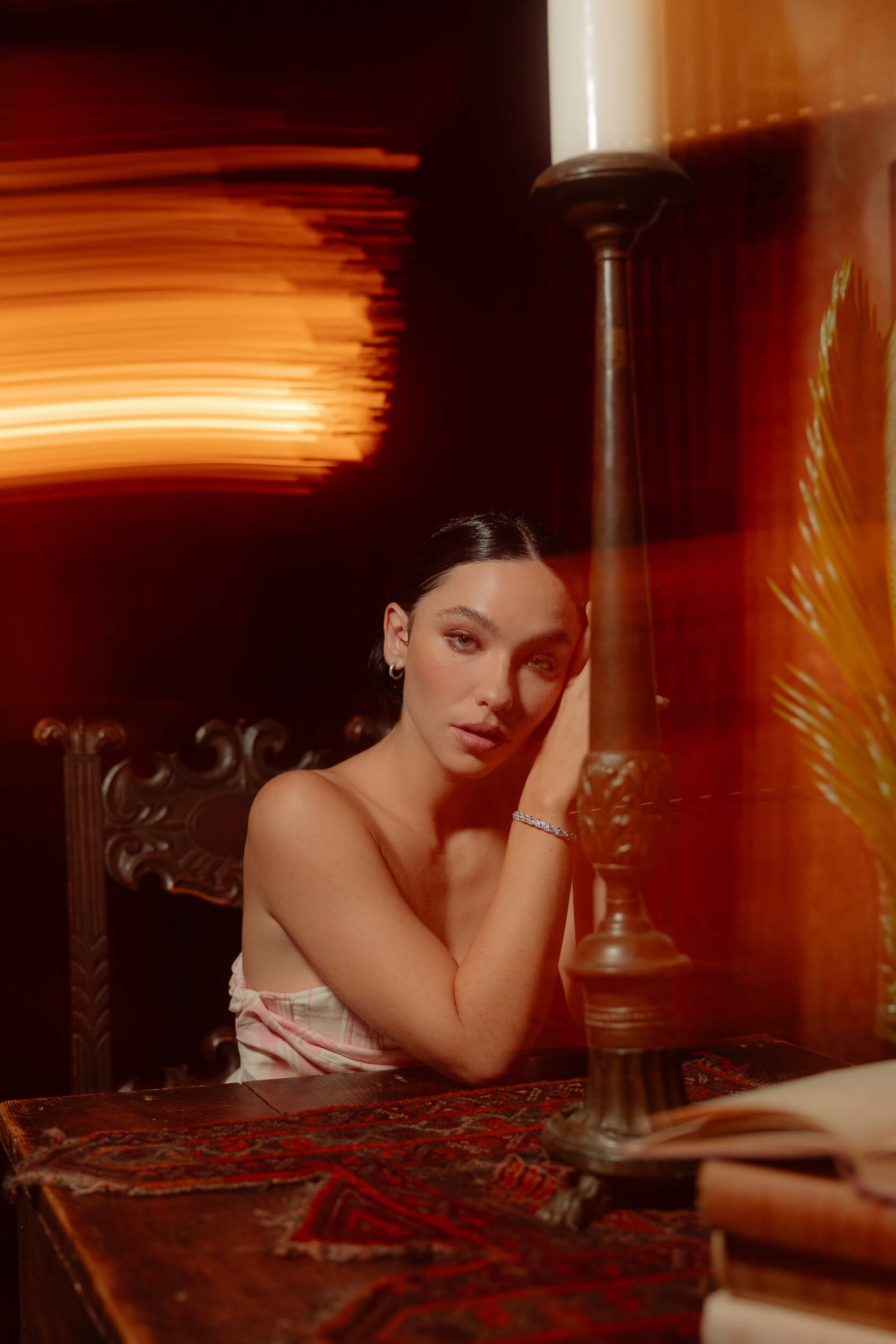
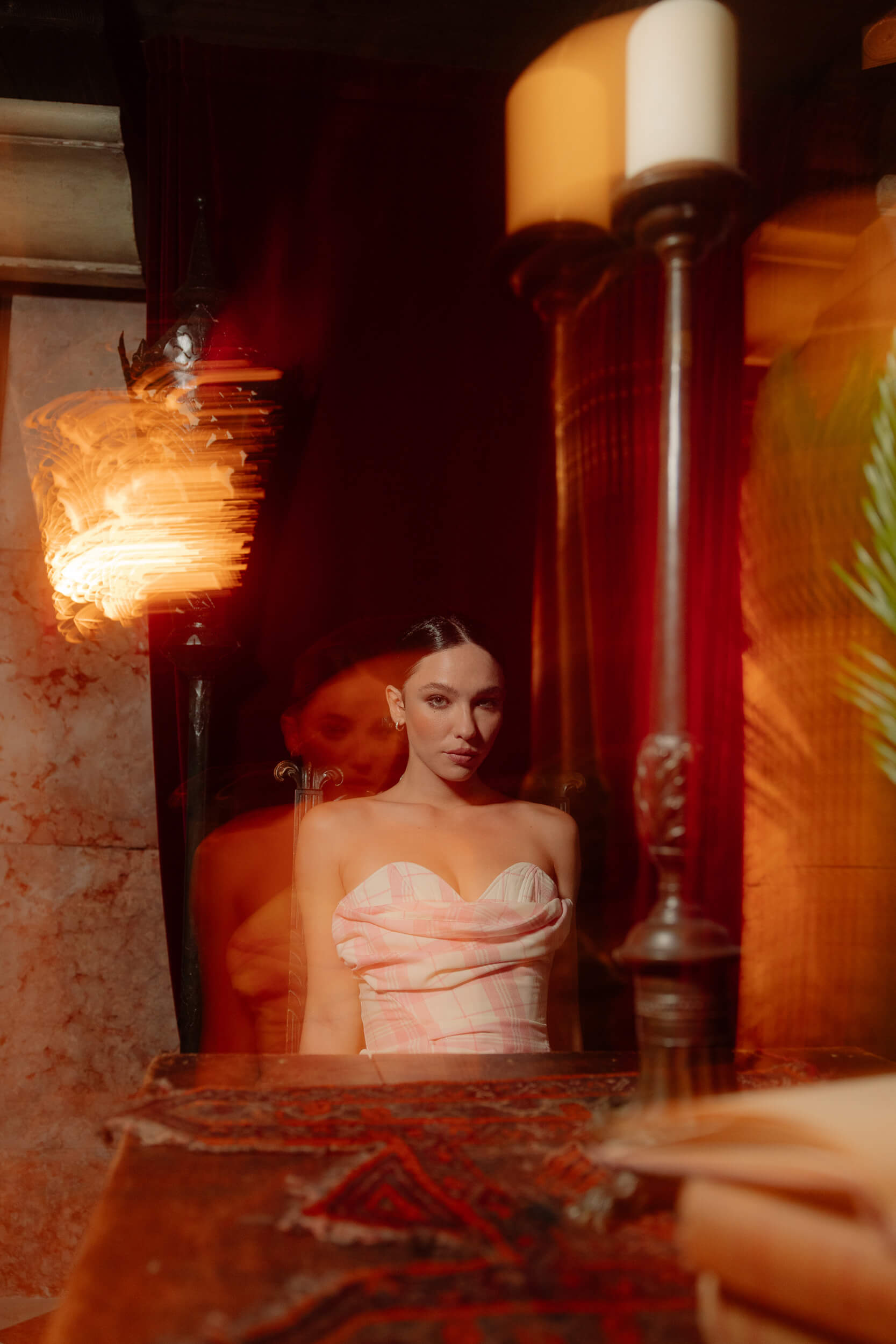
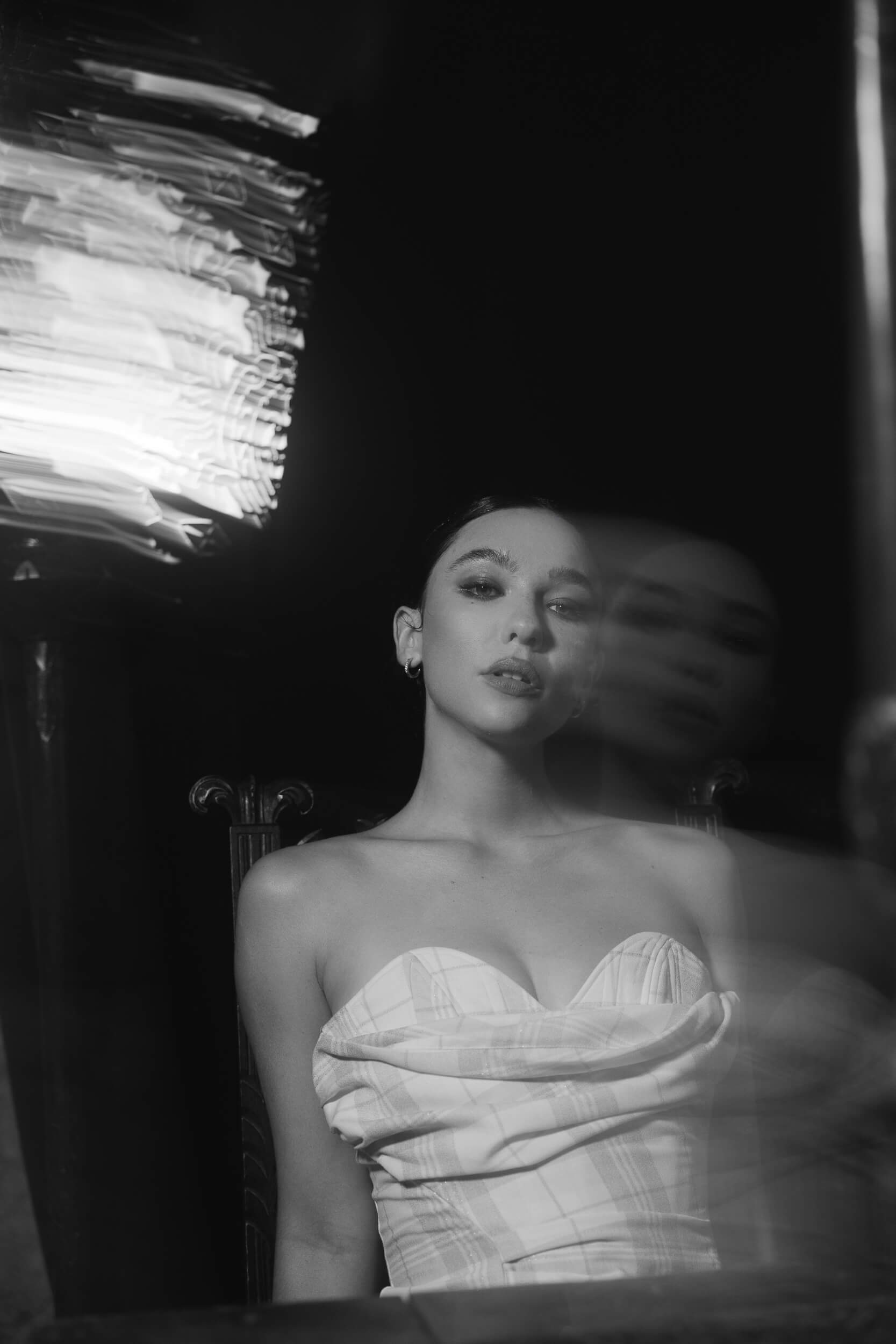
Photos by Johnny Carrano.
Interview by Valentina Carraro.
What do you think?