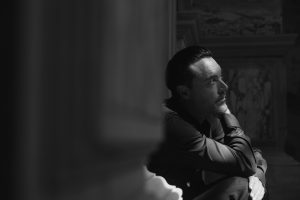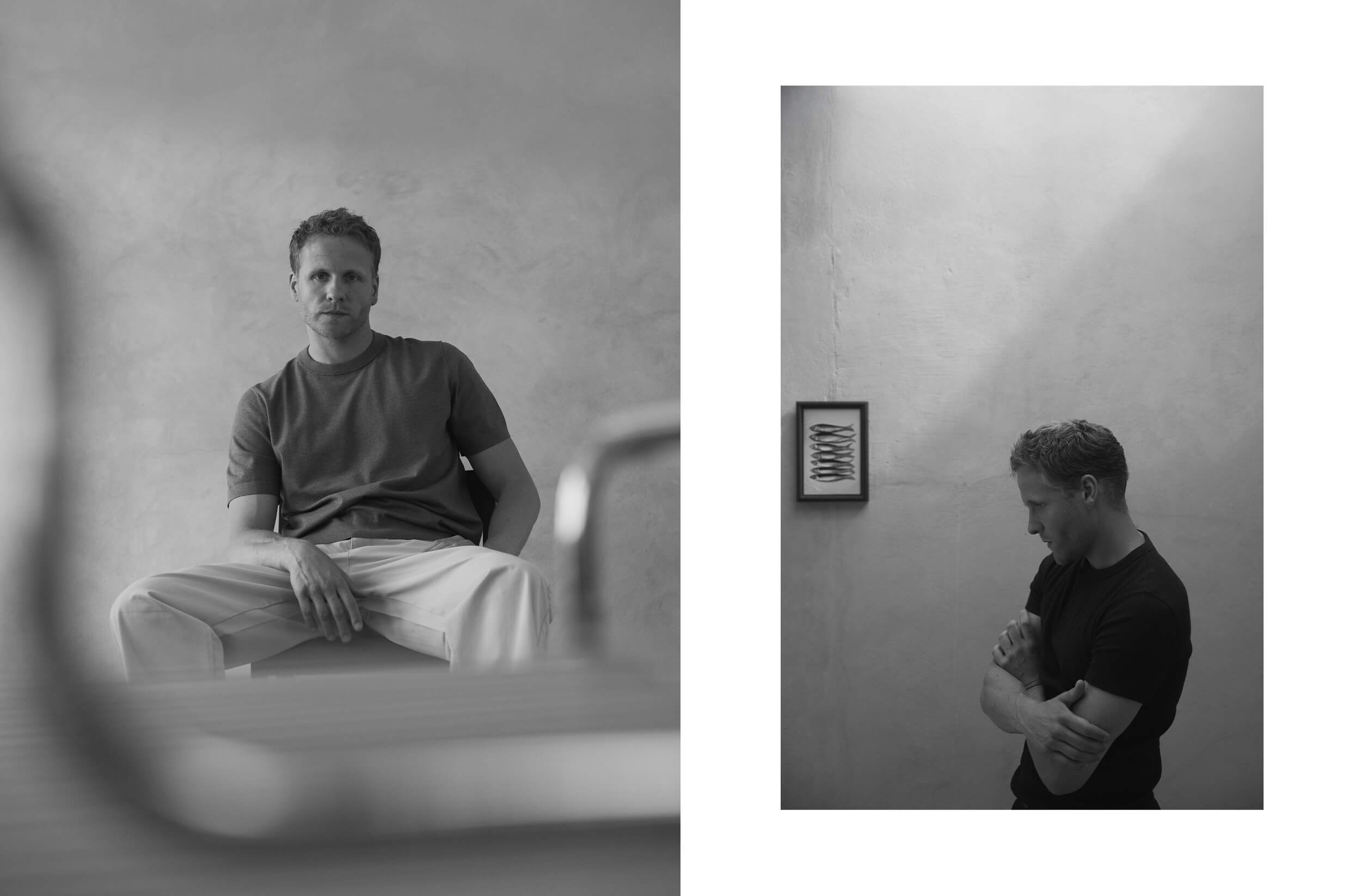
On an incredibly, almost unbearably hot afternoon — unusually hot in both Milan and London — I sat down with Josh Dylan to talk about his latest project as a director, the documentary “You Can’t Fly”. But what began as an interview quickly turned into something else: a conversation, a moment of genuine connection.
When Josh joined the Zoom call, he was sitting in a park. All I could see behind him was lush greenery. It was simply too hot to stay indoors that afternoon. In the middle of that relentless heatwave, our conversation became something more than a Q&A. It was an exchange that genuinely taught me something — about the way we look at the world, about the urgency of telling a story, and about the emotional sensitivity it takes to tell it well. Because that’s what “You Can’t Fly” is ultimately about. Not just its protagonist, Silverback Tarzan, but the possibility of moving through the world with openness: without fear, yet with the full depth of our emotions. It’s about how someone can appear physically strong while still being deeply moved by something as simple as a flower, or by the quiet beauty of nature.
Among many other things, we talked about how seemingly opposite qualities can coexist, about the things we hope never to lose sight of in our lives, and about how even the smallest, most fleeting moments can leave a lasting mark on us.
Nature, books, death — and an extraordinary amount of life. Our July cover story is about all of this. It’s about someone who hopes to change the world, one small step at a time. And we’re happy to watch it happen.
I watched “You Can’t Fly” yesterday evening and I absolutely loved it.
Oh, did you? Thank you for watching it. What did you think?
I loved it, really. I didn’t know Silverback Tarzan before. I think he’s such an extraordinary person. What is about him that stuck with you and made you want to tell his story?
Maybe four years ago, I came across him online. At first, I thought he was totally off this planet, eccentric, hilarious and beautifully compelling. I found him very funny… And then one day he posted a video in his garden, and he was smelling a rose. And he was talking about anxiety, not getting tiny in your mind, not allowing yourself to get to a point where you shut yourself off and get small minded, and he says something like, “Think of like the cosmic nature of a flower, and how it’s blossoming and opening out. There’s something about it that relates to us, as people”. It might sound extreme, but it changed my life, that video stuck with me. And then from that point on, I started to feel that there was something special in in his world …in the texture of his world, in this colourful universe that he moves within. I thought it would be amazing on film.
I didn’t know anything about him at first, but I worked out that he lives in Brighton, and I grew up in Brighton. Then I found that he’s a hang glider… I just thought there was a huge amount of poetry in it, and it could be really fun. So, I got together with my close friend and producer, Kit Patrick…we had been wanting to make something together for a while… We wrote Silverback a letter, he replied and went down to meet him. We initially wanted to make an action packed short film – with him doing handstands and hang gliding, but it became immediately clear that there was something deeper to it all.
We recently premiered the documentary at Raindance Festival, and then we screened it at Brighton Rocks Festival, where we won an award, which was lovely. What we had a quiet sense of before making this film and then spending three years making it was confirmed when we got to see people’s reactions. It’s been a lovely feeling. He’s not perfect, and the film is not intended to sort of come down one way or the other, it’s not a puff piece or trying to tell you he’s the most amazing thing in the world. But Silverback is offering something, particularly to men, that’s positive… At a time when everyone’s sense of what masculinity is feels muddled. There seems to be a lot of condemnation, there seems to be a lot of judgment, but I don’t see many people who are offering a meaningful alternative to men.
Something interesting about Silverback Tarzan, who again, I’m not saying is perfect, or necessarily a solution, is that he can access a particular male space because of what he looks like – he’s got this kind of raw physicality, he’s no frills, he’ll connect with young men who respect strength and respect force. But the reality is that he’s promoting something radically different, which revolves around sensitivity, and connection, and softness, and being open. It’s a challenge for him, because it’s not in his nature – as you’ve seen the film, he has a particular genetic inheritance, his life force is unique… it’s dangerous, he’s got an edge to him. You spend five minutes with him, there’s an intensity to it.
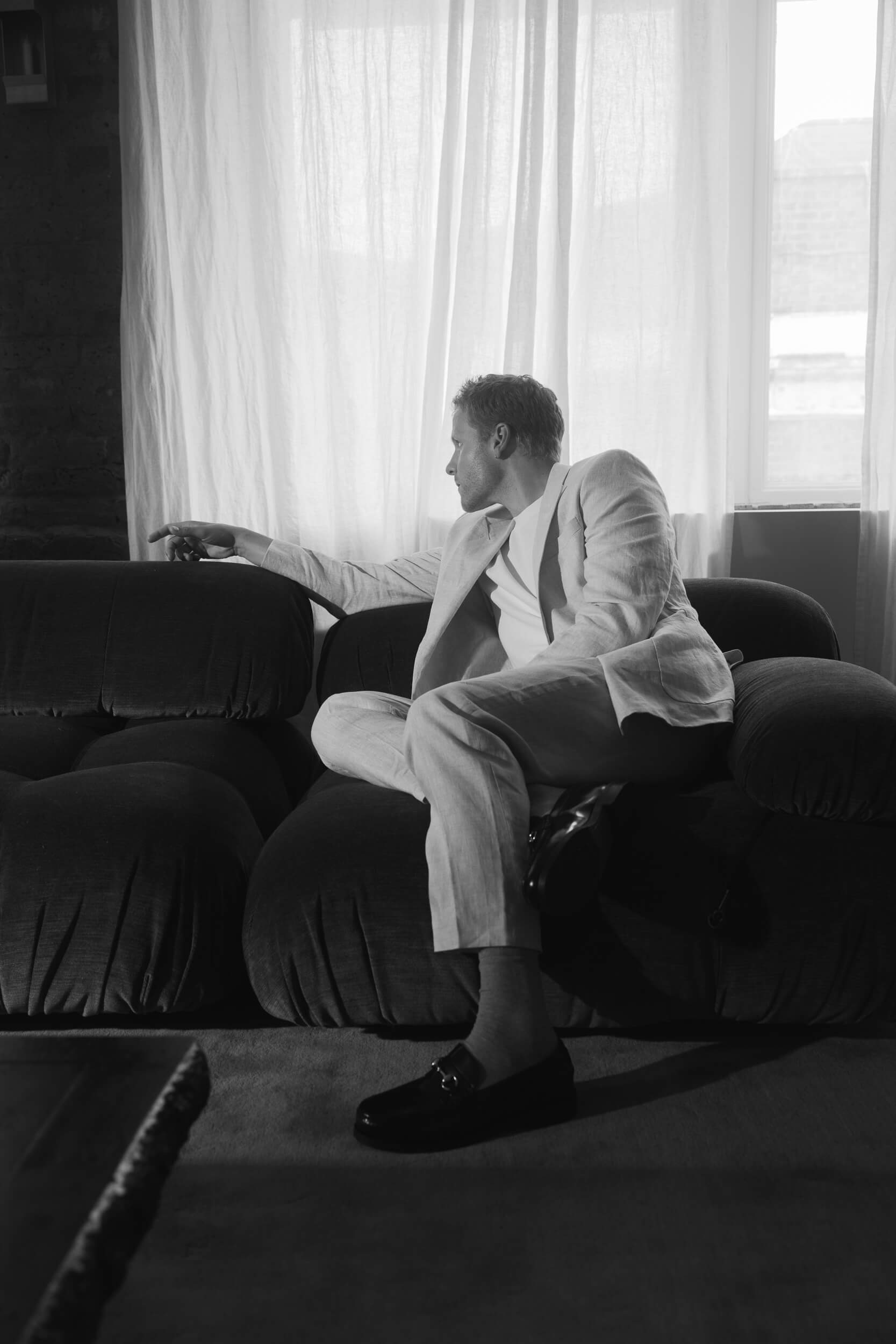
Yeah, I thought it was pure sentimental education for men because he’s showing how you could be many different things. You can be, as you said, strong but at the same time, you can be sentimental.
Yes, he’s very emotional, and he’s not ashamed of that. He says at one point in the film, “You’re half the man you can be if you don’t know sensitivity,” which is so true. That feels like an original thing to hear in this day and age, and it’s something I think is important.
I have a scripted project that’s in development, and before making it, I was curious to direct something else – to not only get the experience, but to see what it felt like… I don’t have loads and loads of ideas, but I’m drawn to very particular things; I didn’t anticipate making a documentary, I wasn’t thinking too far ahead, I was just very drawn to this individual and excited to explore their world. But then it turned out to be just the most extraordinary filmmaking experience.
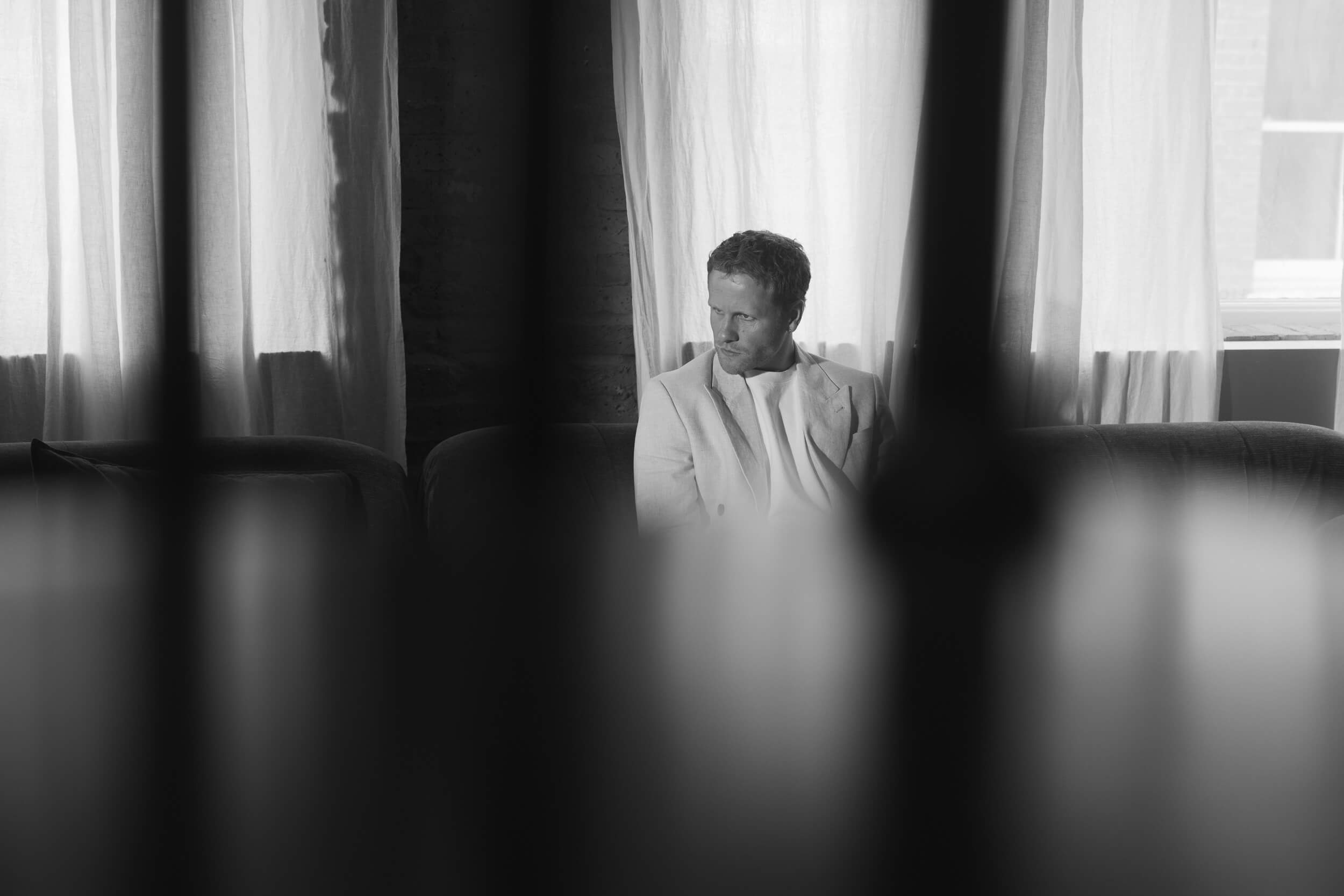
“You’re half the man you can be if you don’t know sensitivity”
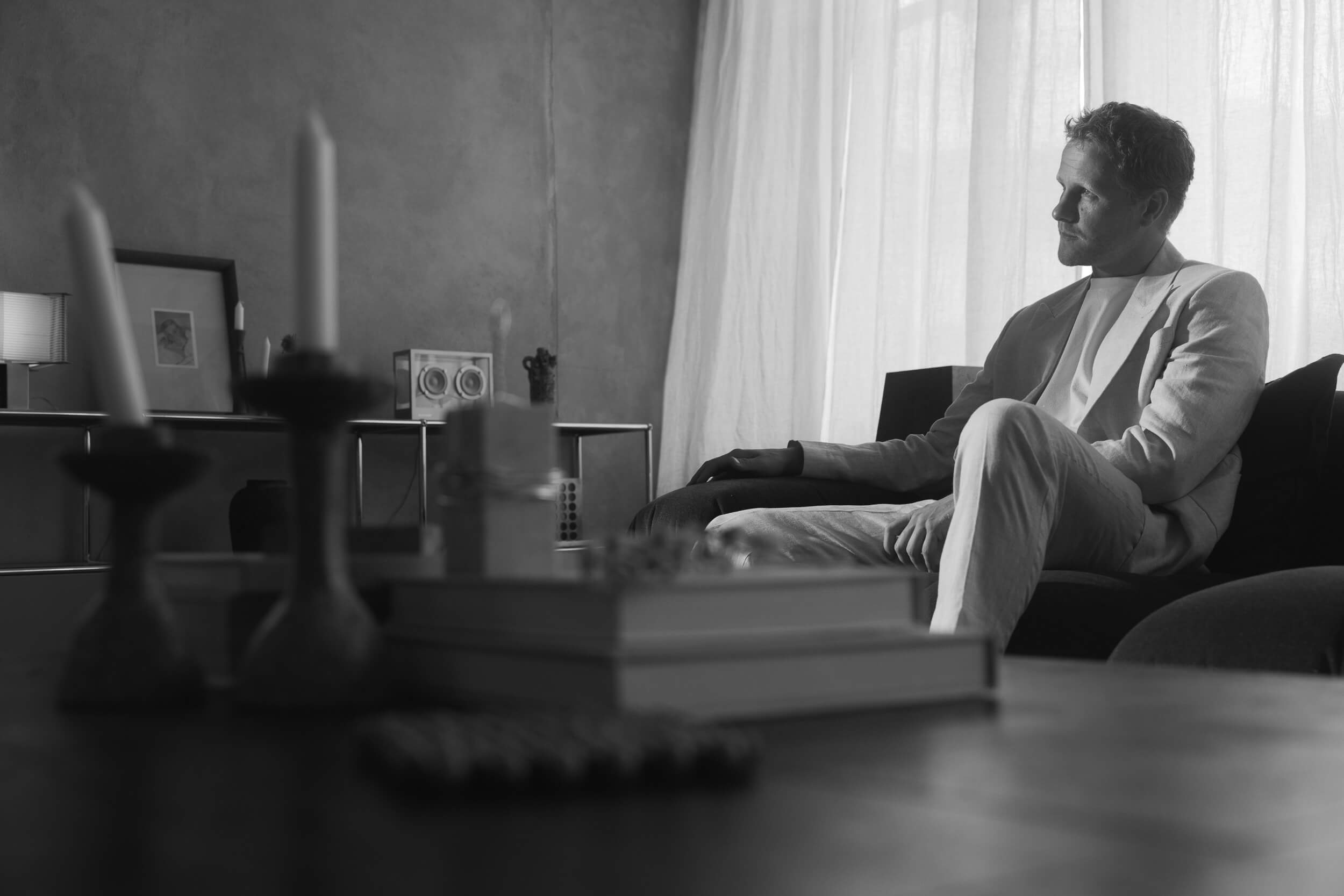
I really understand what you’re saying – me, Johnny, our photographer, and Maria, our producer, shot a documentary a few years ago about the director and cinema critic, Mark Cousins. It all began exactly how you said it began for you. We emailed him, putting all our heart in our words, and then he said yes. We lived in his house for one week and it was amazing.
What was that like?
It was very intense. I think we felt all the emotions you can possibly feel in those days. We were sad. We were happy. Sometimes we were confused because he’s very eccentric. That week was incredible, and the best part is that it just happened.
Those are the most valuable things that can happen in my experience, when they come, they just come from the heart. You’re not thinking ahead, you’re just being present with something and letting it unfold into whatever it wants to be. And it’s difficult, everyone’s constantly trying to put themselves ahead, everyone’s constantly trying to capitalise on something or gain something, and it’s so amazing when you just do something creatively for the sake of it. That’s how art should be.
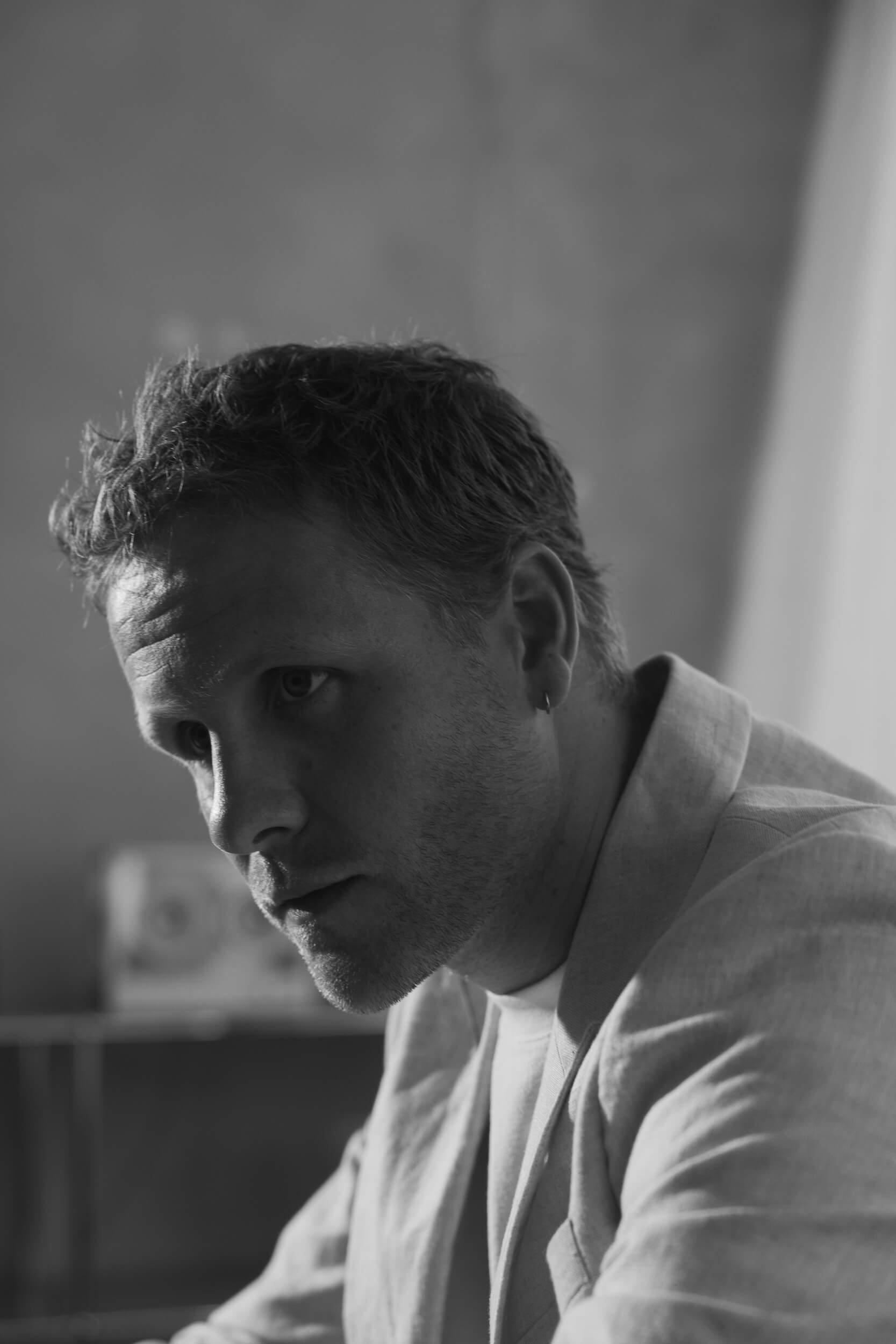
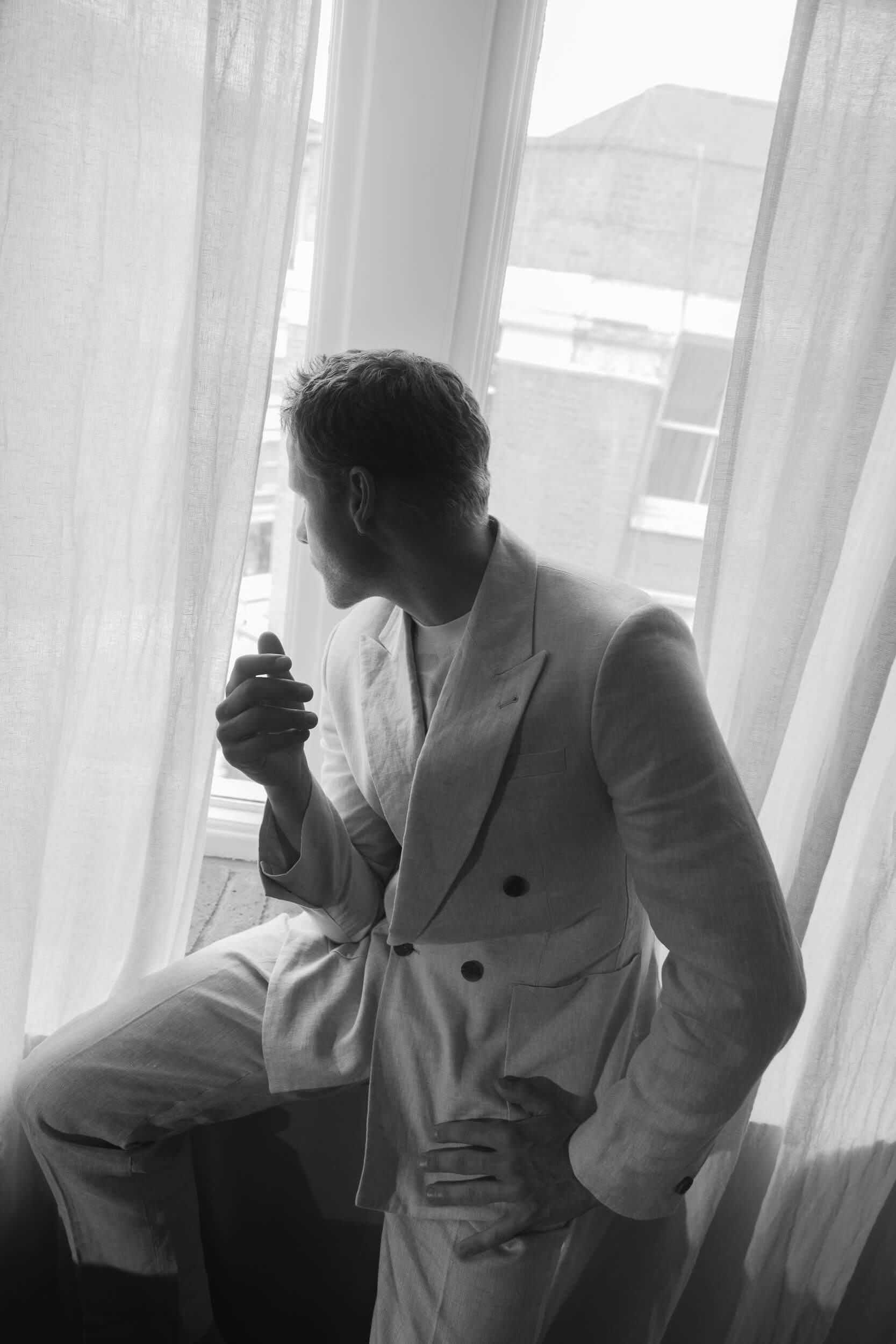
Yeah. You know, Johnny and I founded The Italian Rêve, which is a magazine still independent in Italy, and bilingual, so it was a difficult project at the beginning, but we wanted to do something different. For me, the most important thing is to create a connection, now with you, while we’re speaking, yesterday when I saw your movie, and during our shoot in London, where Johnny really cared about making you feel comfortable.
We are also working on another art project, The Puzzle, a series of short movies. I mean, those are the most beautiful things in our life, and we have to do a little bit of both.
You have to live, but at the same time, this is why we do what we do. Has it been difficult to hold on to that spirit?
Yeah, a little bit. Because not so many people understand what we are doing, especially here in Italy. We were young, independent and online, when we started, so it hasn’t been easy to work our way through this industry.
Back to Silverback Tarzan, what was it like, the first time you went into his home? I mean, it’s really particular, full of things, animals. What did you feel?
The first time we went into his home was about a week after we’d written him a letter. We drove down from London to a place called Mile Oak on the outskirts of Brighton… he lives in that iconic turquoise house. We were nervous, because suddenly you’re there and you’re kind of running off instinct and thinking “OK. This is happening”.
It was exciting. He’s a very striking bloke…he’s got a real presence and aura. We met his partner Tara there as well, I didn’t know much about her, because she wasn’t in many of the videos at that time, but it was lovely for all of us to meet.
We were all quite nervous I think – we sat down and we spoke for around four hours, just about life and got into some intense conversations.
What struck me was not only the texture of their home and how vibrant it was, but the fact that there was such an open spirit. You felt so welcome. You know, there’s no shame in that house, in the most beautiful way, which is so rare, particularly in the UK, where there’s a culture of ingrained embarrassment…which is, in a way, quite fun sometimes, but people often feel a deep sense of shame. Maybe that relates to why we’re all so polite all the time. But in their house, in that space, they let themselves be seen. I love that about them. You can see it throughout the film. There’s a moment where they go swimming as a family in a lake in Wales… On paper, it’s not that big of a deal, they just go skinny dipping in a lake. But these days, that feels kind of radical, the idea of my parents doing that, for example, is extraordinary to me. And there’s something about the way they did that which I loved… It wasn’t ostentatious, it wasn’t performative, it was the most human thing you can think of, being naked in water, enjoying that sensation. I think we’ve strayed quite a long way from that purity of feeling. I reckon we could all do with a lot more of that.
“What struck me was not only the kind of texture of their home and how vibrant it was, but the fact that there was such an open spirit.”
I think also the daughter is so intelligent, so smart. I was a little bit jealous of her because she can have this type of connection with nature and freedom that’s so unapologetic.
Isn’t that beautiful? Her name’s Tia, she was nine or 10 when we met her, which is such a beautiful age. Her parents give her so much space and she feels so protected, but also, she feels like she can be herself. She spends a lot of time in an adult world, and she moves through the world with a kind of confidence that I think is rare in young children. Her parents don’t try to hide everything from her, they’re real with her – they’re such a special family.
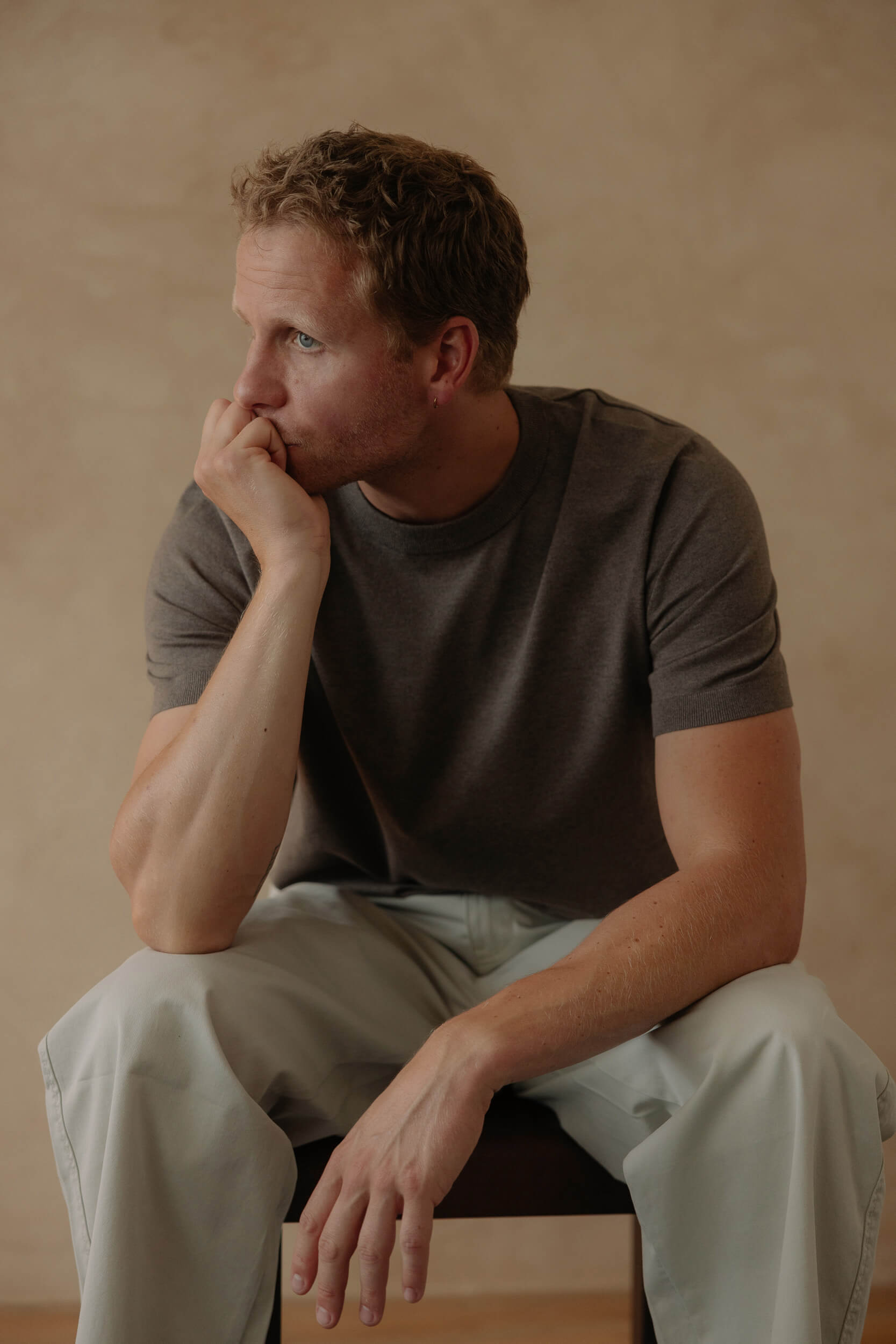
She’s a free spirit.
She’s in many ways the coolest part of the film.
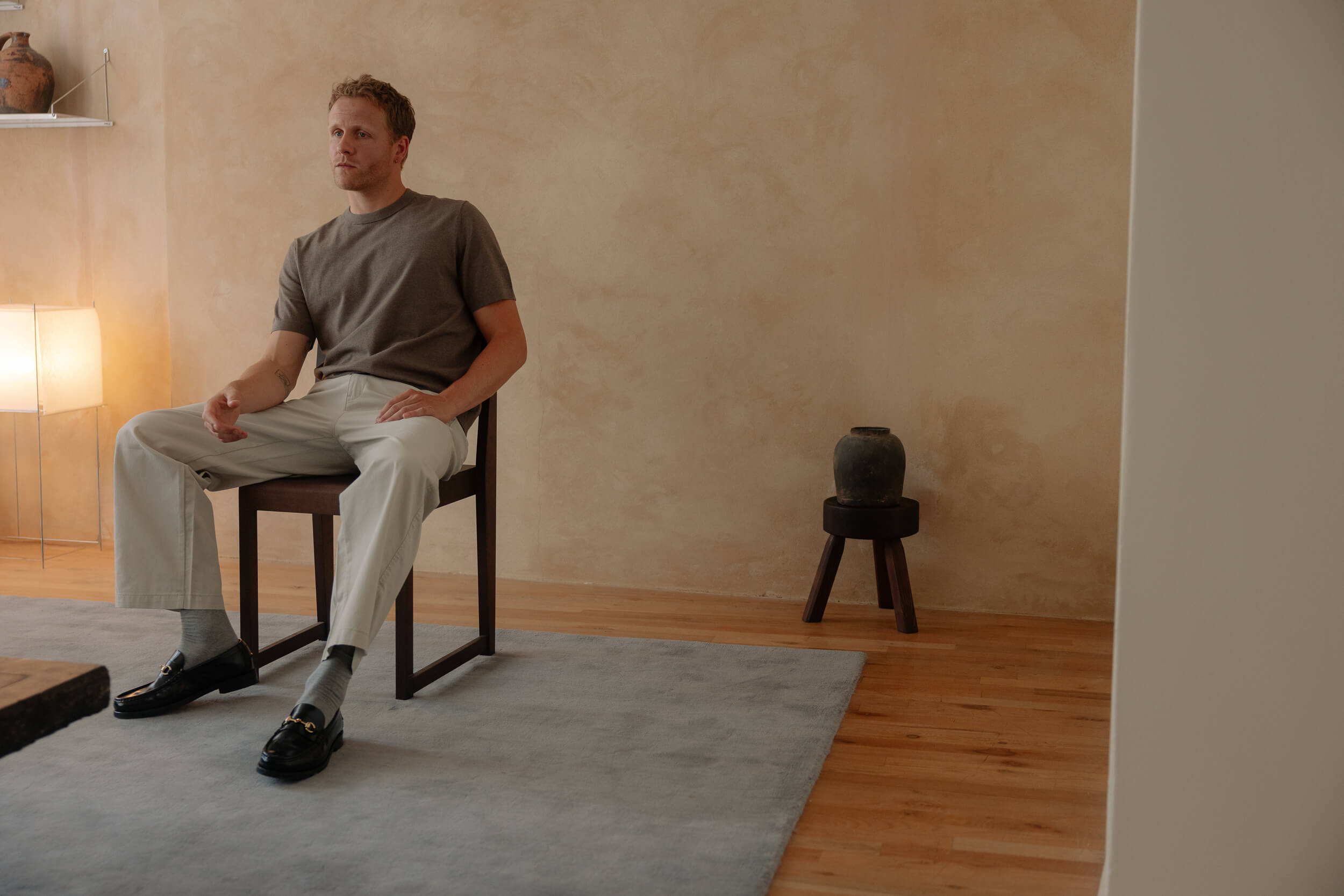
And how much of the conversation with him were planned or prepared in some way and how much was improvised?
I took advice before I started the process and I was lucky enough to sit down with two brilliant documentary filmmakers, one called Tim Wardle, who directed “Three Identical Strangers” and another director called Orlando Von Einsiedel – who’s lovely, he’s won an Oscar, he’s wicked. I managed to have a coffee with them both separately, and I said, “How much is improvised and how much is left down to chance?”. It really surprised me that their answer was that you have to rigorously plan it, engineer it in a way, and shape it. So, we went in and planned things quite meticulously, but it goes to shit after like two minutes, the plan crumbles!
For example, you might ask one question, he’ll speak for 30 minutes and not answer it, and then the next day he’ll answer the question perfectly, in an unexpected way. It was interesting to try and learn their rhythm and how they speak…it was a sort of character study in a way. What I would try and do is I would plan moments and particular topics. And then you have to be present and to be prepared to throw everything out the window and go with what’s in front of you.
Every single day was new, and you had to approach it fresh and stay together, open-minded and creative because – particularly with a film like this – it’s strength is not necessarily plot, it’s not like there’s like one great, defining event after another. It’s about atmosphere and feeling, which is exactly what we wanted. So, I found that you have to be prepared to constantly walk into the dark and trust that you’re discovering something beautiful…
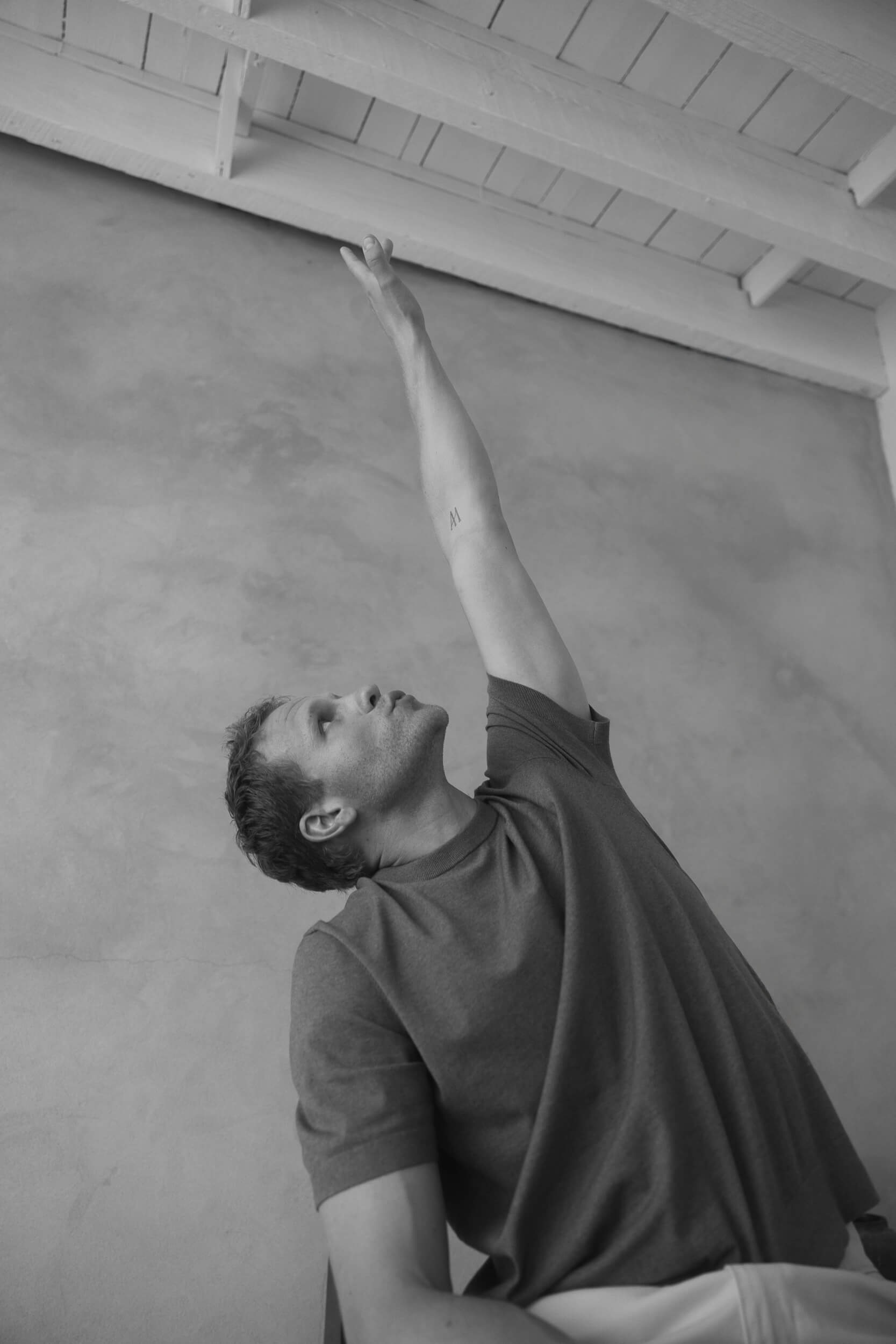
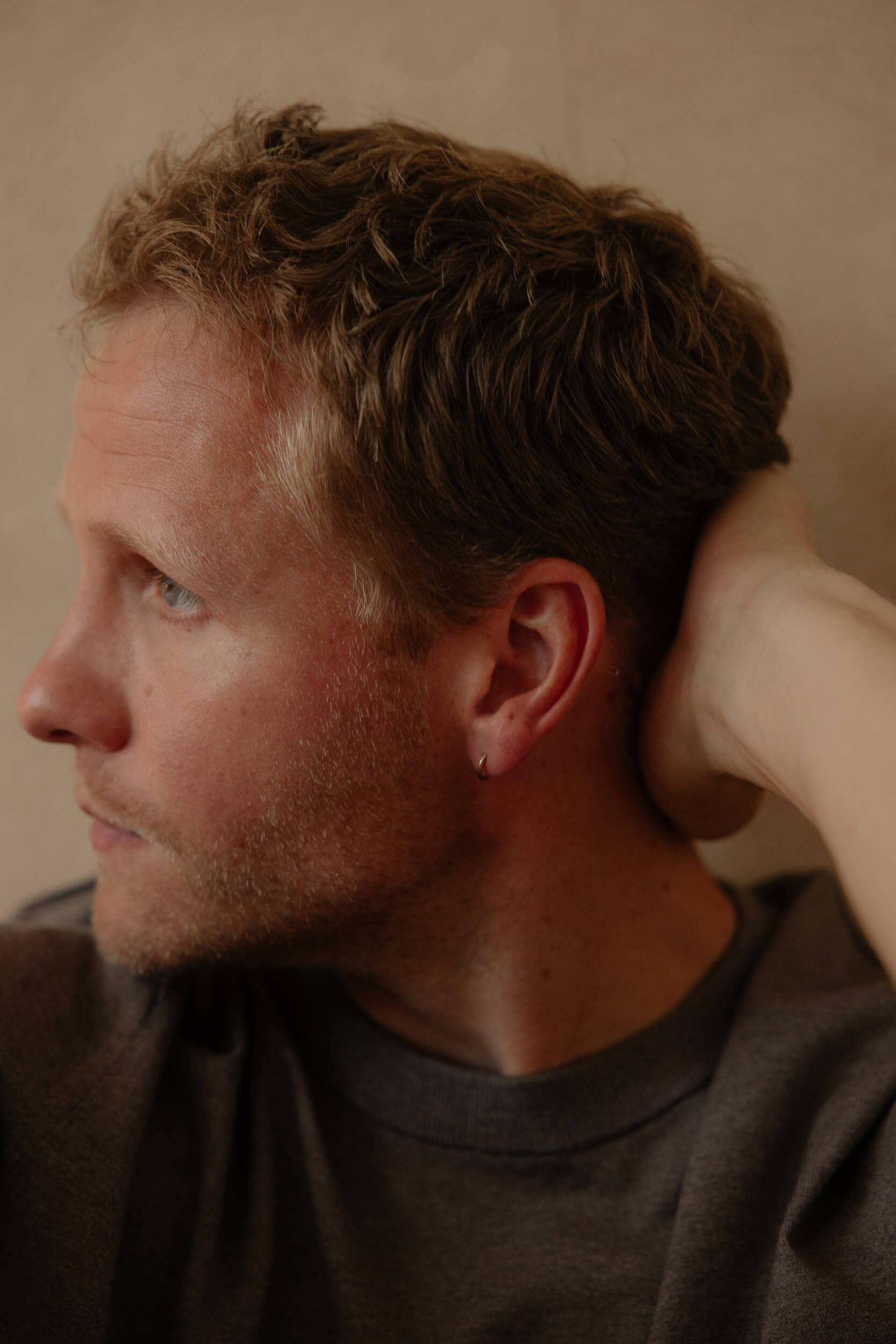
“And then you have to be present and to be prepared to throw everything out the window and go with what’s in front of you.”
At one point, Silverback says that if someone told him he could never fly again, it would be almost like dying. Is there something in your own life that makes you feel that way?
I often ask myself really weird questions like that if I’m in a stuffy room somewhere in the city with no windows – this is just how my brain works – I’ll wonder, “Would I rather spend the rest of my life in this room if someone brought me food and I could survive, or would I rather die?”. I think I would probably die because I need nature in my life. I need to be around trees a lot. So, probably that! What about you?
I think it’s the same for me. I had a really strong relationship with nature when I was a child. I used to talk to the trees. I grew up in the countryside, and my grandparents kept chickens. They were poor, but they took everything they needed from the earth and the animals. They really taught me the value of the earth, which I think is beautiful. So, it could be the same for me, or perhaps writing. I really couldn’t do without it.
How often do you write? Do you keep a diary?
I keep a notebook in my bag and I write when I’m inspired. I don’t plan it. Of course, I have to write for my job, but when it’s for myself, I just go with the inspiration.
That’s beautiful. Last night, I was sorting out my flat… I’ve kept little diaries and notebooks since I was about 14… I was transferring a load of old cuttings, pictures, and notebooks, and I read through some of the pages, which I never really do. I have a loose sense that, at some point in my life, I will be able to look back and it might be interesting. Even just looking back in glimpses, it’s not strict diary entries; it’s exactly what you were saying – thoughts, feelings, short stories, or even very bad little poems. They’re little snapshots. Even just privately, being able to look back at those different chapters and moments tells you so much.
“thoughts, feelings, short stories, or even very bad little poems”
One of the things that fascinated me very much about Silverback is when he says he wants to overcome fear completely to become fearless. Do you think that’s actually possible?
Probably not. I think we’re always going to be scared, and we probably should be scared of things because it keeps us alive. We’re human; we’re essentially animals, alive to threats, we’re emotional, and we’re always going to fear things. I read something amazing about this recently. I think people fear death a lot, and we try to deny that in our lives, which is funny because it’s one of the only things we know for certain. The fear of death dominates us so much because when we deny it, we tell ourselves that we have control and can hold onto things. The reality is that you can’t hold onto anything. Everything is transient, always changing, and impermanent. The sooner you can accept that you don’t have it within your power to hold onto things… Some of that fear evaporates, and you appreciate things more. I think that’s perhaps what Silverback’s getting at in some way. Also, he’s experiences a huge amount of trauma in his early life.
One moment that really stuck with me, and I’ve been thinking about it all day, is when he speaks about his biological father. He says that his way of being isn’t normal, and that he wanted to know what his biological father was like so he could understand himself. I think this is really powerful. Did you talk about this with him?
A great deal, and for me, it’s probably the most interesting part of the story: his nature versus nurture. Here is a person who recognises his own raw power, his muscle, and his unusual life force. The fact that he always recognised that in himself is fascinating. To have such a clear sense of what your biology, your instincts, and your impulses are telling you, and then to have to work against that every day – he either pushes against it or channels it, because he’s incredibly self-aware. I loved listening to him reflect on this because it feels like a process of self-management he has to undertake every day. Otherwise, all that energy and life force could be channeled into something destructive. It shows that we do have some choice in our lives, I suppose. That kind of awareness I find quite inspirational.
Around the time we were talking with him about his genetics, I understood that his online presence – all these videos he makes every day – isn’t a narcissistic pursuit. In a way, it’s a diary entry; it’s his method of checking in and being honest with himself every single day. But he’s also doing it for people who don’t have role models, showing people who feel totally hopeless that someone is showing up for them. By filming himself eating a really clean meal, exercising every day, or talking about the cosmic abundance of a flower, he’s being a constant in someone’s life. His intention is generous. To reach that point, despite having a genetic makeup that could have led him to a darker place, ending up at the opposite end of the spectrum is remarkable to me. What did you think of that?
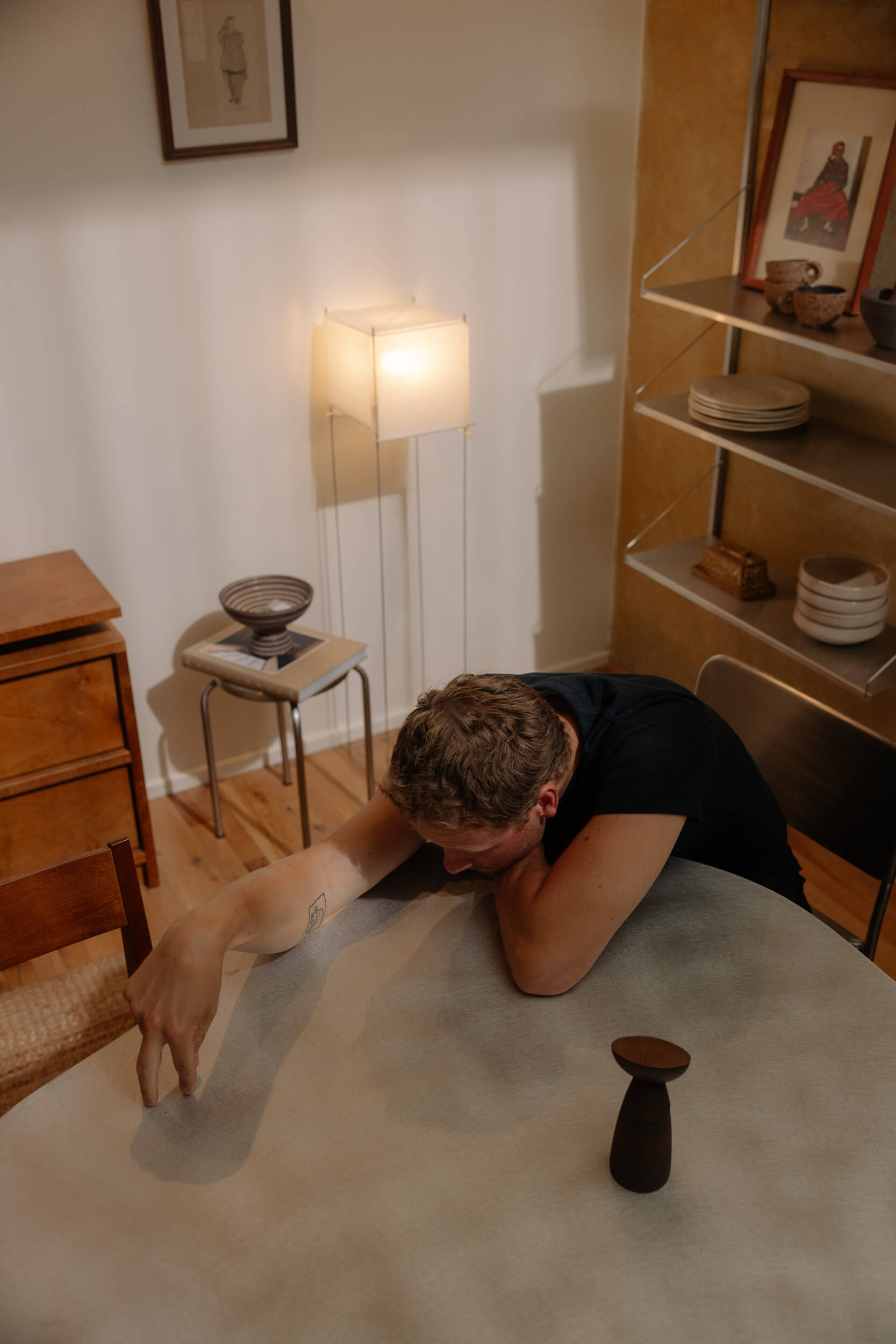
It was very moving for me, in particular, the phrase about not feeling normal and having to search for answers in his biological father. It made me think about what you said about nature, but also about my own father, who passed away seven years ago. He was one of my best friends and very important to me. I see him like a puzzle now; when I try to search for answers about myself, I look at him. I look at what he did and how he was in his life, and I would love to ask him so many questions because I think maybe he would have the solution. I mean, there is no real solution, but it reminded me of that, so it was very powerful for me.
I’m so sorry to hear that, that’s so difficult. It seems we get so much from our parents, whether we like it or not. I don’t know what the answer is, but it’s something I’m very interested in. They say the older you get, the more you become like your parents, right? Do you think that’s true?
I think we are like a 2.0 version of our parents in some way.
Also, how we try to be different from them drives us.
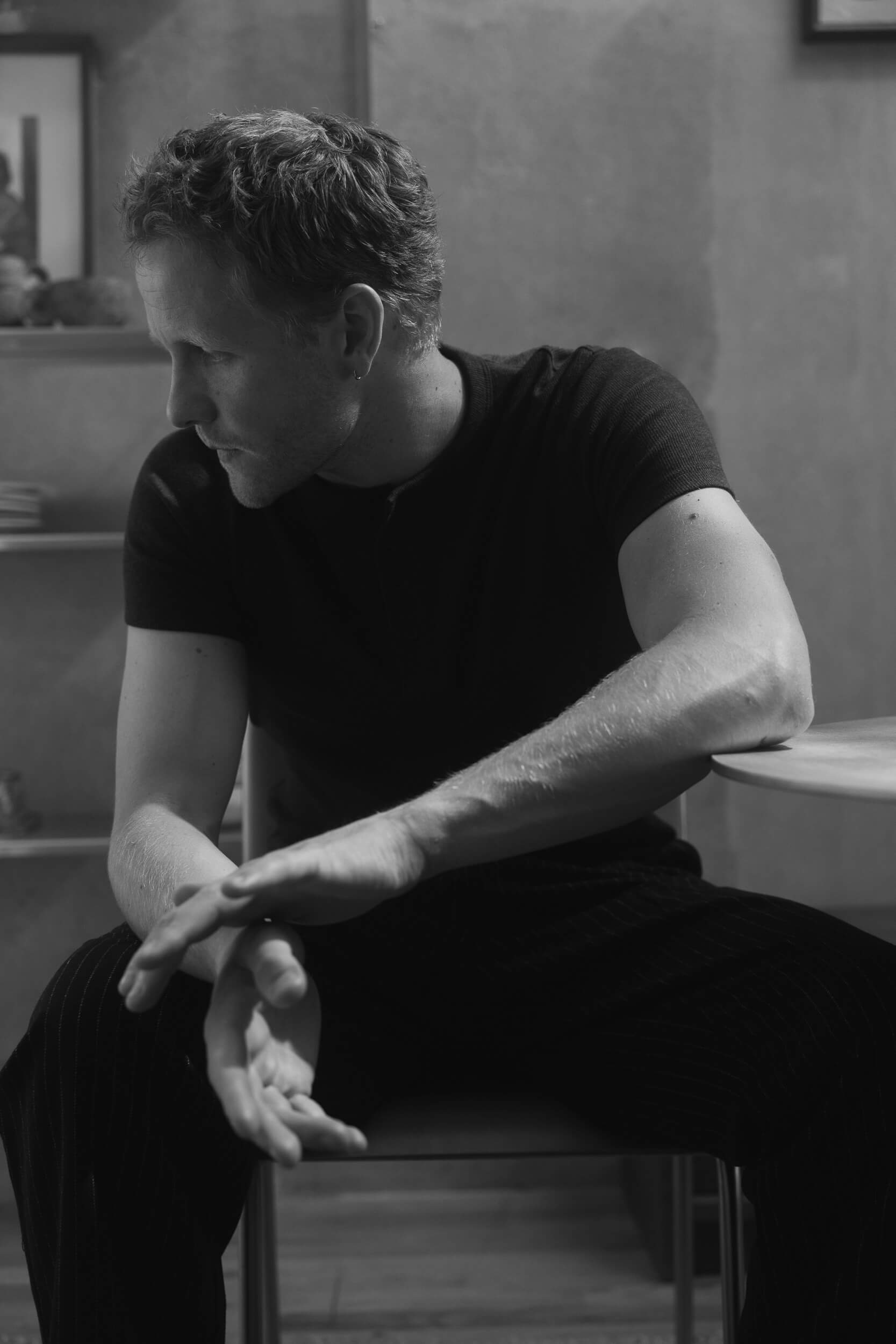
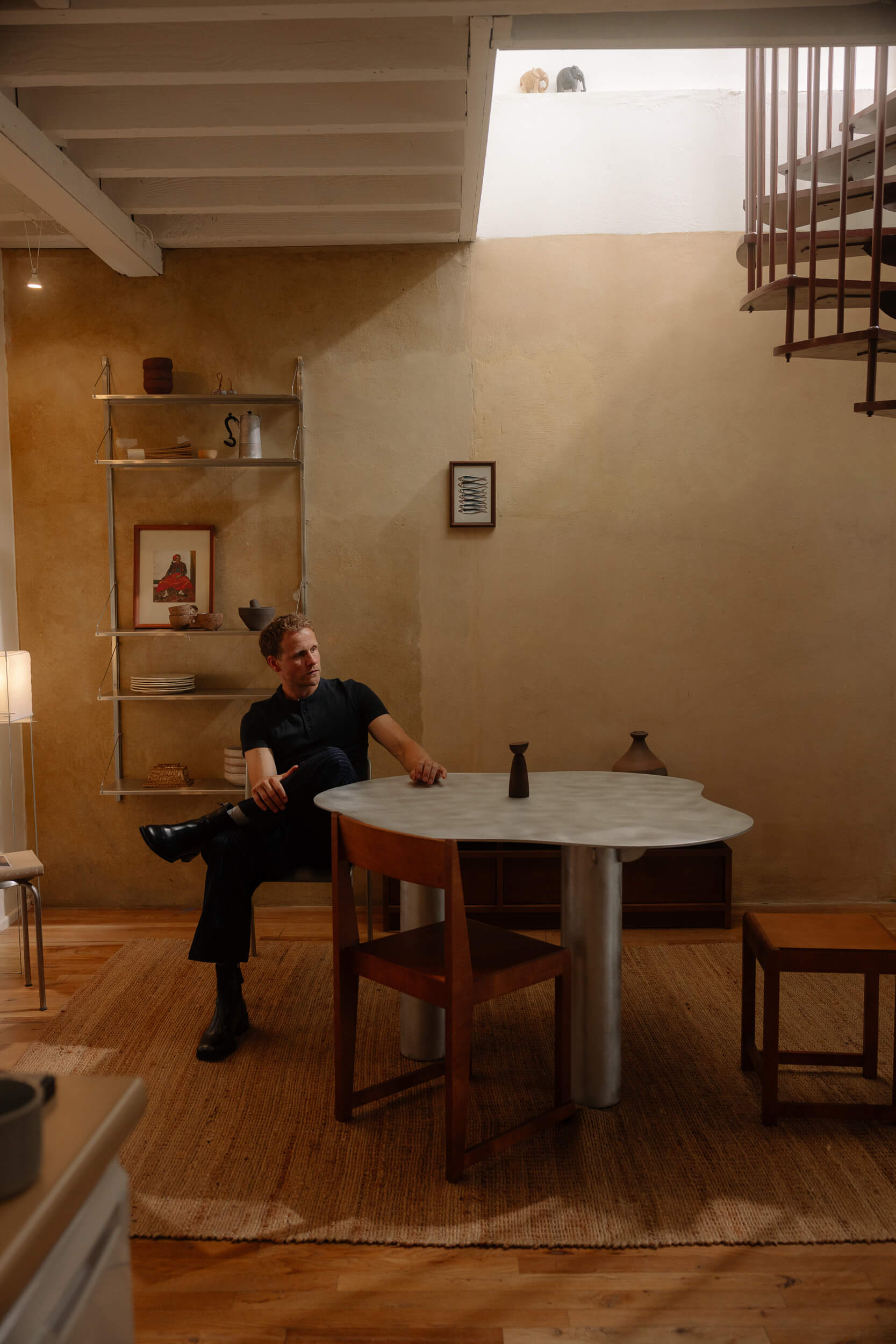
“They say the older you get, the more you become like your parents, right?”
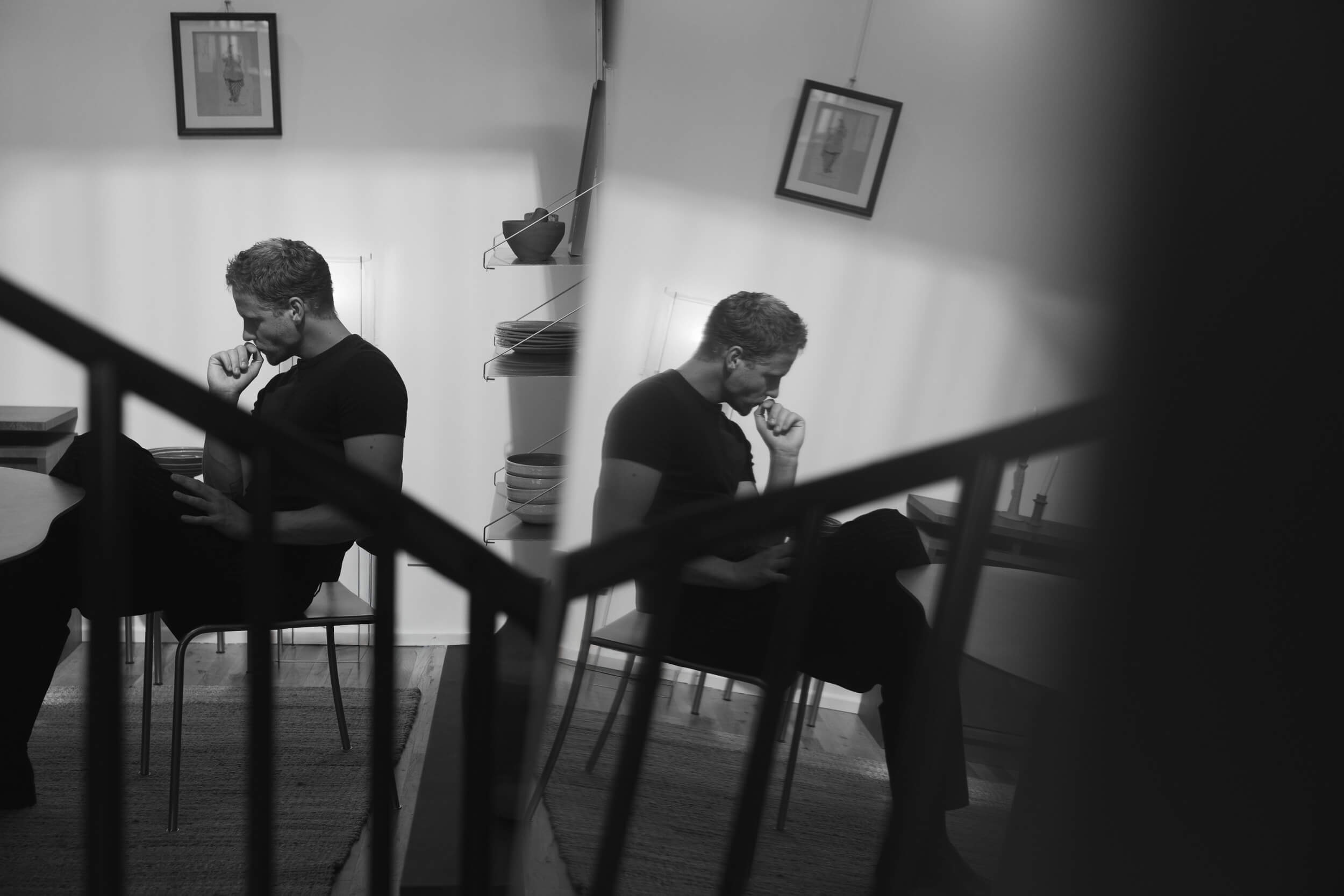
Yes, and by trying to be different, we are also trying to be a little bit better in some ways, but yes, I think we are a version of them. Silverback also says that the world is a boring place when it’s too calm. Are you someone who seeks calm, or do you feel more alive in the middle of chaos?
I increasingly seek calm, yes. In my heart, I don’t think I seek chaos, but I do seek being challenged and being in a place where I feel alive. I really hate feeling like I’m on a conventional path; that panics me, more and more so. So, probably a bit of both. But it’s so difficult to find calm now. There’s so much noise in the world, particularly in our industry, which is constant effort and movement. Stillness and calm is increasingly rare and something to be treasured, I think.
What do you usually do when you want to seek calm? Do you stay in nature? Read a book?
Definitely nature and reading. For me, it’s physical as well; I have to exercise a lot, and that calms me down. If I’m being honest, it’s a bit of a compulsion. Maybe there are some similarities to Silverback there, I don’t know, but I feel them. I need intense exercise and lots of yoga to feel in my body and to make myself physically tired. I’m better at being calm when I have that. If I haven’t got that, I get quite agitated and have a busy mind.
I think with a project like this, there comes a moment when you truly understand why you needed to make it – not just because you wanted to tell someone else’s story, but because you recognized something of yourself in it. What did you discover about yourself through this story?
That’s definitely true, and I think what I’m discovering is ongoing. When you’re an actor, you’re constantly in pursuit of a moment of presence. Equally, with directing, you’ve got this exquisite camera, everyone is giving their time, and it’s up to you to find or create a moment. That can take you away from being present because you’re constantly chasing something. I learned how to find that balance between trying to create shape through quiet leadership and being totally open to things changing and reacting to what’s in front of you.
It’s interesting; as an actor, I spend my life with a camera in front of my face. It’s a strange thing trying to be authentic and become a character when you have a huge camera in your face – it’s totally counterintuitive, even though it’s part of the fun and challenge of screen acting. Being on the other side of that was interesting to me, seeing how it affects another person. You can see it in their body and nervous system when they feel intensely watched.
Overall, I found the process of making this film like a tonic. The small group who worked on it, made it because they loved it and cared very deeply. We let it all hang out…all learning about ourselves, creating a lovely, open environment. As I mentioned, we’re still very close with Silverback and his family. This idea of being “cosmic” that he speaks about is his catchphrase. It’s about reaching for the idea that you don’t have to be moving a hundred miles an hour all the time; there’s so much connection and beauty around you if you just choose to look for it and appreciate it.
“There’s so much connection and beauty around you if you just choose to look for it and appreciate it.”
I think that with a job like yours, as an actor or a director, every time you work on a character or a new project, you learn something new about yourself. If you do your job well, you reflect a lot on yourself because you have to work on someone else’s emotions.
Definitely. It’s so interesting how these things happen. Whenever I’m doing a particular acting job, it’s interesting to see what’s going on in my personal life at the same time. When Kit – the brilliant producer and co-creator – and I made this film, we were going through some crazy, unstable stuff in our lives. The film became something we returned to as a source of real nourishment; it had a special quality, and we really needed it. The process was beautiful. I believe process is really important, and you don’t get enough of it these days. Usually, work is so fast; no one is really talking to each other, and it’s just about trying to make money. When you get a chance to do something that is genuinely about being part of something meaningful, it’s really welcome.
I also loved the cinematography very much.
Thank you. That’s Jack Mealing. He’s a wonderful man, extremely talented, and so patient. I loved working with him.
Having a small crew makes it even more personal and full of meaning. I’ve never worked with a huge cast and crew, but I imagine there is something special about doing things quietly.
Definitely. I would love to be lucky enough to have the chance to make more films and bring that spirit into a larger production. Of course, dealing with more money and operating on a larger logistical scale brings new challenges, but if everyone can be on the same page, care about what they’re doing, and be united by that spirit, I think it matters in the end. I’ve seen it happen, and I’d love to try and work in that way.
I know you have another project you will be directing.
Yes, I’ve written a film called “Zealot”, and we’ve been developing it and nudging closer towards getting financing for the past couple of years. So that’s the next thing to try and do.
You are also doing theatre, right?
Yes, I’m about to start rehearsing a play called “Who’s Afraid of Virginia Woolf?” by Edward Albee, which will be on in London, and I think it opens in September. I’m really excited – I’ve only done one professional play before, and that was straight after leaving drama school, so I can’t think of anything I’m more excited to do right now. To be in a rehearsal room, to work with those actors and the director, Marianne Elliot, on that material and just melt into it – I can’t wait, I love that rigour and that routine.
You also have “Tommy & Tuppence” coming out soon!
Yes, it’s coming out on September 15th in the US, airing on BritBox, while it’s still TBC when it’ll air in the UK. I can’t wait for this one, too!
What about Tommy’s journey appealed you the most?
The story is based on Agatha Christie’s series of books, and it’s the first modern adaptation of an Agatha Christie ever. Tommy is a lovely character, he’s a crime novelist who’s had some success. When we meet him, at the start of the show, he’s living in his aunt’s old flat, and he has a chance encounter with his ex-partner, Tuppence, at a wedding. They stumble into becoming amateur detectives together. This is the first time I’ve been a lead in a show. To be honest with you, it wasn’t something I was fixated on doing, but I really enjoyed that, surprisingly, because you just have so much more room to experiment and can create more of an architecture. Tommy and I have quite a similar essence and playing him felt very natural, which was an interesting experience. There was an affinity.
The series blends mystery, romance and comedy, so it must be fun!
Yeah, it is fun! I’m excited for people to watch it. I had the chance to work with brilliant actors… Antonia Thomas, who plays Tuppence, is just an extraordinary superstar, we get along really well and had a lovely time, and Imelda Staunton too, which was a privilege.
What are you reading right now?
I’m reading a book called “The Wall” by Marlen Haushofer. I found it in a bookshop in San Francisco a couple of weeks ago, where there are so many lovely bookshops. It’s an Austrian book about a woman who’s staying with her friends in a hunting lodge and one day she realises that they’re not there, and she goes look for them; then she realises there’s an invisible bubble around the land and she’s contained within it, with a dog and a cow…and a cat. The novel is her sort of diary, a testimony of her experience of being completely isolated, with no idea what’s happening on the other side of the wall. It’s so good. What are you reading?
“The Correspondent” by Viriginia Evans. I just started it, but it seems really good. It’s the life story of an old woman, told through the letters she answers to every Wednesday. I love sad books, or mystery books.
What’s your favourite book?
I think “Less than zero” by Bret Easton Ellis. He’s a genius, for me. This book is not my favorite in the sense that I think he’s the best, but it’s my go-to answer to that question, so it must mean something. What’s yours?
I think it would be a tossup between “The Sea, the Sea” by Iris Murdoch and “The Magus” by John Fowles, which is my dad’s and my brother’s favourite book, as well.
I’m taking notes!
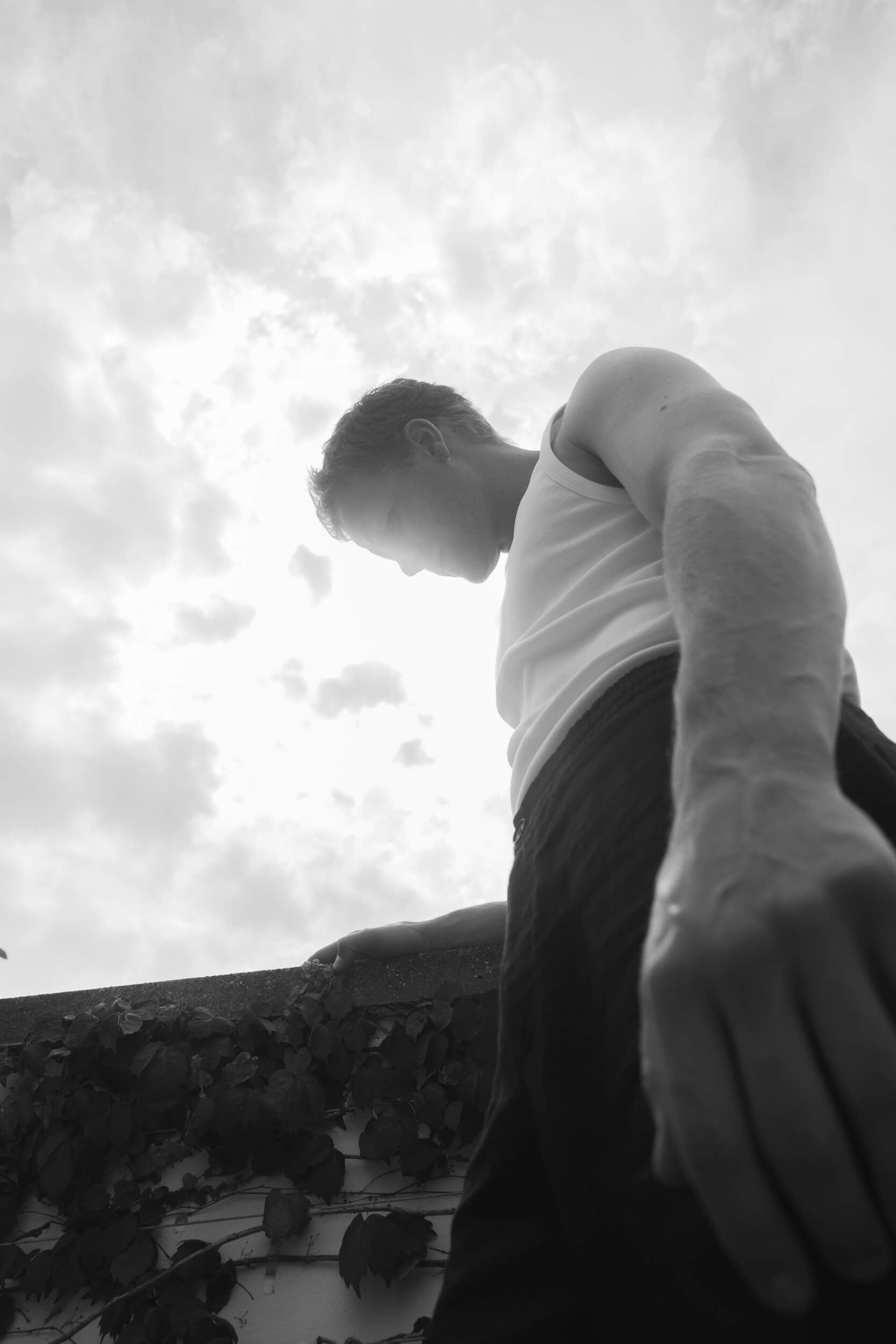
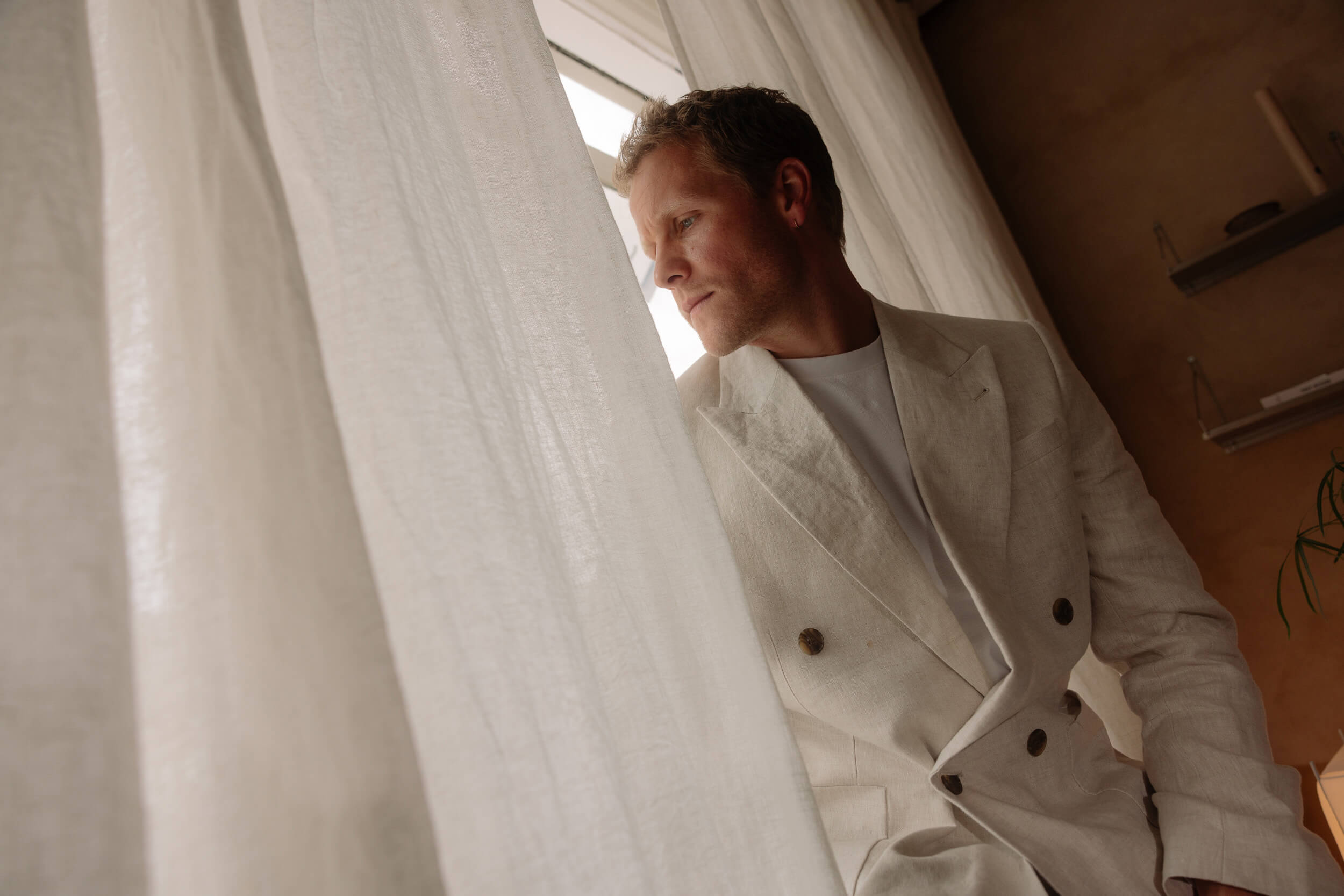
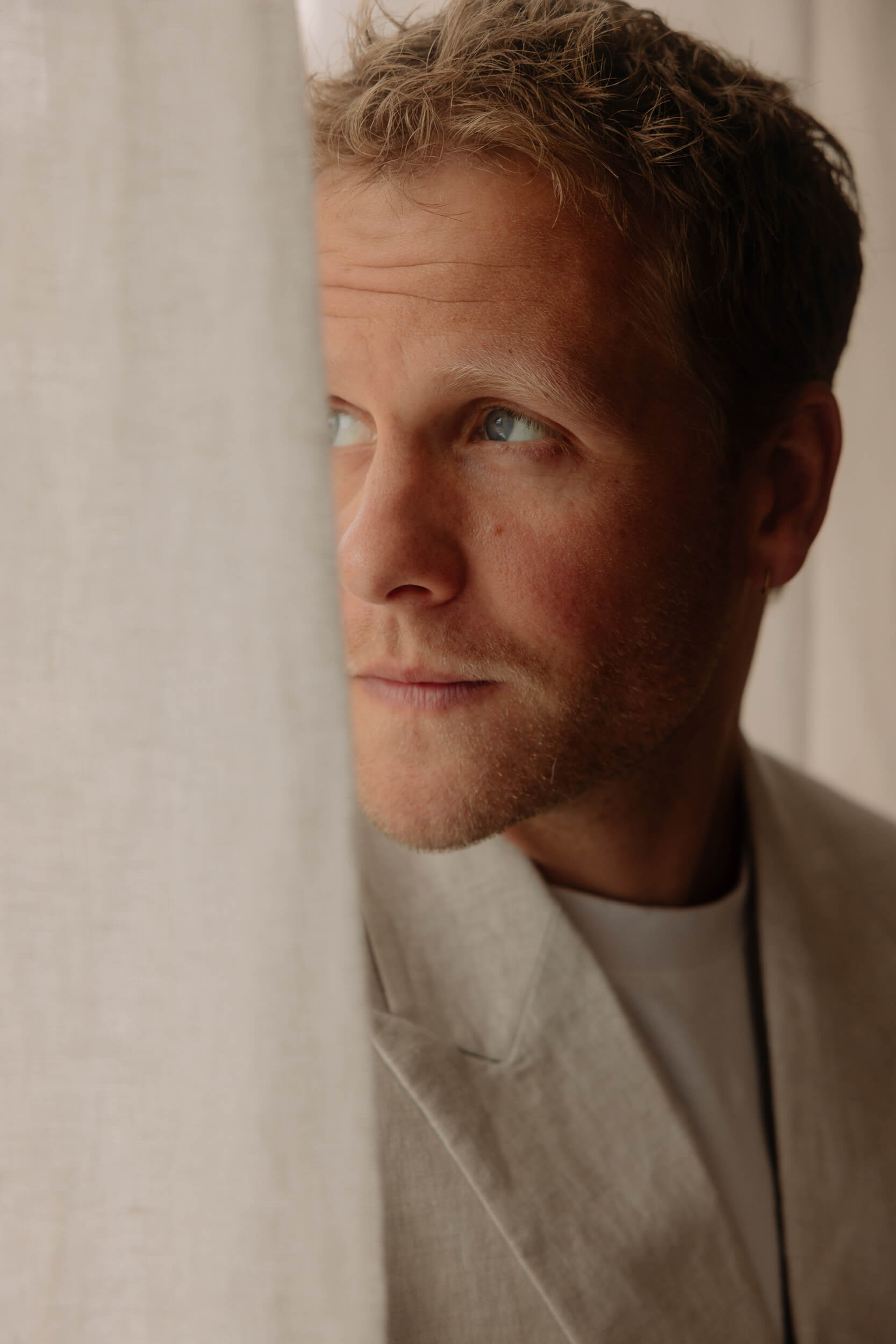
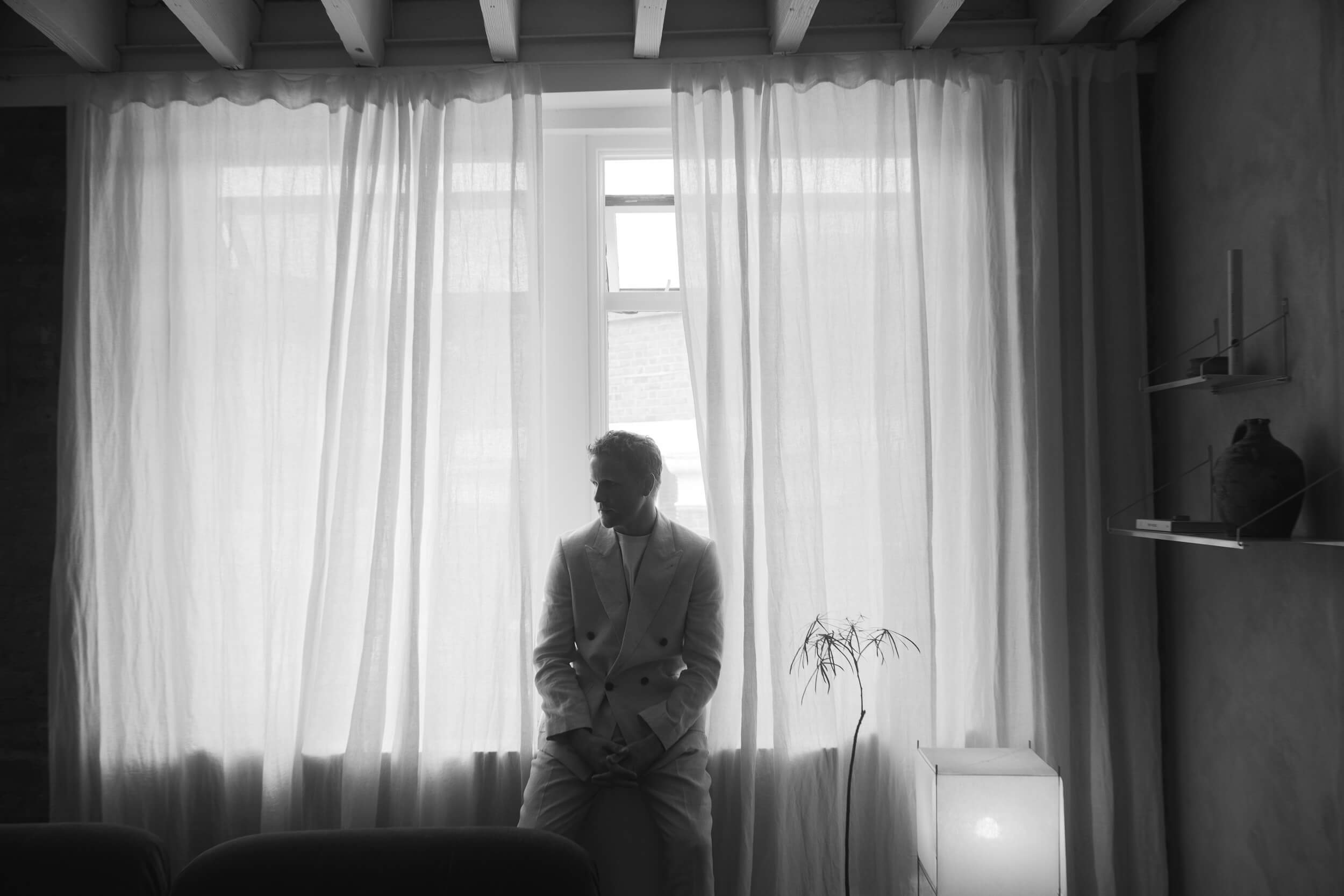
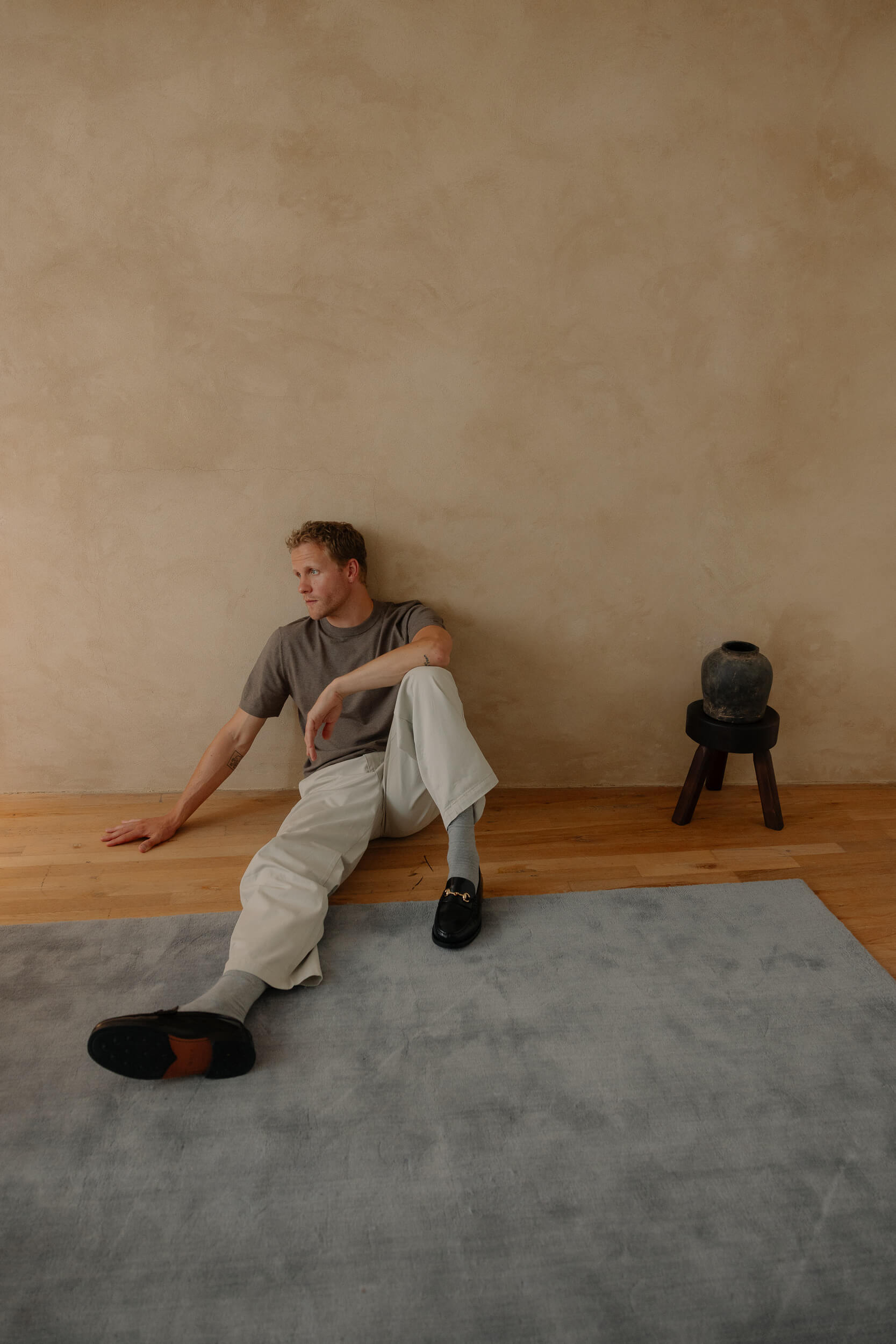
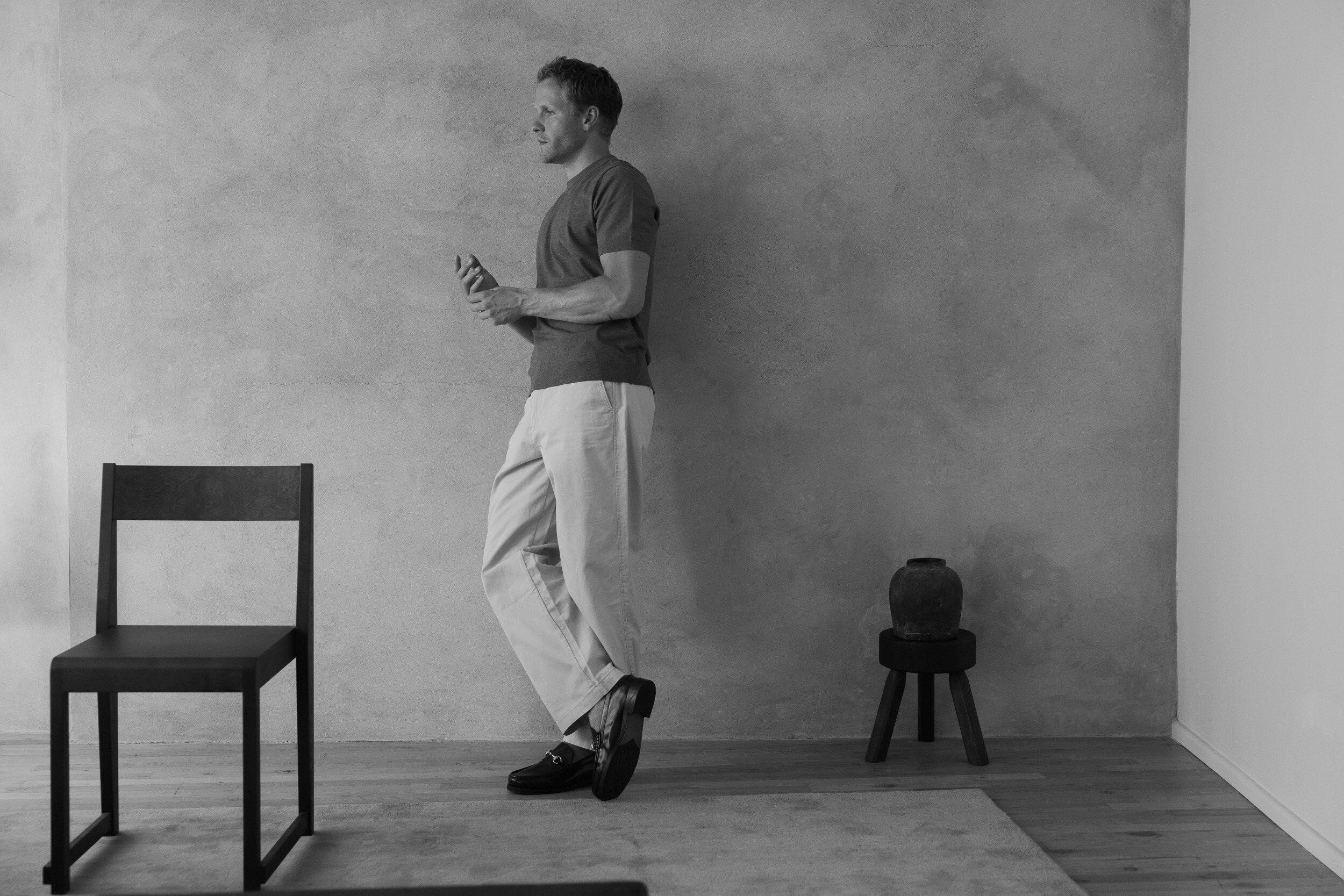
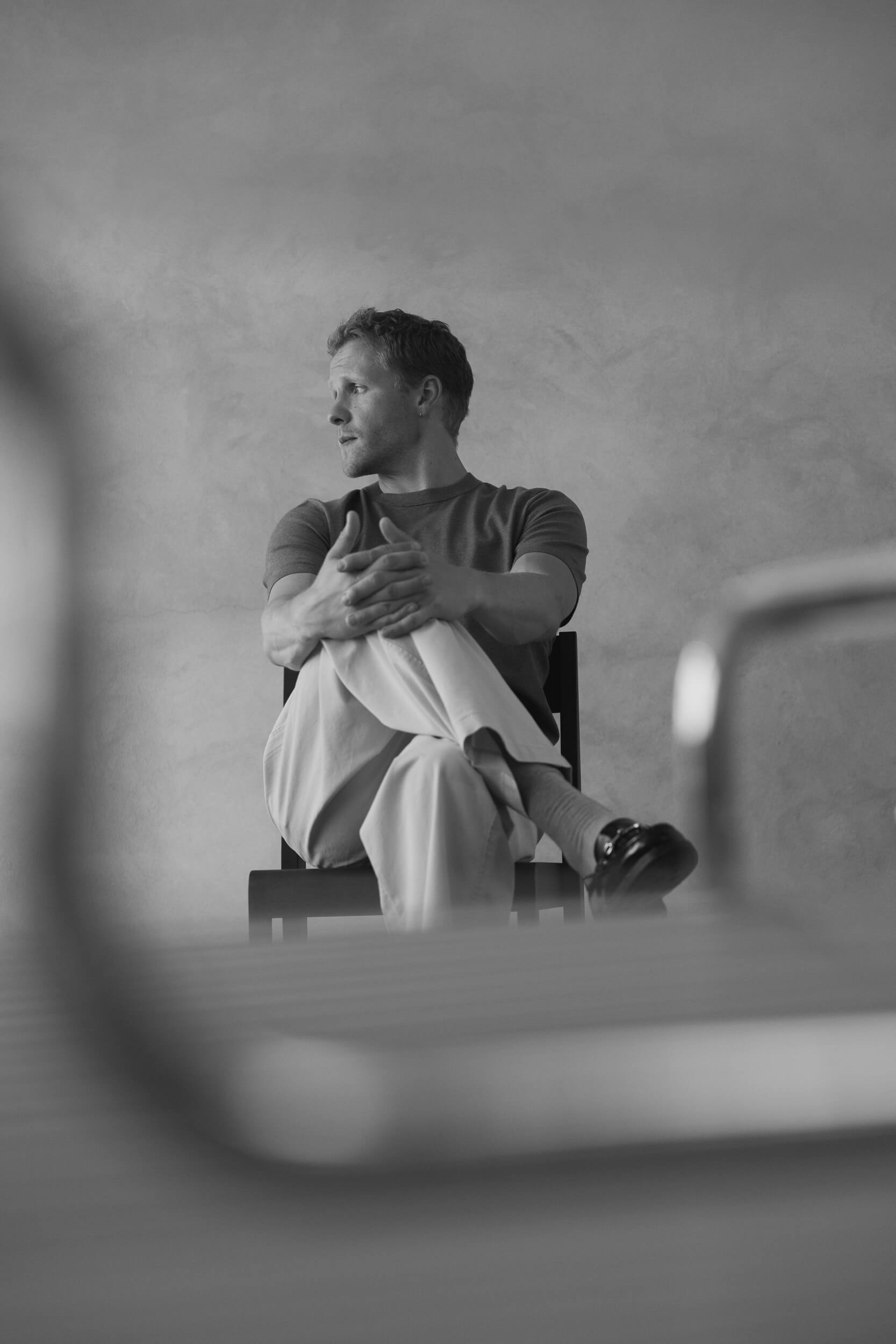
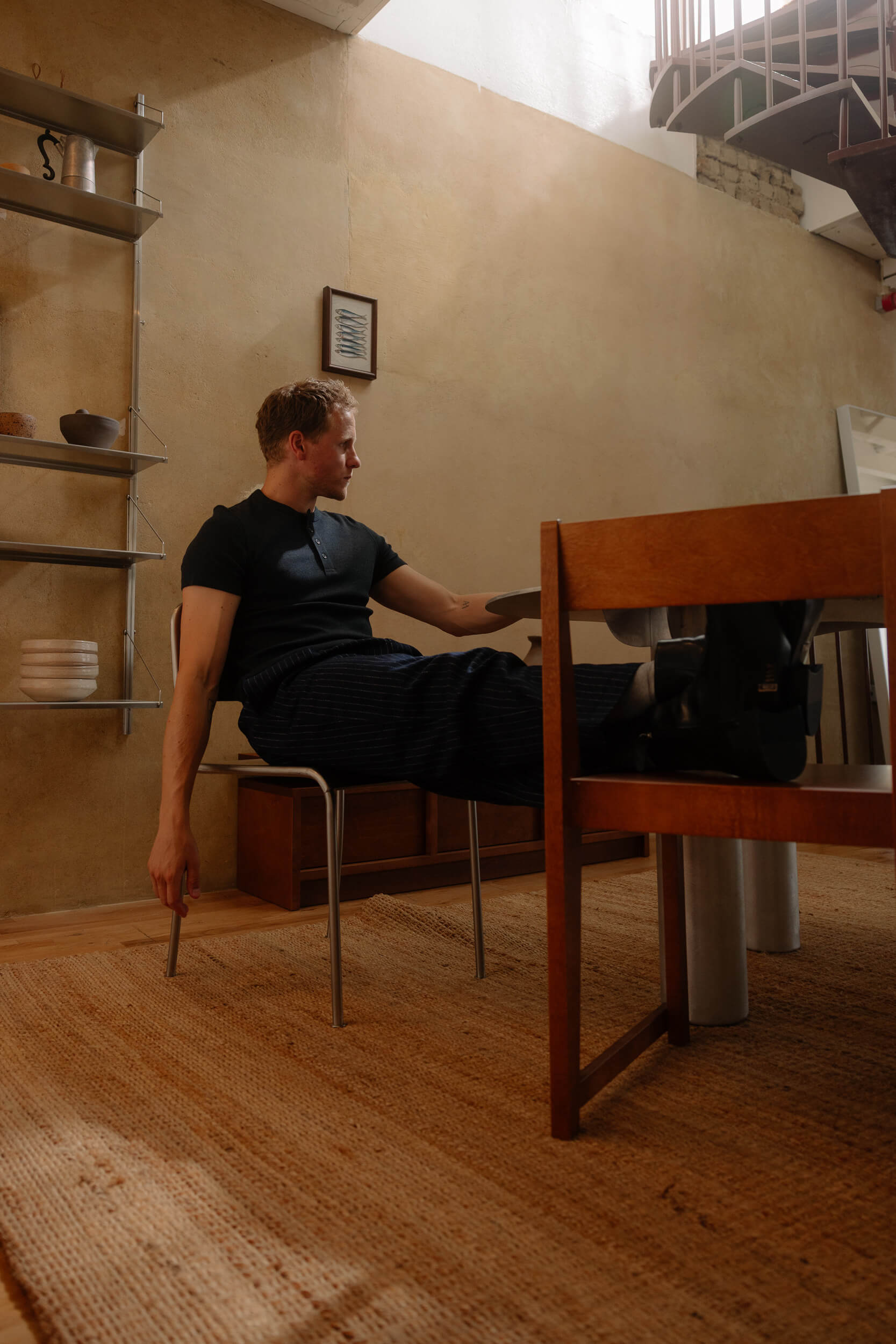
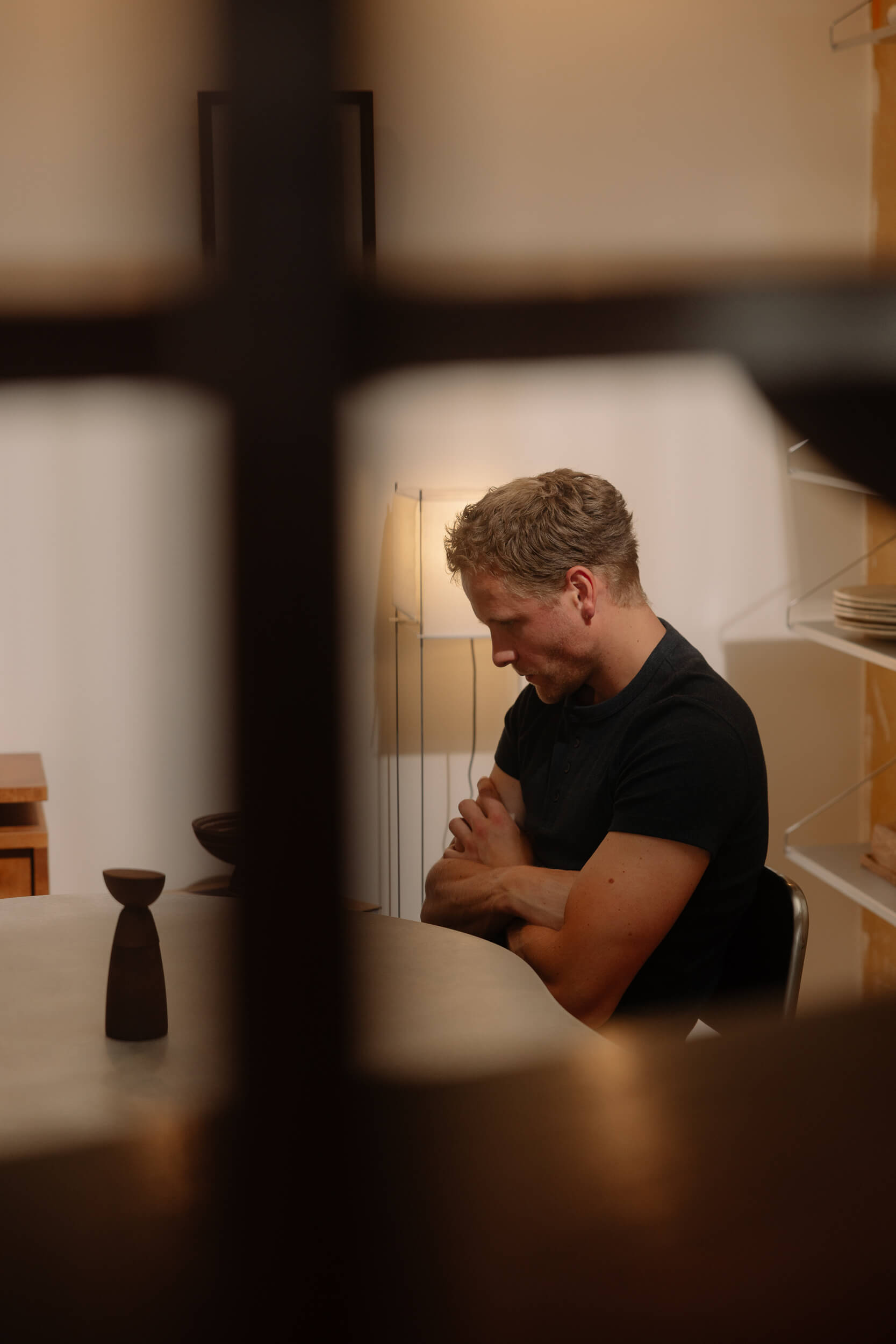
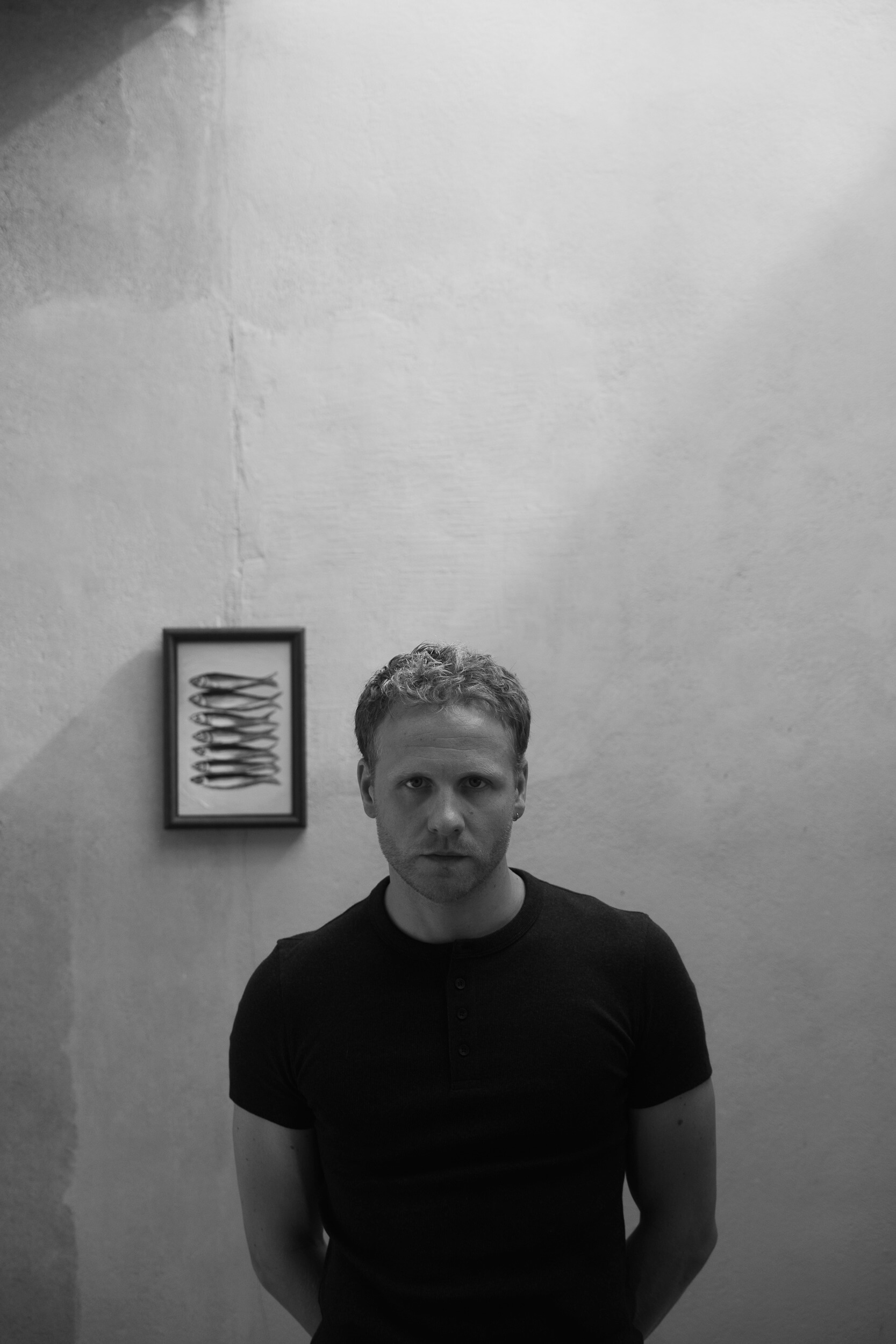
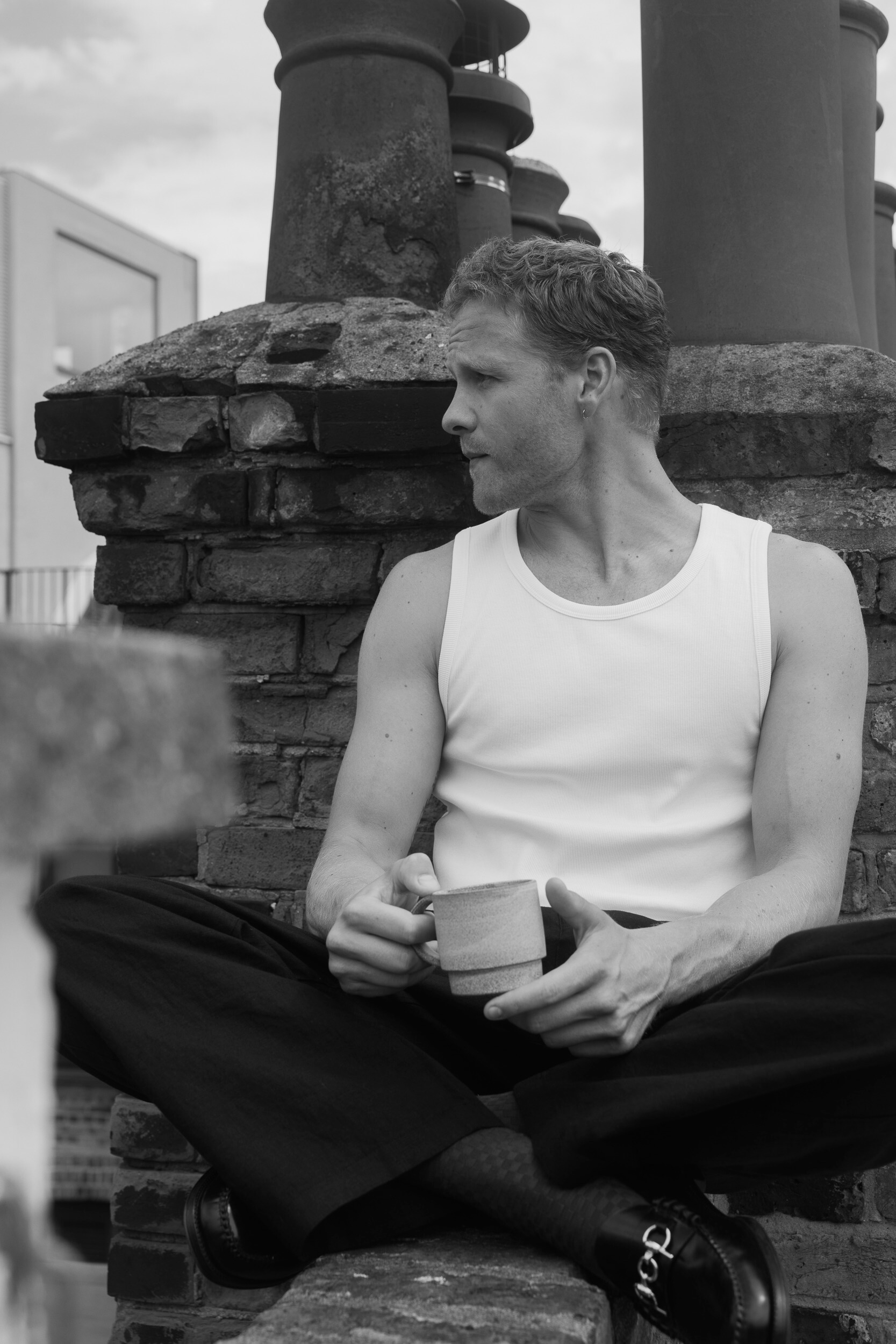
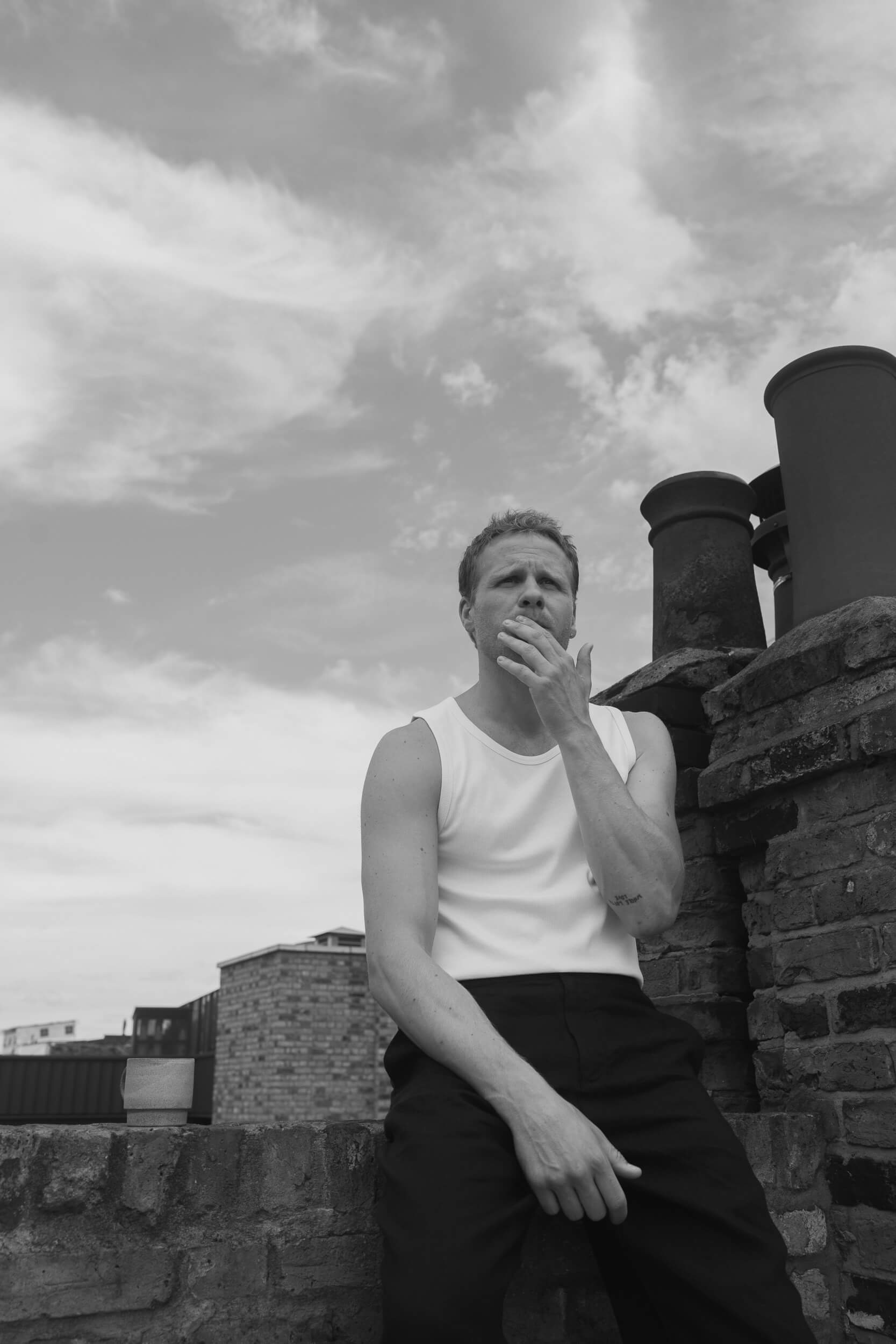
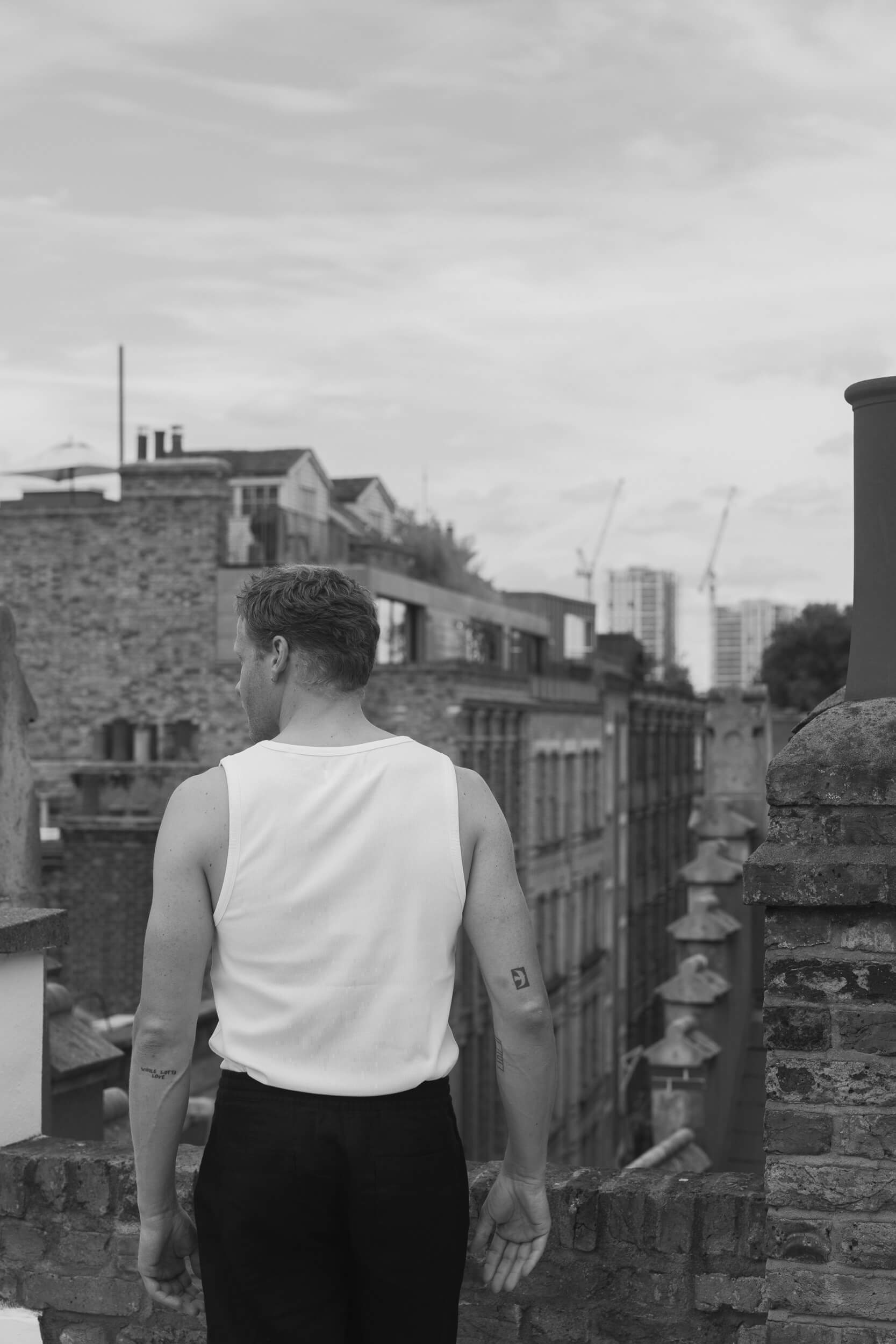
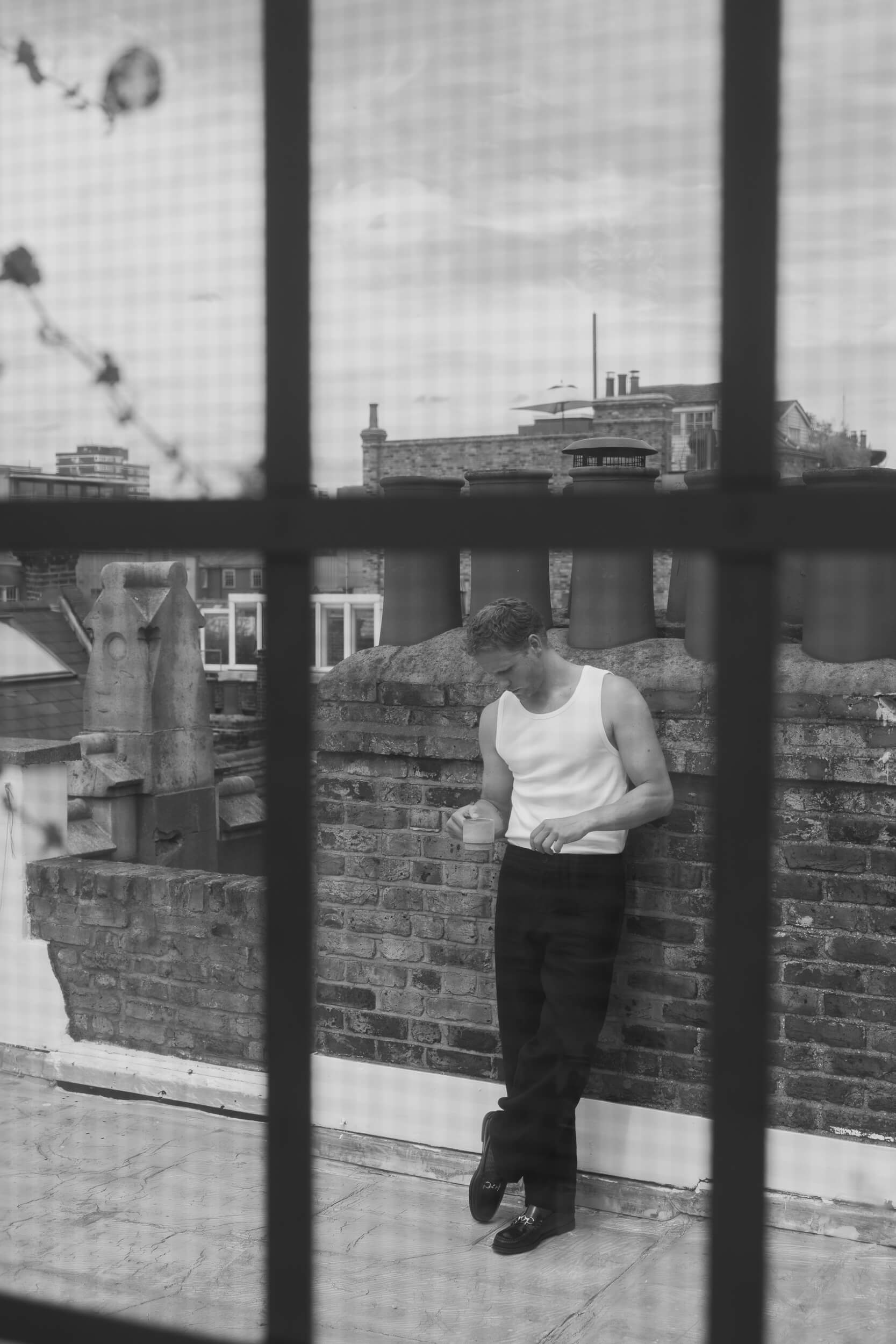
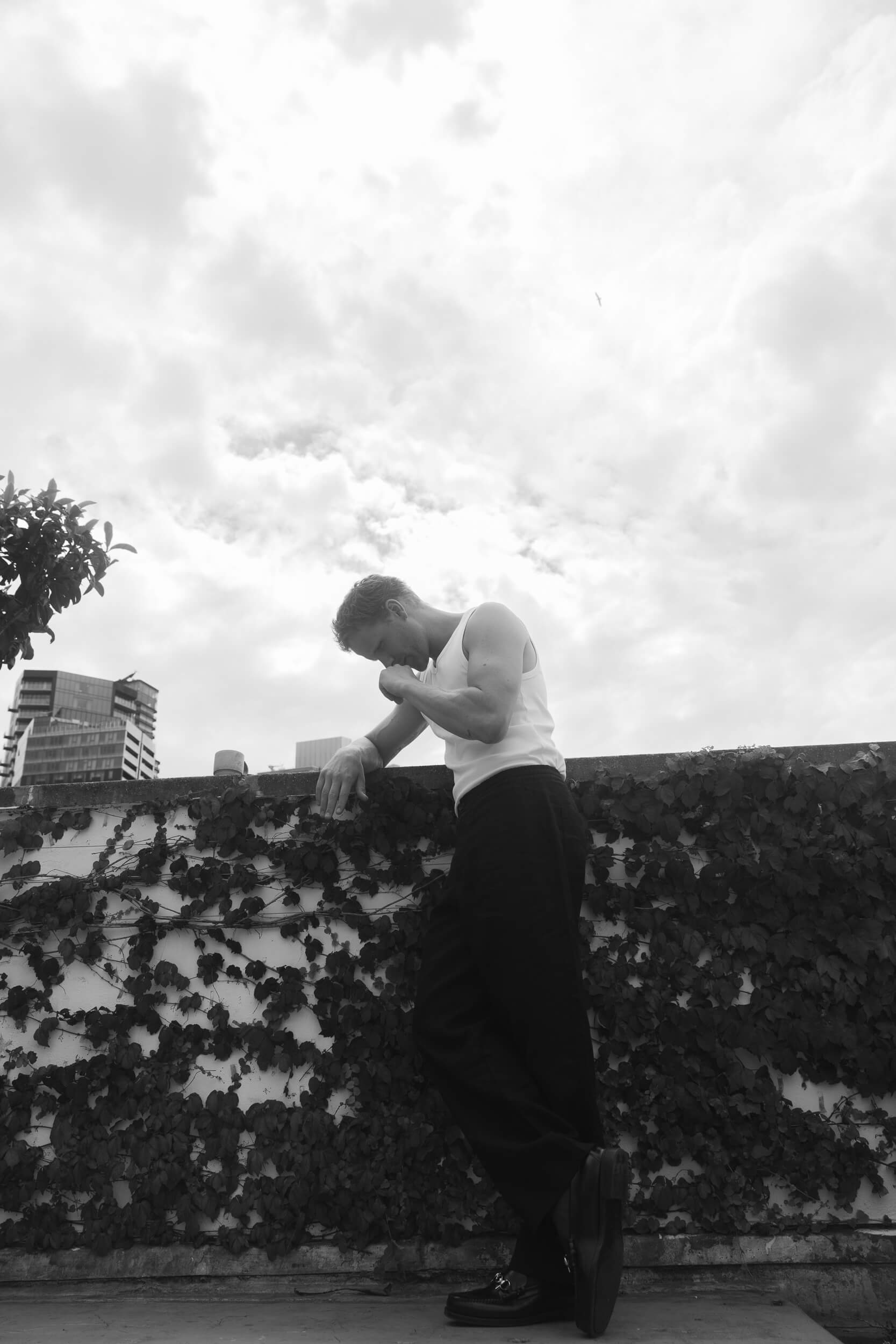
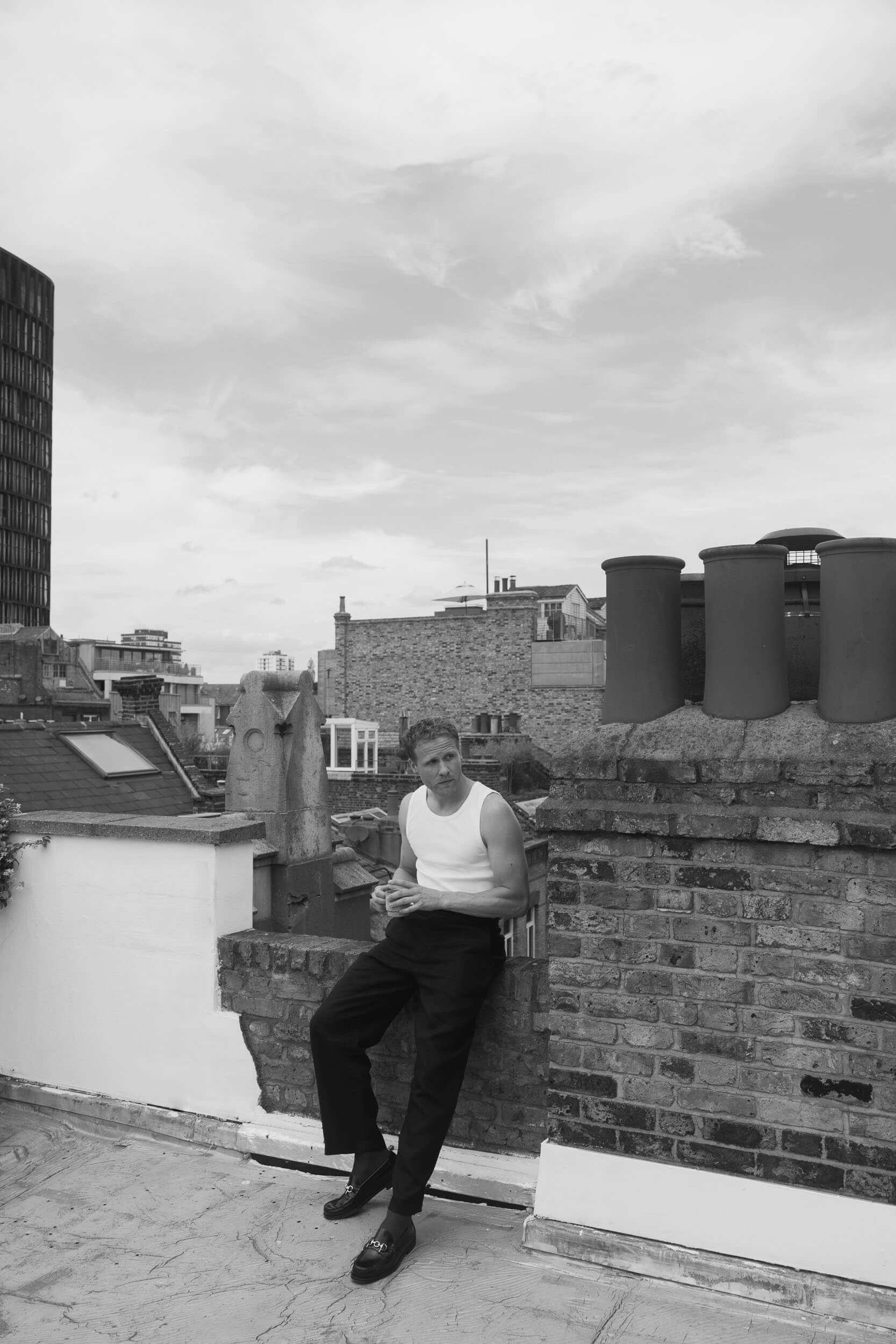
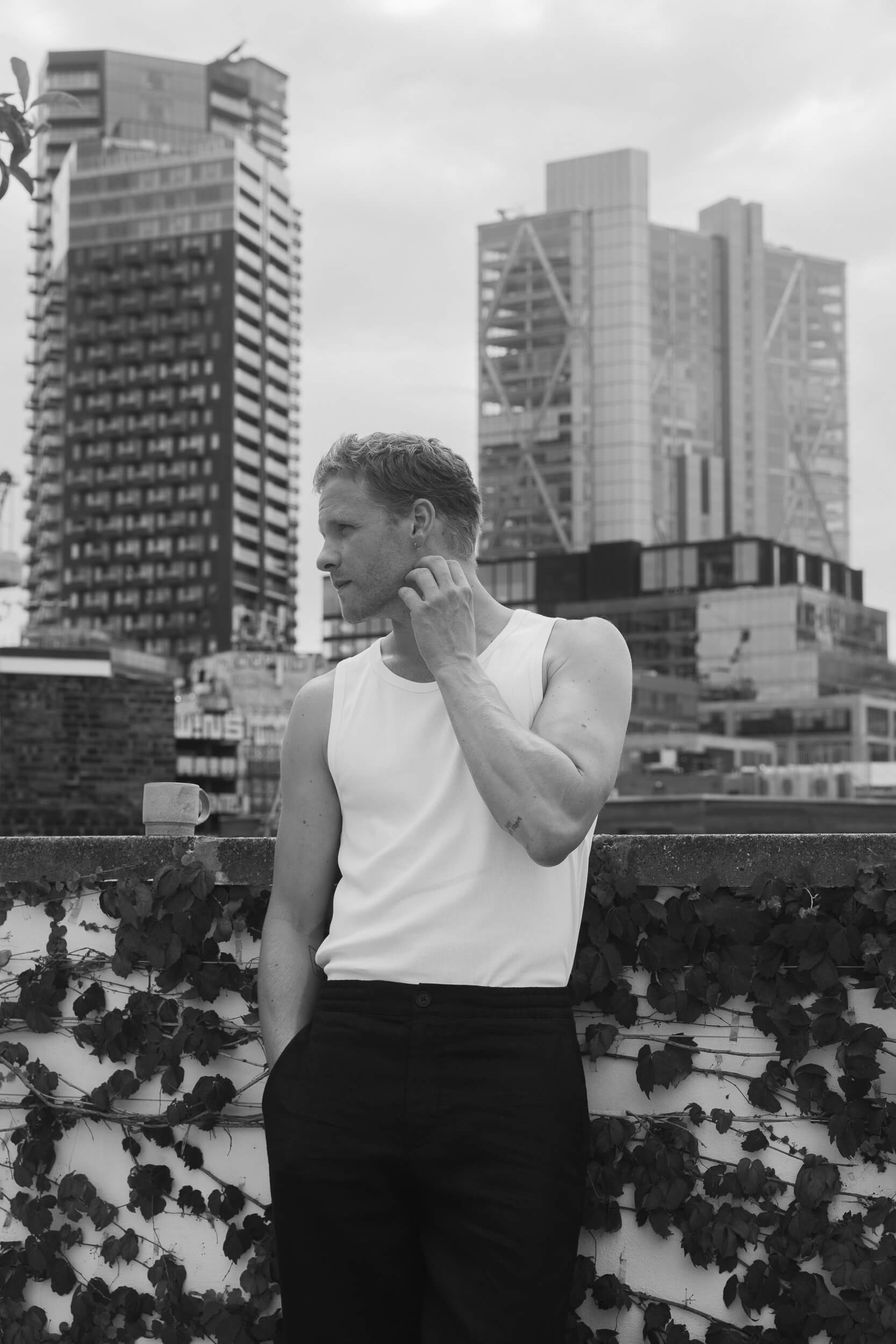
Photos & Video by Johnny Carrano.
Styling by Prue Fisher.
Grooming by Nohelia Reyes.
Thanks to Curtis Brown.
LOOK 1
Suit: Wax London
Top: Wax London
Shoes: Walk London
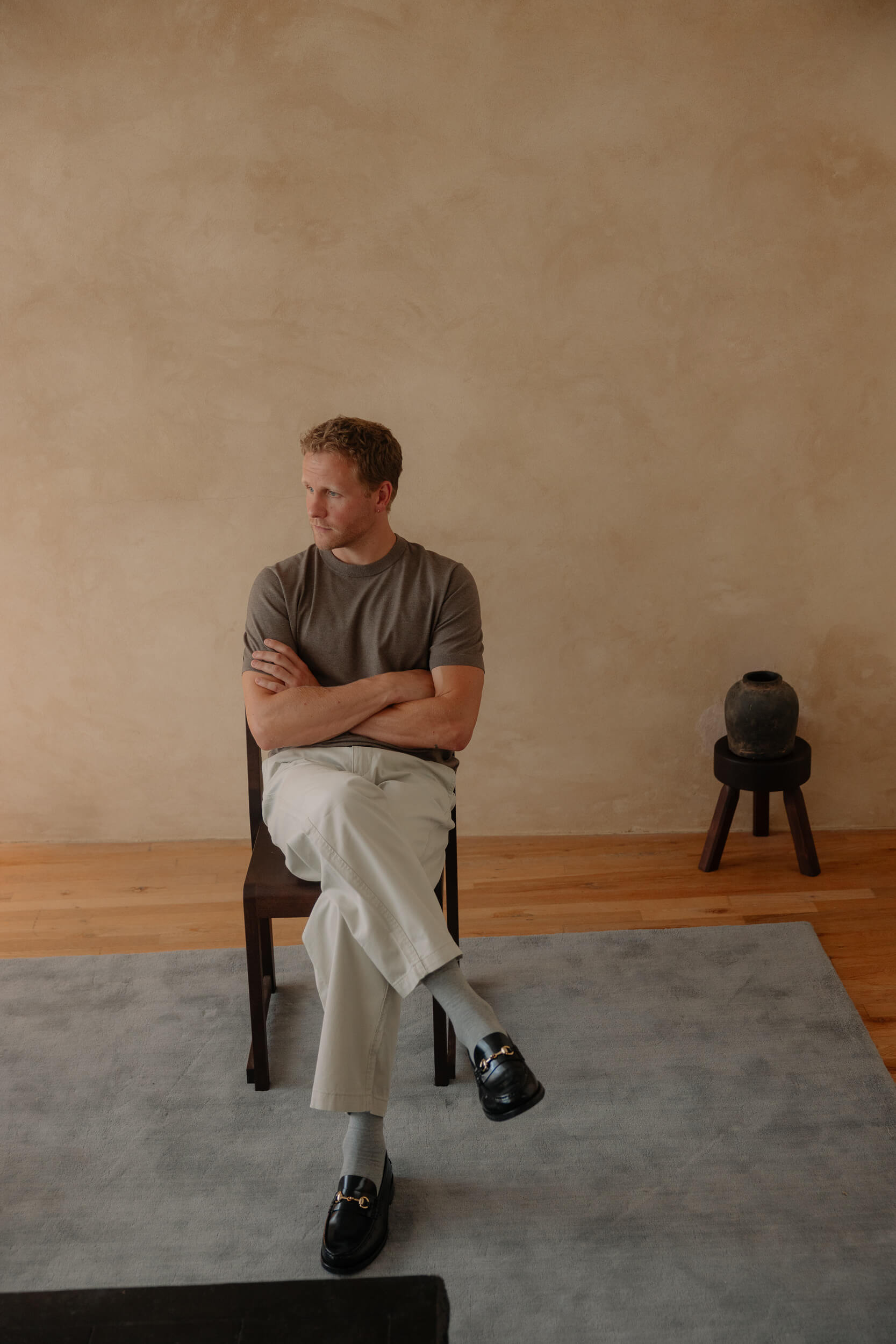
LOOK 2
Top: Theory
Trouser: Levi’s
Shoes: Walk London
LOOK 3
Top: COS
Trousers: Wax London
Boots: Walk London
LOOK 4
Top: Wax London / COS
Trouser: Wax London
Shoes: GH Bass
Socks: Falke