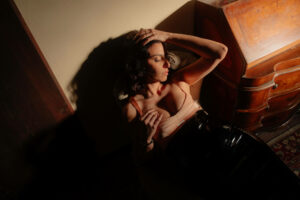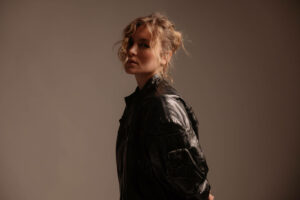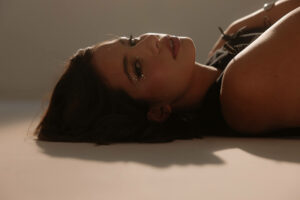
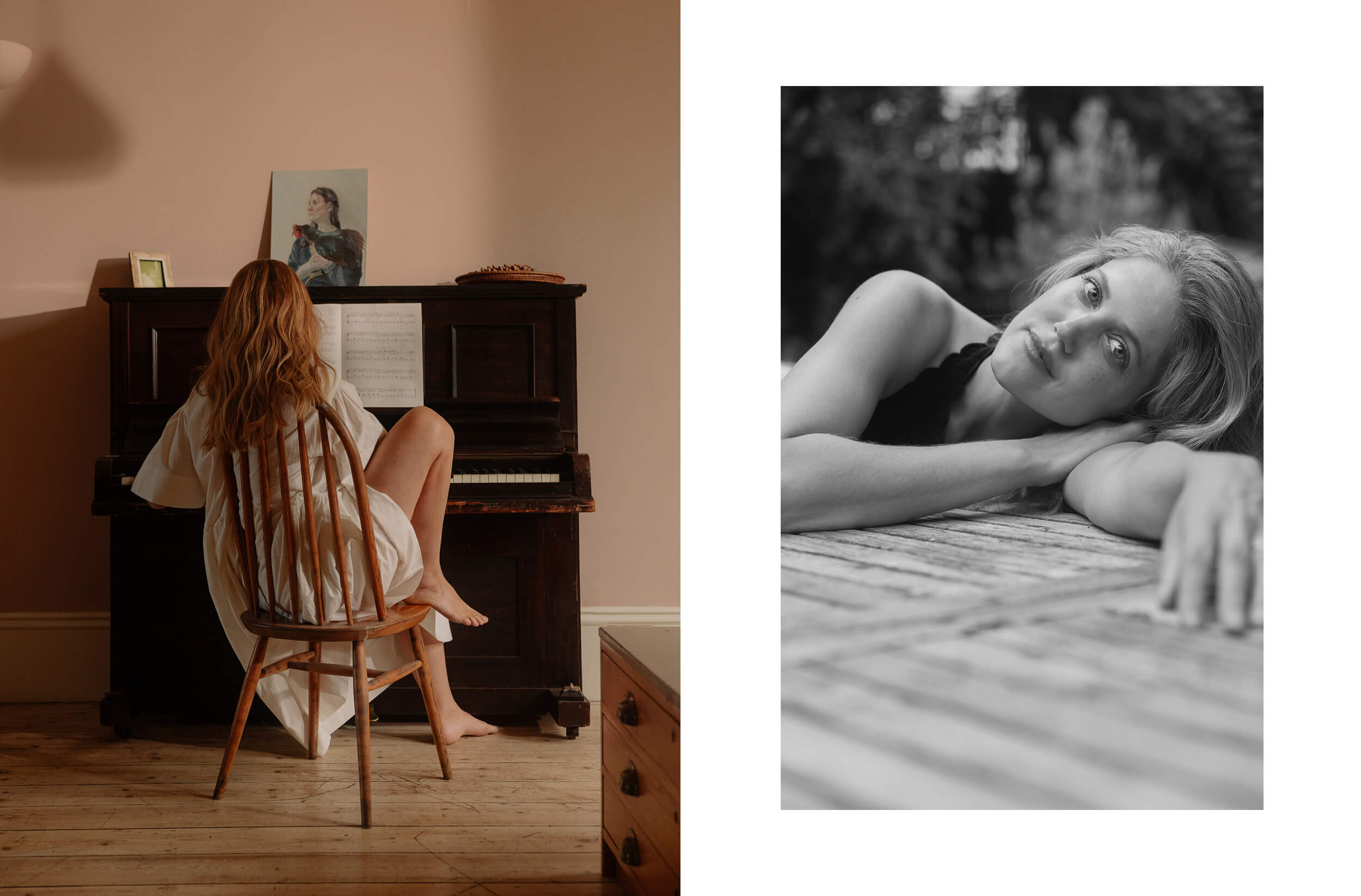
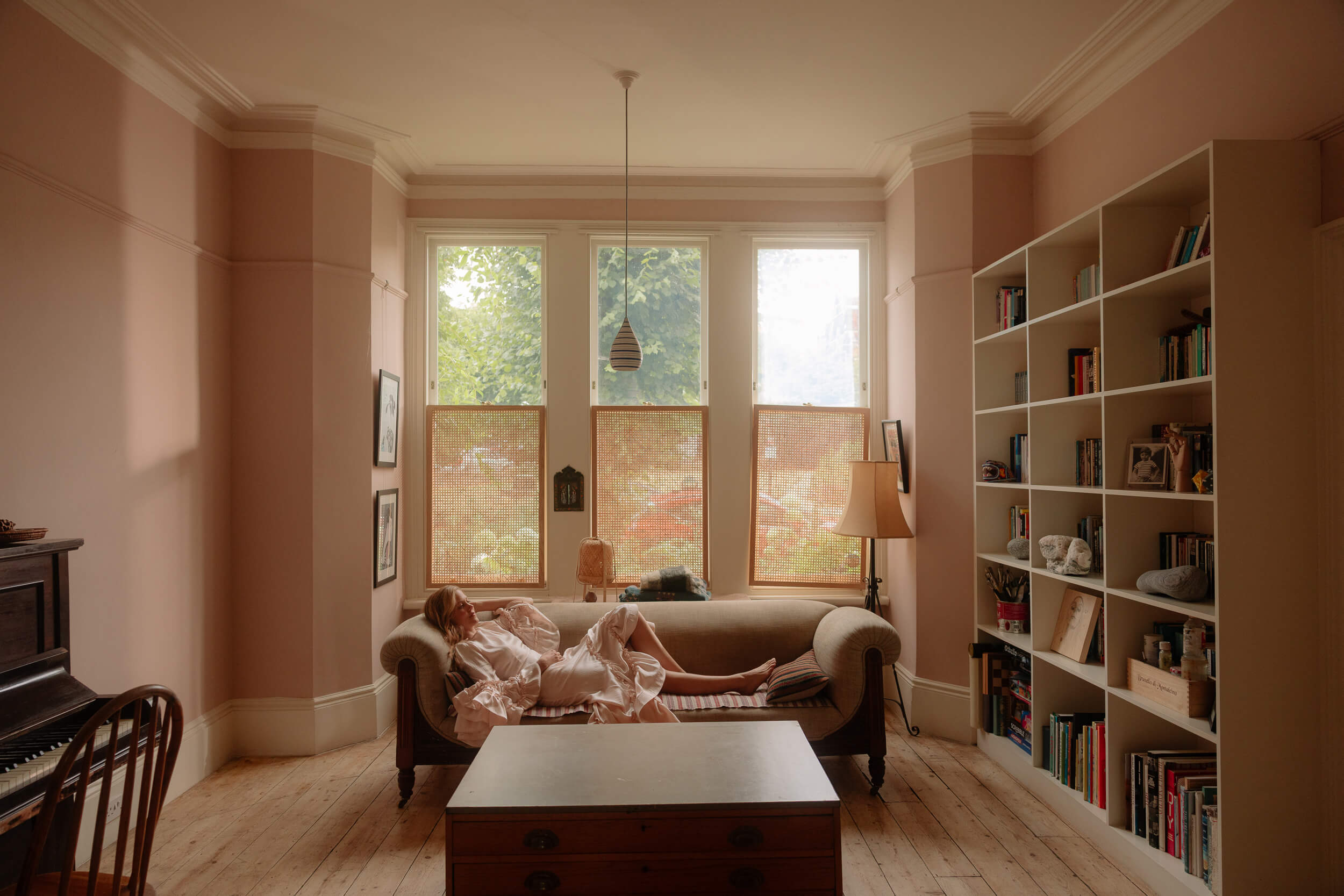
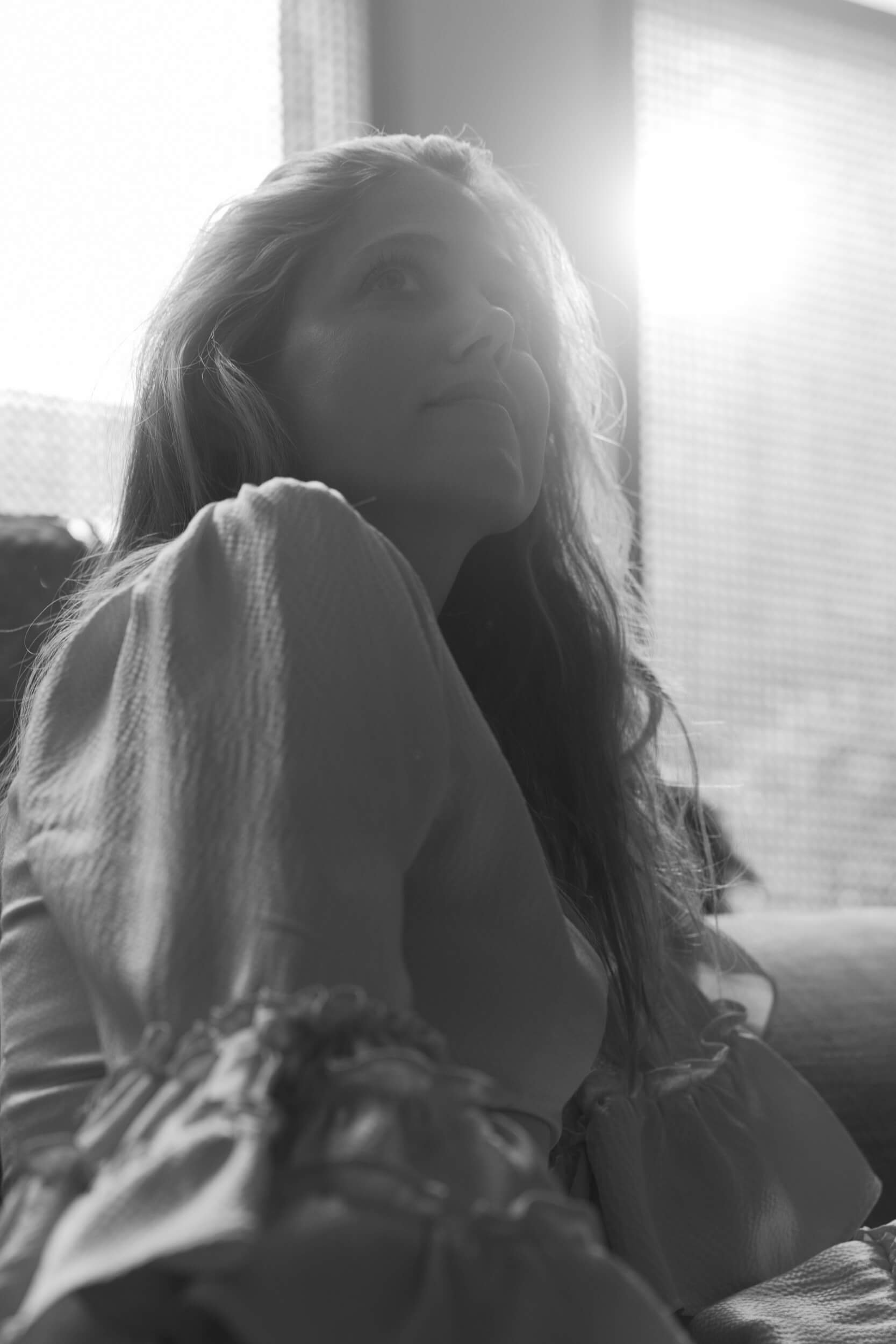
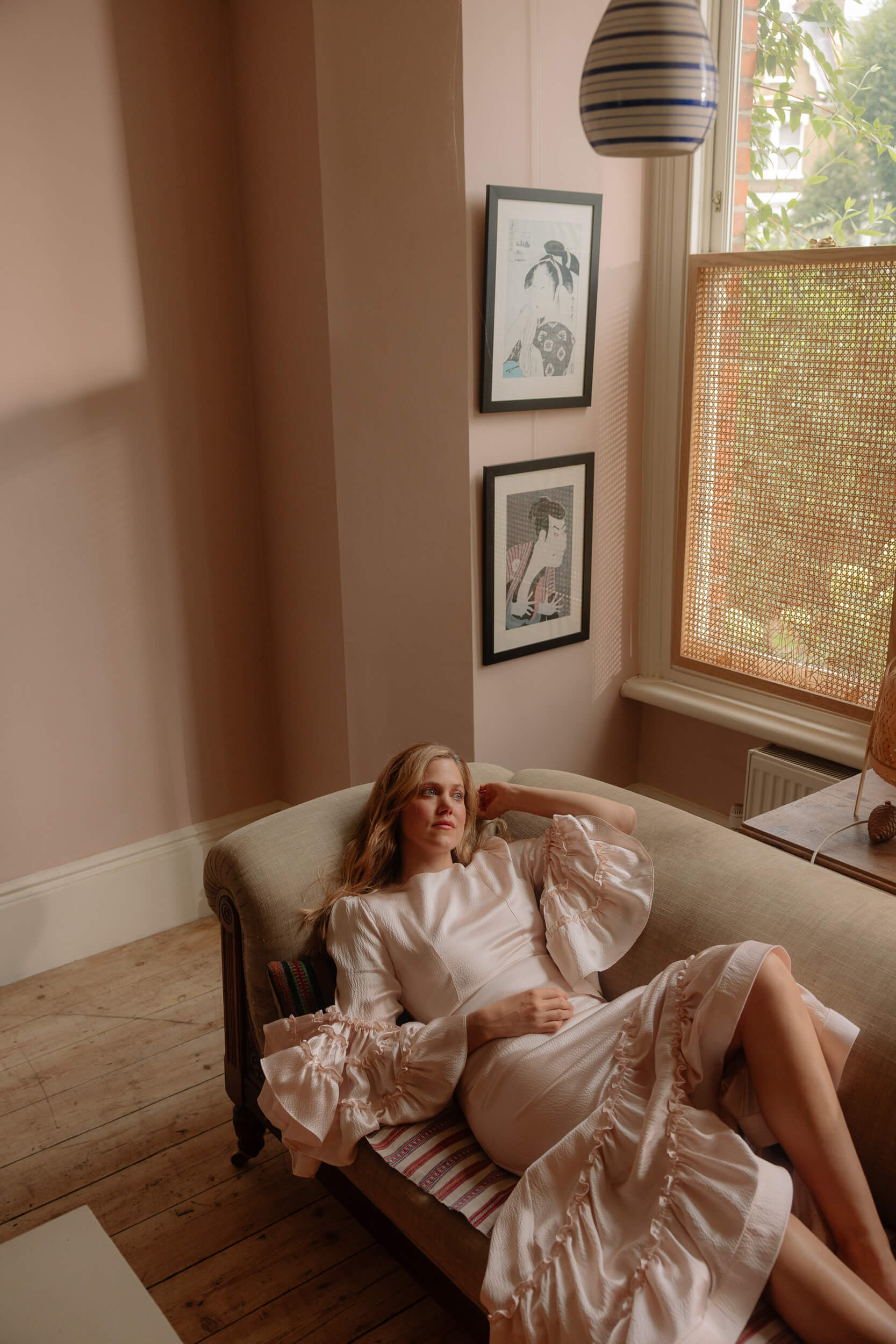
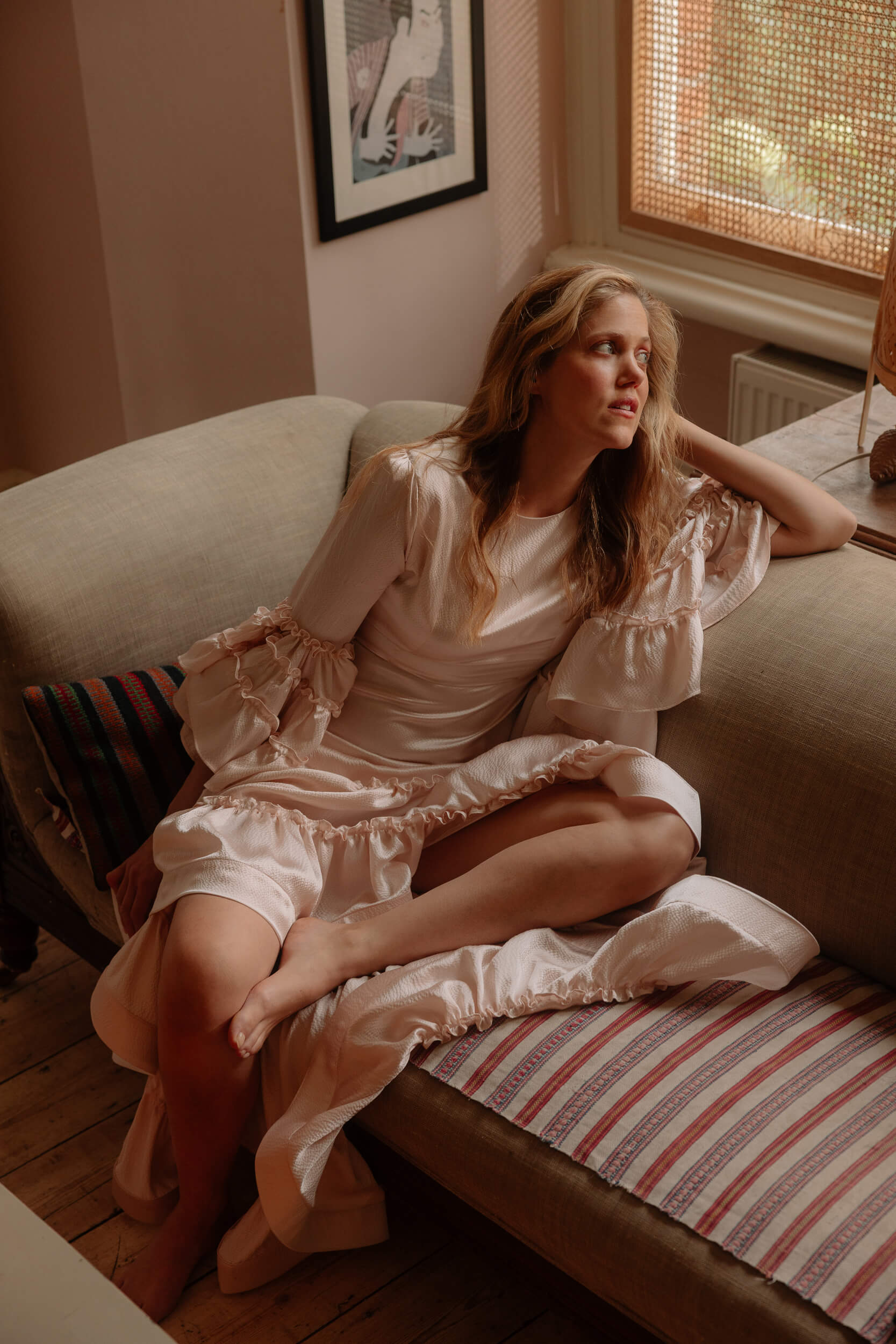
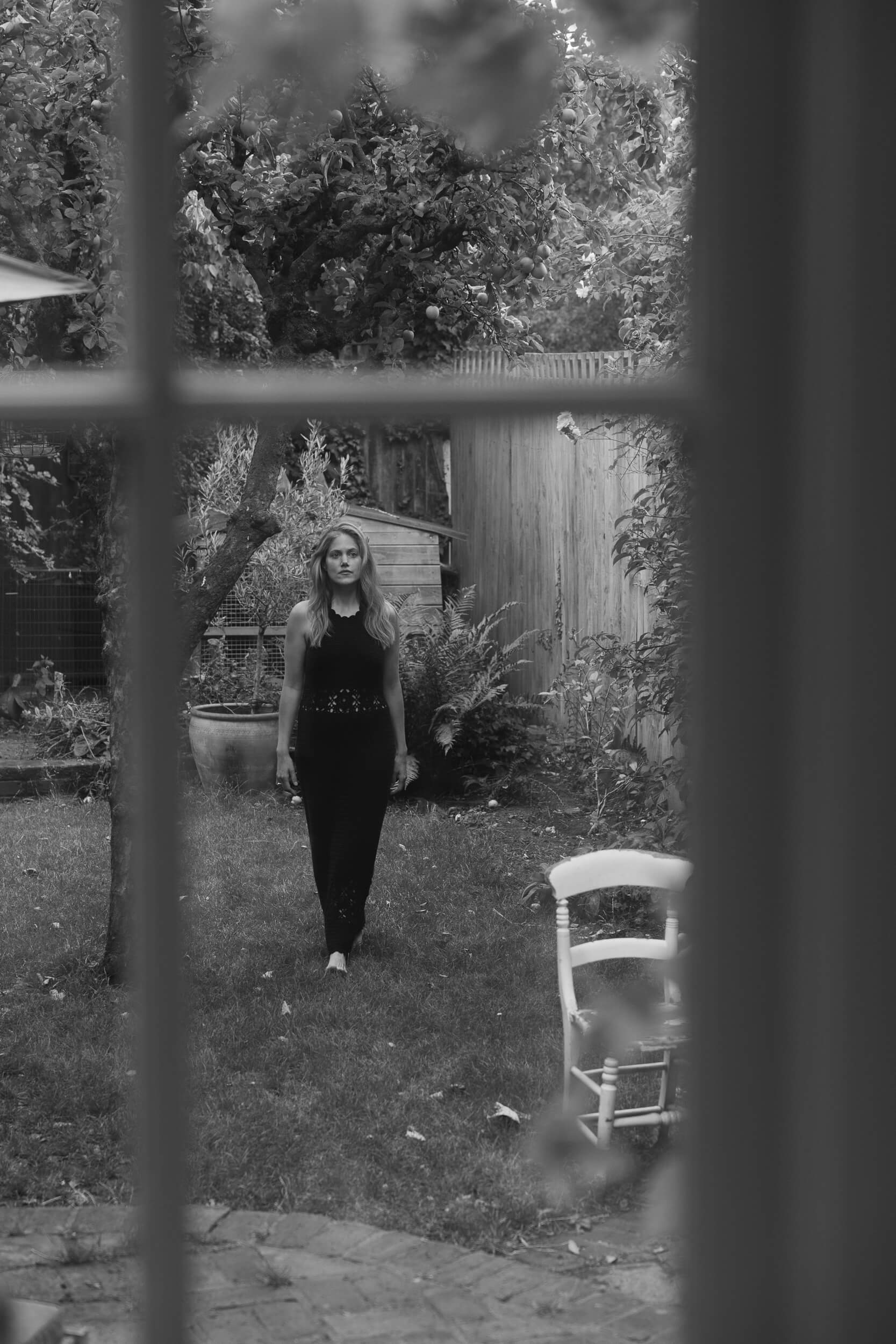
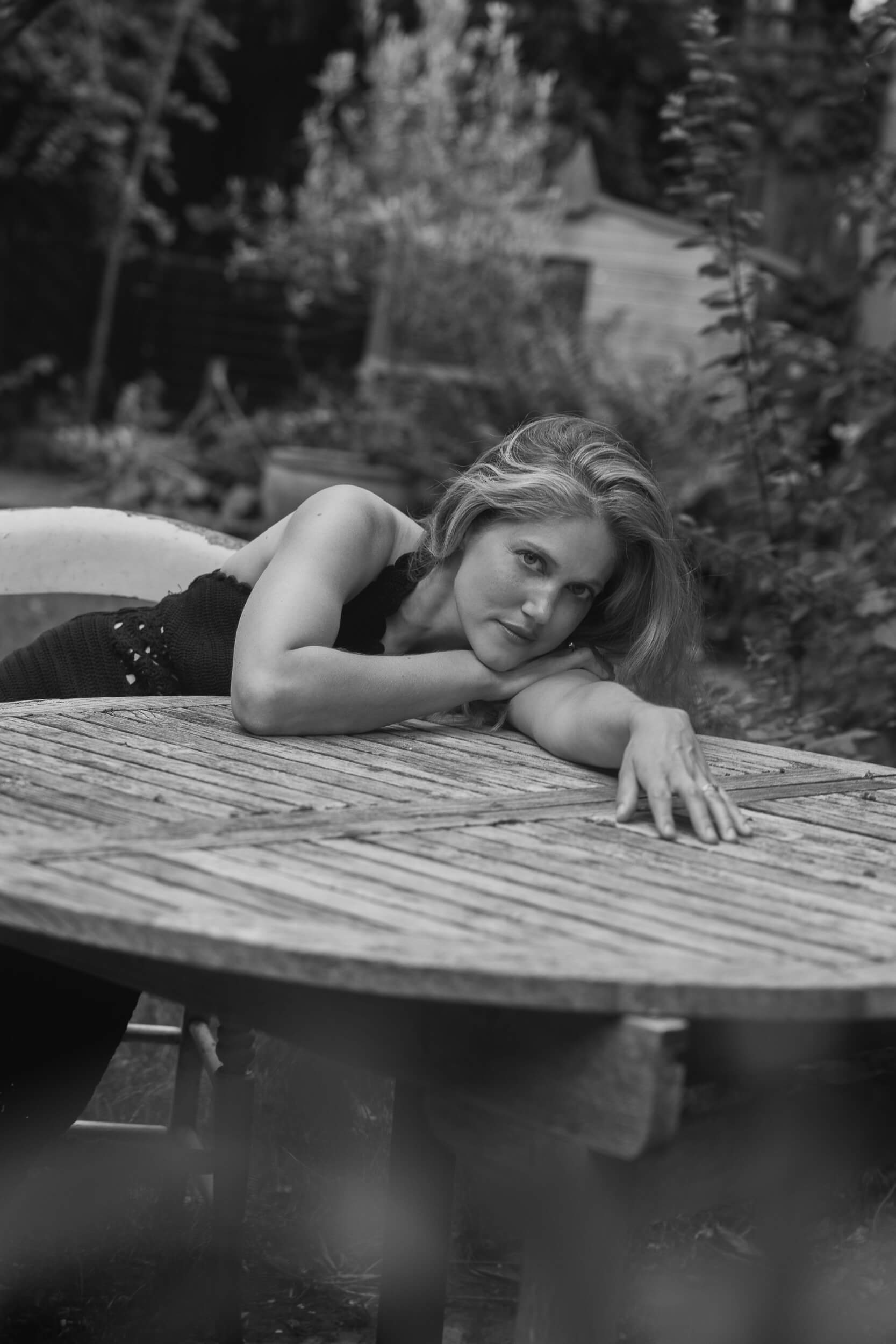
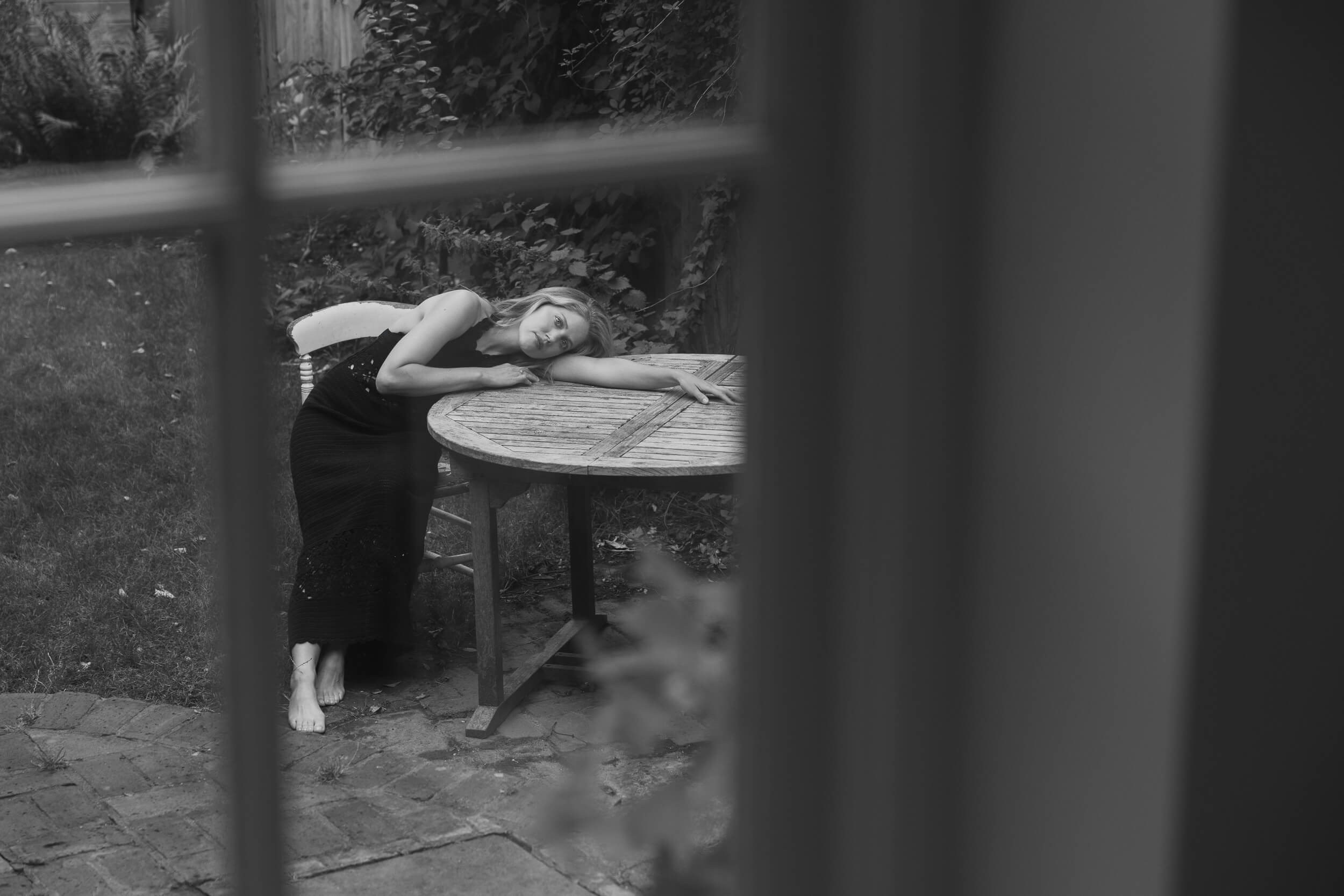
There’s a particular kind of light that follows Charity Wakefield – bright, curious, gently rebellious – the sort of glow that feels at once timeless and unmistakably contemporary. It’s the same energy she brings to every character she inhabits, whether she’s navigating the chaotic decadence of “The Great”, breathing new life into Jane Austen’s heroines, or quietly reshaping the industry from within with her commitment to sustainability.
For our December Cover Story, we meet an artist who moves through her world with both sincerity and spark: someone who’s deeply in love with stories worth telling, who still believes in their power to shift culture, and who isn’t afraid to ask how filmmaking – and fashion, and everyday habits – can tread more lightly on the planet. Open-heartedly, Charity talks about bravery, imagination, historical storytelling, the thrill of improvisation, and the aching beauty of the natural world.
This is the portrait of an actor who isn’t just shaping her craft – she’s shaping the future she wants to live in.
What’s your first cinema memory?
It’s not my first cinema memory, but my first big cinema impression, or the first time that cinema really affected me was when I watched “Titanic” at the cinema with my boyfriend at the time. It was this huge film back then, and I just couldn’t believe how incredible cinema could be. It was so darkly funny, and it was so romantic. I loved Kate Winslet in that film, and I was an absolute fan of Leonardo DiCaprio.
I remember feeling totally caught by and completely into this imaginative world – it was such a detailed world-building film, and I was left totally heartbroken. Also, I have a vague memory of looking at myself in the mirror in the bathroom and thinking, “Could I do that?”. Of course, I didn’t really understand much about how they made films, and I think I probably thought she was in the icy water for days filming that [laughs]. Of course, now I know she would have been in a tank in a studio, but I think I was like, “Could I have the stamina to make a big film? Do I have any talent?”. You know, I was really thinking maybe I could do that for a job.
Do you think there was enough space for Leonardo DiCaprio on the door? [laughs]
I do! [laughs] But you know, it’s very “Romeo and Juliet”, isn’t it? It needed the dramatic end, probably, it needed it for us all to understand the importance of appreciating our loved ones when they’re here.
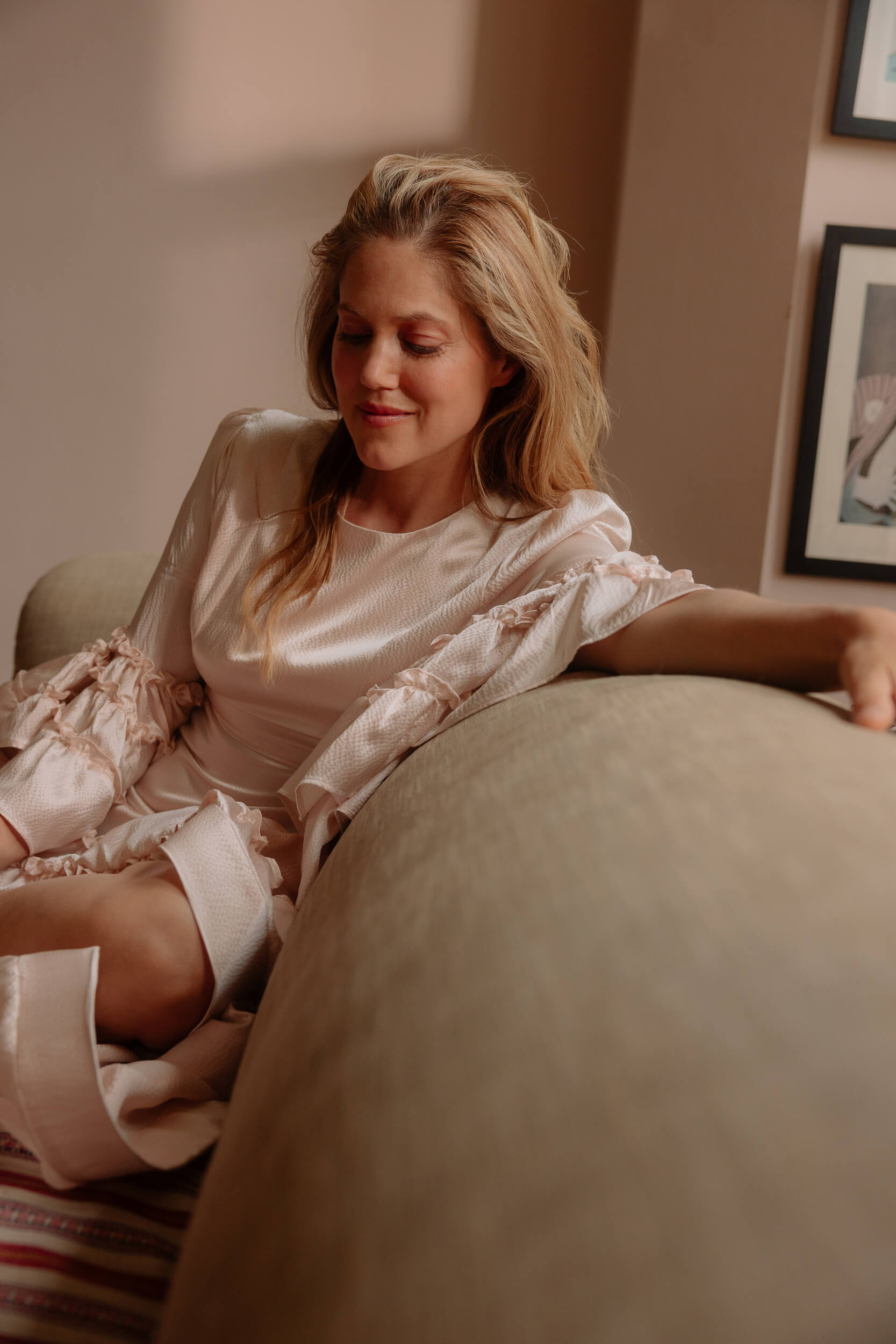
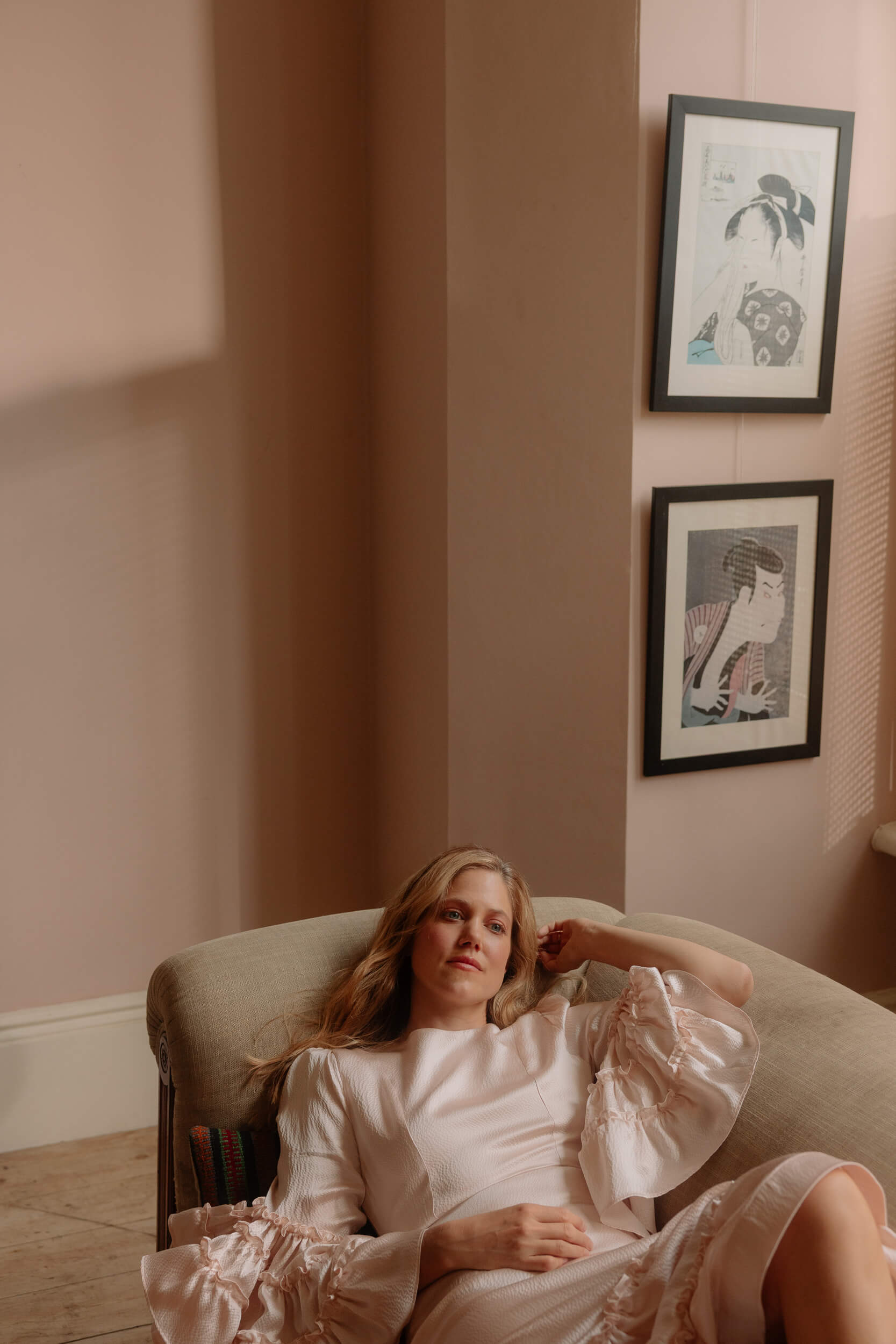
What do you usually look for in a script when you approach a character? Do you have a more emotional or rational approach?
I definitely have a more emotional approach. There’s something that captures you about a script, and it doesn’t necessarily have to make sense. It’s not like it has to be lots of money in making the film or paying you, it’s not about necessarily looking at who’s there in the cast and crew. It’s more related to a feeling of what the film or the project is engaging in, and that could mean that the subject matter is really interesting. Even if the dialogue isn’t great, if it’s something that I’m going to be exploring and learning about, that can be a really attractive thing towards any kind of project.
Normally, it has one or two really brilliant things about it, and then you’re kind of in, and you have to be lucky enough whether to get the job or not. Because I also, sometimes, have that thing where if I think something is really incredible, I get very nervous when I’m auditioning. My worst experience of that is I auditioned for “Jane Eyre”, a TV show. I so desperately wanted that part that I gave the most terrible audition ever – it felt very big and too beyond me. I was lucky enough that I did get offered a tiny part in that even though I didn’t get that main role, and it was one of my first really small jobs. But yeah, I think that’s why I’m attracted to doing historical things, because it’s something completely new to learn about, it’s something that I can get engaged in, or it’s a kind of emotional gut reaction.
I think I’m someone that likes to do new things. Before I was an actor, I found I just wanted to do so many different things – I could never really pin myself down. Being an actor, if you’re lucky enough, it means that each time you do a new project, you’re doing a completely new thing, so it kind of satisfies that need.
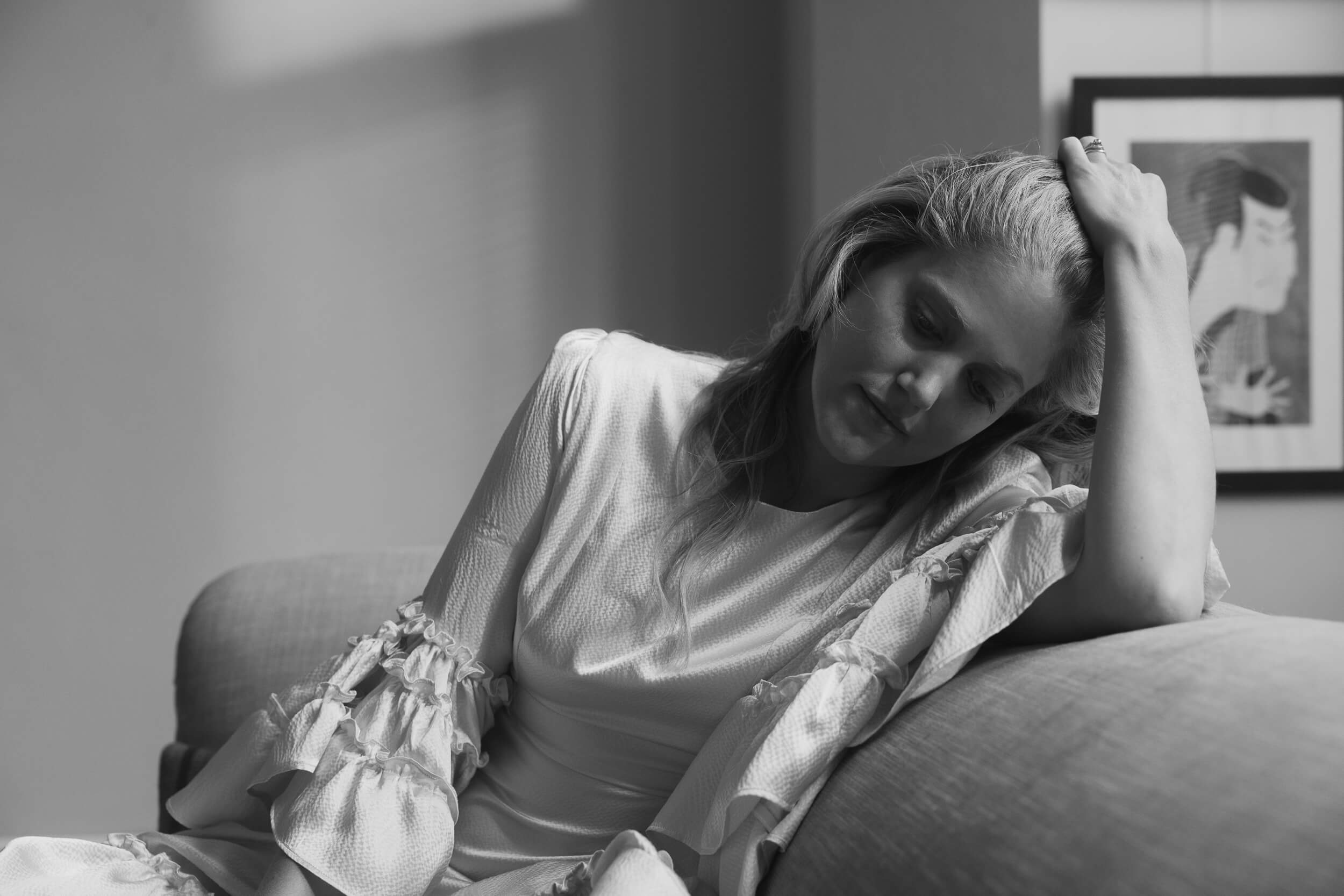
“There’s something that captures you about a script, and it doesn’t necessarily have to make sense.”
Since you mentioned historical characters whom you had the chance to play throughout your career, is your approach to a fictional character different from an historical figure?
Yeah, I think so.
I did “The Great”, for example, a TV show about Catherine the Great of Russia. The author, Tony McNamara, writes the characters using the base material of what that person was in history, but then putting his own kind of stamp on it as a writer. So, I remember when we went to our first rehearsal, a lot of us had big books about Catherine the Great, as there’s a huge amount of Russian history to try to understand and learn, and we were really interested in doing that. When he saw us, Tony immediately said, “Put your books away. Just don’t worry about it. Some stuff, we’re just going to forget, and some stuff, we’re just going to make up from scratch”.
He did this as well in “The Favourite” by Yorgos Lanthimos, a film about Queen Anne – he takes the bits that he likes and wants to expand on, and then he makes them more “folk-tale figures” than real figures.
Tony really writes in a way that winks at contemporary things. For example, when he wrote “The Great”, Trump was just coming into power in America, and his campaign was “Make America great again”, so, it’s no surprise that the title of “The Great” was related to that. It’s a comment on the current culture of people who are very populist gaining power, so we’re looking at what’s happening in modern politics by looking at what happened in those times.
So, how did you approach your character, given this unusual and fascinanting approach to history?
I definitely I researched the period, even though we weren’t drawing exactly from it, because you have to create a world that’s within the historical context, although then we created our own sort of tradition. So, the court was incredibly debauched, there was a lot of partying, a lot of sex, a lot of breaking the rules, and we would say “Huzzah!” and throw our glasses down. We also had a brilliant movement director called Polly Bennett, who worked with us on all of the dance parts and the etiquette: that means that you’re not deciding how your character behaves, but you rather need to realize that your character is part of this way of behaving, and then from there, you’ve got your baseline of “What’s the style? How far can I push certain physical decisions?”.
With that particular project, Tony wanted the emotional life of the characters to feel very real, and even though they might be saying things that to us seem crazy, to them is normal. That’s why it’s funny, because we were trying to act in a way that felt serious and meaningful, but actually the stuff that we did and said to our eyes now is kind of mad!
When it comes to other pieces that are more based on someone real, then you have a really different set of parameters around your work because you realize that if you’re playing a real person, there will be people in the public who have a real genuine connection to that person, even if they’re from history. Lots of people will feel strongly opinionated about how you should do it, what you should do, and so, in some ways, it’s good to understand that, and in some ways, you have to let it go. It really depends on what you’re doing.
For example, Jane Austen, whom I’ve just contributed to a BBC documentary about: when I did that, there’d already been a film of “Sense and Sensibility” with Kate Winslet and Emma Thompson, both heroes of mine, and I decided not to watch it because I thought, if I watch that, I’m just going to think, “Why am I even bothering?”, because she’s brilliant, “What’s the point of doing another version of this? I can’t possibly try to copy her. So, I need to just not watch it, otherwise it will be in my brain”. And I thought, “I’ll have a real chance to build something of my own here”. But even then, it’s not a real character, but it is written by somebody that people know and love, so, you’re trying to respect what the fans of Jane Austen would think. I remember trying to really talk to a lot of people across different backgrounds who had read that book to see what they thought that Marianne, my character, was like. And then again, as soon as you start being in the fold of the filmmaking process, you’re just trying to really see what the director sees, what is their vision.
I’m going in now to produce myself, you know, to produce my own work. So, I’m trying to think about the filmmaking process a lot, about how to bring a cast and crew together in a world, also because the work that I’m going to be doing is set in a particular historical context. I’m also thinking a lot about the effect of filmmaking, because I feel very passionate about the environment: I’m an ambassador for the Woodland Trust, a charity which protects ancient woodland, plants new trees and educates on how woodland habitat can help with environmental sustainability. I work with them to try and bring stories to the public domain. So, I’m thinking, as I start to produce, “How do I create a filmmaking process that’s much kinder to the Earth?”. That is part of my artistic mission, and my endeavor is to make work that is kind, where the filmmaking process is regenerative and kind to the environment, and that goes across, imaginatively, what’s in the piece, using nature as a backdrop, talking about environmental issues as part of the storylines and things like that.
I’m also an active supporter of Equity Green Rider, which is a UK actor lead climate positive campaign, aiming to make the film and TV industry greener and more sustainable. Green Rider’s brilliant core team Danusia Samal,Will Attenborough and Fehinti Balogun advocate for actors to be a lot more engaged in encouraging environmentally friendly processes in the workplace.
We help actors to request a Green Rider to be added to any new Equity work contact. For those famous actors with a lot of negotiation power, they can ask productions to consider large climate positive adjustments like: no use of deisel generators, plugging into local mains electricity, clean augmented power, no private jets, start having vegan food days on set, use second hand clothes for costuming, all which decarbonise hugely.
For actors that are in smaller roles, we ask them to consider simply letting production companies know that they are interested in making their time working as eco friendly as possible, and that they want to engage with ideas and help on set. This might mean car sharing, trains not planes, bringing their own water bottle. It all helps.
It’s important to ask the filmmakers to engage in that conversation too, we are all one community, together we have the potential to do so much, and our planet needs us to.
I’m glad that you are tackling this subject because I have a question on your environmental advocate job and the way you are involved to make the art industry greener, somehow. How is it going so far? What are your goals to make a greener industry, and the achievements that you are most proud of?
One of the projects that I’m looking to do is a project that’s about gardening. I’ve been researching a lot about the gardening industry, and actually, I’m shocked to find that a lot of the gardening is very bad for the planet.
What do you mean?
Essentially, gardening is manipulating what’s natural into something that is unnatural, in the sense that we want, as human beings, to curate our nature to make it look beautiful for us. Some gardening is really destructive because you plant something, then you take it out. In public space, it can be like “you plant these flowers for two months, then you take them out, throw them away, plant some more flowers for two months”. So, if I’m going to go and make a TV show about gardening, I really need to research what I can do to make that process better for the environment. That’s a huge challenge.
I’ve got a year and a half for this particular project, to look at the story, and the filmmaking process, but I think it’s an amazing opportunity. I think it will be a really good story, the story of the filmmaking process. The question is, “How do you film gardening in a really good way?”. I have to look and see if I can find a site that needs agricultural help, if I can find somewhere that actually is not great and I can enrich it by gardening on that space and then maybe looking to build a future garden that stays like that, you know, rather than taking a beautiful garden and digging it up and making it bad, you know? That’s kind of what I’m thinking about at the moment.
On the line of sustainability, in our magazine we have a column related to sustainable fashion. It’s called The Green Side. So, I’m curious, what’s your approach to fashion, as I know it is the second most polluting industry?
That’s also another interesting point of view when it comes to getting a sustainable approach. In fact, I’m really interested in sustainable fashion.
I grew up with not much money, and so I did all my shopping in secondhand shops and charity shops. So, as a teenager, I got really used to going into these places. Of course, when I first got some seriously paid jobs, I was like, “I just want new things”, and I totally fell into this trap. I thought, “I don’t want to be tied into having to wear things that somebody else gave me”, which is what my whole childhood was like. However, I then went full circle in my late 20s, and what I realised was I had a huge amount of clothes and, even though I was buying new things, I would still always go to charity shops and markets, and I would buy things even if I didn’t think that they would fit me, just because I thought they were interesting and they weren’t expensive. At some point, my friend Frances Millar and I decided to start a vintage stall, and it went really well. We went from doing little table sales to being in a bigger student market, to doing two- or three-day shop installations where we would do the window.
What a great experience! Super formative, wasn’t it?
Yeah! I got to really understand so much about fabrics, the history of fashion, why people bought clothes, why people kept clothes. We then had a shop for two years, and that experience was so great because I was acting, as well, but then I just had this thing going more permanently, and it was with my friend, and it was quite artistic. We had also a woman called Tracy Cahoon, who’s a really amazing fashion hairstylist, having her hairdressers at the back of our shop, and we used to have parties and poetry nights and music.
In the end, we had to close the shop because I went to America to work, but I think that then, after that, I started doing a bit more stuff in the public domain – Instagram’s happened and everything became a bit different, like I had to make these public choices about what I was wearing. Pretty soon, I realised that often in fashion styling, the person being styled doesn’t really have much choice – you’re sort of told, “This is what the production wants”, or you work with the stylist, and they want to make you look as good as they can. At that time, it was quite difficult to find a lot of choice with sustainable red-carpet stuff. It still is not easy, not everybody is doing it, or lots of people say they’re doing it and then they’re not. There was a point a few years ago where I just said, “It has to be entirely sustainable or at least the person making the clothes has to have some element of trying to be sustainable”, and as soon as I just said that, it was much easier because it actually was really limiting, but that’s fine. I’d much rather have a limited choice and do what I believe than not feeling comfortable, you know, because I think you have to practice what you preach. I did a lot of making sure to write down who they were that I was wearing and borrowing from and trying to champion, and I’ve recently been thinking what I could do even more than that. You know, Instagram is really transient and I actually enjoy it for that – I guess it’s called Instagram for a reason, but in all honesty, I would like to try to write a bit more in the long form about my experience of sustainable fashion, so watch this space!
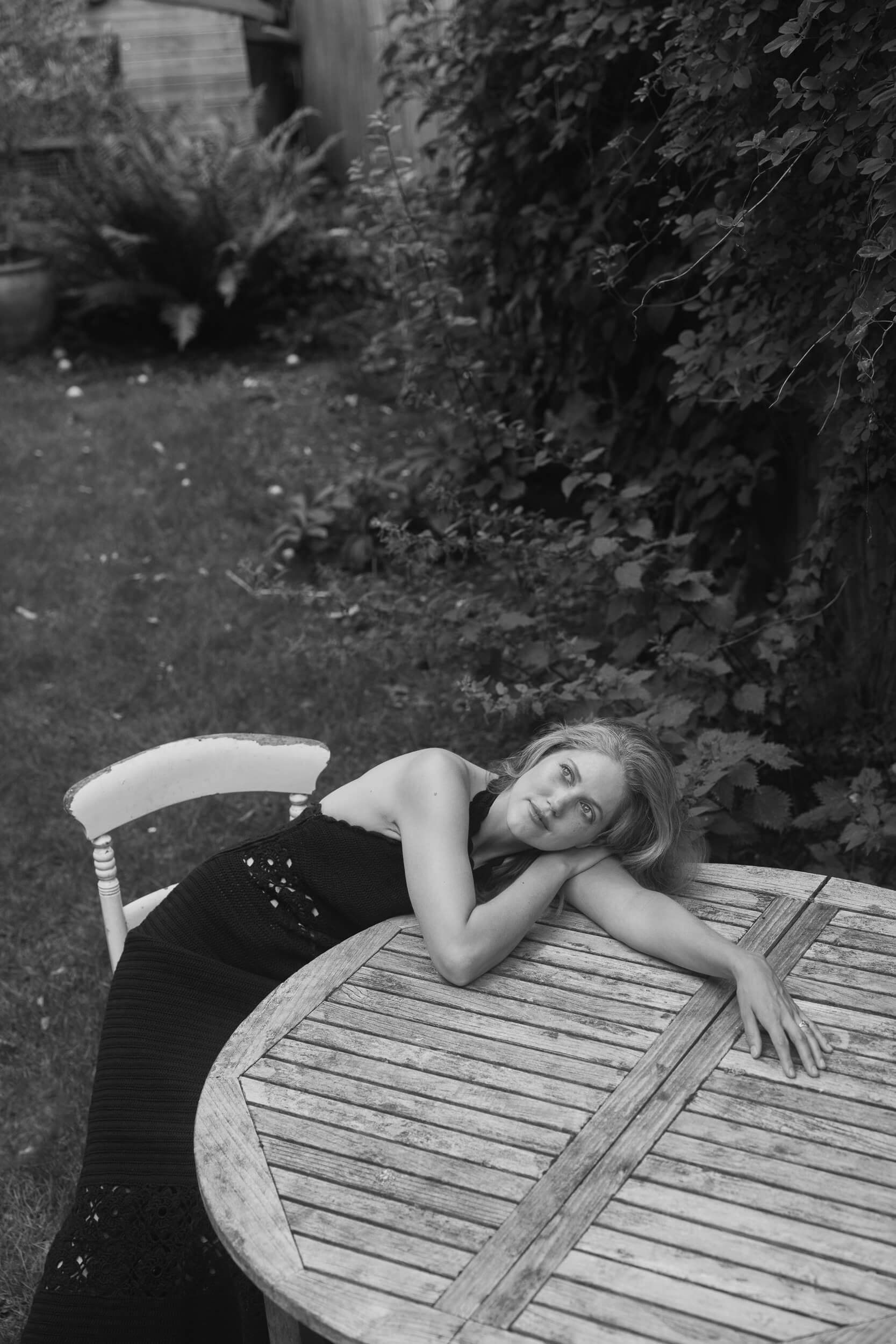
“I’d much rather have a limited choice and do what I believe than not feeling comfortable, you know, because I think you have to practice what you preach.”
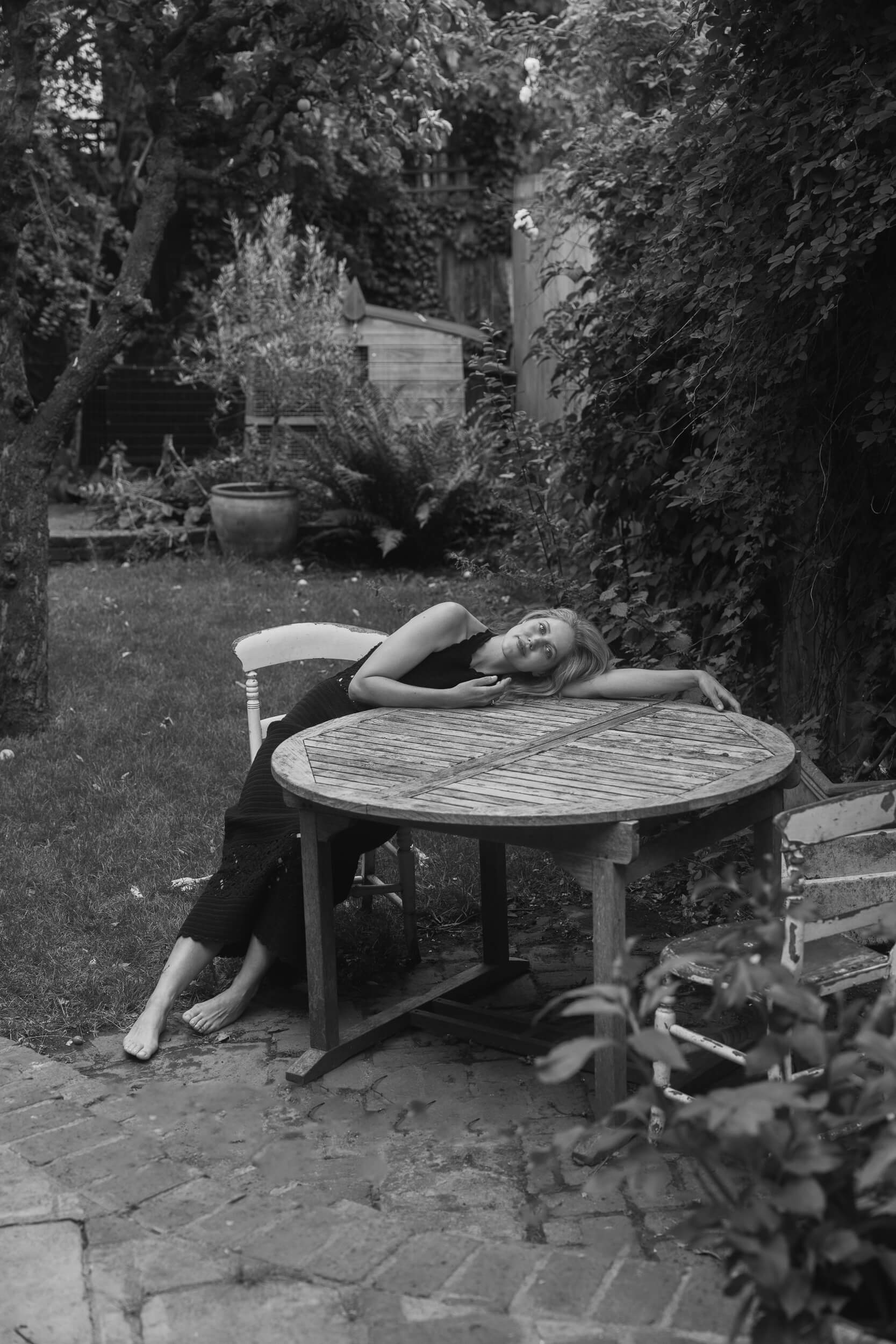
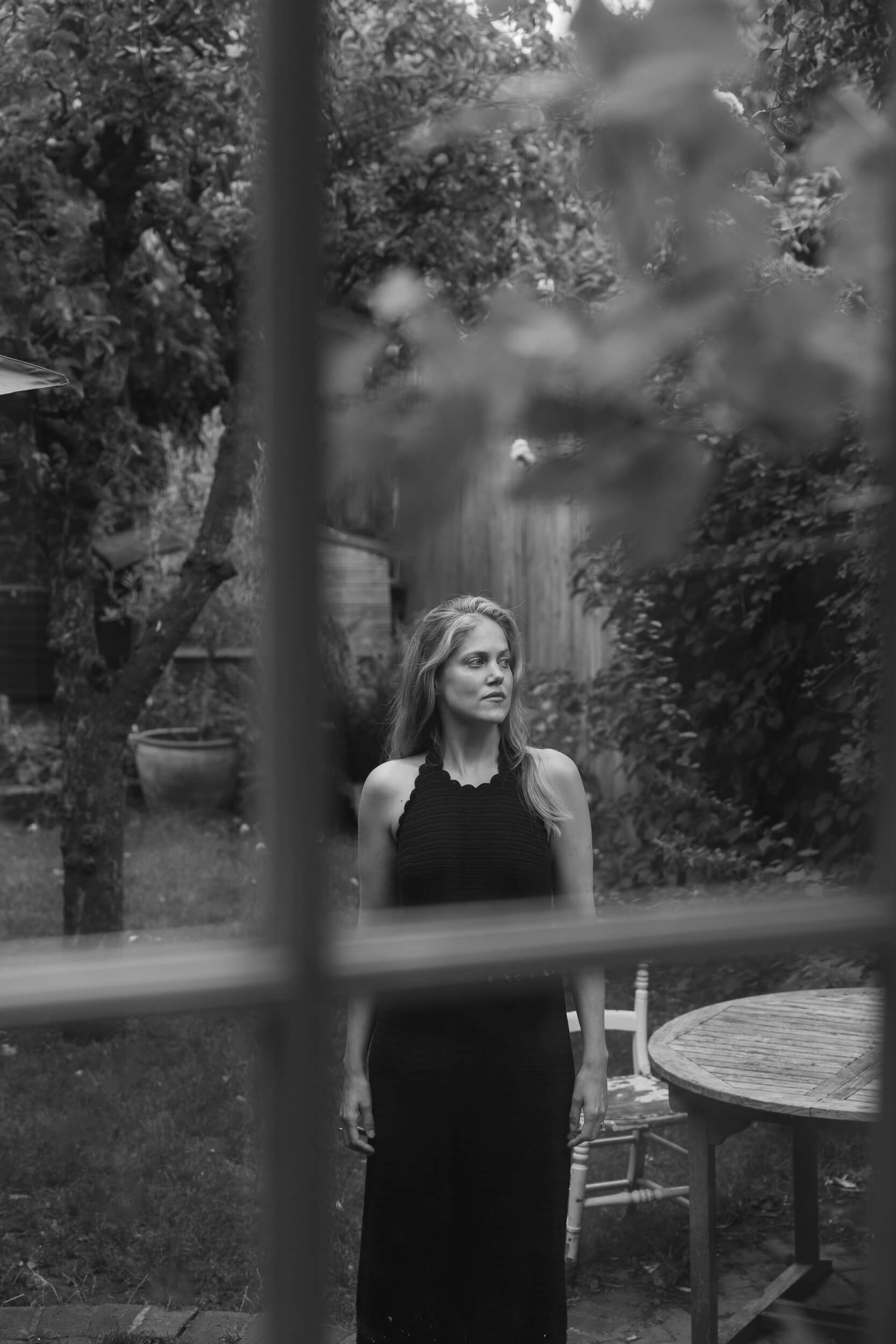
Back to Jane Austen – I read something you said about her basically telling young women “I see you and I hear you”, which is so maternal. What’s the best teaching from her works, and also from your other jobs related to the Jane Austen world, that can still be applied today as a woman working to find her place?
Well, I think firstly just the act of writing it down, and being brave enough to write. I’m someone that thinks a lot of ideas, but I don’t do them all, because I’m afraid of failing or not being good enough or not being what somebody thinks I should be. Just trying in the first place – the act of writing it down, you know: just getting it on paper. Practice makes perfect, right? But if you don’t make the first start… We now have constant access to all knowledge, AI, 24 hour everything on tap. Austen did so much with so little facility. There’s something we can from her about quality of time, focus, intention, honesty. Being careful with the time we have on this planet.
I think Jane tells us, through her characters, to be really in the moment, to be alive, to try, to engage, to be with people.
But in terms of what she did, I’m always struck by her sending her work under a male name, buying back her own manuscripts, and still trying. It’s about tenacity, she became a great author under such difficult circumstances: no money, no husband, she’d lost her father, no conventional life ahead of her. Potentially she could have married conventionally if she wanted to, but something in her made her commit to a life of art. That’s so brave. So: having the courage. That’s the main thing I take away.
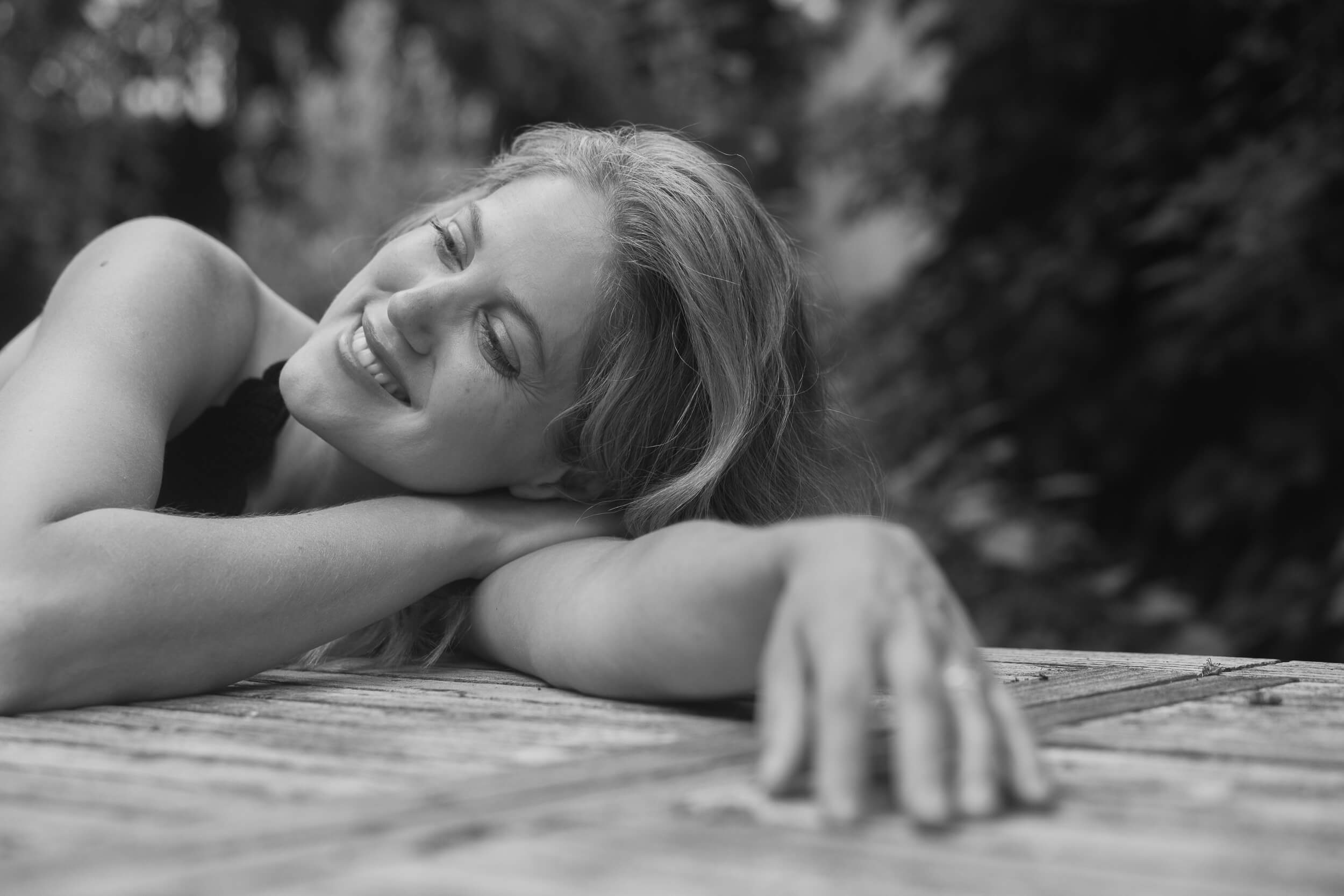
Is there a character you would love to play in the future — not necessarily a historical figure, but a type?
I think I’d like to play an adventurer. Someone who goes into the wild and has to live alone. Because there’s so much in that: can we survive? I’m very worried about the world. I’m intrigued to play someone who does that work. It comes up a bit in one of the films I’m working on – it’s set 150 years ago, with explorers. It would be a cool challenge: the psychological aspect of surviving alone. You can be the most prepared in the world, but you can’t predict your mind. It’s intriguing and scary at the same time.
What’s the latest thing you discovered about yourself, thanks also to your job?
That I really enjoy doing comedy improvisation. I did a film this year called “Preschool”. It’s about two sets of parents competing to get their children into the best possible preschool. The script was great, and the director, Josh Duhamel – who also plays my husband – was really relaxed. He said before filming that we were allowed to improvise. If we felt like there was more for our character, we just had to say it. So, I wrote some stuff – an extra scene, a monologue… I didn’t know if I had that in me. I was nervous, but I did it, and it got accepted. I have some of my own lines in the script, which is scary because then it has to be good!
I really enjoyed the process, it was freeing, and I thank Josh for giving us the opportunity, because many directors don’t want improvisation or don’t have time for it. We didn’t have much time or money, but they made space for us to play. That surprised me, and I want to do more of it.
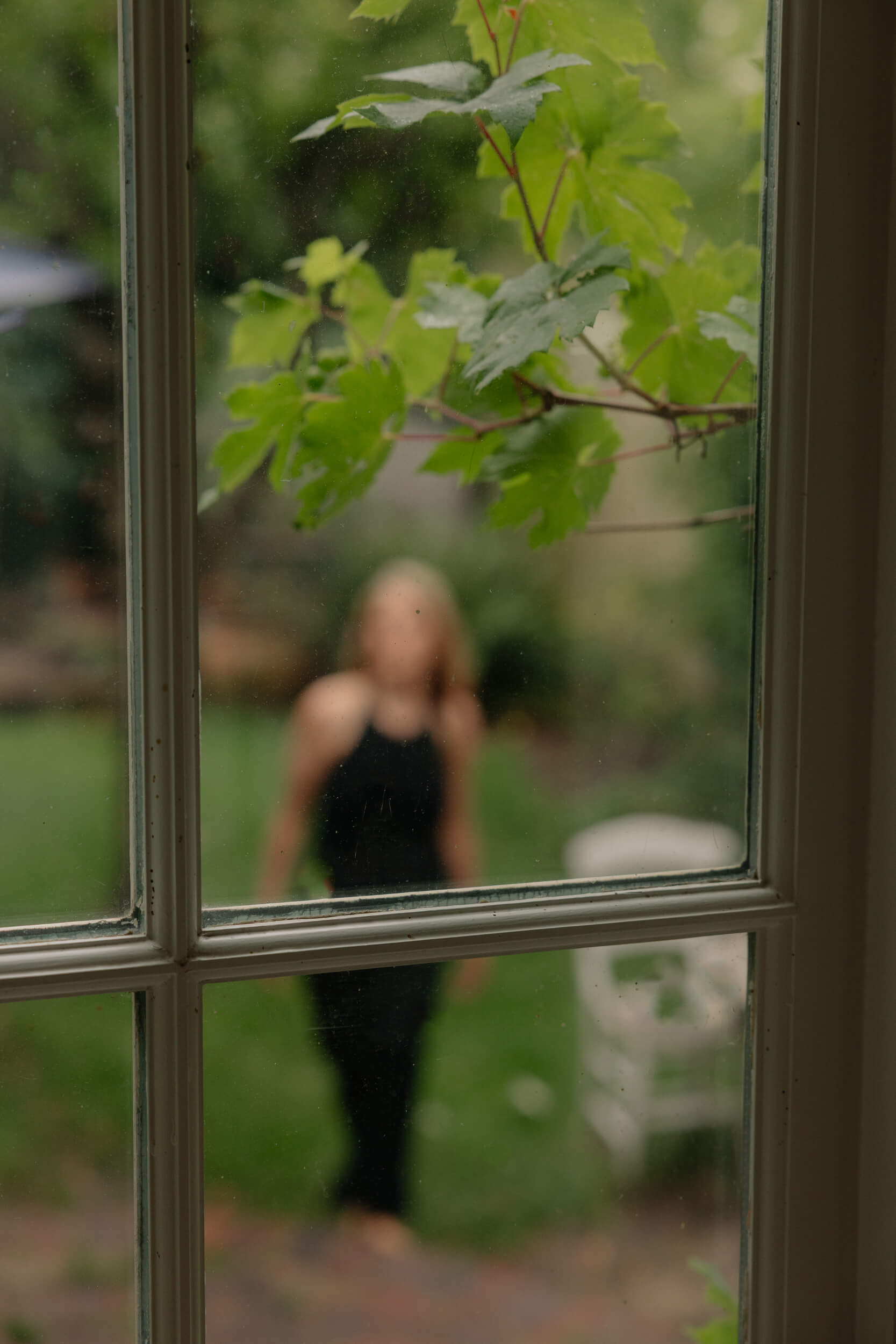
What’s your greatest act of rebellion?
Probably when I went to Thailand at 18. I decided not to go to university to take a gap year, I worked two jobs, very long hours. My parents did not want me to travel alone, they were worried about safety. And I just went anyway, even if they were upset. Now I feel bad because it put them through a lot emotionally: it was 1998, I didn’t even have a mobile phone or email. But I’m glad I did it. It wasn’t long, I was there for a month, but it felt big, and it really helped me find independence.
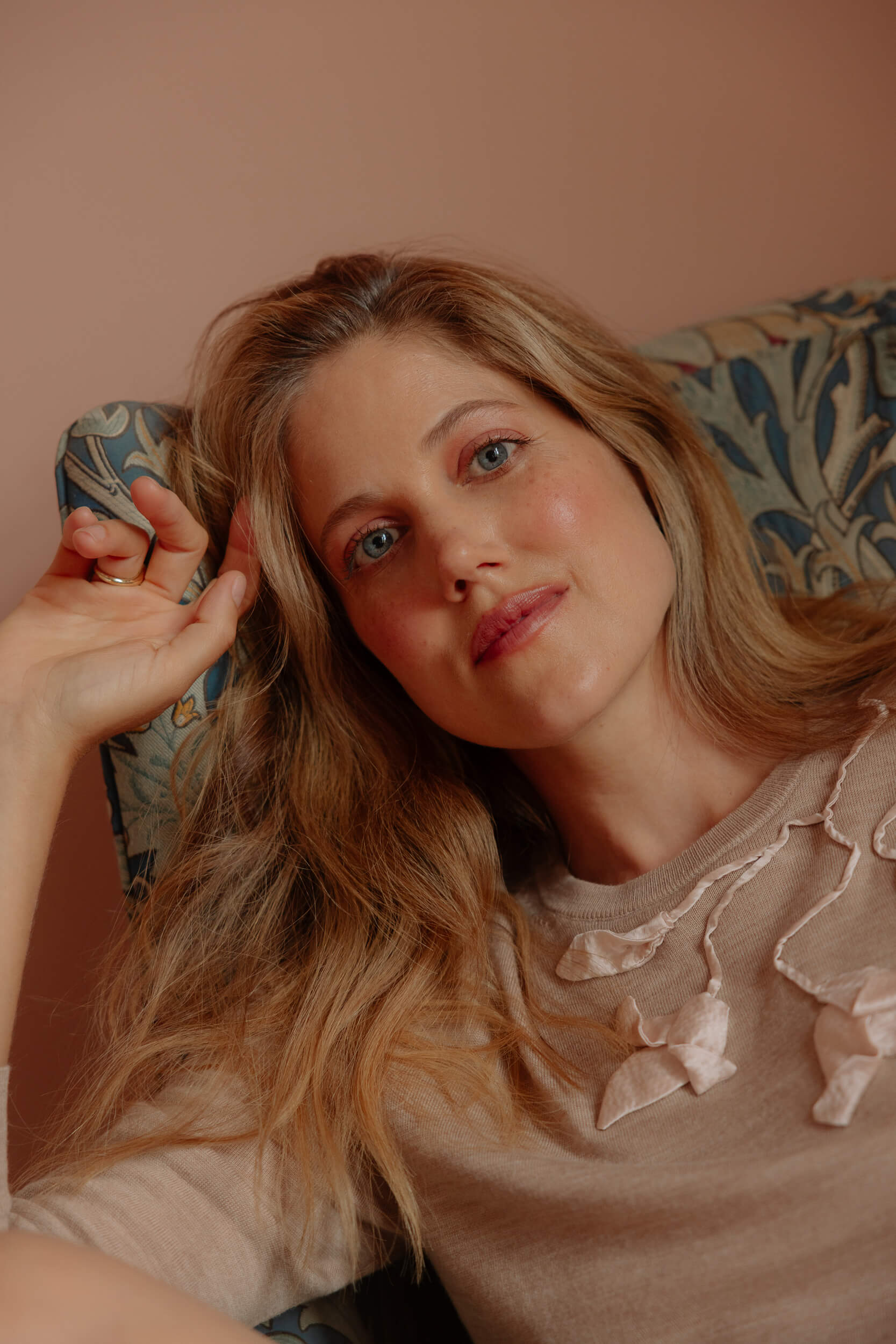
And what’s your biggest fear?
I wish I could say spiders, but I actually really like spiders. My mom hated spiders instead, but she went to a zoo where they had a petting corner with a tarantula, and there she decided to face her fear: she asked to hold it, but the keeper said: “Fred” — which was its name — “is having a break; he gets stressed if handled too much”. The idea that a spider can get stressed, the idea that the spider has its own world, really helped my mom. She came back later, held it, and had a positive experience.
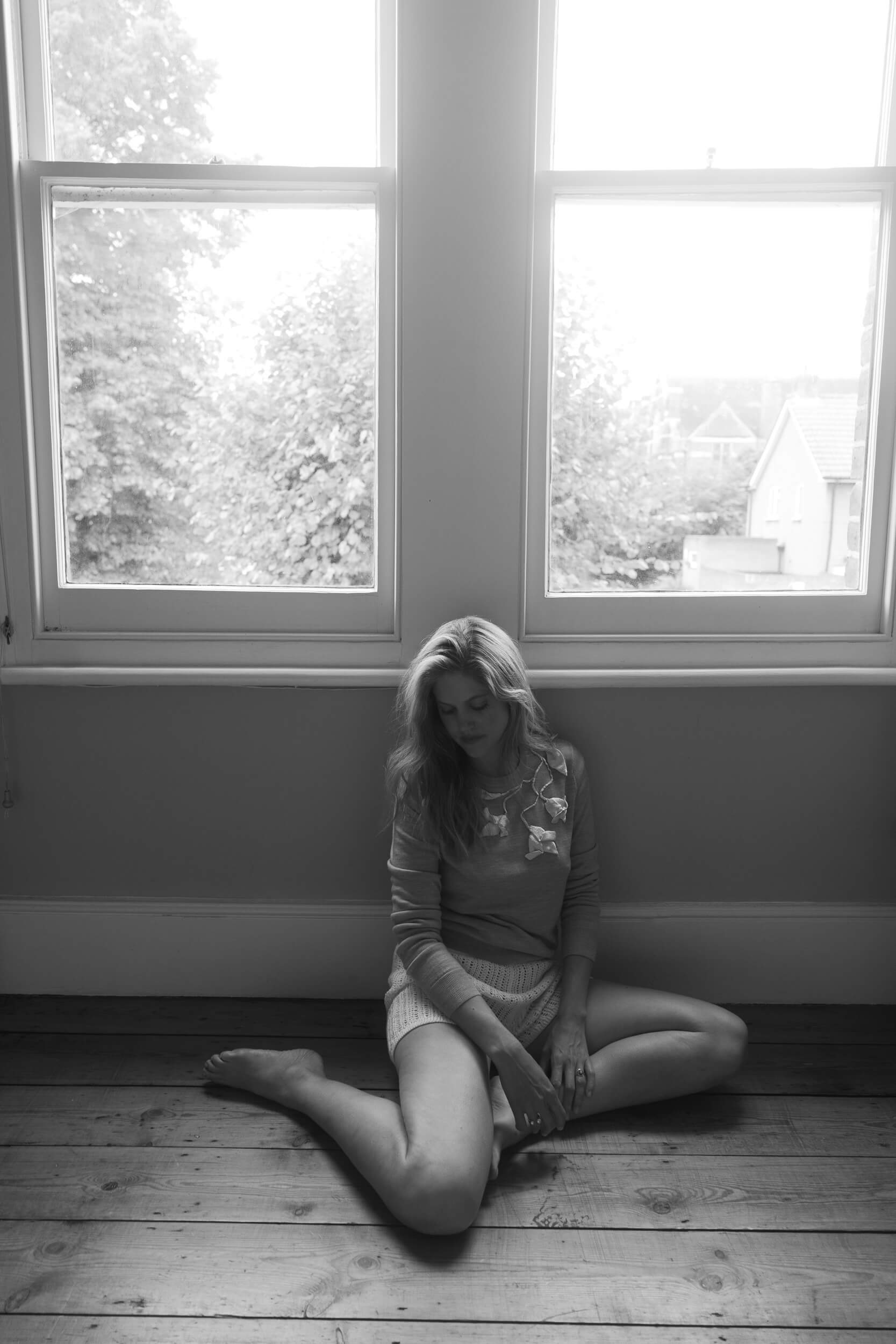
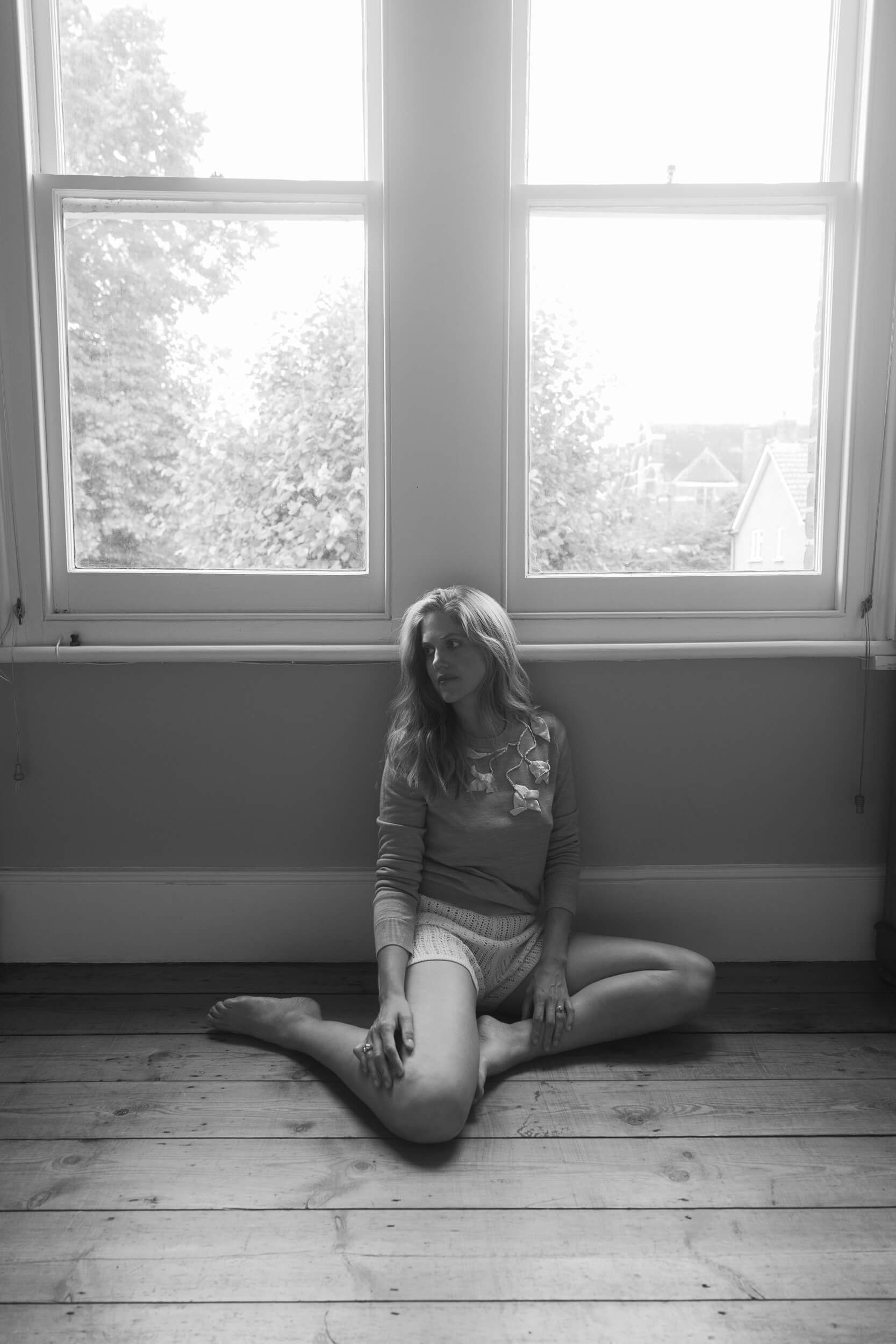
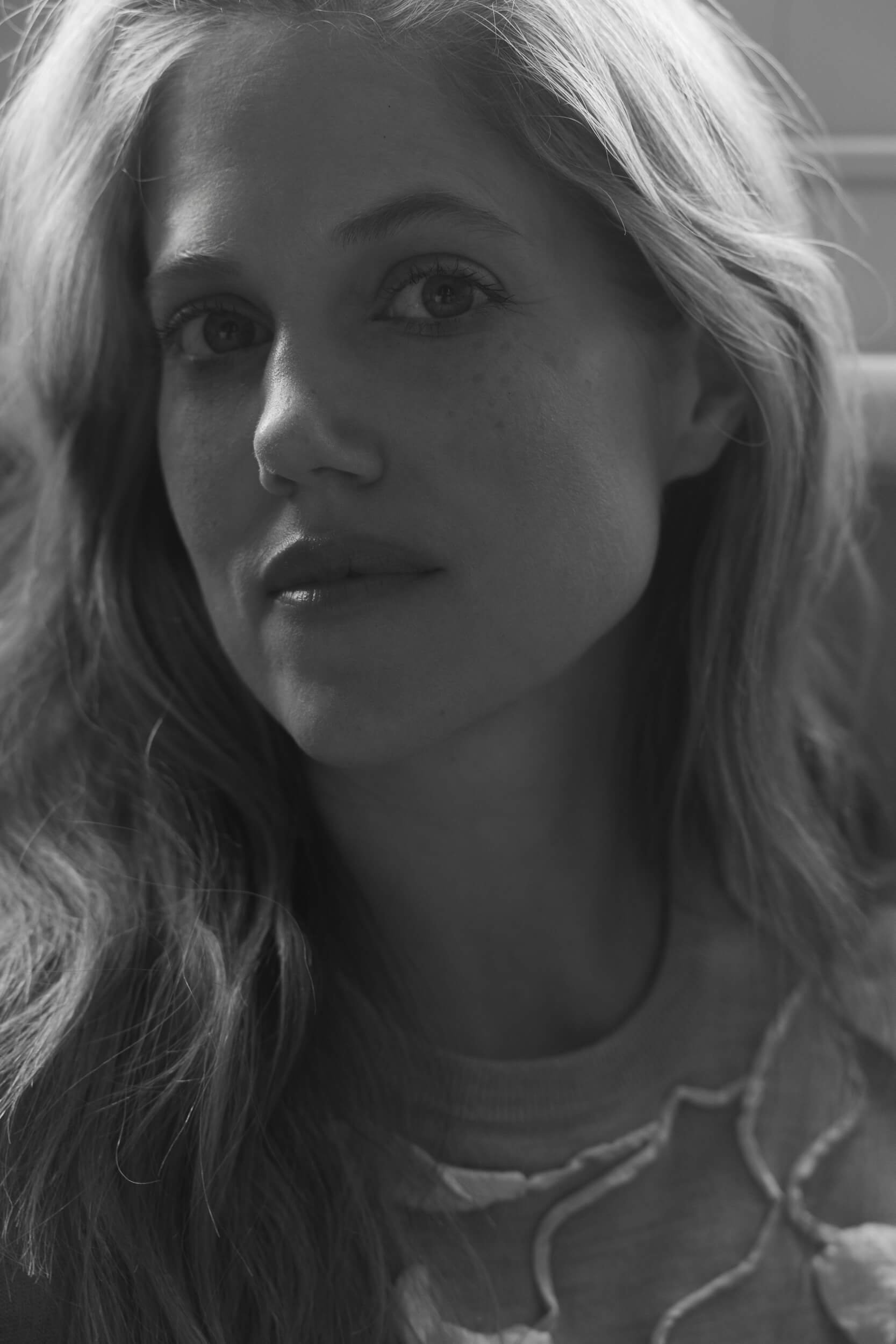
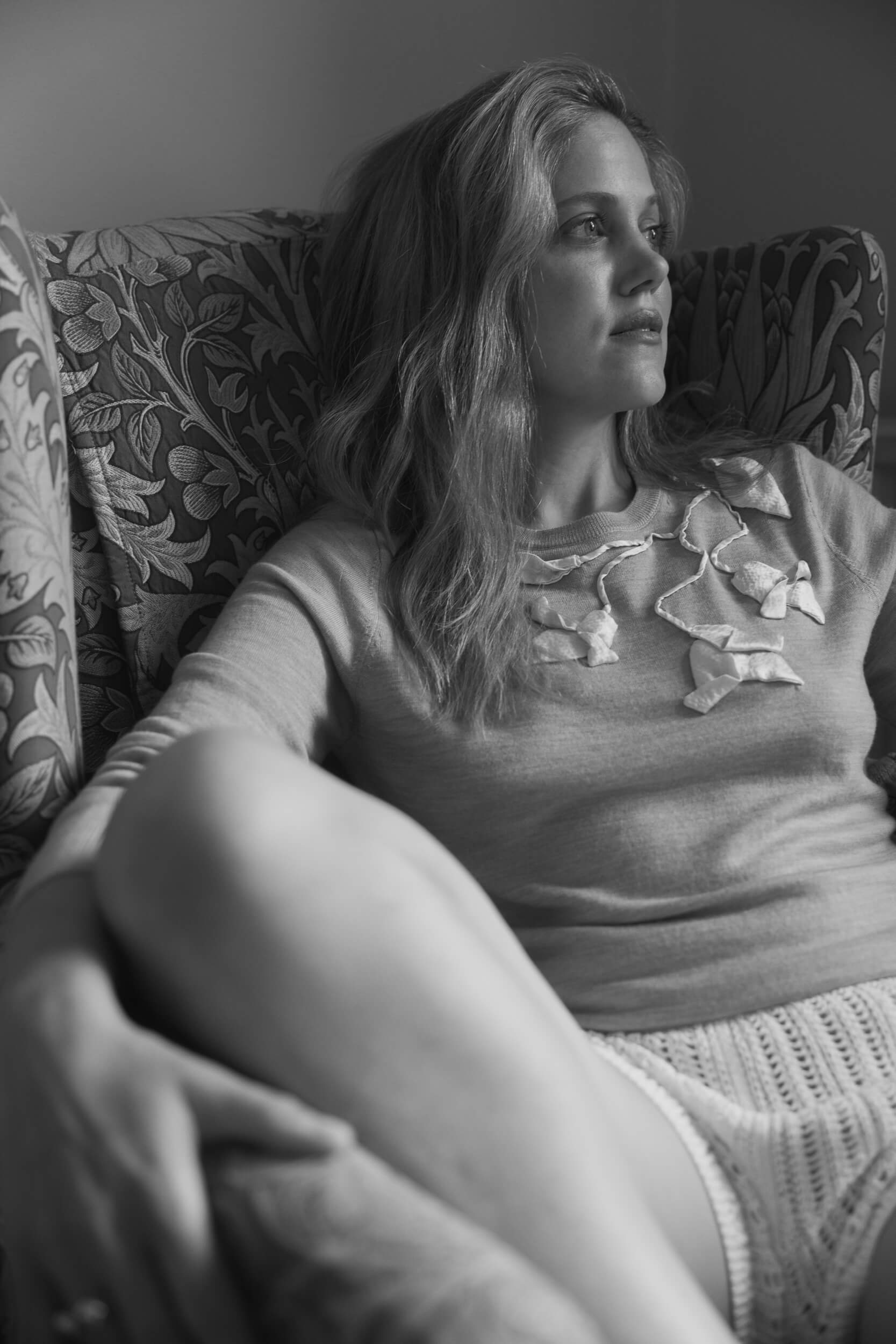
Wow! That’s so fascinating. And what does it mean for you to feel comfortable in your own skin?
Probably wearing very comfortable jeans and a T-shirt, outside in the open. I feel my best in the sea or in a big field. If I’m happy, I’ll try a handstand or a roly-poly, be with my dog, my family, my son, just playing. Feeling the grass under my feet, or water… I’m from near the sea, and if I’m stressed, I try to plan a trip to get in the water.
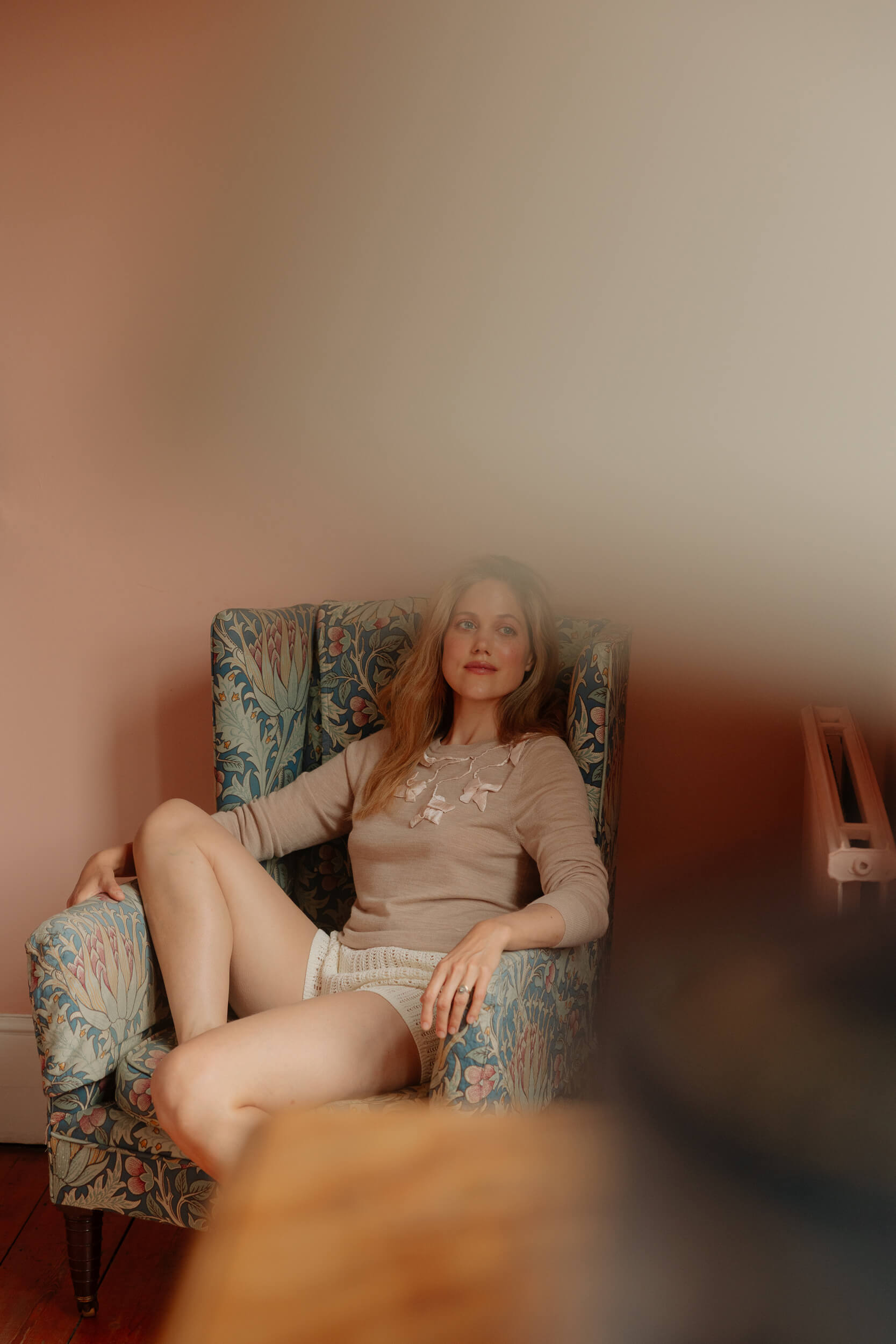
So, your happy place is the water?
Yeah, I think it is.
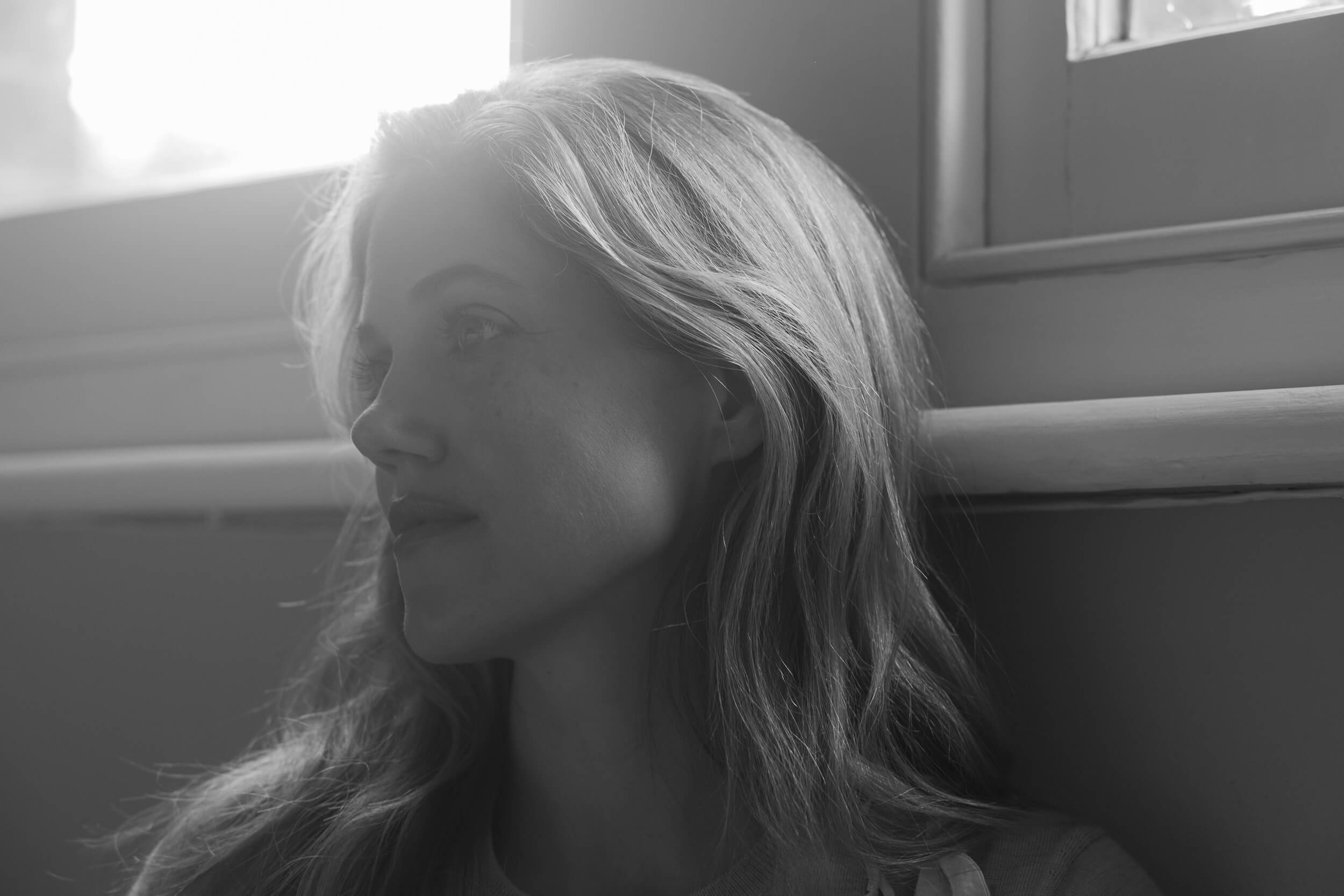
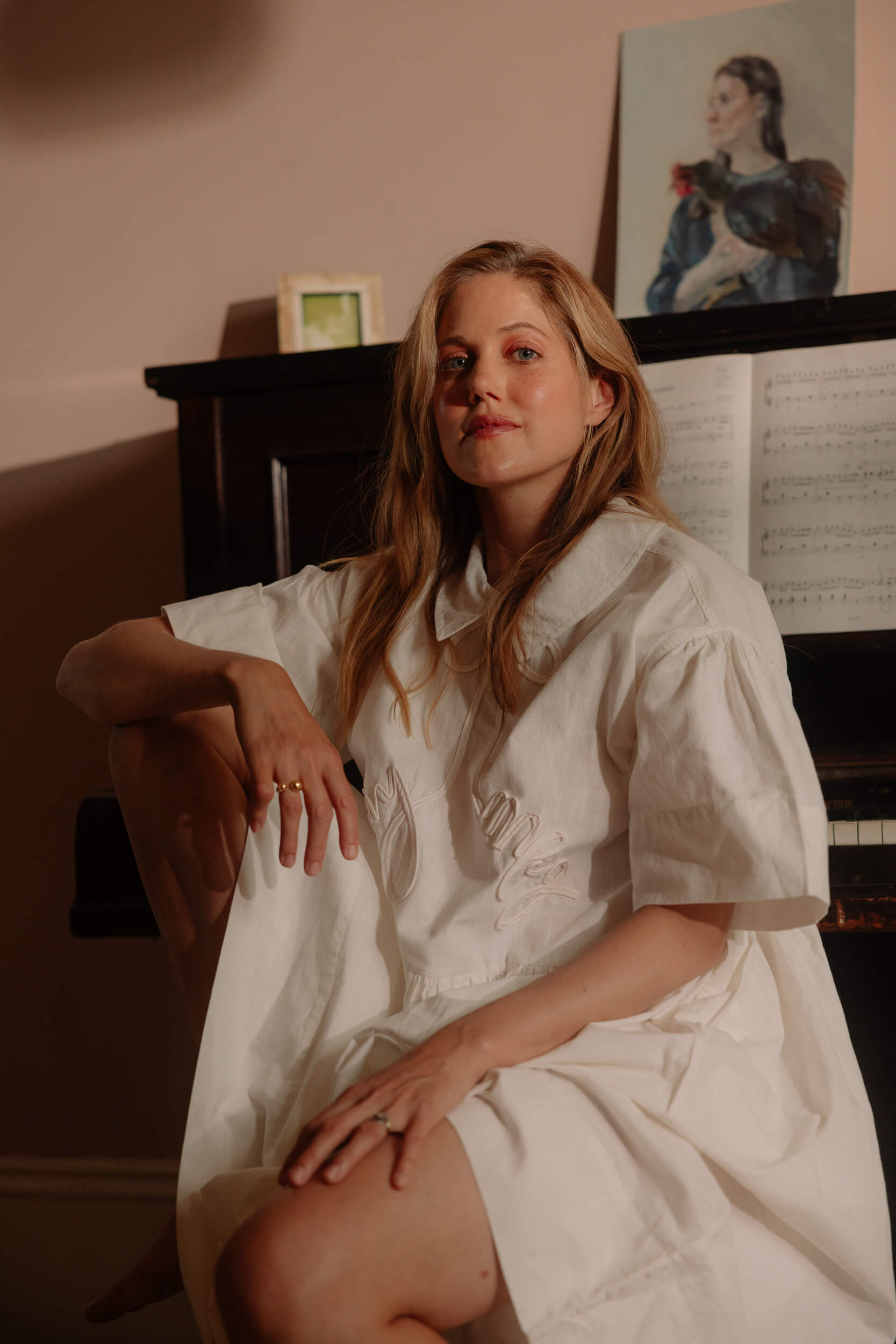
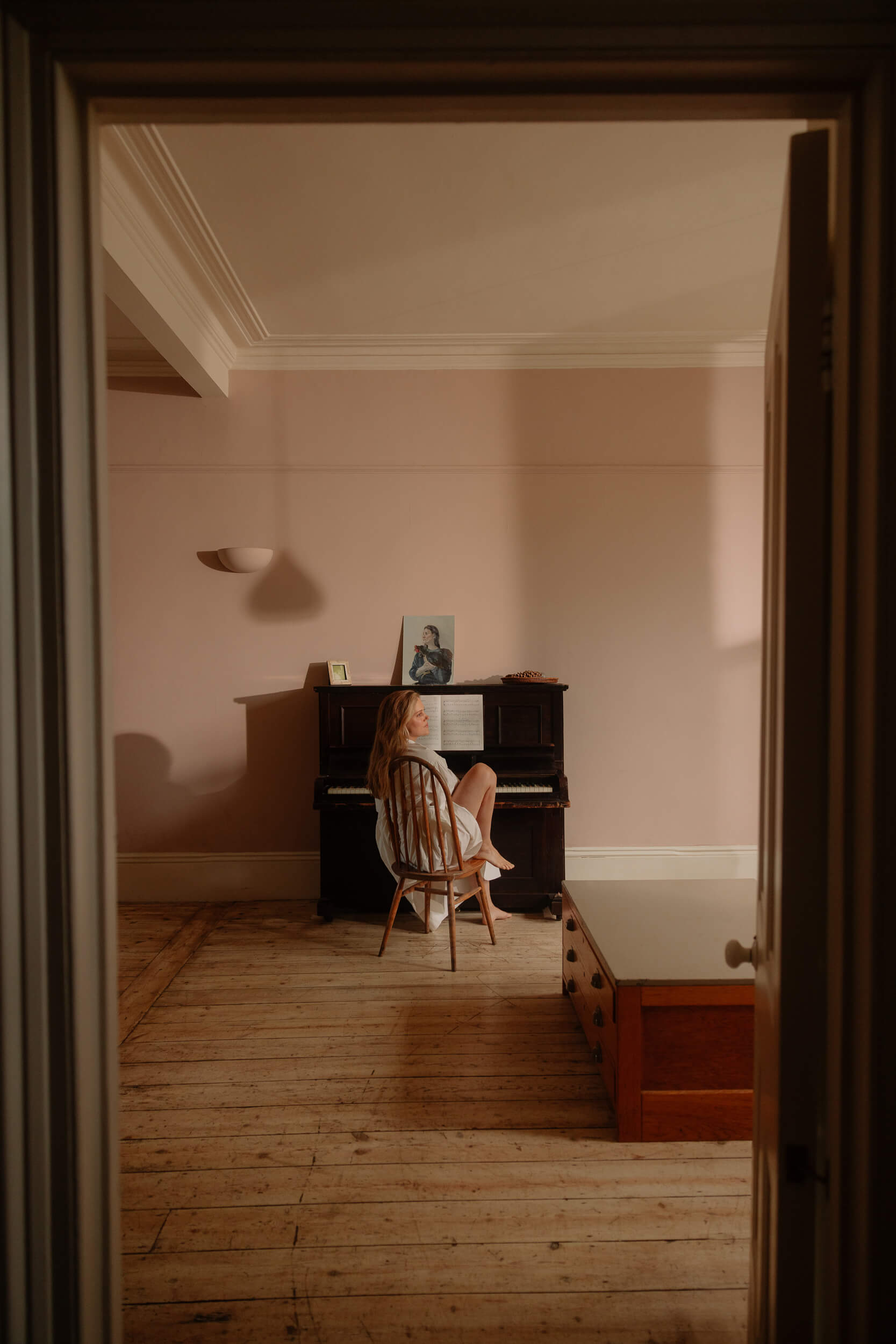
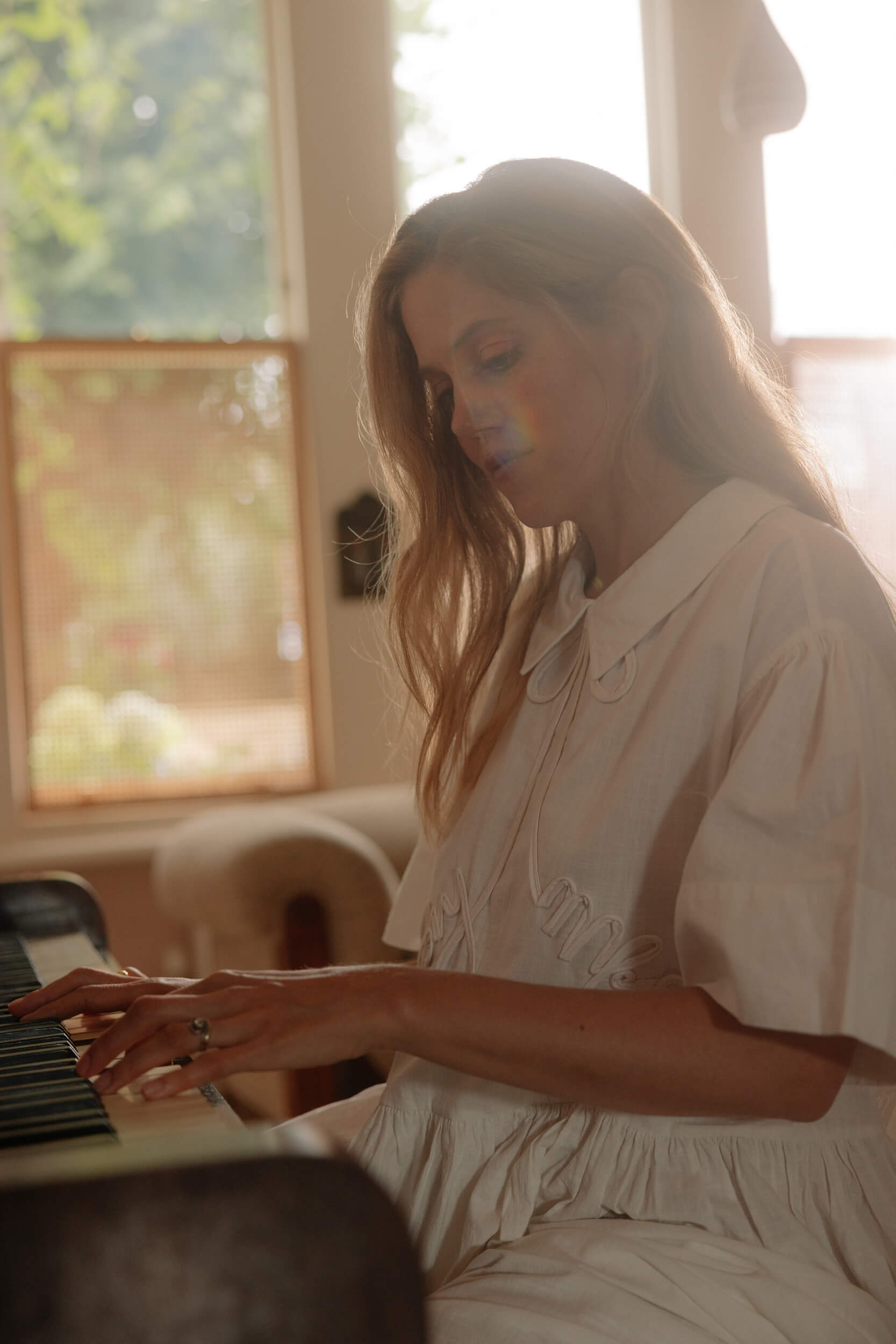
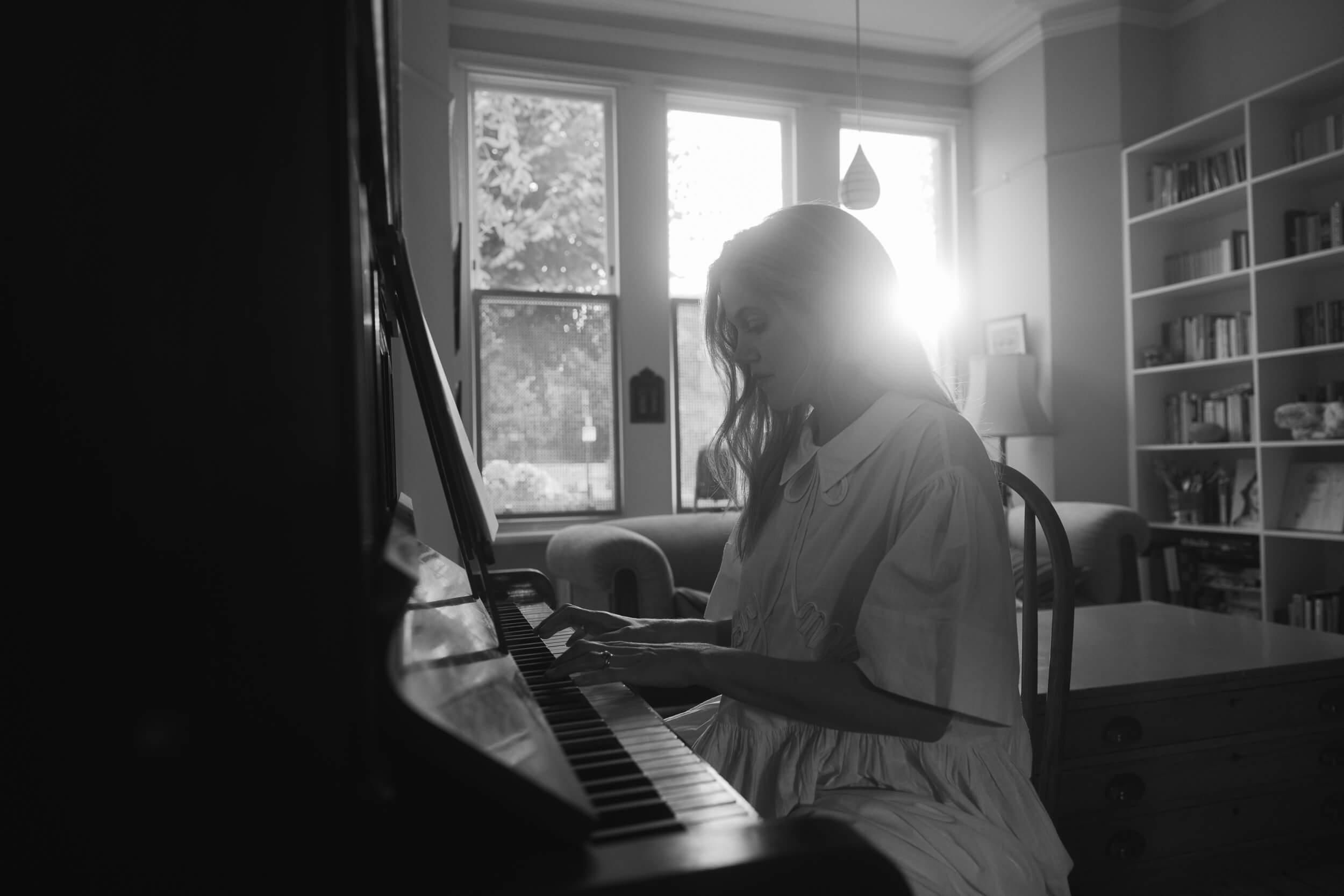
Photos & Video by Johnny Carrano.
Makeup by Justine Jenkins.
Hair by Paul Donovan.
Styling by Chloe Beeney.
LOOK 1
Prink ruffle dress: Lisa
LOOK 2
Dress: Story MFG
LOOK 3
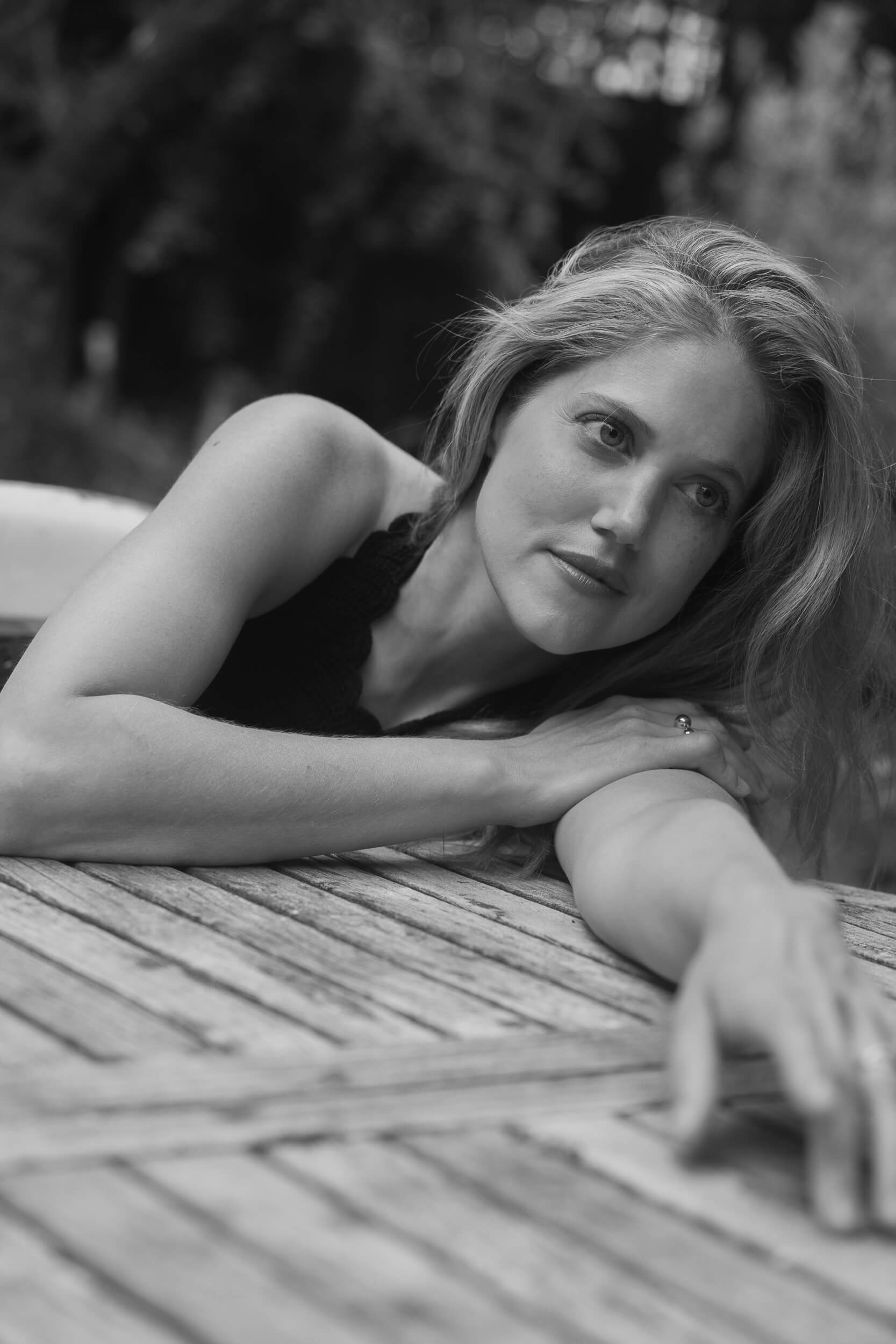
Black halter neck crochet dress: Fine Art of Design Vintage – Palm Springs
LOOK 4
Rose jumper: Lisa
Crochet shorts: Arket