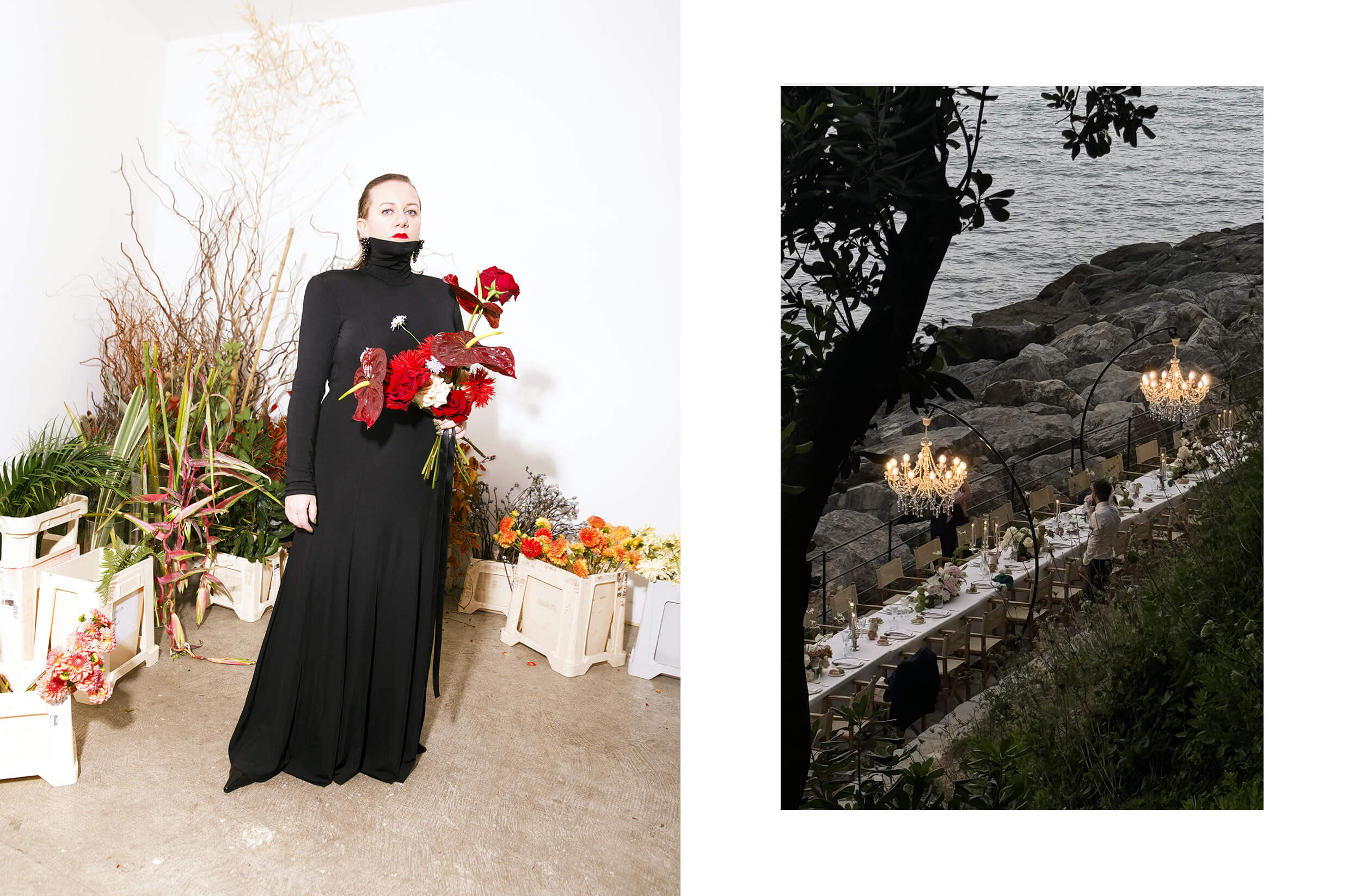
There is a moment when flowers stop being just beauty and become life, memory, emotion. For Cecilia Paganini, that moment arrived almost by chance, but with the force of an announced destiny: between her childhood hands, stained with earth, and the memories of grandparents with passions to inherit, the spark of a talent that today illuminates La Fiorellaia was ignited.
Here, every flower tells a story: a wedding, an event, an emotion that remains imprinted in the eyes of the observer. Cecilia did not follow the traditional path, and perhaps this is the secret of her magic: she built her own vision piece by piece, mixing creativity, experience, sensitivity, and courage. During our chat, Cecilia took me inside her world, where color, form, and music intertwine, where the florist’s gesture becomes a universal language, and where the art of the flower transforms into an experience to be lived and preserved.
What about the moment you realized that flowers would not just be a hobby, but your profession?
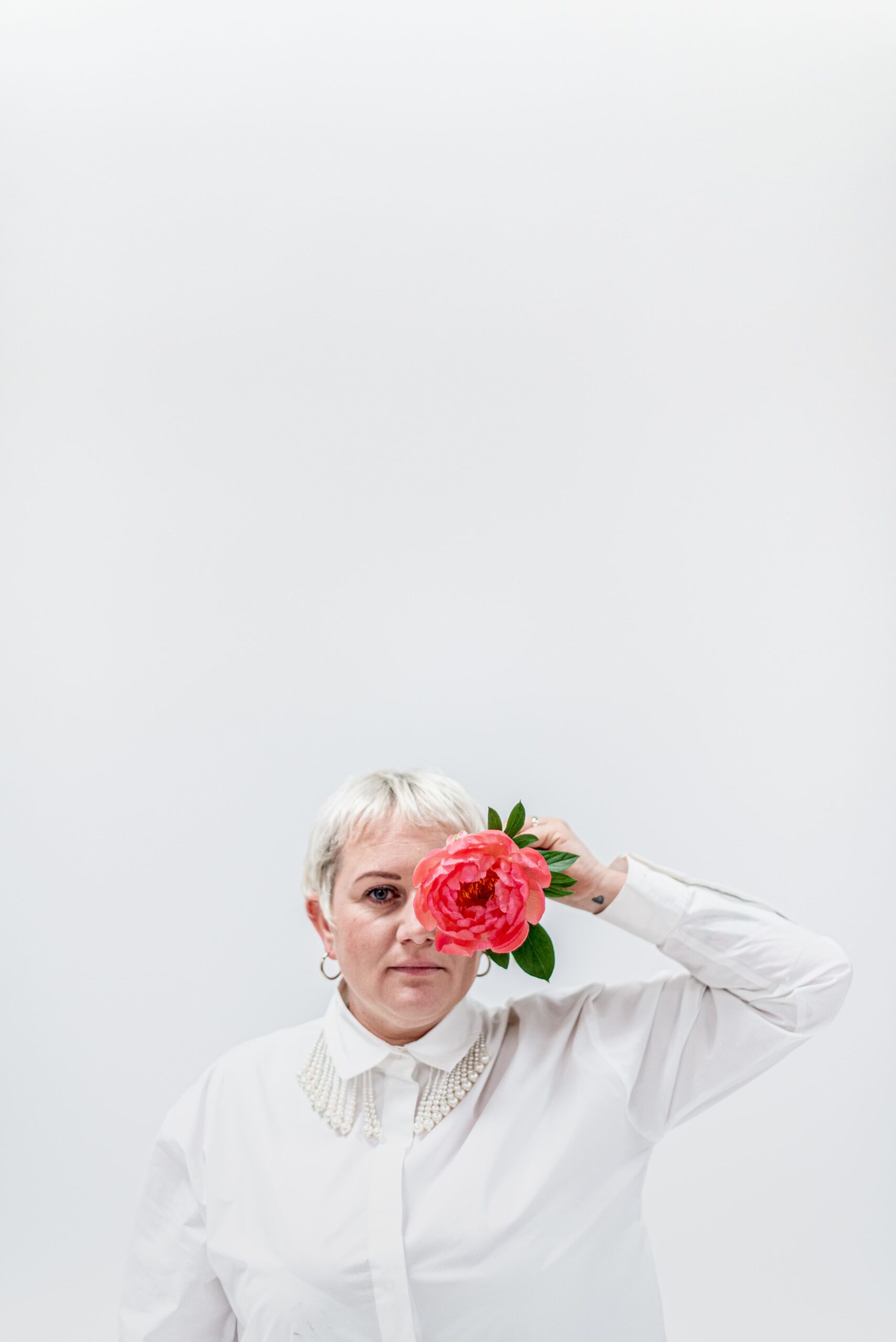
I have always been passionate about plants because of my grandparents. My paternal grandfather, whom I unfortunately never met, was already collecting garden tulips in the 1950s, and my maternal grandmother was a great lover of garden plants. The whole family would gather at the end of the season to put away two hundred pots of geraniums. Plus, I was always the friend who took care of dying plants! [laughs] In short, it’s an instinct I’ve always had; I’ve always played with my hands in the dirt; it’s a sensitivity I’ve trained my whole life.
You know, I previously worked for a large distribution company, held an excellent role, and was established professionally, which was a transition phase that helped me immensely in starting a business and leading a work group. However, I had reached a point in my career where I no longer had free time to cultivate what had always been my creative urgency. I have always done many things: painted, photographed, played the trombone, and I’m also a pastry chef.
In fact, I know you also took a graphics course, among other things. Have all these professional experiences influenced your vision of flower design in some way?
Absolutely, yes. I don’t have a degree, or even a high school diploma: due to a series of personal circumstances, I didn’t study formally, but I did many different things, and that was my education. Think about it, my husband is the opposite of me, a real scholar, a numerical engineer, someone who boxes everything up, and he always tells me, “Your great fortune is that you don’t have a method that was transmitted to you, but you built it yourself through the many experiences you’ve had.”
My parents always taught me to transform a thought, an emotion, a concept into something concrete, so if I think something, I automatically try to express it concretely. I bring this internalized process into my projects a lot. I believe this is the strength of Fiorellaia: being able to express my point of view, the brand’s identity, and the client’s needs through the flower and all the decorative elements that can support it.
Going back to the experience with the large chain I worked for before founding La Fiorellaia, at a certain point, I was physically injured, so I was forced to stay home for a while. During that period, I understood that something in my life had to change. One day a friend of mine told me that the town florist was selling his business; knowing about my green thumb, she said to me: “In my opinion, that shop is yours. You’ll figure something out later, the right idea will come to you, but that shop is yours.” It was October 2015, ten years ago, when I took over this shop with my mother. I didn’t know it would become my professional life, but I knew I had talent. In one year, I learned everything, the names of all the flowers and how they behave. I took a course with Federfiori, getting the European florist diploma, and with the same study class, in July 2016, I designed the setup for my own wedding. After mine, in 2016 I decorated two other weddings; the following year it was 35, then, the next two years, 80 weddings a season. The growth was impressive and also demanding.
In 2018 I started thinking about Via Milano 43, my space in Brescia — what would later become my new Fiorellaia home, which opened in 2019. Shortly after, Covid hit, and for me it was a huge shock: I had just made a major investment, with around 60 projects already confirmed, all with private clients. The entire sector came to a complete standstill for two years, and the institutional support was not enough to truly guide us through such a complex moment.
Fortunately, when things reopened the business began to grow again and today it’s doing very well, but that experience was pivotal. It made me realize I couldn’t afford to remain tied to a single sector, and that’s exactly when the online shop was born, along with the decision to expand into B2B installations, which today represent our real strength.
Communication, as you know better than me, needs its time, it needs to be cultivated, and we, in particular, are working on conveying that we are effectively a flower design studio, a design studio where the flower is at the center of our projects, but at the same time we manipulate it so that it can lead to a result that doesn’t necessarily see the flower as central, because we also move around many other elements.
And how would you describe La Fiorellaia’s style to someone unfamiliar with it? What are the key elements that make your project recognizable?
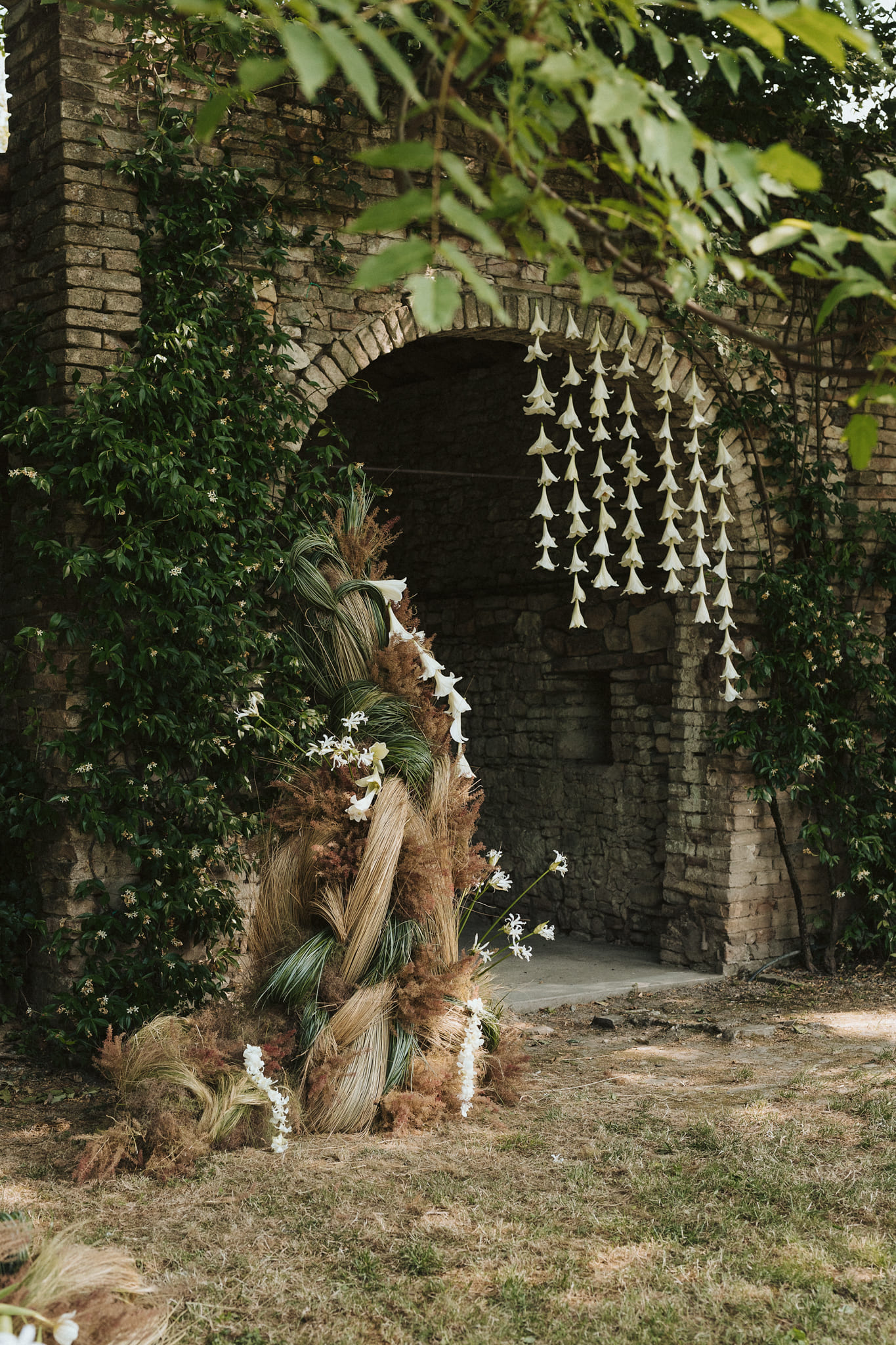
I believe I have a very non-standard manual skill: not having a traditional florist background, I have a very fresh point of view on the work, I am not stuck on the rules. I respect, of course, the rule that the flower must drink to last, but certainly the use of form and color is fundamental for me, it’s the vision that makes the difference. When faced with my work, the BPMs must be high, people must feel their heart beat, so I would be lying if I told you that I only work with the flower: it is certainly my central element, but then there’s everything else, because I care that something impactful reaches people.
The Fiorellaia Academy for professionals was also born: what does teaching flower design mean to you? What do you try to transmit to your students, even beyond the technique?
I try to teach the value of the profession. Then, of course, I care about teaching my students to avoid all the mistakes I made. There were periods when the florist had a different identity within society, because if you think about it, the flower is always there, in good times and bad, but now the role of the element has changed so much in the lives of the new generations. This needs to be taught to the young people, and they must also be given a point of view on some important things to know, first and foremost that opening and running a company is no joke.
Earlier you also mentioned your digital work; you are also a content creator, with a strong digital presence. How important do you think visual aesthetics on social media are today in your work as a flower designer, and how do you reconcile the real life of flowers with the virtual one?
If I had to draw you a pyramid of values, I believe that at the top there is always honesty, in the sense that what I transmit is always, first and foremost, the truth of La Fiorellaia. It is no coincidence that, compared to a year and a half ago, we are communicating a little less, precisely because the business has grown so much, not just in economic terms, but also in terms of the client target.
In the last year, we have worked for Netflix, Illy, Iliad; we have done productions that exceed turnovers that I wouldn’t have believed if someone had told me, and so purely for a matter of honesty, and because I am very responsible and respectful of my project, the people who work with me, and my clients, my priority has been to materialize this growth and be present despite the various difficulties, because from the moment you jump, not everyone has the legs to jump with you.
A company, to work well, must have people who run at your speed, who work with your same precision. There has been a change of roles within our company; we are reprogramming ourselves so that my person, my face, is a little more present on social media. We are working on introducing videos related to pure composition, and I would also like to reintroduce the “Fiore del venerdì” (Friday Flower). That for me was an opportunity to train and educate an audience that, if they become more aware, is able to give greater value to our work and our role when we are called upon. In any case, it is very important that everything is always consistent with the truth of the company.
I was thinking that flowers, cut flowers in particular, have a short life, but how do you make them last in people’s memories? What do you hope remains after an event or after the end of a La Fiorellaia composition?
I’m going to tell you a truth that will change your point of view, are you ready? Flowers die even if they are attached to their plant, and not much later than when you cut them. It is still a violence, but it is important to know that the life of a flower is short anyway.
To answer your question, it’s important to think about who receives the flowers or what role they should have. If I know that you are a delicate, romantic person, with certain personality traits, and I bring you a black bouquet, with sharp, orange tropical flowers and thorny blue Eryngium, I don’t know if you’d be happy. Perhaps, instead, if I bring you hand-opened roses, or I surprise you with a flower you have never seen, of a particular color, but still soft, round, with a delicate nuance, when you see it in your house you feel a bit of happiness.
Then there is always the matter of training. When I do my flower bars, for both corporate and private clients, I always give away a postcard on how to make the flowers last or dry them, on how to live with them at home. There are obviously very simple rules that, if followed, make the memory last better and also prevent that feeling of waste that is often felt.
“When faced with my work, the BPMs must be high, people must feel their heart beat, so I would be lying if I told you that I only work with the flower…”
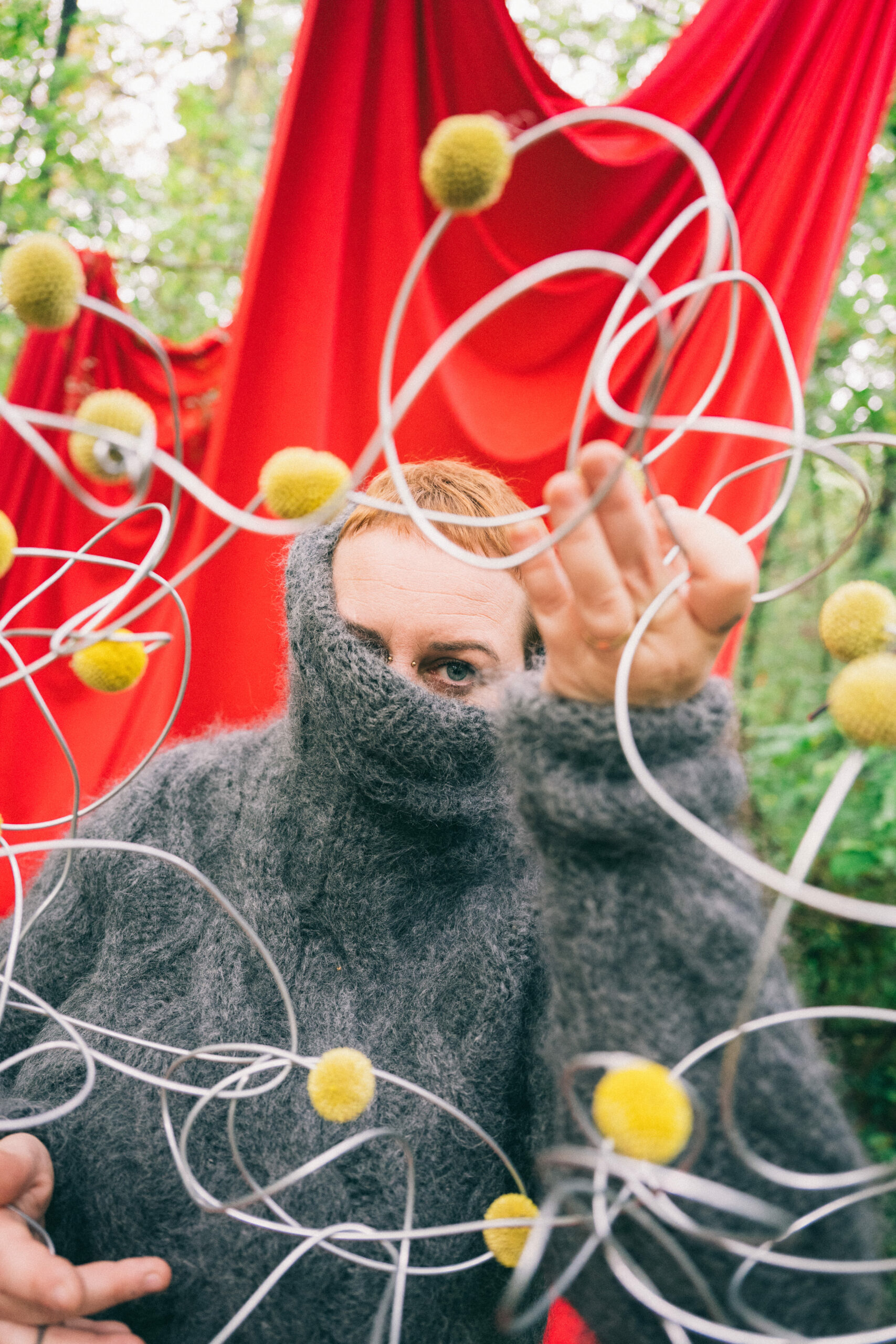
It is also very important for you to associate music with your events, or even the compositions themselves, isn’t it? In fact, on your website, I noticed the section at the top, “Listen to us,” with Spotify playlists associated with each team member. How is music important in your work? How does it inspire you and nourish you? You know, it is often said that plants are also nourished by music; do you think that’s true?
Yes, music is a set of frequencies, and as such, it affects every living being, including flowers. For me, music is something very intimate, in the sense that it is something I have investigated within myself, which brings me a unique pleasure and feeling. Music was also the thing that made me meet my husband Marcello, whom I love madly, and so music, undoubtedly, since it is experimentation, since through it I have experimented and also searched for my own person, is a total and all-encompassing art form for me.
What are your ambitions for the future of La Fiorellaia? What dream would you like to achieve?
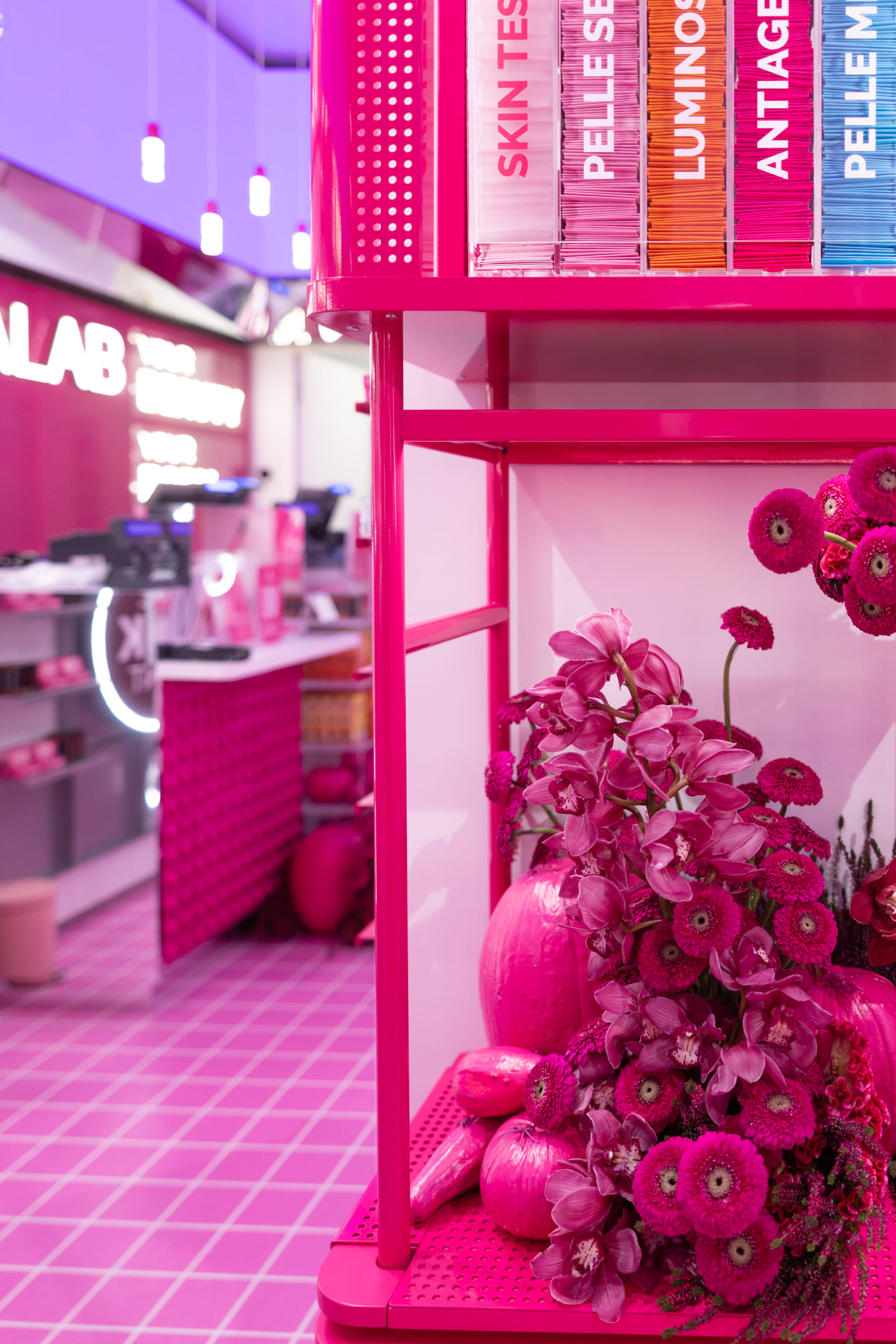
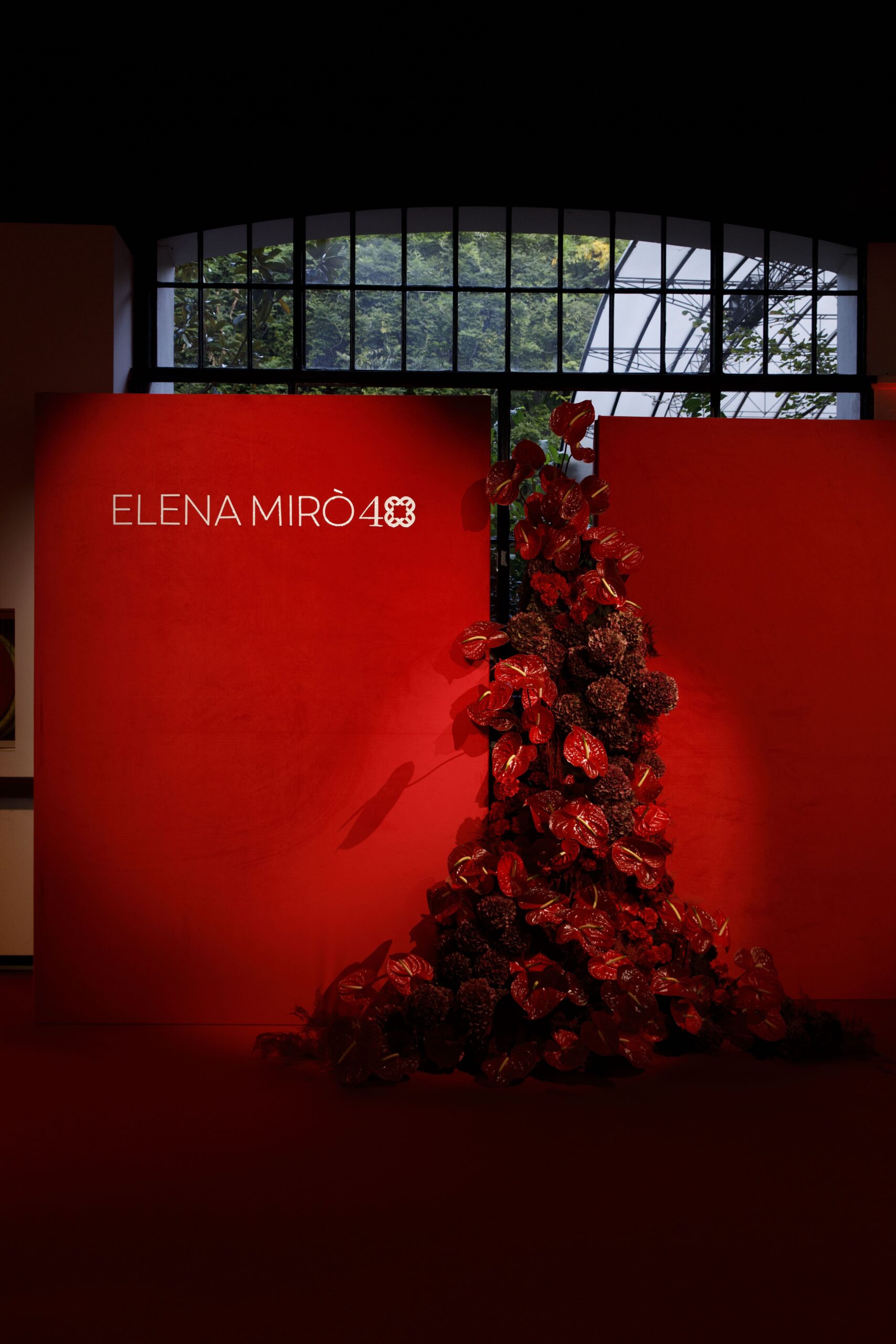
Certainly to grow bigger, to improve, to have a larger work group: the people I have now are the essence of what I want. I wouldn’t want anything other than to establish myself in what I am doing in this phase, which for me is a new beginning. Today we have an ongoing collaboration with Loewe, a beautiful and profitable relationship with Veralab, we did a beautiful project for Elena Miró, and much more. I hope, in two years, for example, to have created continuity, to have established myself as Cecilia Paganini, flower artist, with a precise vision of my sector and a flower design studio that is doing well and is recognized.
And what is your biggest fear?
Failure.
Everything in life has its time, changes, transforms. Failure can take many forms – failing a project, failing an expectation – and I fight very hard to prevent it from happening, but I believe that failure is a concrete fear for all entrepreneurs.
And what makes you feel confident?
You know, I had some very negative experiences when I was little, which I had to metabolize well to stay mentally healthy. I have been in analysis since I was 24, with the same person who knows me very well by now, and psychotherapy has become a gymnasium: I like seeing how I have managed to structure myself and mature through the things that happen to me. I’ll give you an example: the first employee who quit was a real loss for me, a separation grief, while with the last one, I understood that they simply weren’t running at my speed anymore, and I realized that often, when space is created, that space is filled by something not necessarily better, but more in step with you. It is very reassuring for me to know that I have been able to grow up, mature, put myself out there, and know how to do it continuously.
My nest, my home and my husband, reassure me greatly: even though my husband is my opposite—I am loud and agitated, while he is a very quiet person—our nest is truly cared for, our house has grown with us, we have our five cats and a lovely dog we rescued from the shelter, and all this brings me peace.
Professionally, continuity makes me feel safe, because it gives you the liquidity to be serene, and the trusted people around me, and the pride of having people who choose to work on this project with me every day. This is a profound thought, but it is real, and one must force oneself to remember it at times. Just like the thought that everything comes back: this is truly reassuring for me, the idea that everything that happens, everything that has happened in these ten years of Fiorellaia, has always had a meaning.
What does it mean for you to feel comfortable, in your own skin?
I think it is an achievable state if you work sincerely on yourself and understand your fragilities, your limits, and also your strengths. It is not easy, because we always tend to feel a little ashamed because society tends to put pressure on you, but recognizing your strengths is fundamental. If you have a clear vision of the person you are, in all your facets, including your flaws, then you manage to be honest and also build a private life, a professional environment, and work and personal relationships that reflect who you are.
You are never under blackmail: this is what being comfortable in my own skin means to me.
You know, I am a very anxious person, but from the moment I understood what my fragilities are and realized that I will never solve some of them, but I have cushions that I know where to position so that they are salvific for me, my life changed. Then, it is also true that among all these beautiful things we have said, there are also negative sides. For example, my husband and I do not have children for various reasons, including the very exhausting pace of my life; so, sometimes I feel guilt, because I think that if the child hasn’t arrived, maybe it’s because I’m too stressed. When thoughts like this arise, I recognize even more clearly how salvific therapy is for me, which helped me arrive at the conclusion that if the child hasn’t arrived, it’s okay; I don’t need that to identify myself as a woman or as an individual, with the awareness of still doing everything I can in the moment I am in, so without regrets.
I’ll ask you one last question: what is your happy place?
My travels, my friends, and my husband Marcello.
You know, Maria Luisa, when I have moments where maybe I’m very scared because I have a thousand deadlines and I don’t know if I can make it, I have managed to develop a way of thinking such that when I leave work I tell myself: “Cecilia is one thing, and La Fiorellaia is Cecilia’s daughter, but Cecilia and La Fiorellaia are two distinct things.” So then I go out with my husband, I go out with my friends, and everything passes; I spend some time with my dog, and everything passes.
Travels, as I said, are also a happy place for me, because when I travel, I look at how colors behave, how nature behaves, what the environment is like, what the flavors are like; I look into the eyes of people who have a different point of view on life than mine, and for me, that is life, and I feel very privileged to be able to do it.
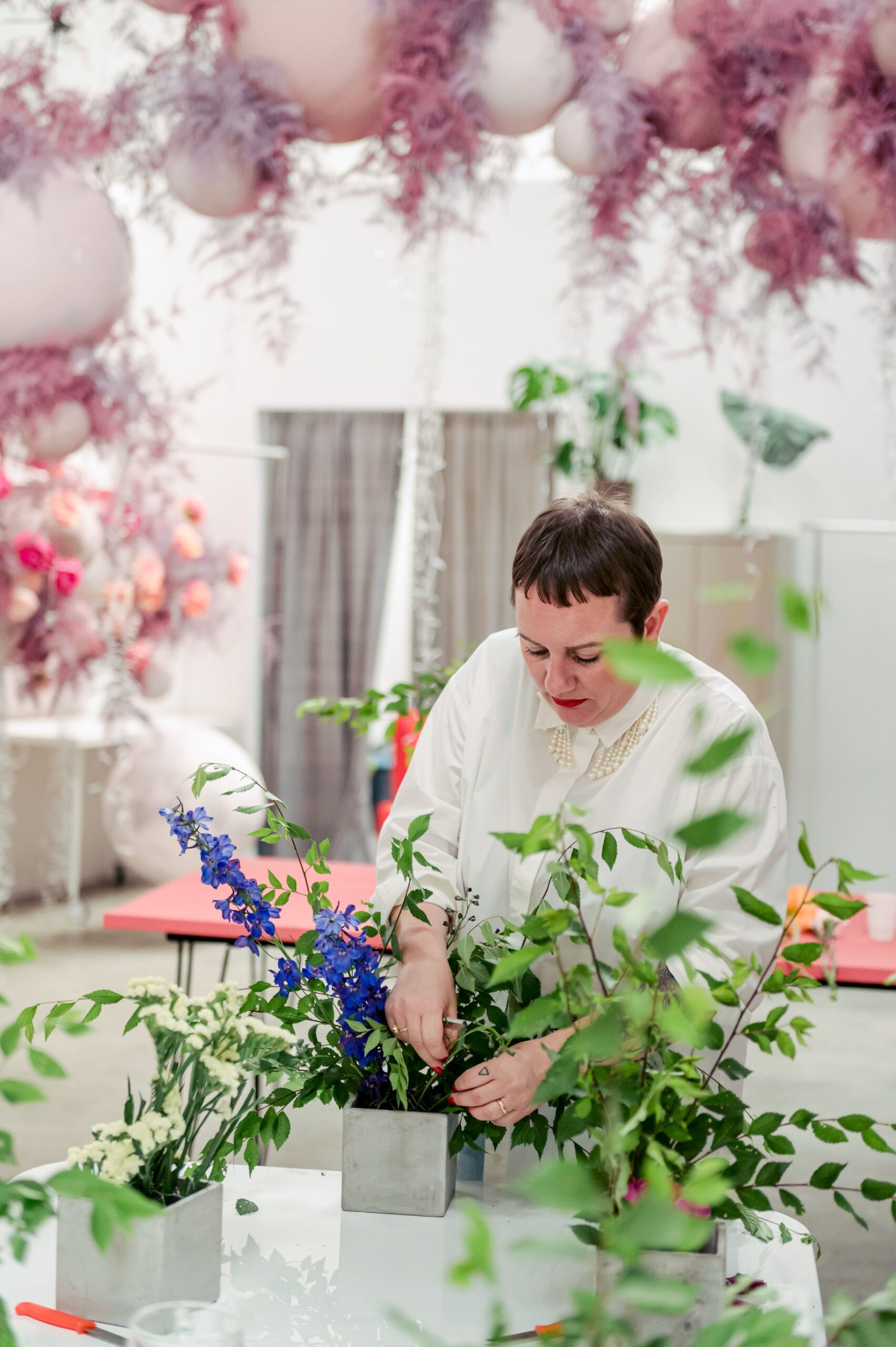
Thanks to mm studio.