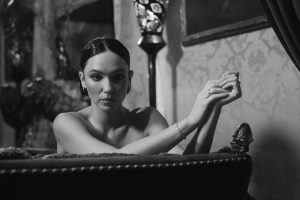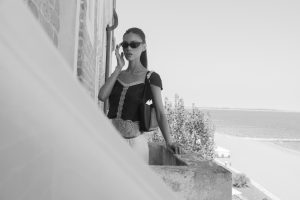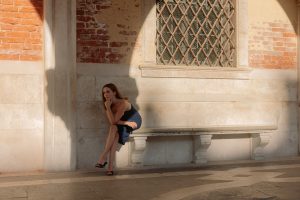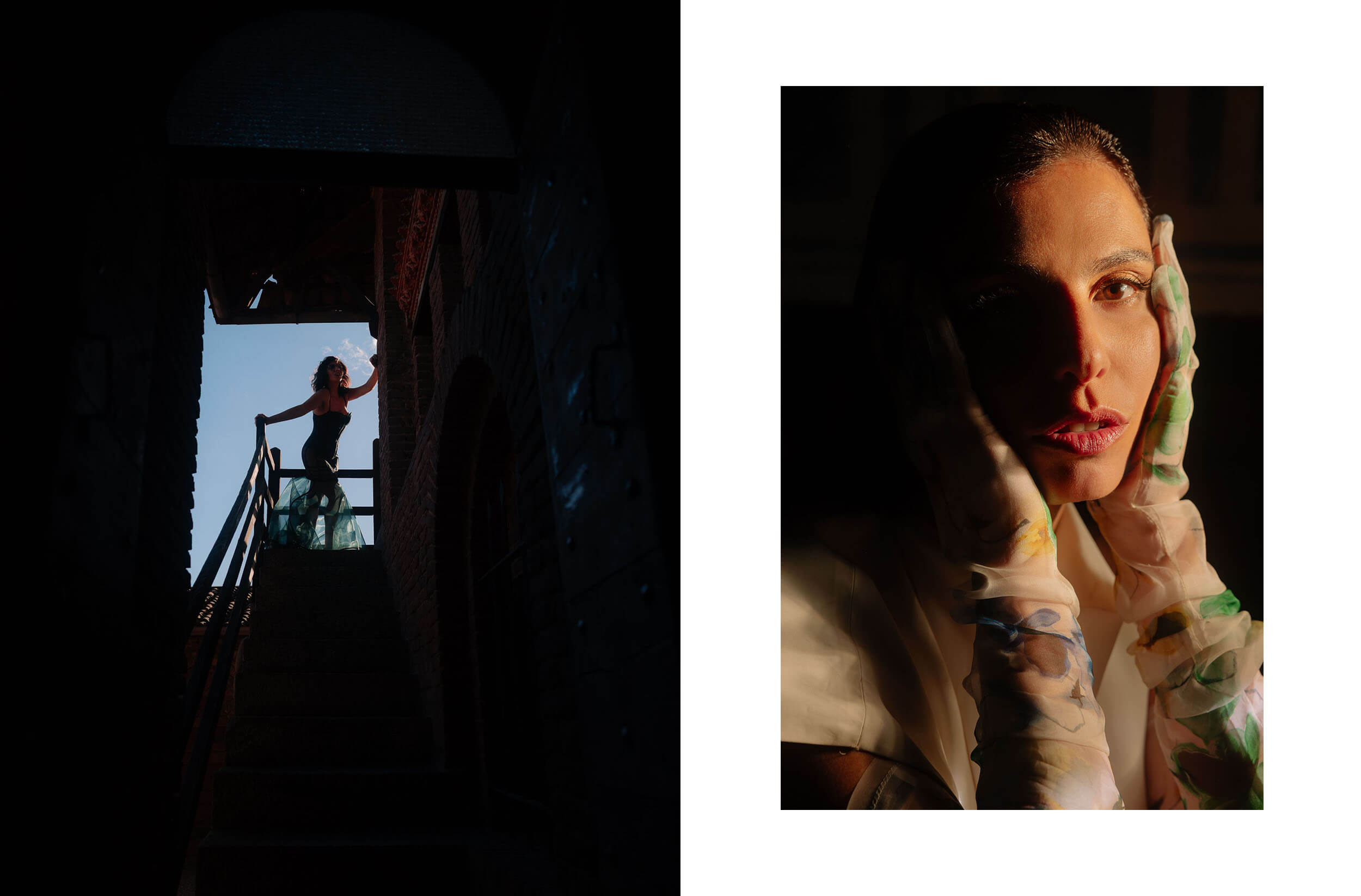
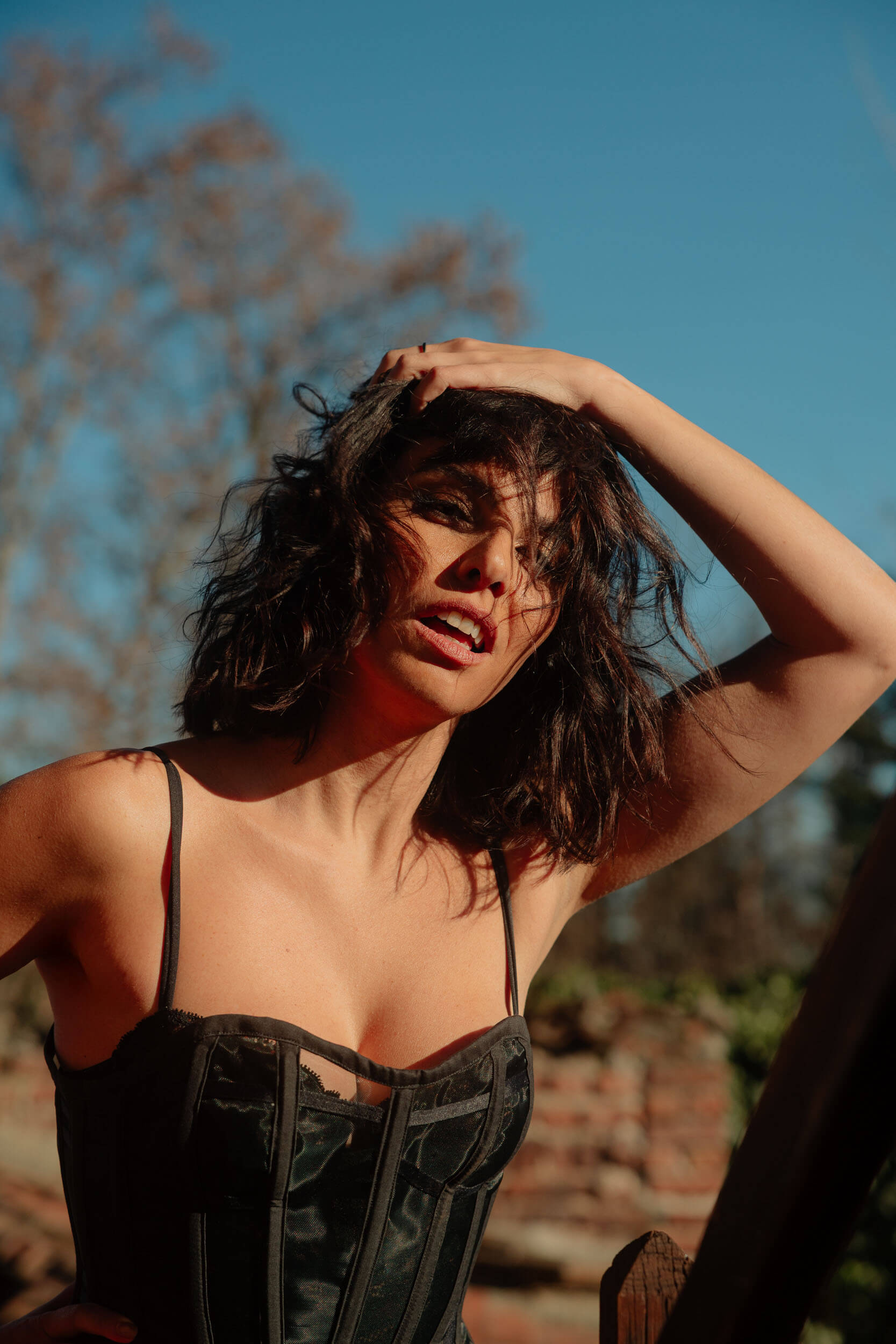
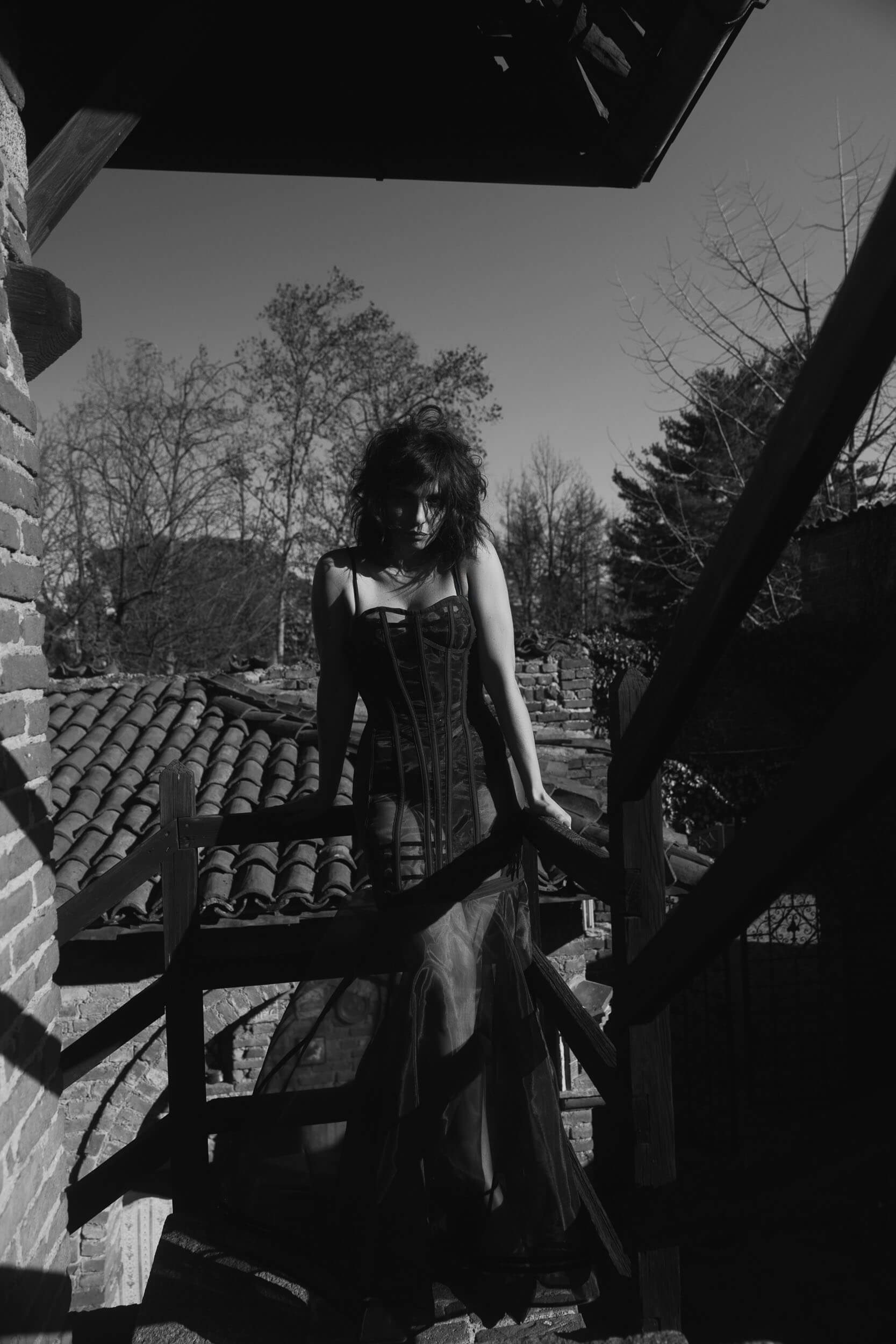
March is the month with a particular light, suspended between winter that insists and spring that is restless. It is the month of transitions, of silent transformations that then become explosions of color. And we could not have imagined a better face to tell this moment than that of Irene Maiorino, our March Cover.
Magnetic, intense, free, Irene is a talent who does not look for shortcuts: she builds, she digs, she listens. Every character she moves through carries with it a rough truth, never accommodating, that lingers on the viewer far longer than the end credits. She is an actress who is not afraid to expose herself, to show herself vulnerable, to inhabit contradictions, and perhaps it is precisely this that is her brightest strength.
During a phone conversation, we immersed ourselves in her journey, among sets that change their skin, radical choices, discipline and instinct. We spoke about ambition, fragility, beauty as a political and personal act. And we discovered the importance of looking ahead with clarity and desire, without ever losing contact with one’s roots.
March is the month in which everything begins again. With Irene on the cover, we too feel that something is opening up.
What is your first cinema memory?
When I was a teenager, I went to the Giffoni Film Festival. I have to say that that experience changed my life quite a lot, because there I met, among the various international guests, Meryl Streep.
Even as a child I had a great instinct that later led me to throw myself into this career. A sort of drive, but also trust in instinct. I remember that time, with Meryl, I stood up without even having formulated the question I could ask her; the microphone reached me and there was this exchange with her, unforgettable for me. I remember her as incredibly radiant. We spoke about The Bridges of Madison County, in which she played Francesca, so she had also done work on the Italian language. I will never forget the way she looked at me while answering my questions. She conveyed so many things to me beyond being a great artist… perhaps she is one precisely for this reason. For me she was an example of attitude, something I deeply internalized. I still look for that quality, also in the people I meet.
Then, last year, I myself was awarded right at the Giffoni for “My Brilliant Friend”. I looked at these girls in the audience, and for a character like Lila I saw enormous involvement. It moved me very much.
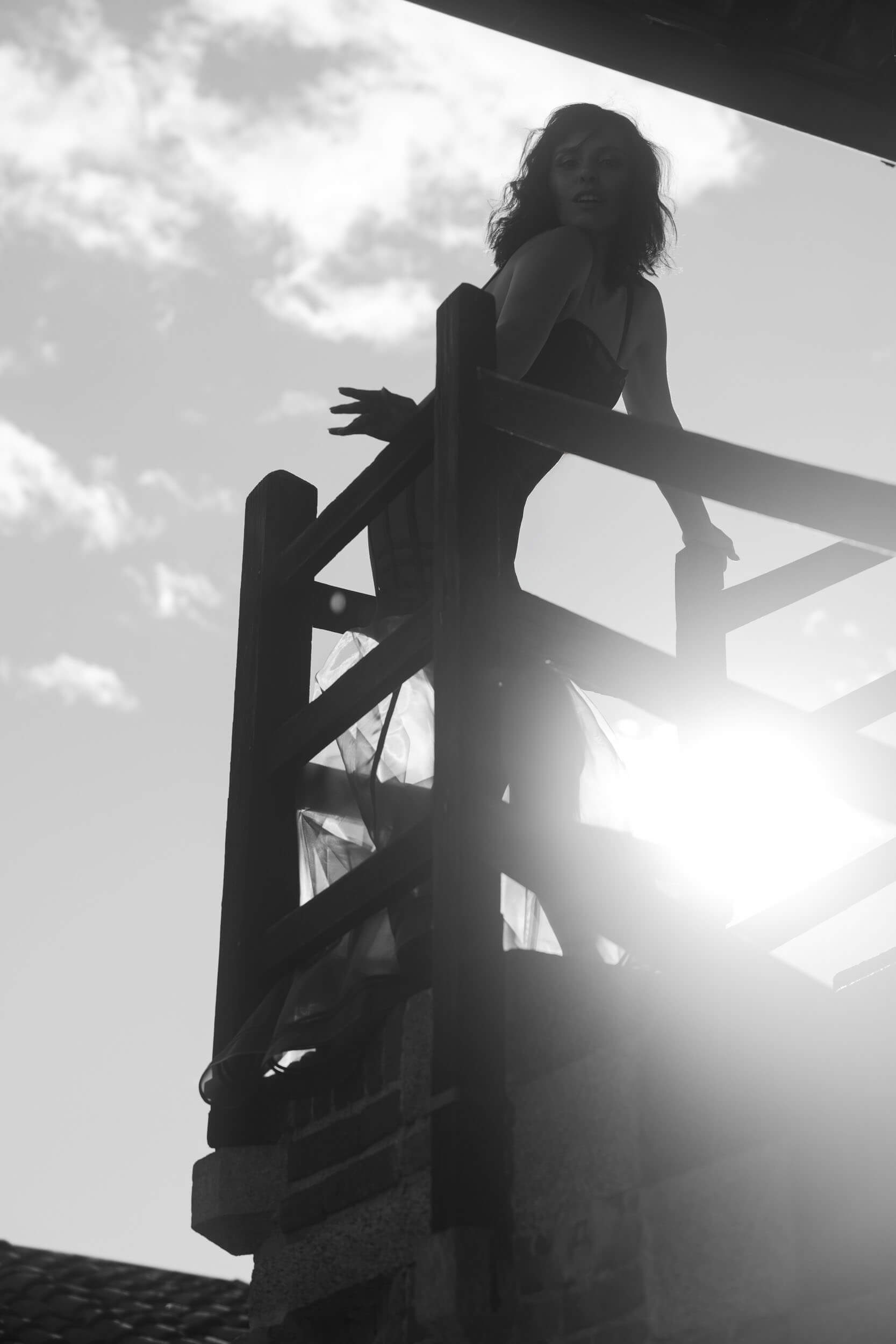
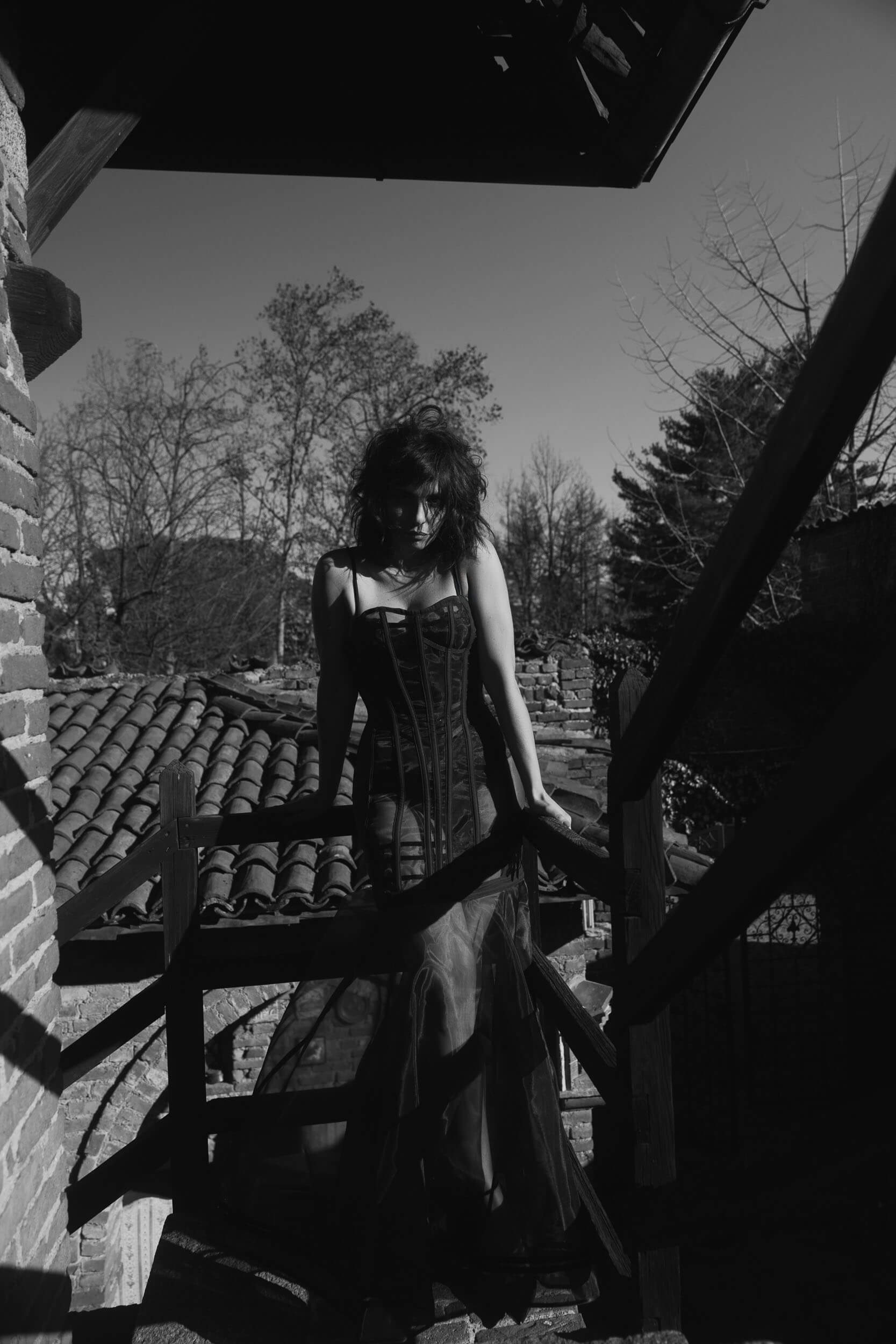
Being on the other side, after so many years, must have been super emotional.
Yes, it was. Anyway, thinking again about “The Bridges of Madison County”, in the film Meryl Streep lives this great clandestine love with the character of Clint Eastwood, a traveler who falls in love with her and can no longer leave. Francesca, however, loves her husband, she has built a life with him, and yet she discovers a passion she did not even know could exist. At a certain point, he tells her that he has to leave and asks if she wants to follow him. She says no. Then life places her in front of another choice: there is this scene, during torrential rain, in which she is in the car with her husband and in front of them there is her lover, stopped at the traffic light. The light turns green, the husband starts honking, wondering why he does not move. But he is waiting for her. Then she grabs the door handle and swallows her tears: we do not know whether she will get out or not. In the end, she does not get out. Beyond the love story, I find it a super emotional scene. Perhaps since I saw that film, I raised the bar a bit from a romantic point of view [laughs] – I keep looking for that passion. I always say, jokingly, that cinema and literature have improved me but also ruined my life. Because on the one hand I feel like a woman who makes choices, I consider myself a feminist, attentive to language and to the education of the new generations; on the other hand I carry within me so much romantic literature and so many films that place me in a position of longing, but that at the same time continue to fascinate me.
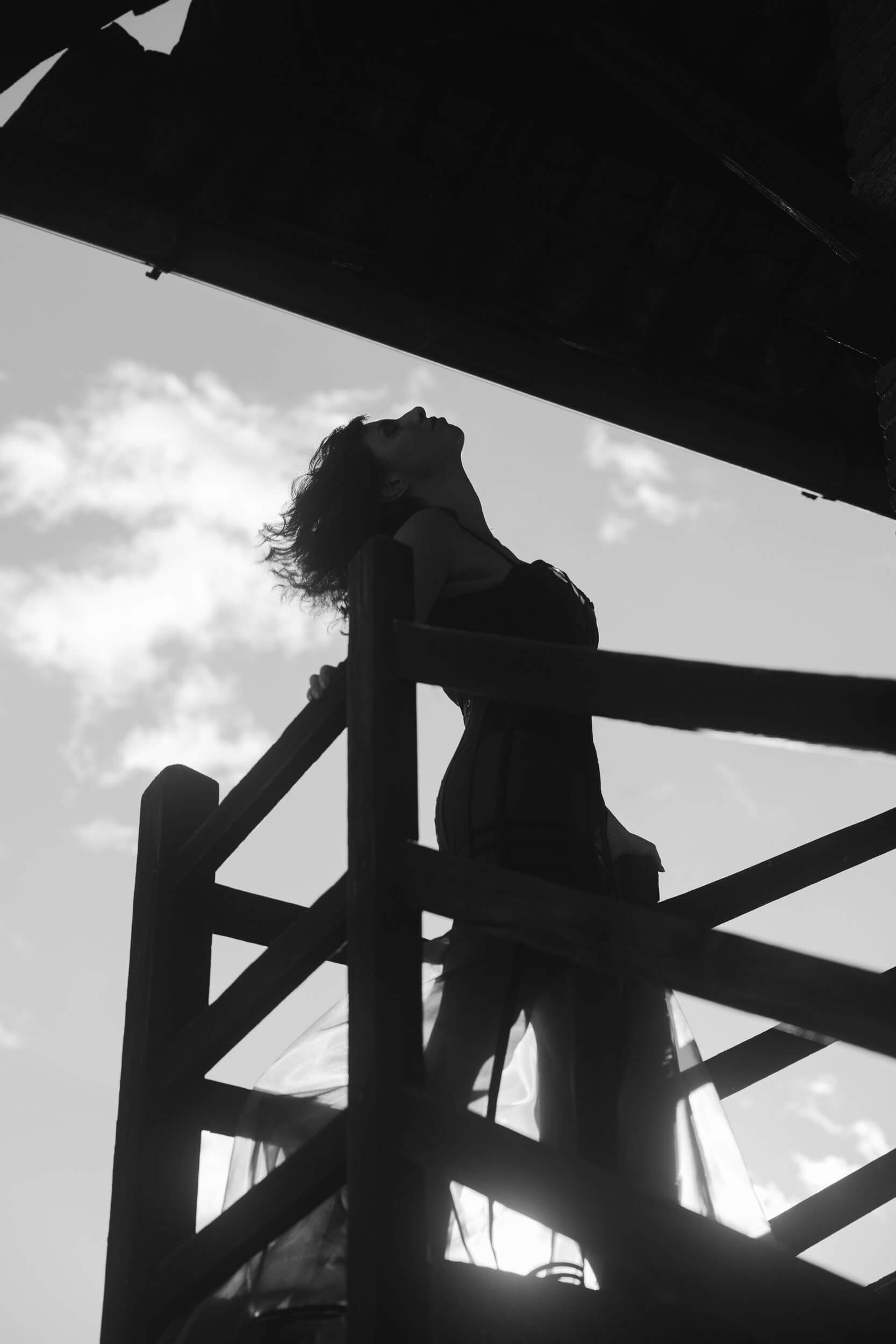
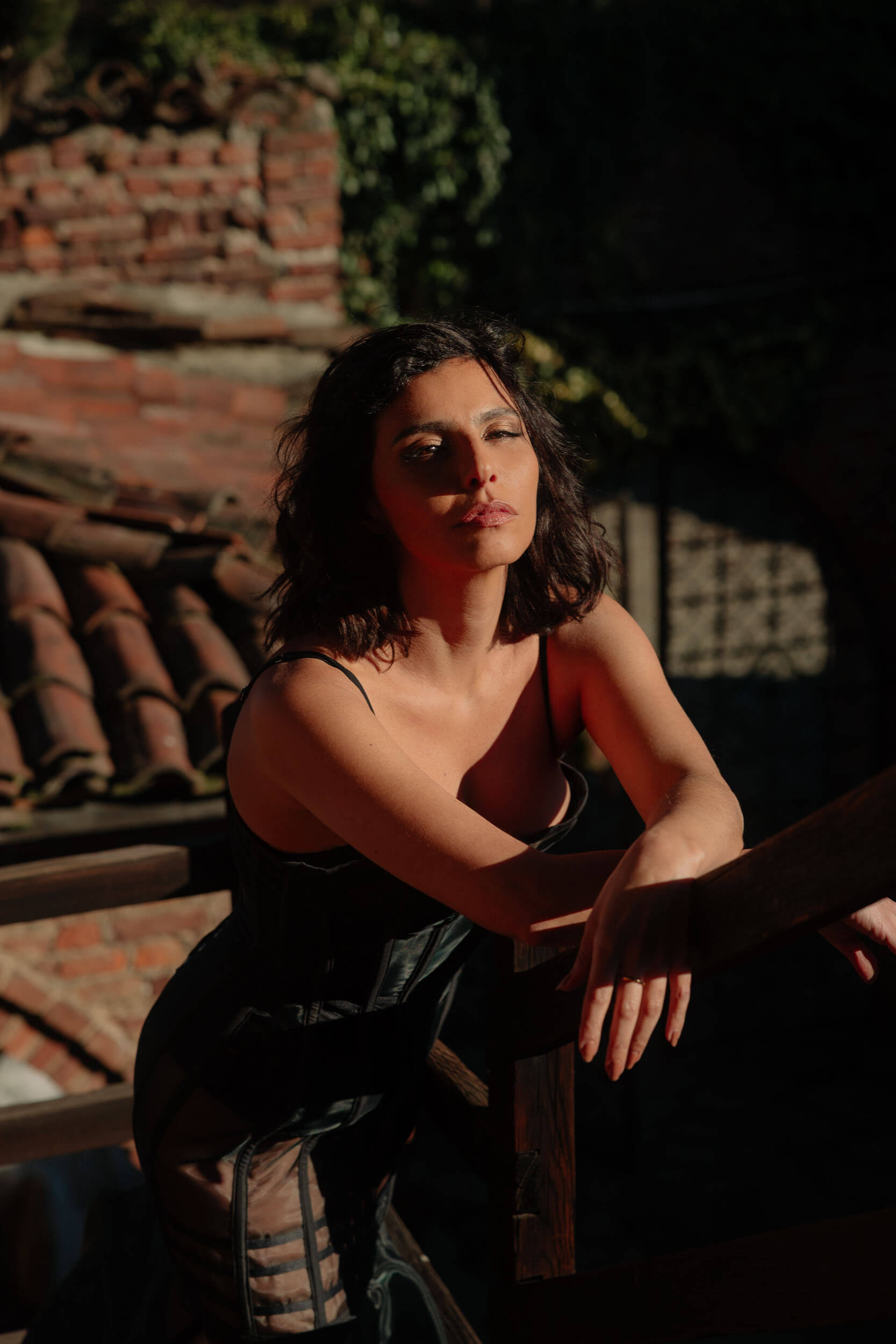
“I always say, jokingly, that cinema and literature have improved me but also ruined my life.”
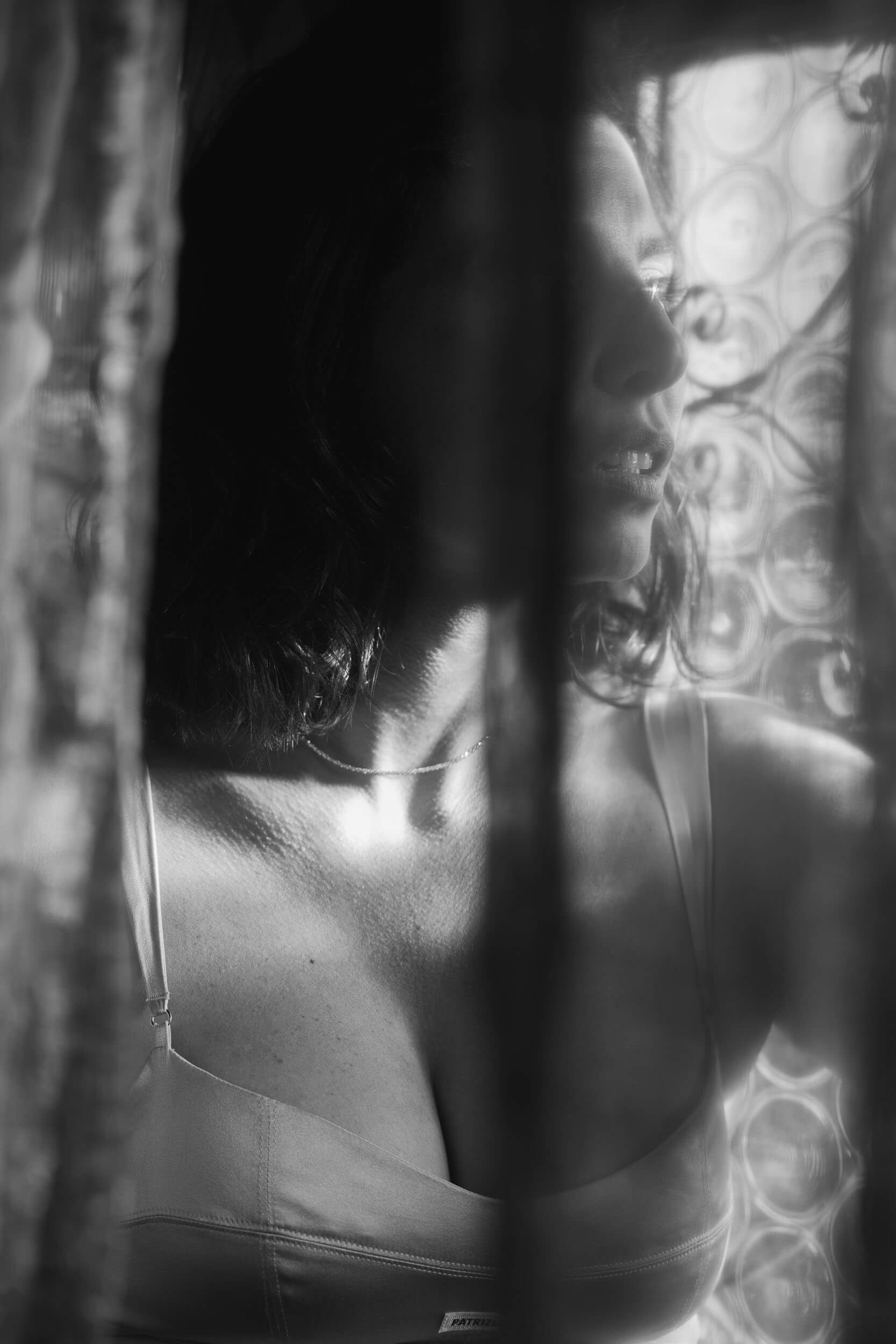
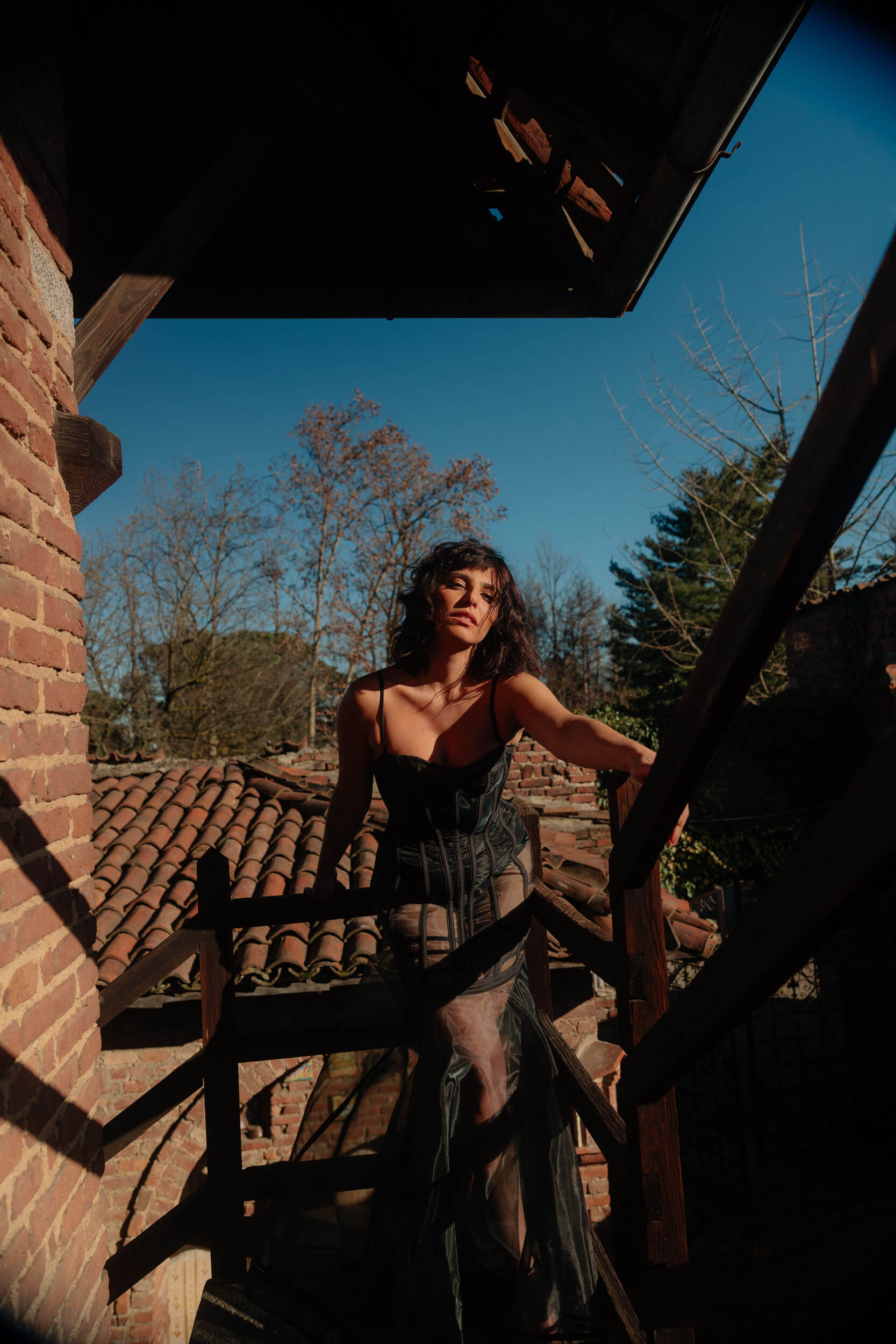
Speaking about one of your latest projects, Quasi Grazia, here you portray a youthful phase of Grazia Deledda, the first Italian woman to have won the Nobel Prize in Literature. What was it like to work on this character?
I really liked moving from Lila, who is a very large character but fictional, always connected to writing, to portraying an actual writer. This transition struck me, also because we are always speaking about enormous personalities, in whom one can truly lose oneself. This year, moreover, marks one hundred years since Grazia Deledda’s Nobel, so the timing is perfect. I am very happy to have taken part in this film, because cinema is also historical memory; for me it must be escape, imagination, the possibility of circulating thought, but it is also a way to restore the figure of a great literary woman who in my opinion is still little considered.
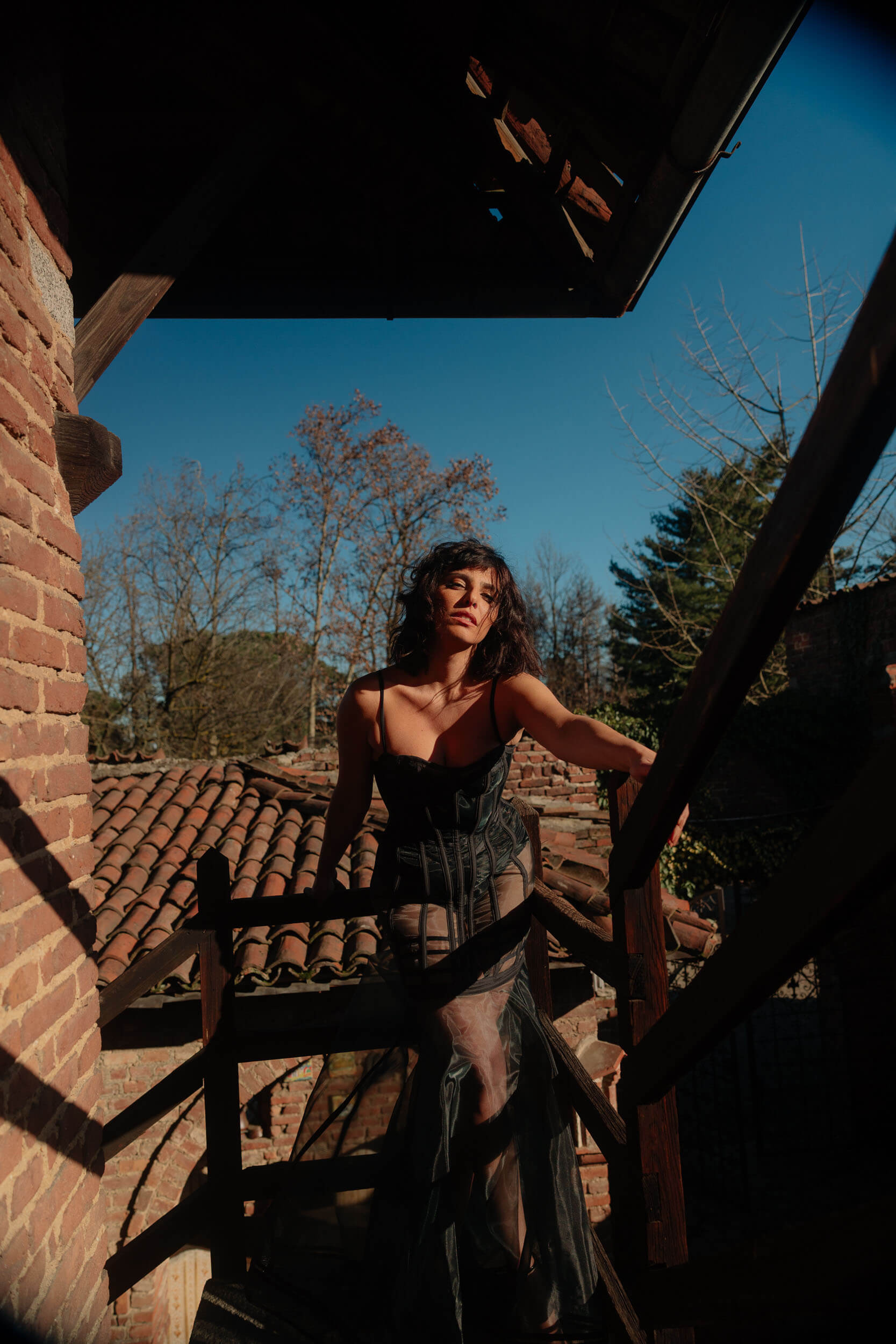
She is the only Italian woman to have received the Nobel Prize in Literature, and yet we hear her name mentioned little; she is also missing from school anthologies. When a film or a series speaks about a little-known historical figure, it is one of the most effective means to bring her into everyone’s homes.
Yes, I agree. Moreover, she carried out a revolutionary act: detaching herself from her family’s opinion, emancipating herself, leaving her village, crossing the sea – which at the time was an enormous journey – in order to defend her own passion. Not a passion for a man, for once, but for herself, for her own talent, for her own space as an artist. She is a gigantic figure.
Luigi Pirandello was always hostile to her. She did not live an easy life. The story with her husband is also interesting: at a certain point he decides to leave his state job in order to become her manager—a countercurrent gesture for the time.
To prepare myself I followed the book from which the film is adapted and I reread Canne al vento. I also read Cosima, her last novel, which remained unfinished. However, at a certain point I stopped, because I had to portray the youthful phase of her life, so I wanted to maintain a sort of virginity, not to know too much about her mature thought, in order to render a movement of the soul still in potential.
In “Portobello” by Marco Bellocchio, instead, one of the most well-known judicial cases in Italian history is told, that of Enzo Tortora. How did you work on such a touching story, which intertwines justice, judicial error, and collective memory?
It was an incredible journey. Entering such a collective project, led by Bellocchio, is a gigantic experience. He has a very strong imaginary world and he never reconstructs just for the sake of reconstructing: it is neither an investigative film nor a documentary. This too, moreover, is a somewhat forgotten story. Those who lived through it remember it well, but it was not passed down as it should have been. The film reflects greatly on the human soul, on the ego, on how much the search for visibility can influence choices.
I worked in the episodes set in the court bunker. There was an almost theatrical dimension there: actors, criminals, informants, succeeding one another as on a stage. Bellocchio often speaks about farce, about theatre: his was a work on multiple levels, extremely lucid.
In “La scuola”, instead, a miniseries set at the Nunziatella Military School, you portray a deputy commander. How did you build your character in order to balance rigor and humanity, avoiding the stereotypes linked to the military figure?
Yes, exactly. My concern in this project was to avoid the stereotypes linked to the military figure. I tried to give humanity to this woman, working on ambivalence. I was interested in her being a bridge toward a more modern way of experiencing authority, attentive to language and to educational dynamics.
Is there a fil rouge that somehow connects your characters?
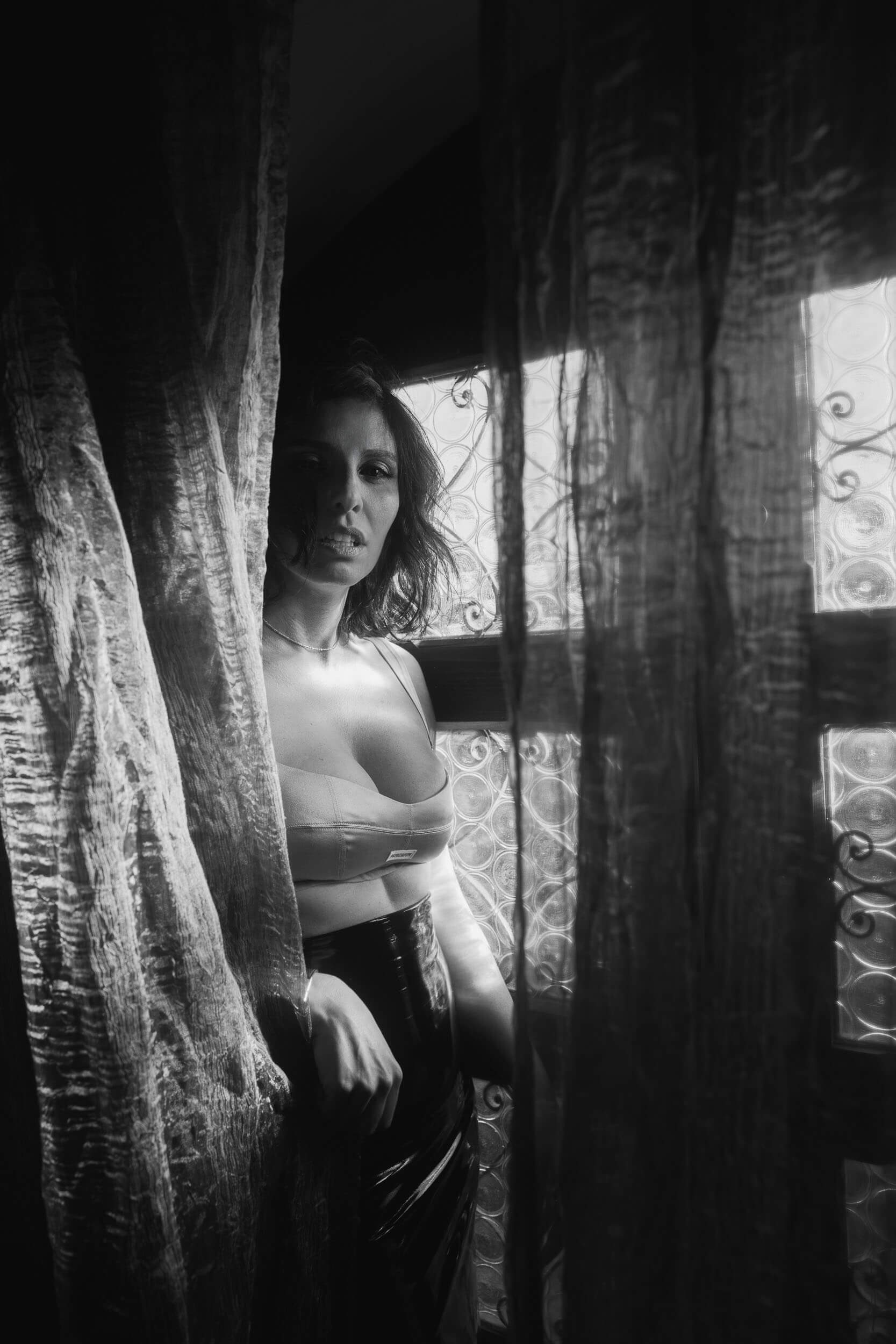
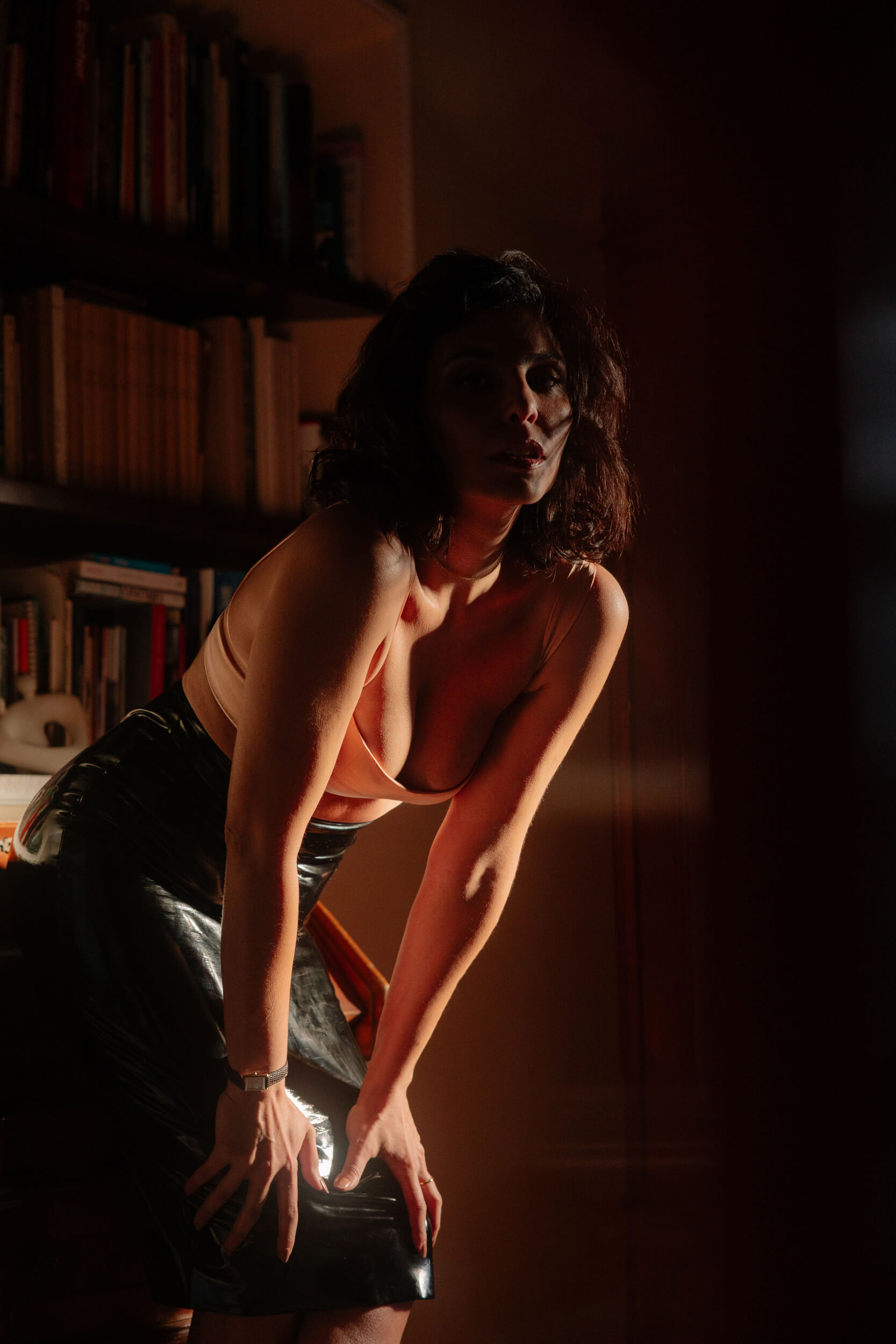
Perhaps courage. The courage required to tell the truth, to leave, to go away. Defending oneself requires courage. I carry this with me from the women I portray.
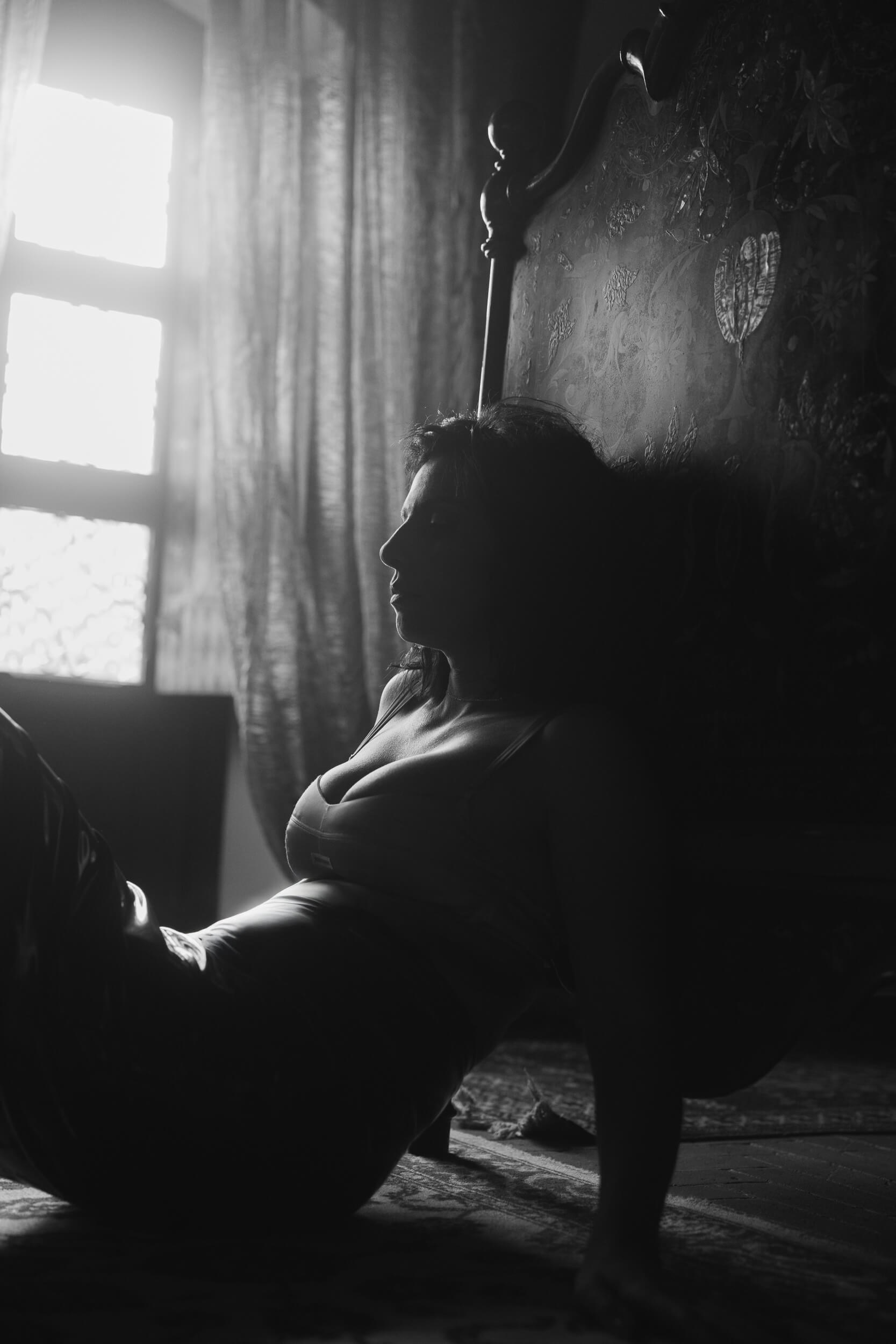
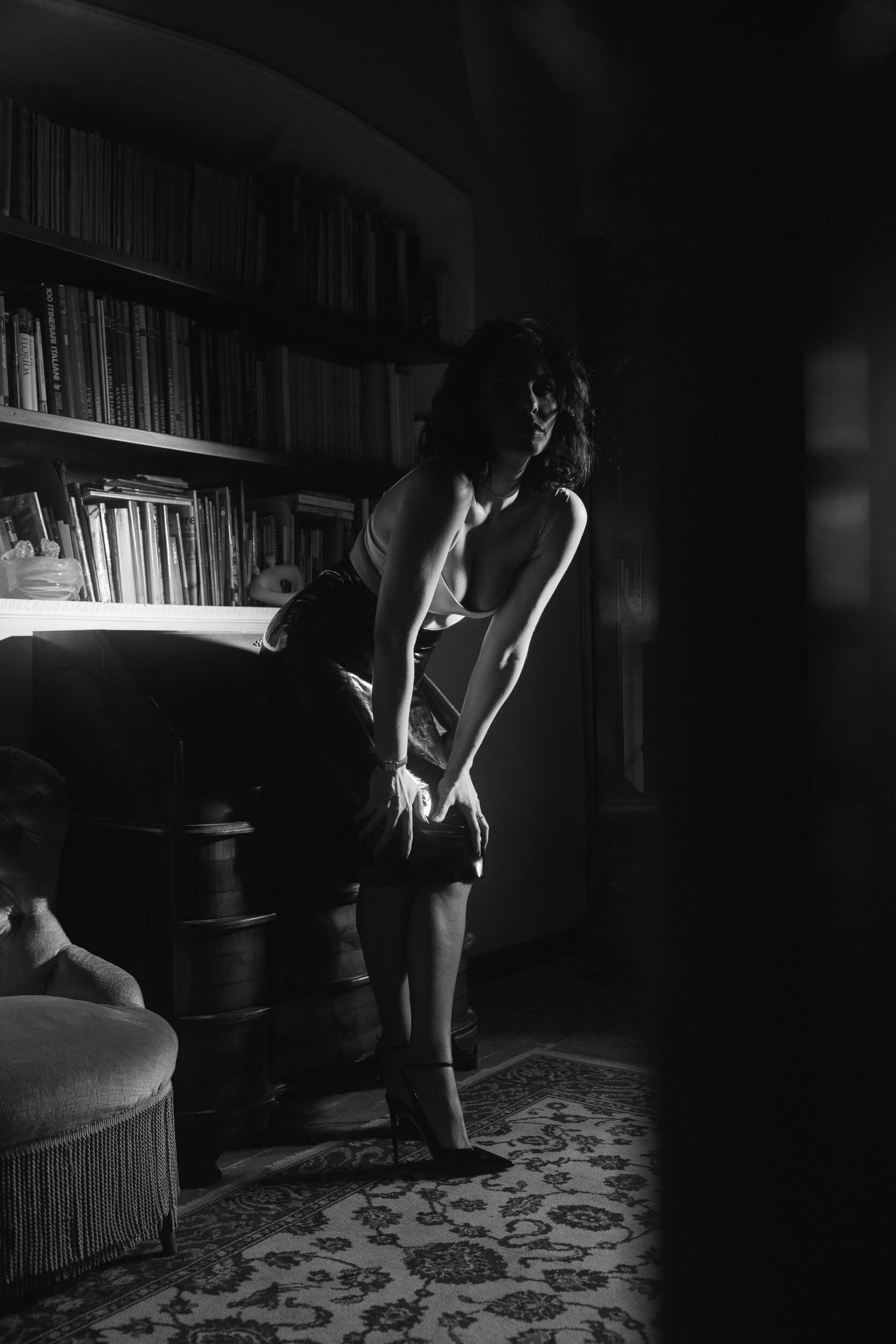
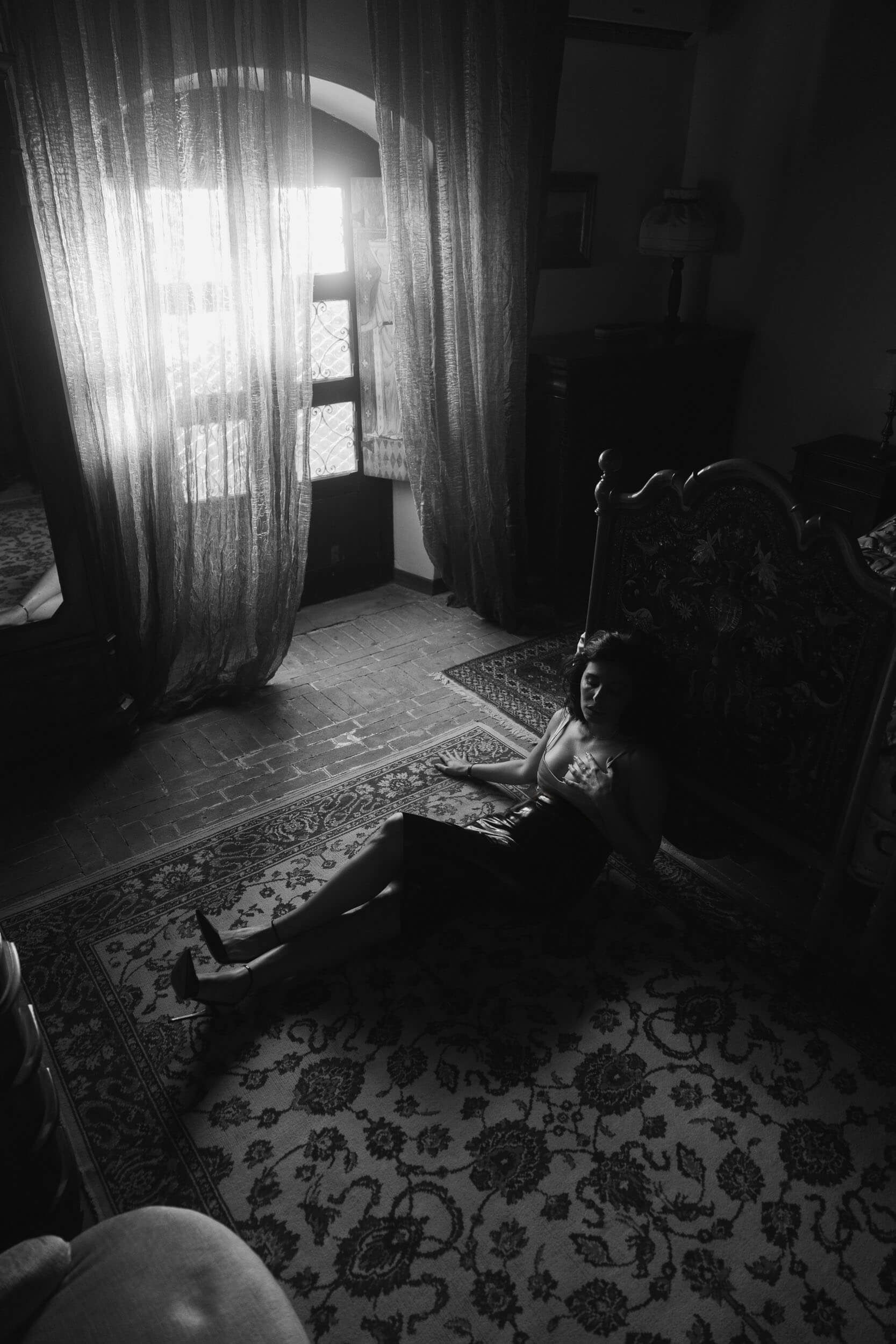
“The courage required to tell the truth, to leave, to go away.”
What has been your greatest act of rebellion so far?
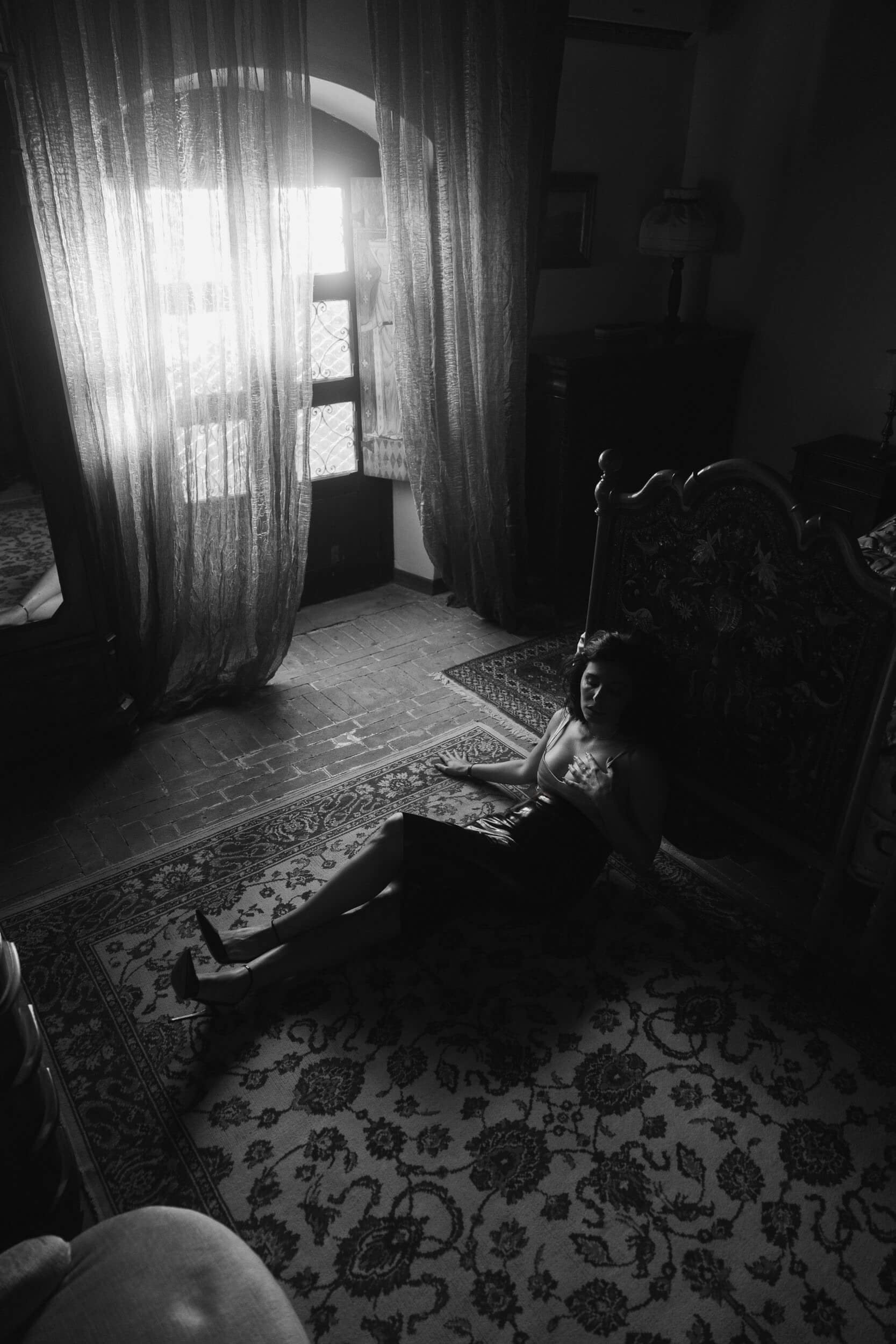
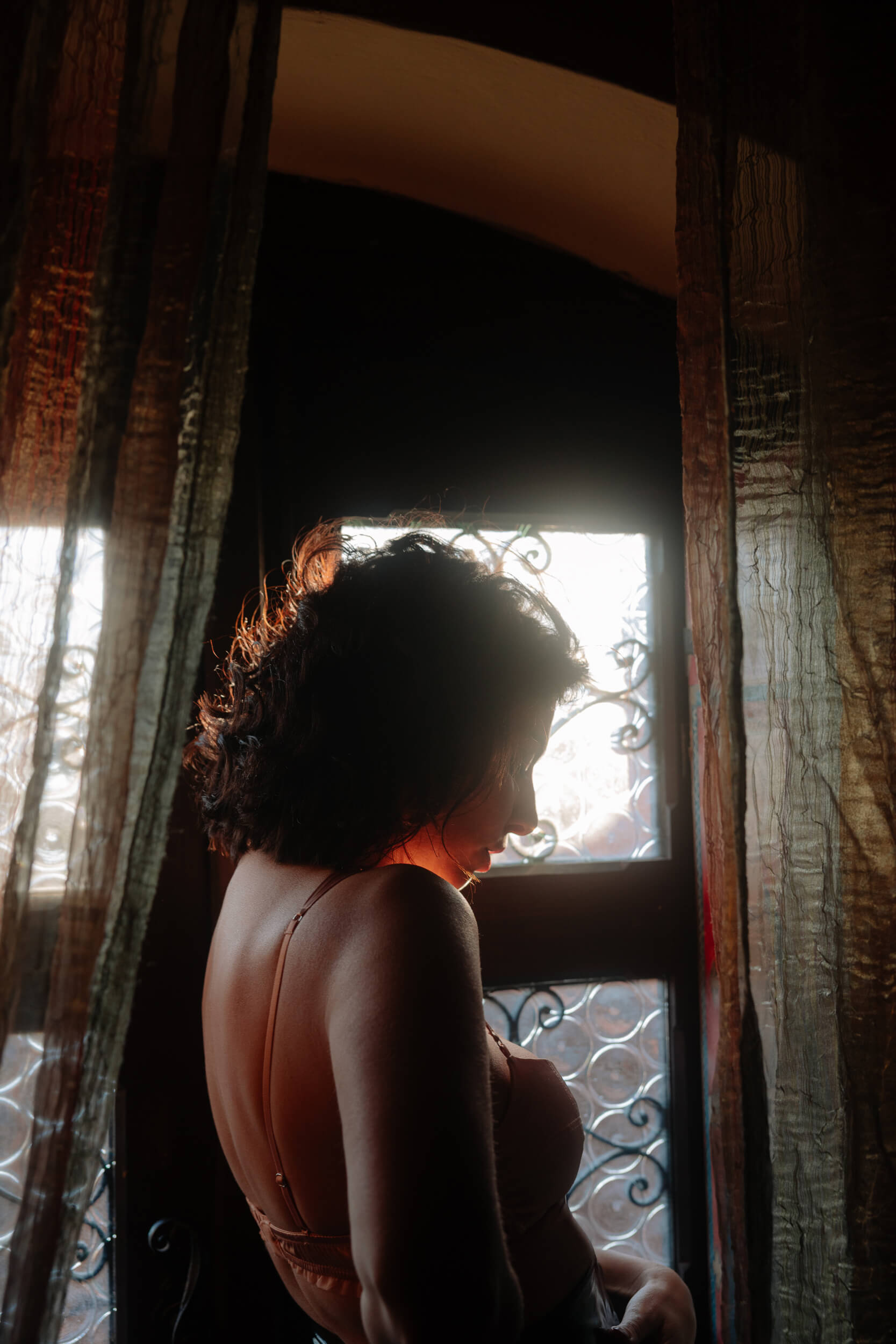
I think it is underway right now, in a silent way. I have turned forty and I feel that something is happening inside me. It is a particular moment. Perhaps with the complicity of literature, to return to what we were saying before, or who knows what else, this age has led me to perceive a change. Moreover, I reason a lot in terms of seasons: it has been winter, a winter in which I gathered, but in which I also remained a little under the snow. Now I trust in spring: I feel that there has been a revolutionary seed.
I do not know if at this moment I would be capable of making a revolution in the traditional sense of the term, that is, a striking gesture. Perhaps the greatest revolution I can make now is to remain in silence and let things happen. Which in reality is very difficult. It is an inverse revolution, because I have always participated a lot, in my life and also publicly. Social media, for example, can be very tiring.
Now I feel the need for a silent revolution.
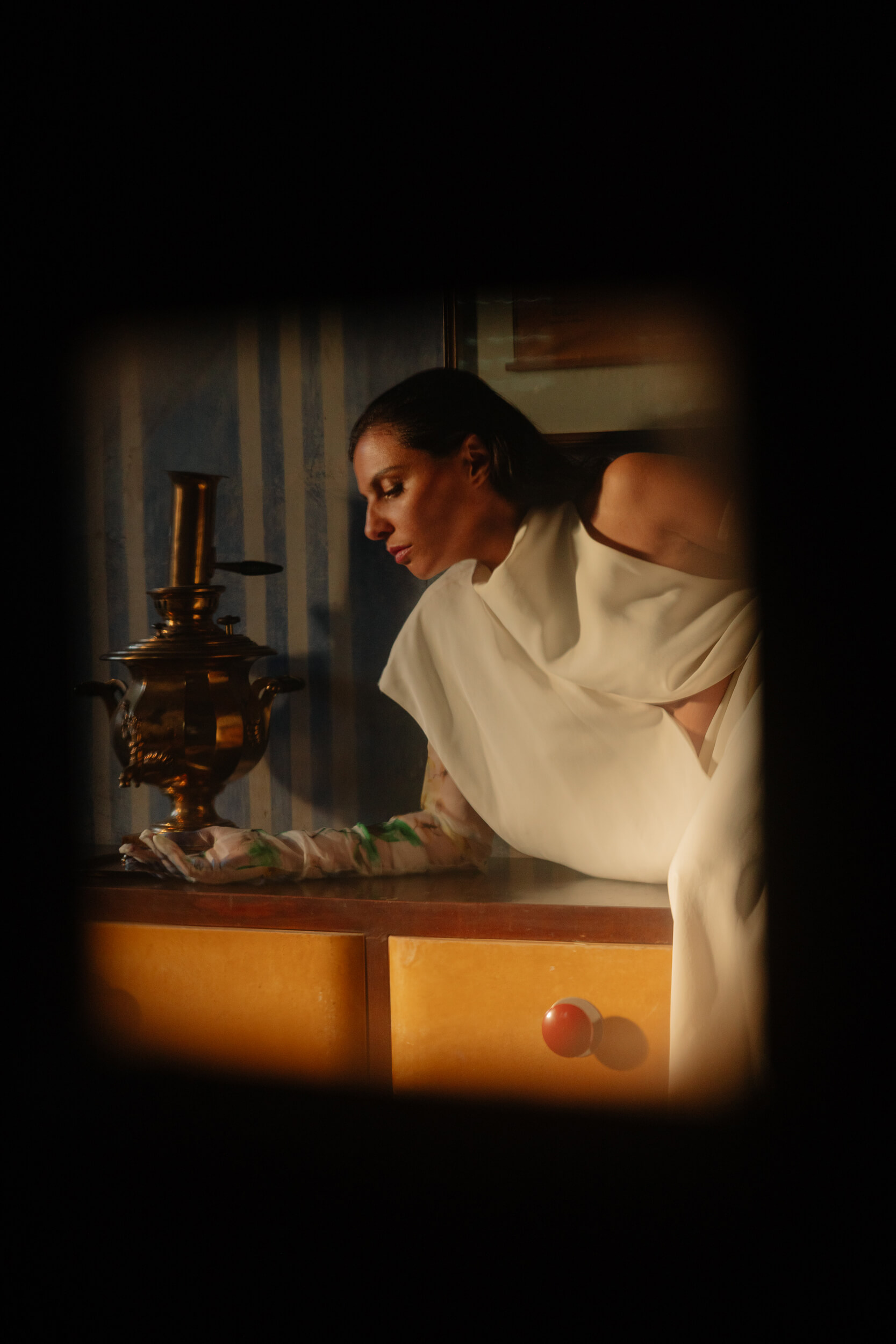
What, instead, is the thing that scares you the most?
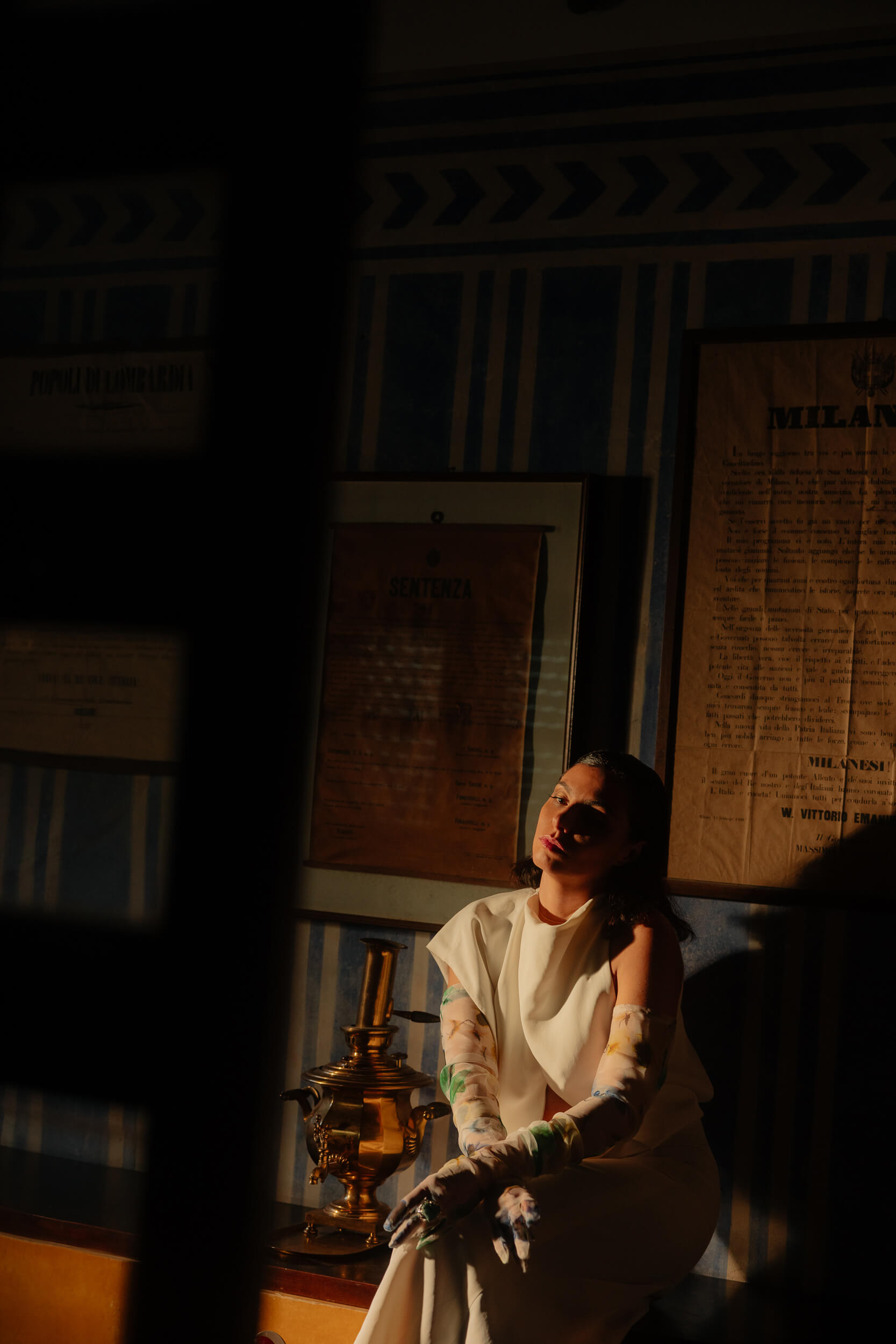
My greatest fear is the anesthesia of feelings, or in any case a form of anesthesia with respect to what happens in the world. I am afraid that, in order to defend ourselves from what we feel, inside and outside of us, we end up shielding ourselves. Sometimes we do not even have the tools to face certain things, and so we protect ourselves by switching off a little. With the complicity of the speed of videos, of social media, of phones, everything has changed enormously. I am not a digital native, so I have seen the evolution and, in certain aspects, also a worsening. At the same time I see that many people are returning to simple things: spending a day without a phone, going into nature, recovering a more authentic dimension. I have always cultivated these things, and now I feel that they are becoming necessary for everyone.
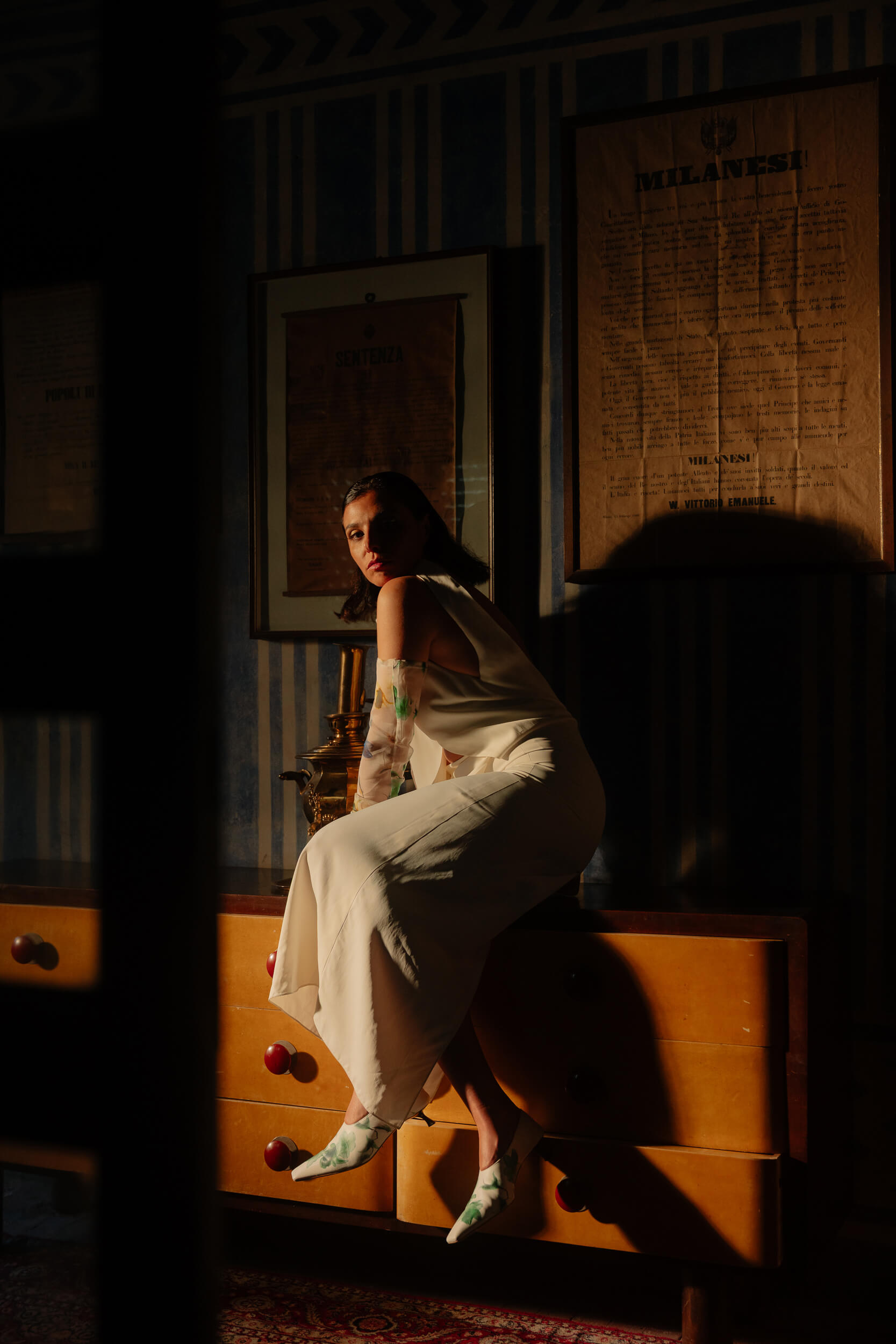
“Sometimes we do not even have the tools to face certain things, and so we protect ourselves by switching off a little.”
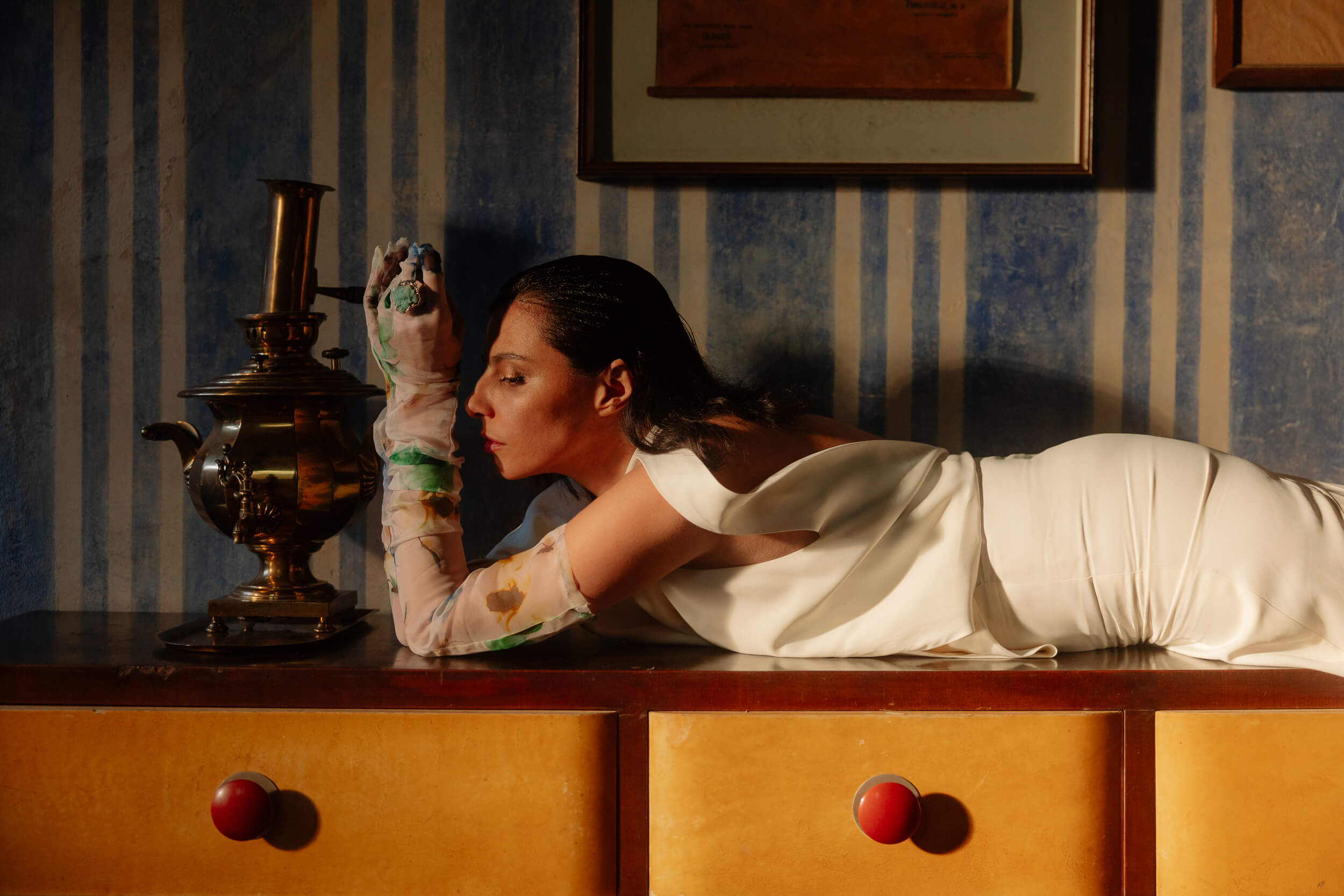
What makes you feel confident?
I almost never feel completely confident. However, I feel more solid when I return to my inner child. She was much less afraid, more courageous and less concerned with judgment. When I “return to being a child,” it is as if I return to an original purity. I did it also in the work on Lila, actually: you arrive at your essence like that. I was a child very “inside life,” full of imagination. My mother used to say that she could recognize me among all the children coming out of school, even under umbrellas, because I had an enormous smile. Every now and then returning there helps me, because sometimes in adult life I get lost.
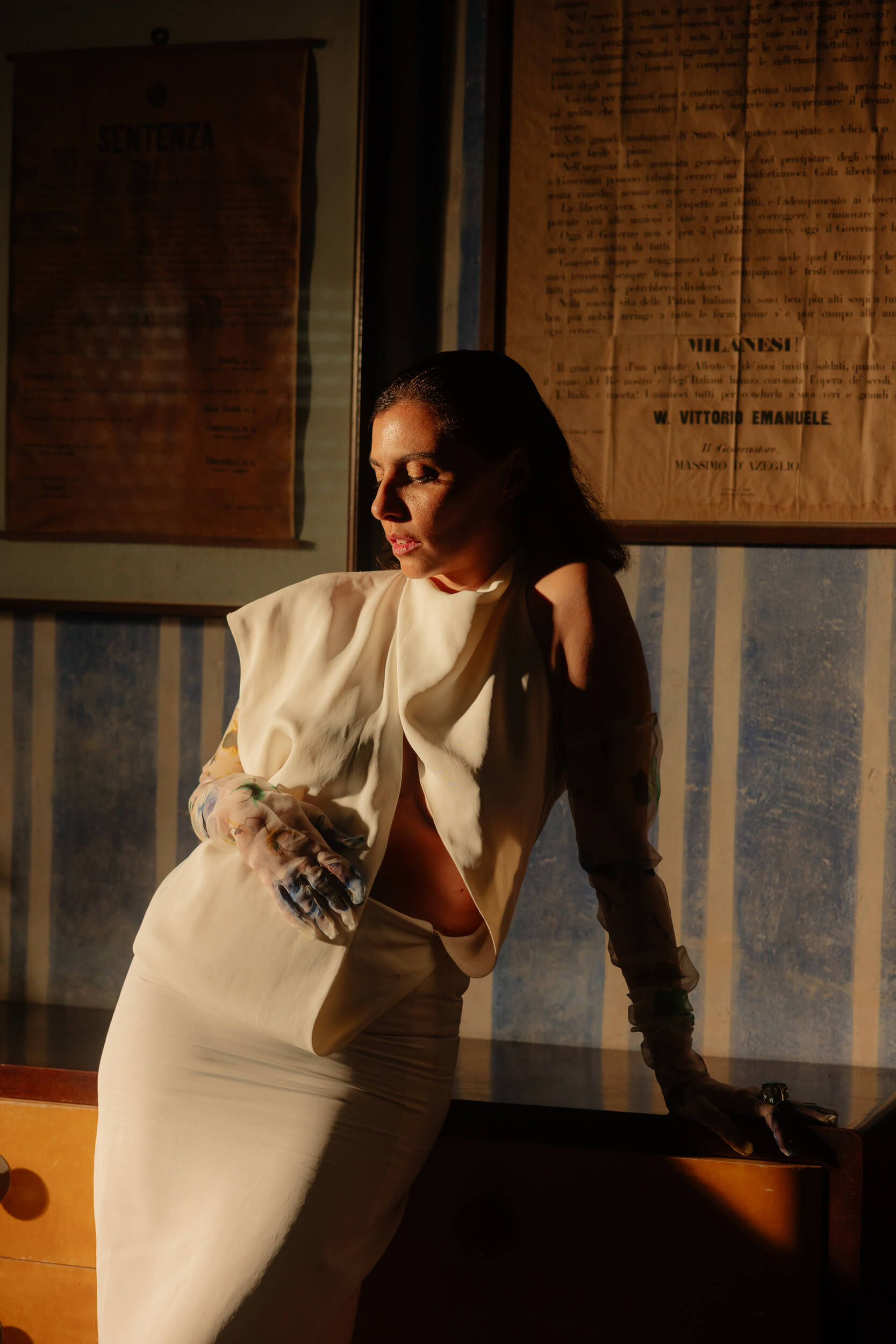
What makes you feel safe?
Perhaps it is the same thing: returning to myself. Rooting myself. Even stopping in the middle of the street and saying: “Ok, I am here.”
If you could ask a question to one of your characters, whom would you ask?
Probably Lila. She was a character with whom I remained in contact for years: years of auditions before being chosen, then a year of shooting. In some way they were three or four years of my life. It was a silent work, which I defended a lot. We were almost a secret couple, she and I: I did not tell anyone that I was preparing the auditions. Perhaps for this reason I internalized her so much. Actually, when I think of these women I portray, an almost tribal image comes to mind: as if I felt a circle of female figures around me. Sometimes I am afraid to move forward alone in this circle, but there is no need to say anything in reality: knowing that they are there, even just behind me, is enough. Because I like to think that they are behind, and that now I must look ahead. In some way they have made me a woman.
Is there a film or a series you have seen recently that has stayed in your heart?
The film “Sentimental Value”. It had been a long time since I had seen something that struck me like that. I could talk about it for hours. Inside it there is life, cinema, sisterhood. The direction is present but invisible, you forget you are watching a film and you enter a dream that is however real. I like Northern European cinema very much.
What is home for you?
At this moment, home is me. It is not a physical place. Partly because of the work I do, partly because of the phase I am living, I struggle to define myself. I cannot say: “I am this, I stay here, I do this.” So I root myself inside myself. I am my own home in the world. To quote a poem by Chandra Livia Candiani: “You are the only me I have, come back home.”
Looking out the window now, what would you like to see?
Nature. Perhaps the Amalfi Coast, where I spent my childhood. There is the sea and there are the mountains, the heights, the lemon groves. There is that suspended dimension that belongs to me. The Southern women, the roots, the landscape: for me they are always a point of reference. We are daughters of the land in which we are born.
What does it mean for you to feel comfortable in your own skin?
It is a complex question. I evade definitions a bit, because I believe very much in change. I am very different even from just two years ago, for example. Of course, everyone changes, but for my personal story and for the work I do I experience very intense transformations, made of departures and returns. I call them tides: there is the wave and then there is the undertow. When you finish a job you never know where you end and where you remain. This is a profession that moves you deeply. It is not a linear change, it is undulating. For this reason I believe it is fundamental always to keep a gaze toward the mainland, a return to oneself. To know who you are, otherwise you get lost in the open sea.
We actors live long periods of solitude, then suddenly months surrounded by people we did not know, then alone again. We are a bit like pirates. Being in one’s own skin, for me, means maintaining a continuous contact with oneself, even while changing.
What is your happy place?
I would like it to be the present. It is not one hundred percent, because I am nostalgic, melancholic. But the exercise I try to practice every day is precisely to remain in what is happening now.
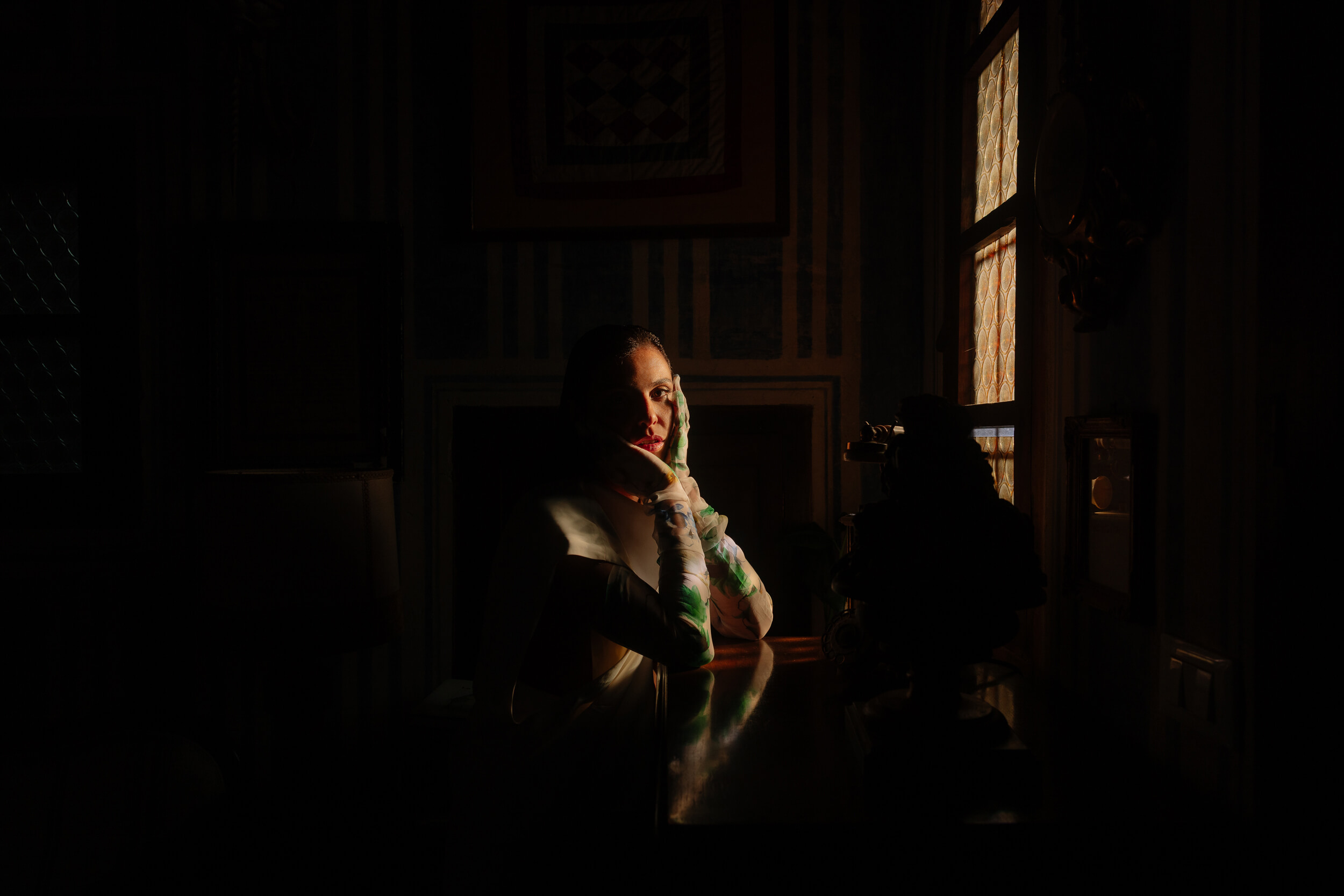
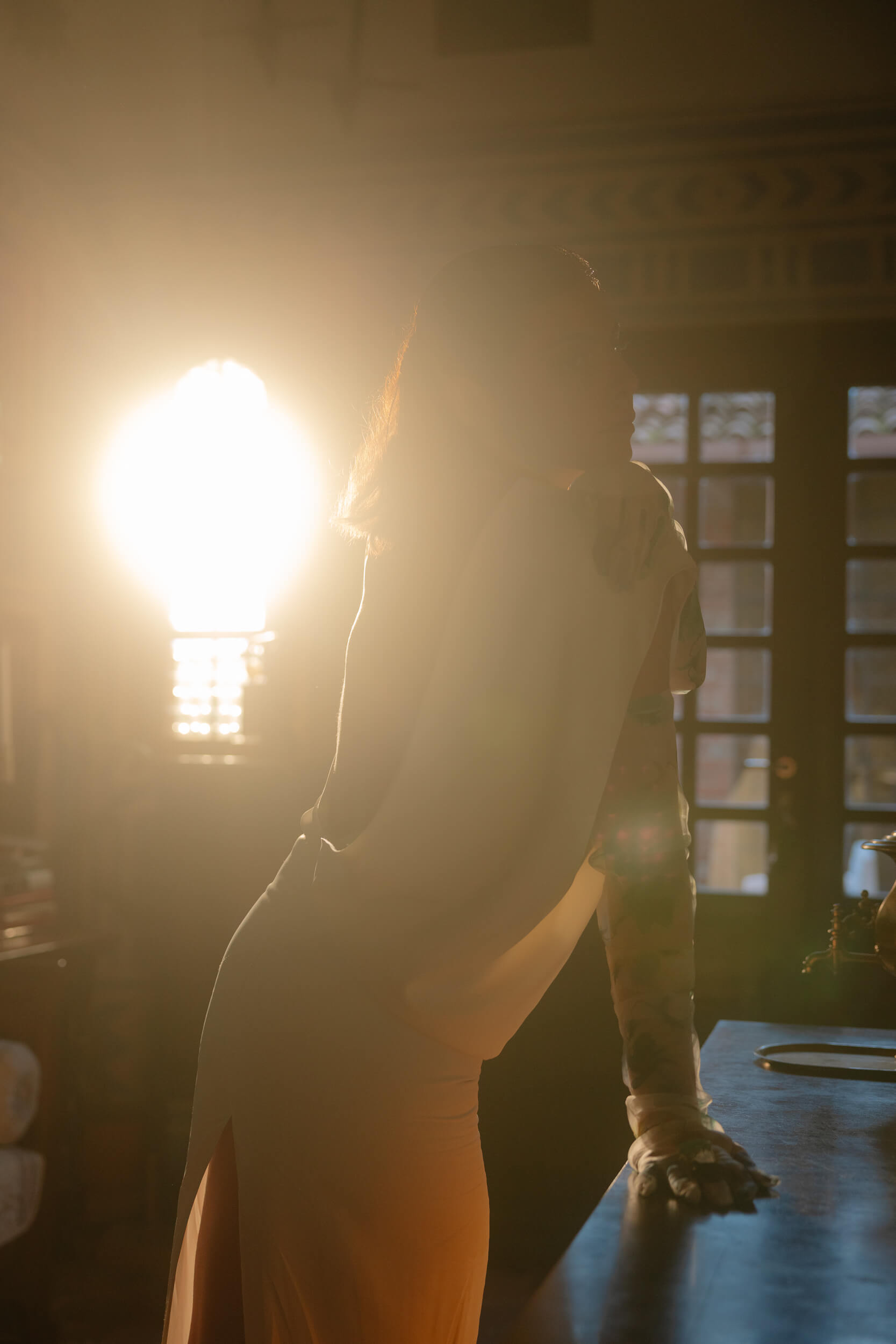
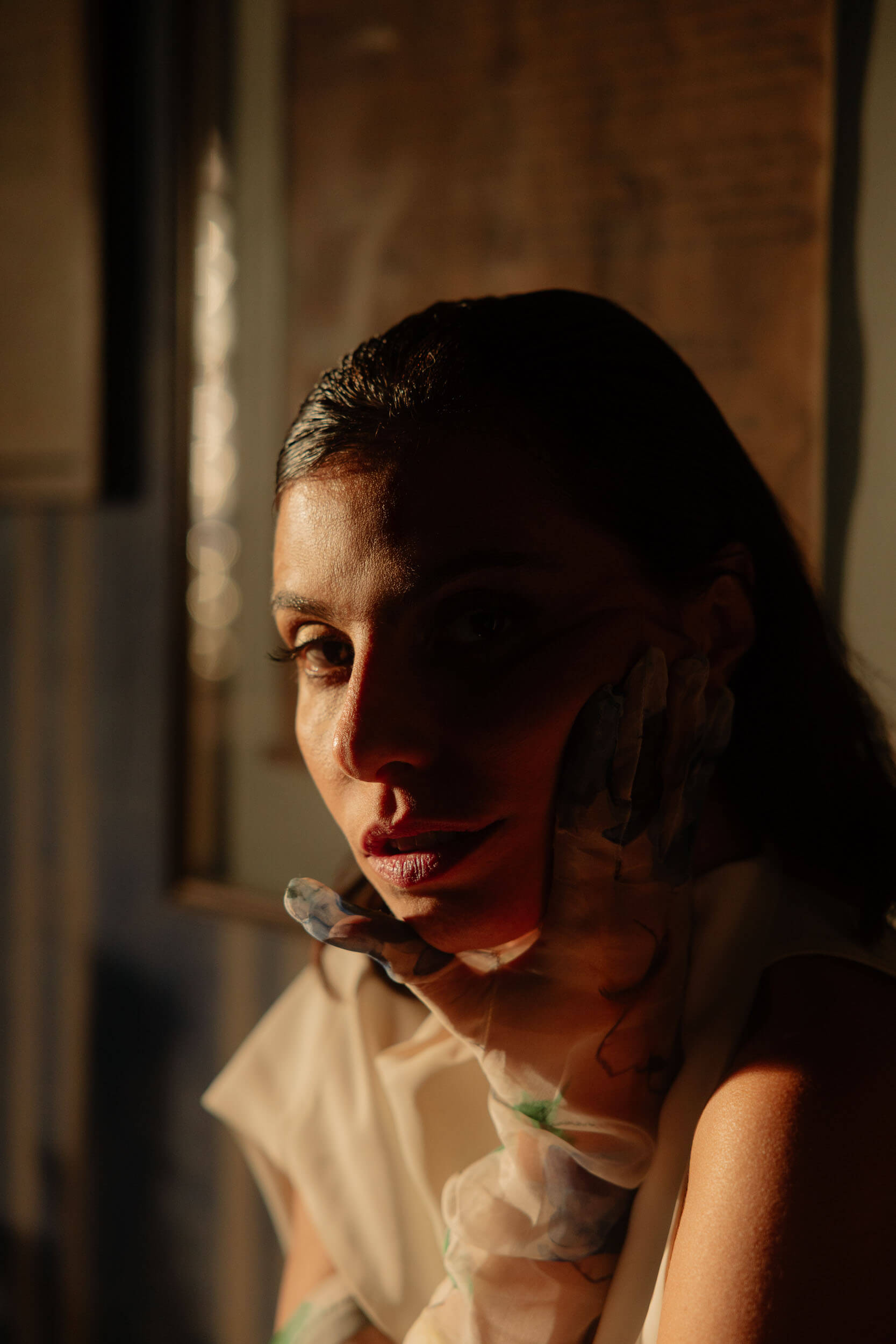
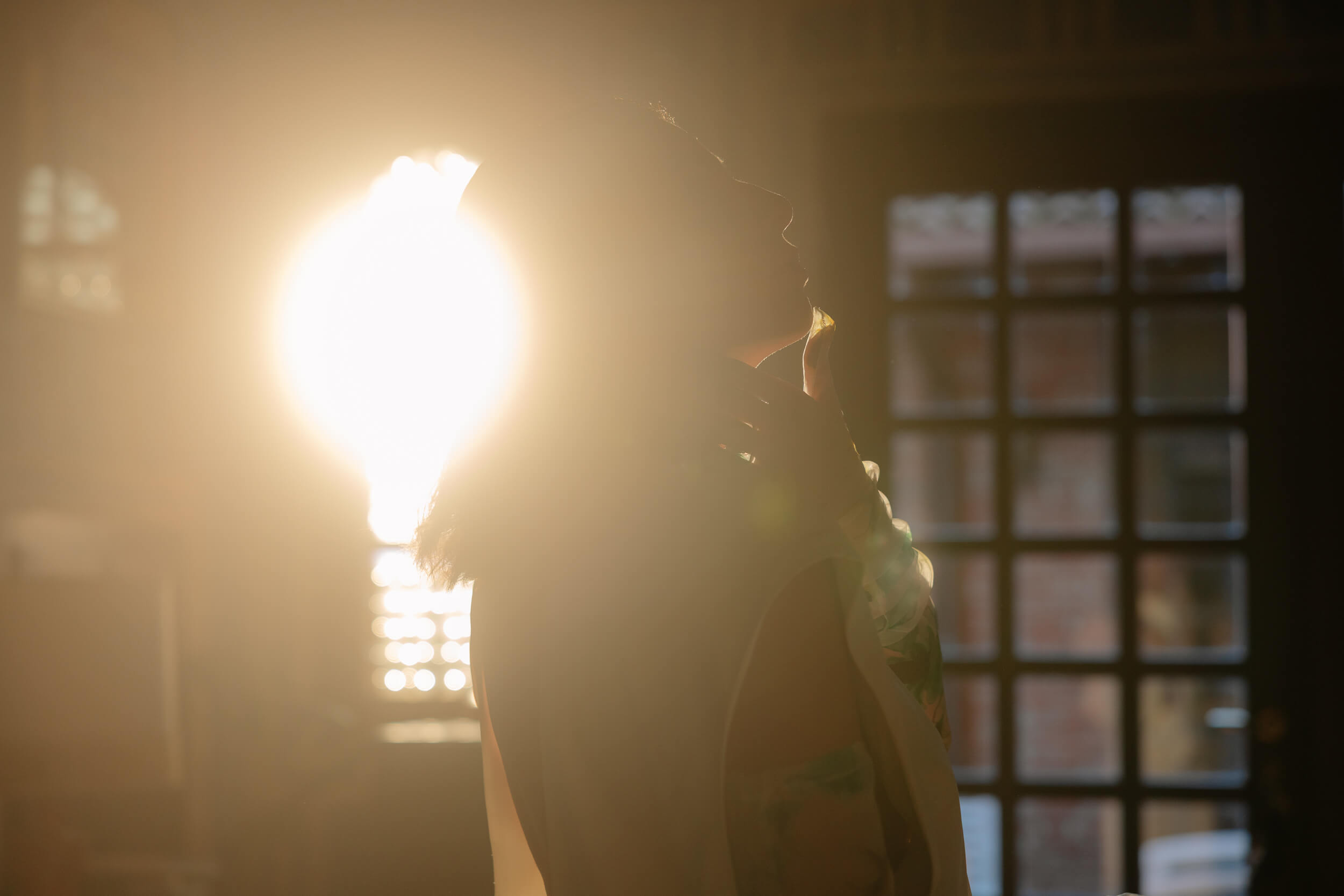
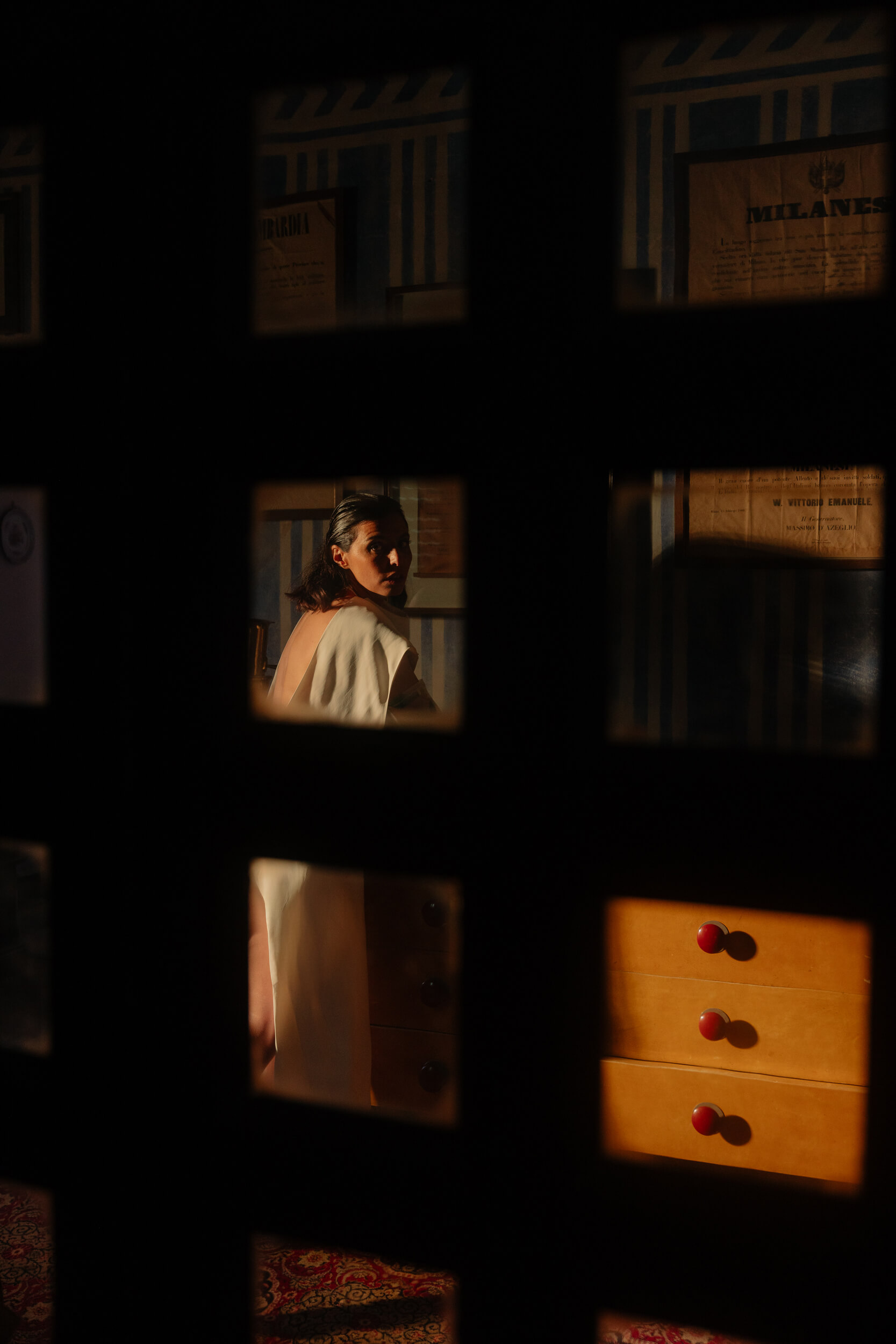
Photos & Video by Johnny Carrano.
Styling by Ilaria Di Gasparro.
Makeup & Hair by Sveva Del Campo.
Location: Castello dei Centotetti.
Thanks to Amendola Comunicazione.
LOOK 1
Dress: Lorenzo Seghezzi
Body: Fleur Du Mal
Shoes: Gianvito Rossi
Ring: Daniel Wellington
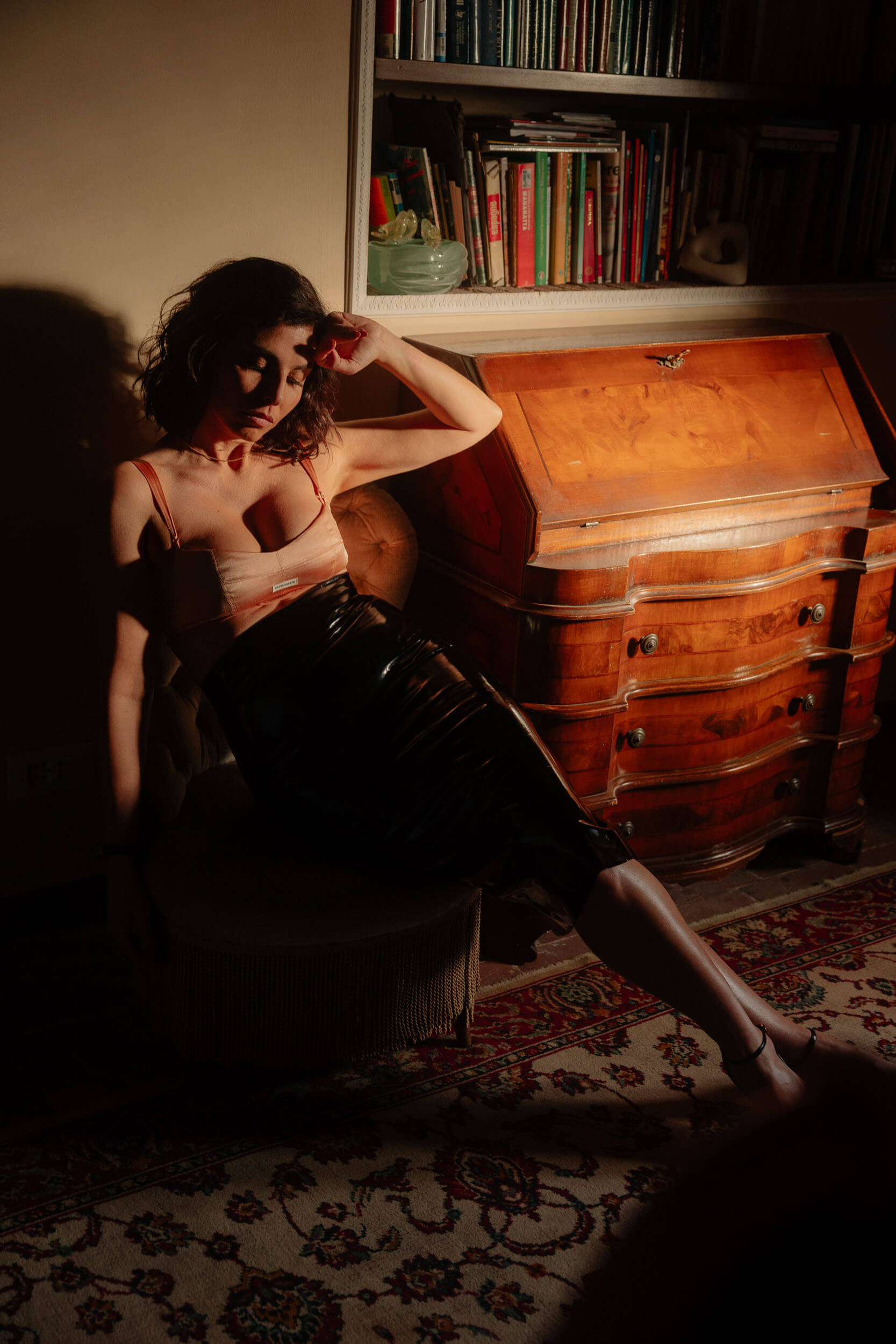
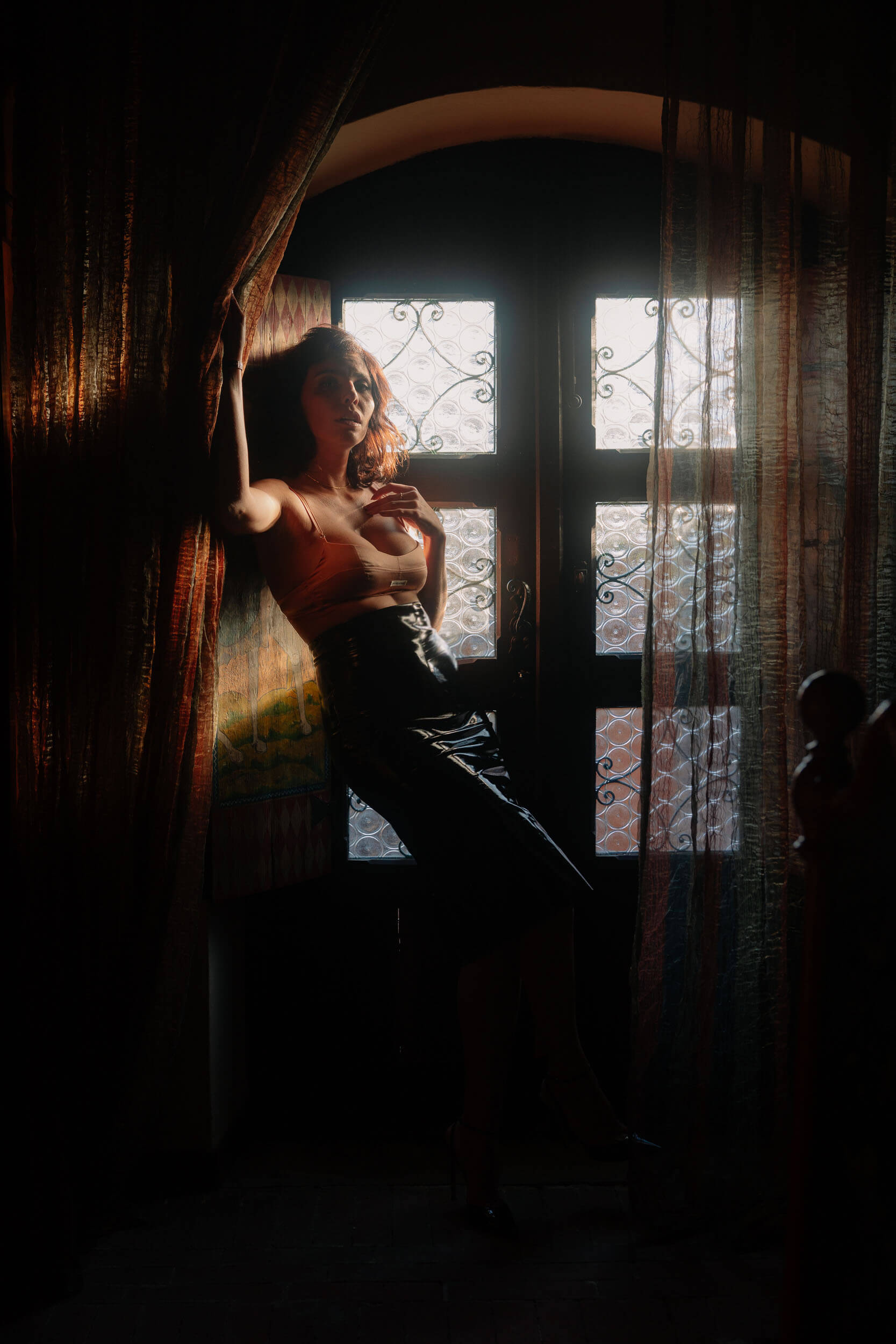
LOOK 2
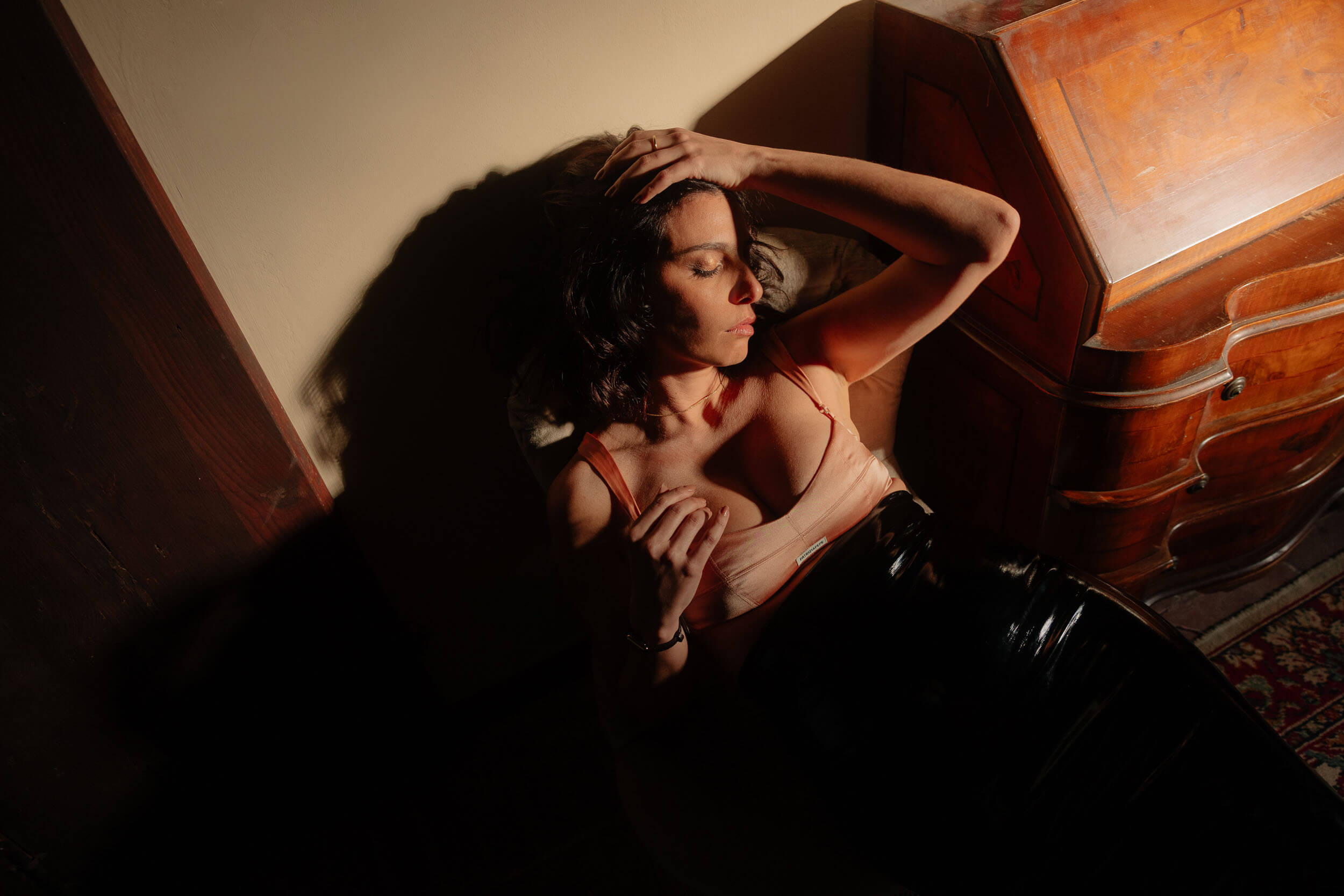
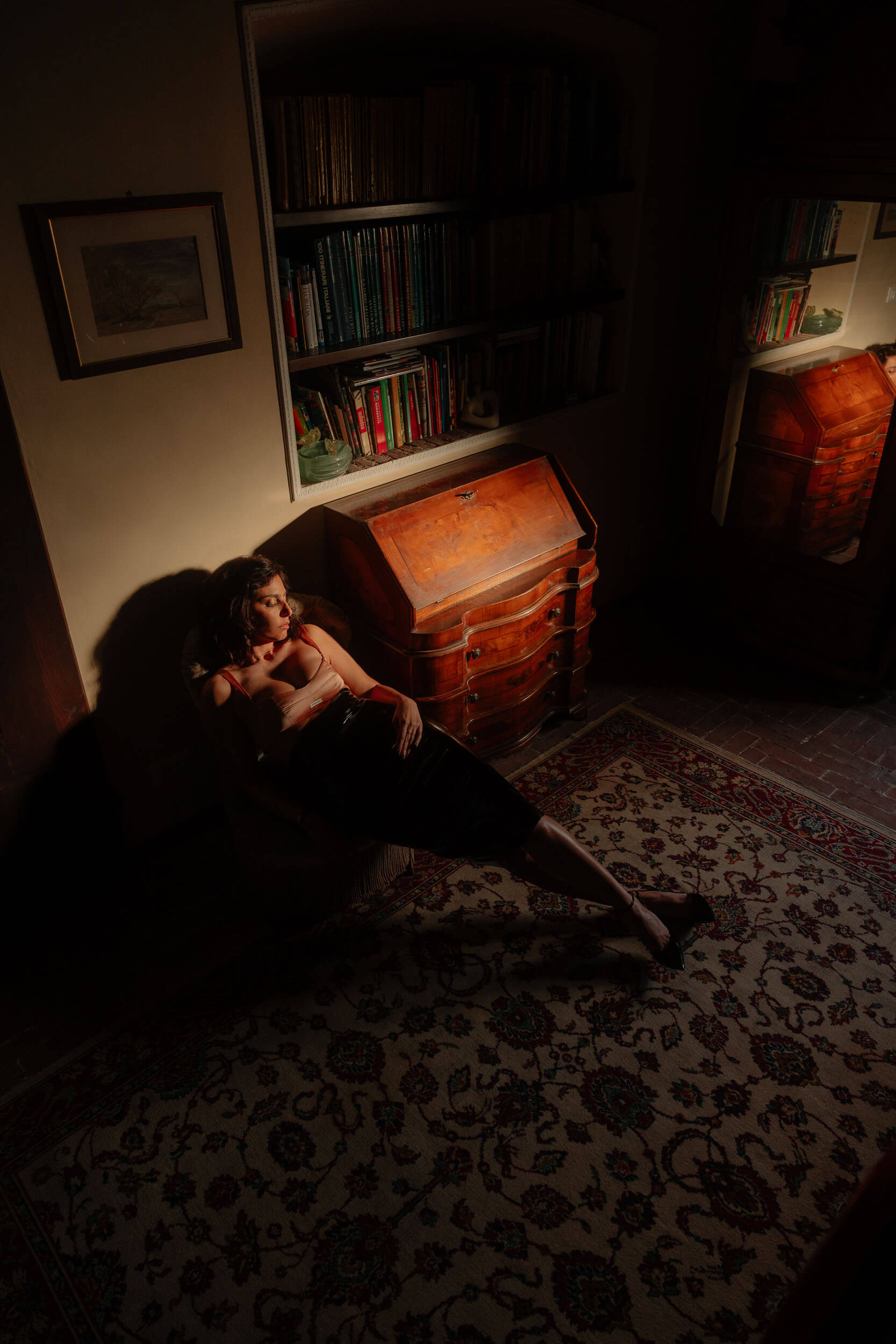
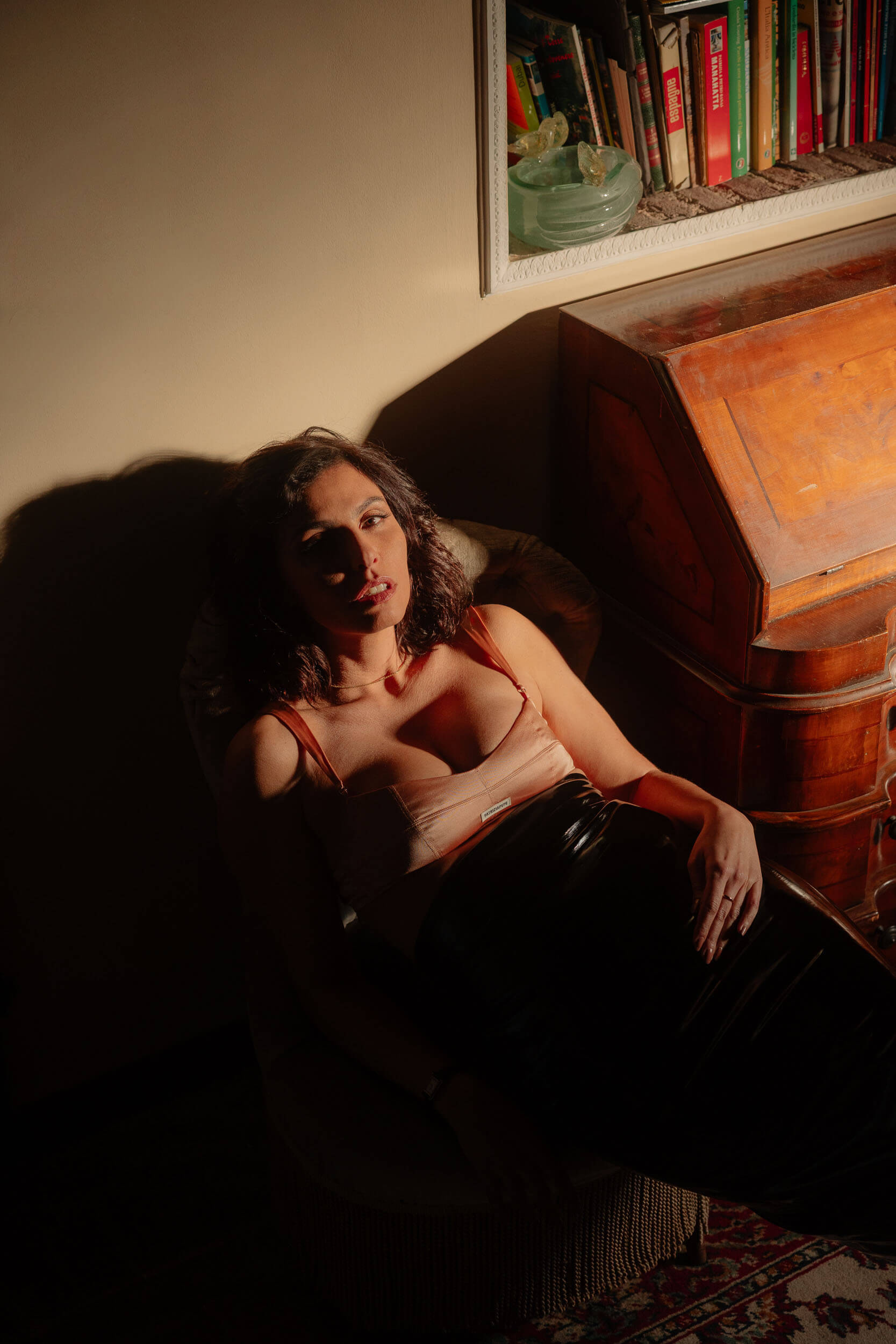
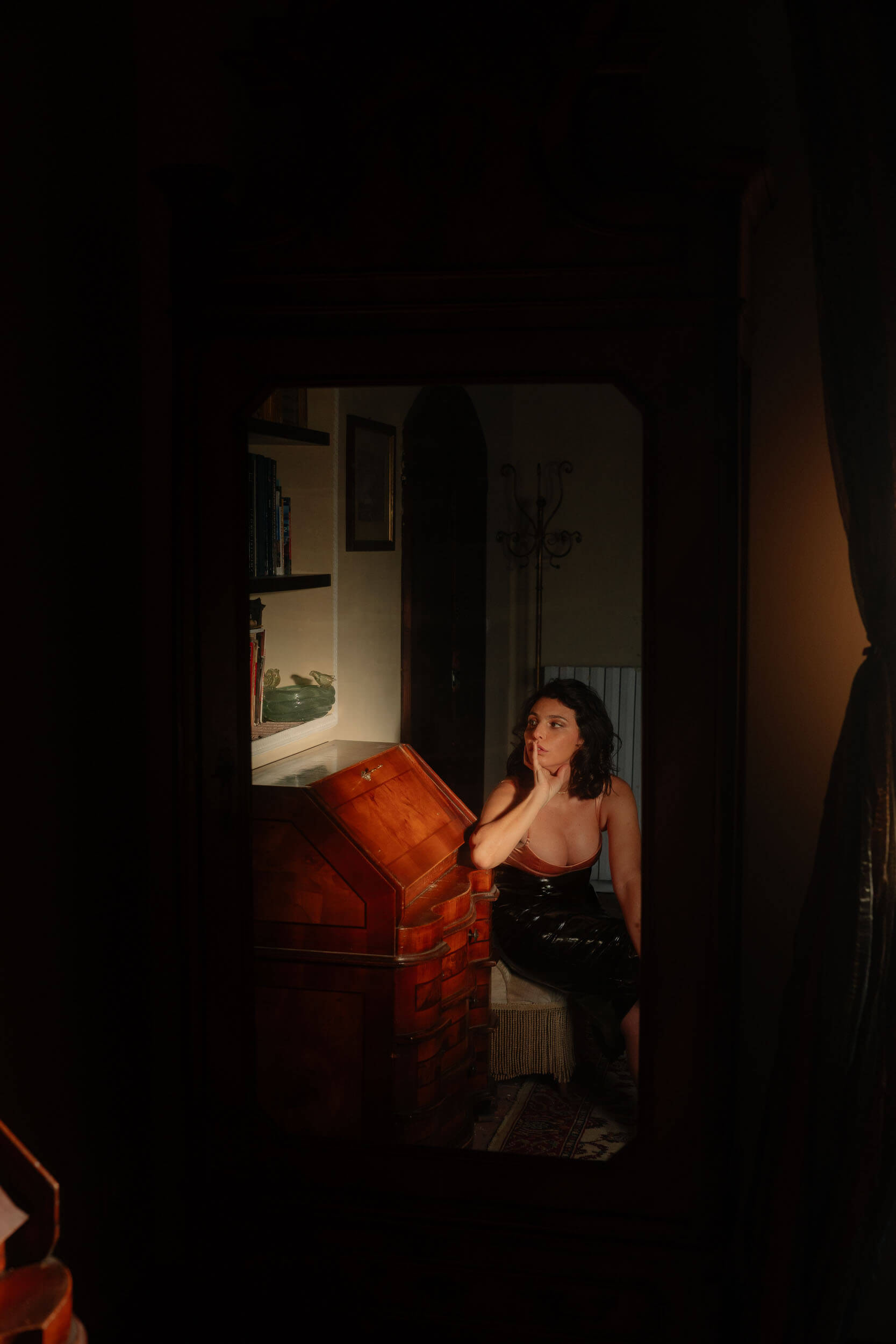
Bralette: Patrizia Pepe
Skirt: Commando via TheApArchive
Shoes: Gianvito Rossi
Watch: Daniel Wellington
Necklace: Lil Milano
LOOK 3
Total Look: Sportmax
Ring: Atelier Ortica