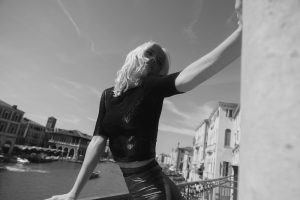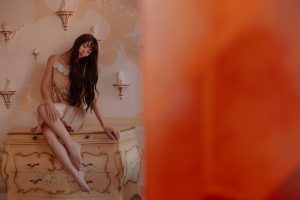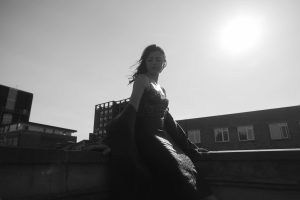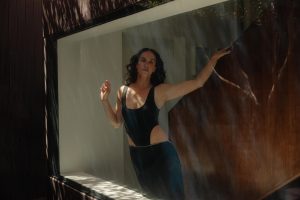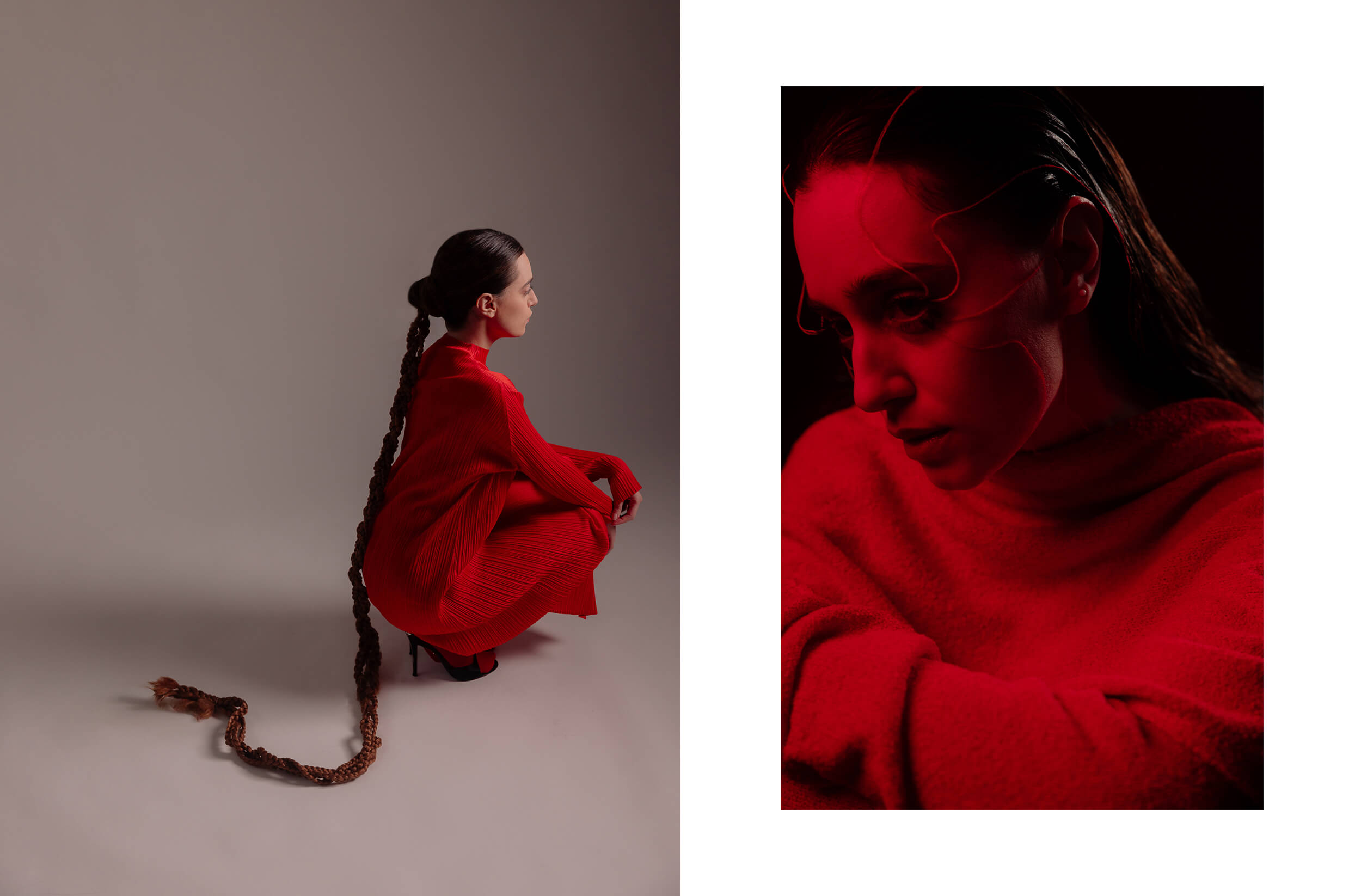
There is something deeply cinematic in the way Giulia Schiavo tells her own story: she starts from a living-room rug, from a worn-out VHS tape, and arrives at characters that demand the courage to walk through pain without shortcuts. During our conversation, Giulia explores her visceral relationship with cinema and acting—experienced not simply as a vocation, but as a necessity, a space of absolute truth.
We talk about “Malamore”, about relationships that wound and female resilience, about emotional self-protection and the responsibility of embodying true, difficult, urgent stories. But also about kindness, fear, happy places, and that quiet tenacity that allows one to stay true to oneself in a profession made of waiting and leaps into the void. What emerges is the portrait of a young actress who is already deeply self-aware, capable of looking inward without fear and of using her work as a tool of listening—to herself and to others.
What is your first memory connected to cinema?
The first memory that comes to mind is tied to the hours I spent watching VHS tapes, switching between cartoons and films. I’d sit on the living-room rug, and when the tape ended, I’d rewind it and start again. That’s how it was with “The Lion King”, and I remember watching “Titanic” over and over. I didn’t really understand it because I was very young, but I was completely hypnotized by it.
When did you realize that acting—the thing you saw actors do on screen—wasn’t just a passion for you, but an actual need, something you wanted to turn into your job?
First of all, I went to the cinema very often and bought tons of VHS tapes and DVDs. I loved the idea of having a home library dedicated entirely to films, of collecting and preserving them. Watching actors perform always gave me huge inspiration, but I never thought it would become my path.
Among the arts, I always chose singing and dance, especially dance. Around the age of 18, while I was in high school, I started feeling a strong desire to try something else. I realized I felt good when people laughed if I imitated someone. Even my final thesis was about the power and value of laughter.
At a certain point, starting from that need, I asked myself: why not dig deeper and actually study the craft, understand how acting really works? So after high school I auditioned for Yvonne D’Abbraccio’s academy, I got in, and I began studying intensely. That’s when I fell in love with acting.
“Why not dig deeper and actually study the craft, understand how acting really works?”
Let’s talk about “Malamore”. It’s the story of a love that hurts, a very specific kind of love. When you read the script, what was the first emotion you felt when you encountered the story and your character?
I think anger was the first emotion. Then I started working on the different human layers of the character, trying to understand what kind of bond can keep a woman trapped in a relationship that burns you, consumes you, both psychologically and physically.
Mary is a character who has reached the limit of endurance, of pain—pain that at a certain point turns into a kind of transparency…
In the sense that you no longer feel anything, things pass through you and you feel transparent…
Exactly. Then, in Mary’s life, a pure, genuine love arrives—someone who truly sees her, despite everything, despite the existential drama, and understands that there is something beyond the trauma. That is her salvation, the thing that pushes her to find the courage to live, even while remaining terrified by the idea of death. Unfortunately, it’s a kind of story we hear all too often today.
I also felt a strong responsibility to tell this story in the best possible way, especially because it’s based on real events, linked to the Sacra Corona Unita from a few years ago. The real Mary, unfortunately, didn’t have the same ending as my character—she met the ending we can all imagine. That responsibility affected me deeply.
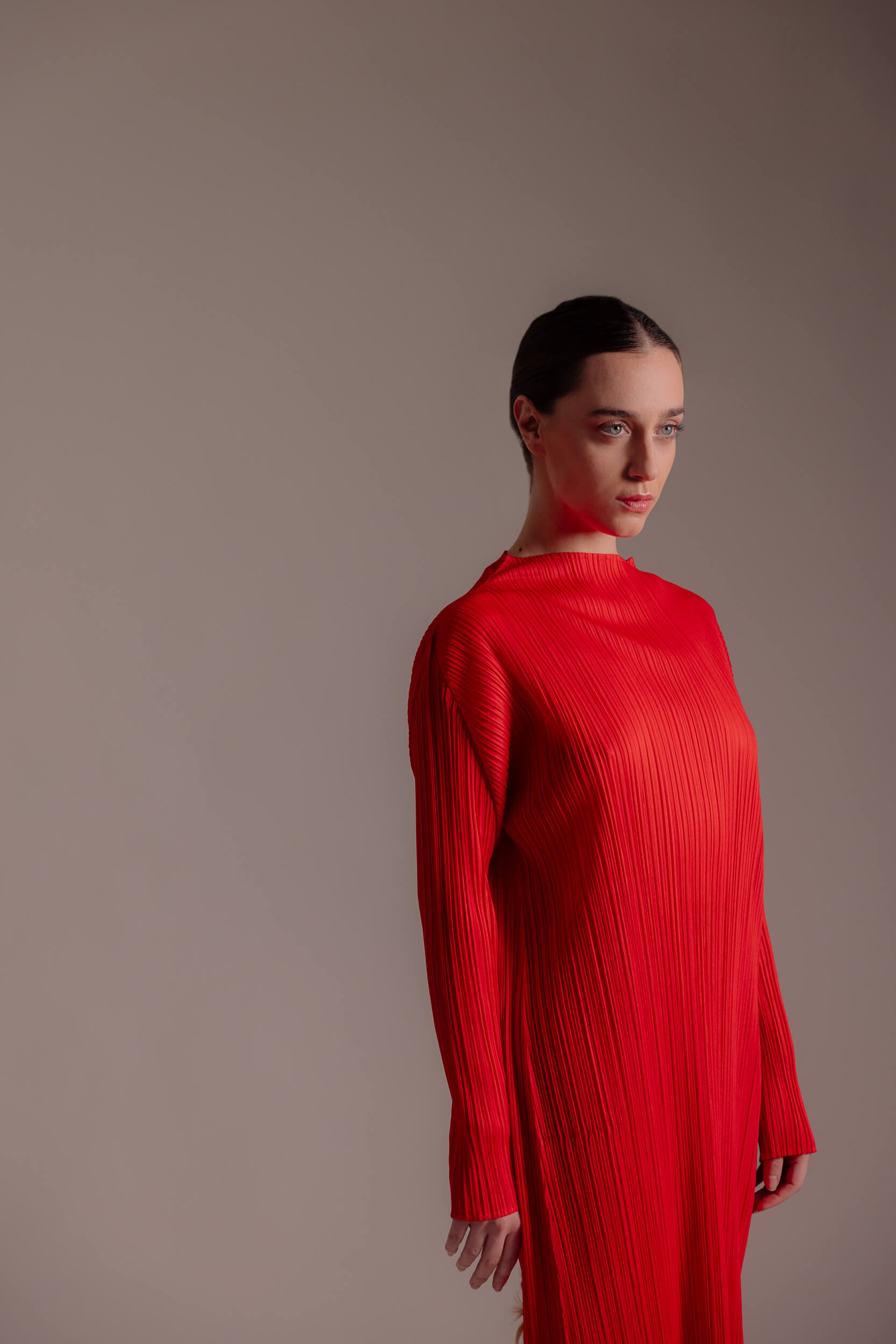
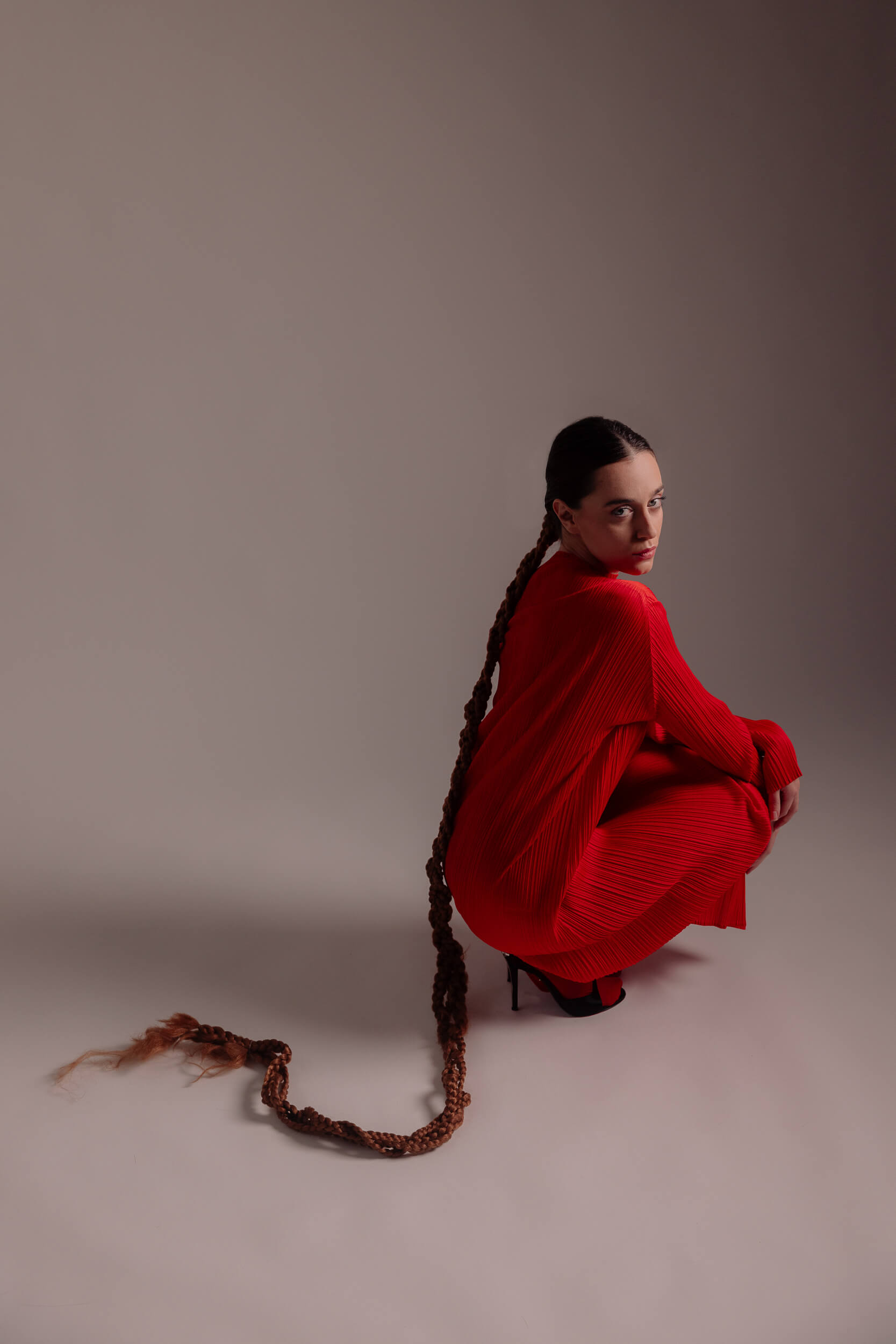
What struck you most about Mary? What stayed with you from her way of being in the world?
What struck me most was her resilience, her courage in standing up against an entire mafia system, which embodied her greatest fear. What stayed in my heart is her courage to go against everything and everyone in order to live an illusory love—one that won’t have a happy ending, but that still allows her to glimpse a spark of hope and try to chase it.
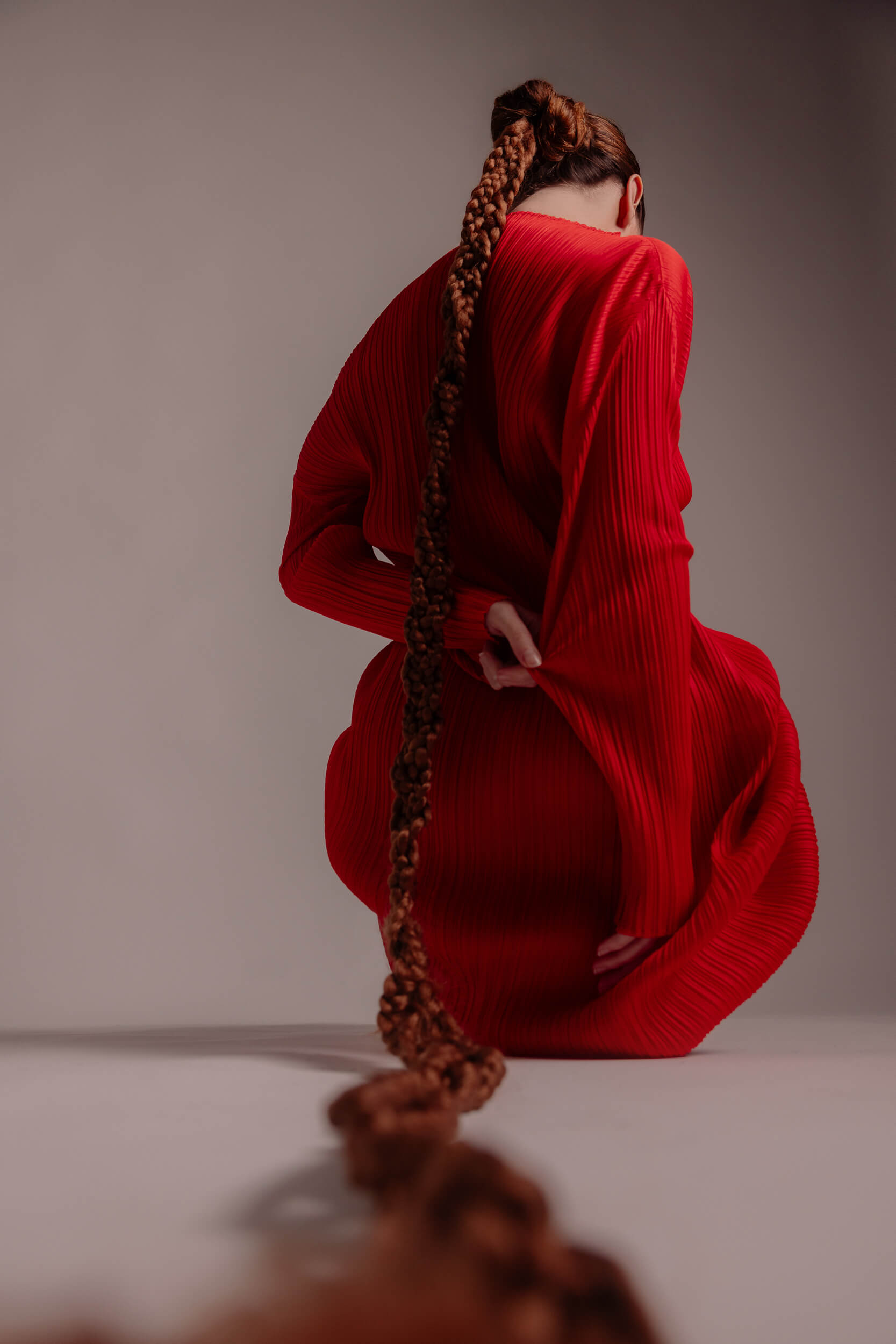
Playing toxic relationships often requires strong emotional self-protection. How did you take care of yourself during and after filming?
At the end of filming, I felt a real emotional impact. I touched strings I already knew, even if in a much lighter way, but I had a path to follow. I brought certain complicated things back to the surface, and it wasn’t easy to put them back down.
I tried to separate what was useful for the journey from what I no longer needed in my personal life. But sometimes it’s difficult when you dive so deeply into a story—it’s very delicate work, because the boundary between what we want to bring to the screen and our own experiences can be very fragile. You have to let things pass through you, and often that can be painful.
During filming, I didn’t really notice—I was fully inside the story, focused on the discipline of the set. But once filming ended and I returned to Rome, I felt overwhelmed, realizing not only that the project was over, but that the daily life made of people who become your temporary family had ended too.
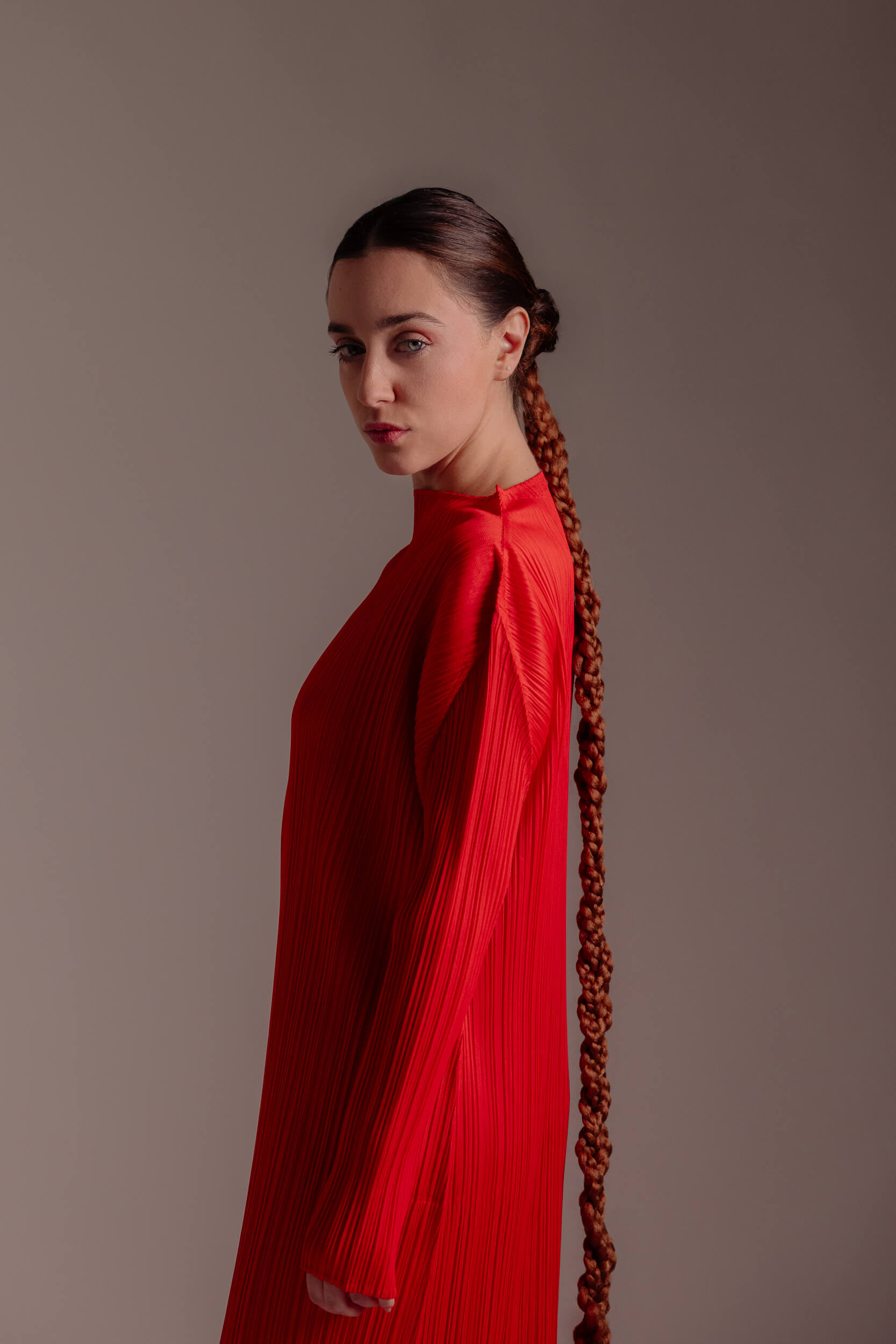
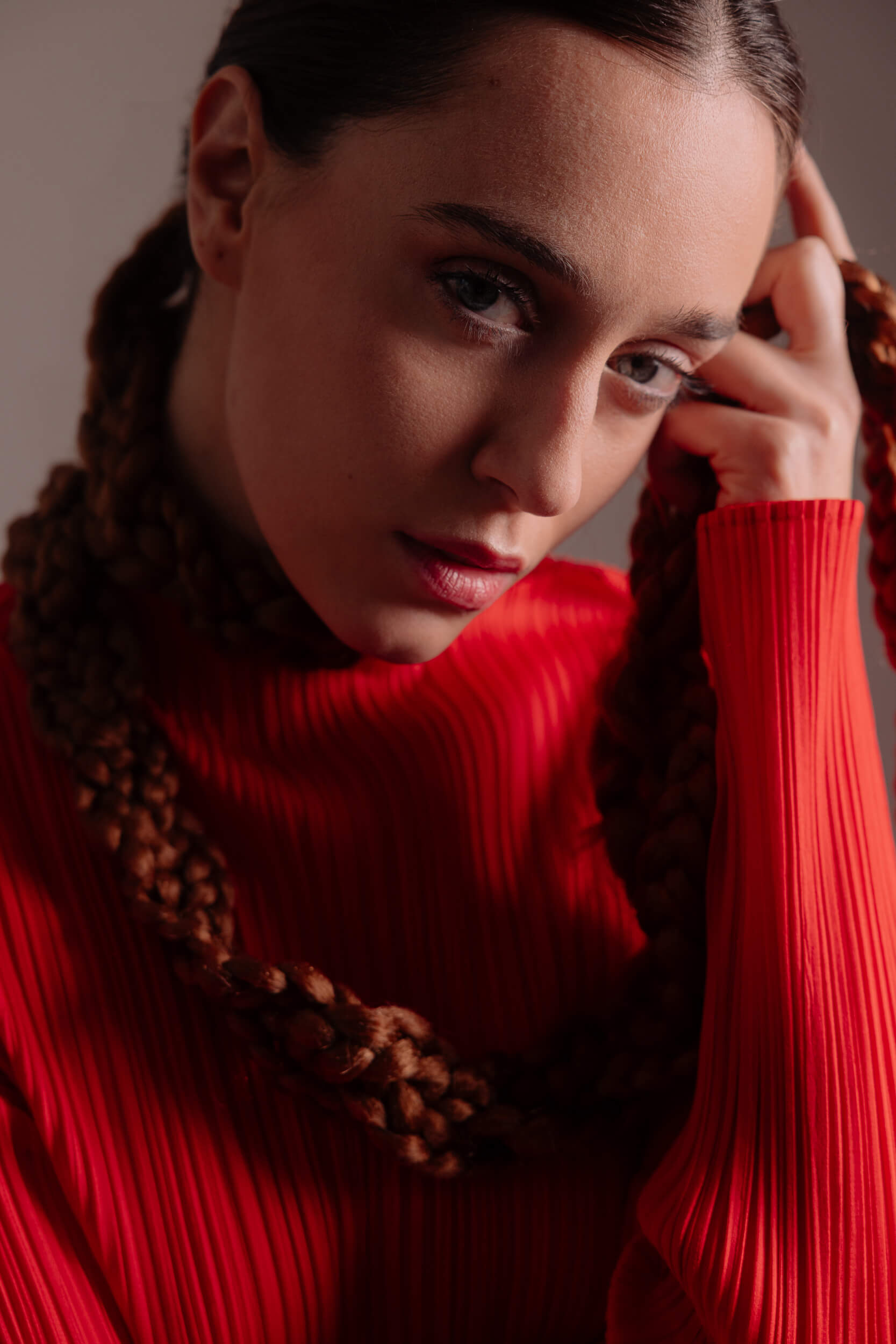
“It’s very delicate work, because the boundary between what we want to bring to the screen and our own experiences can be very fragile.”
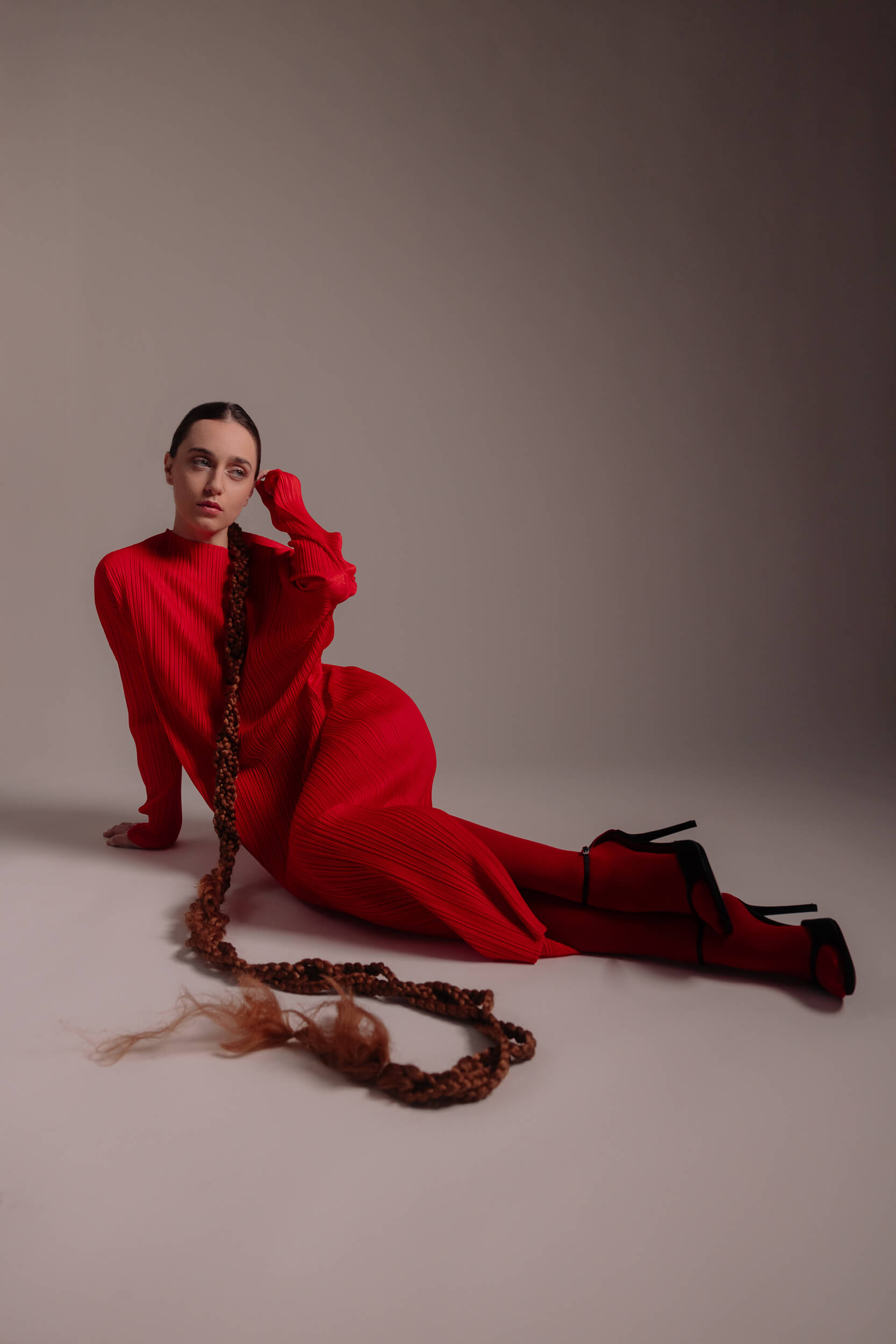
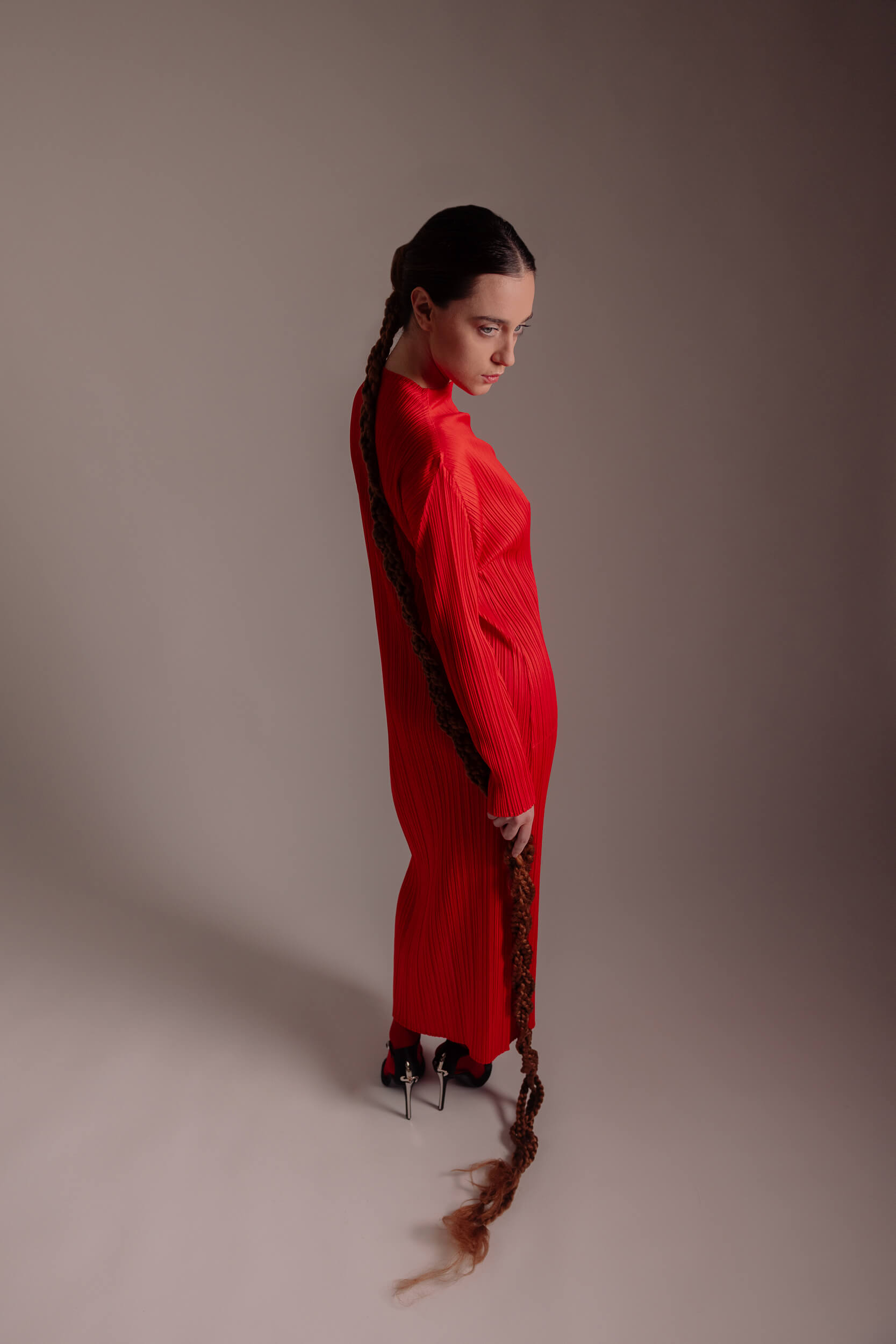
Has this film changed the way you look at love or romantic relationships?
Yes. I still believe that certain experiences are necessary, that some relational passages must almost inevitably be lived. This story is obviously taken to an extreme, but it reflects dynamics that many people—hopefully in less dramatic ways—can recognize. So yes, it definitely gave me a new perspective on emotional relationships.
From the moment “Malamore” came out, my hope has been that the film would encourage as many people as possible to find the courage to speak out, to take that extra step toward salvation. Isolation is the worst mistake you can make in these situations, even though the fear experienced by Mary—and by many women in similar situations—can be paralyzing.
In toxic relationships, men often isolate their partners, cutting them off from family and friends, making escape seem impossible. That’s why it’s essential to talk, to share what you’re going through with trusted people—because no one saves themselves alone.
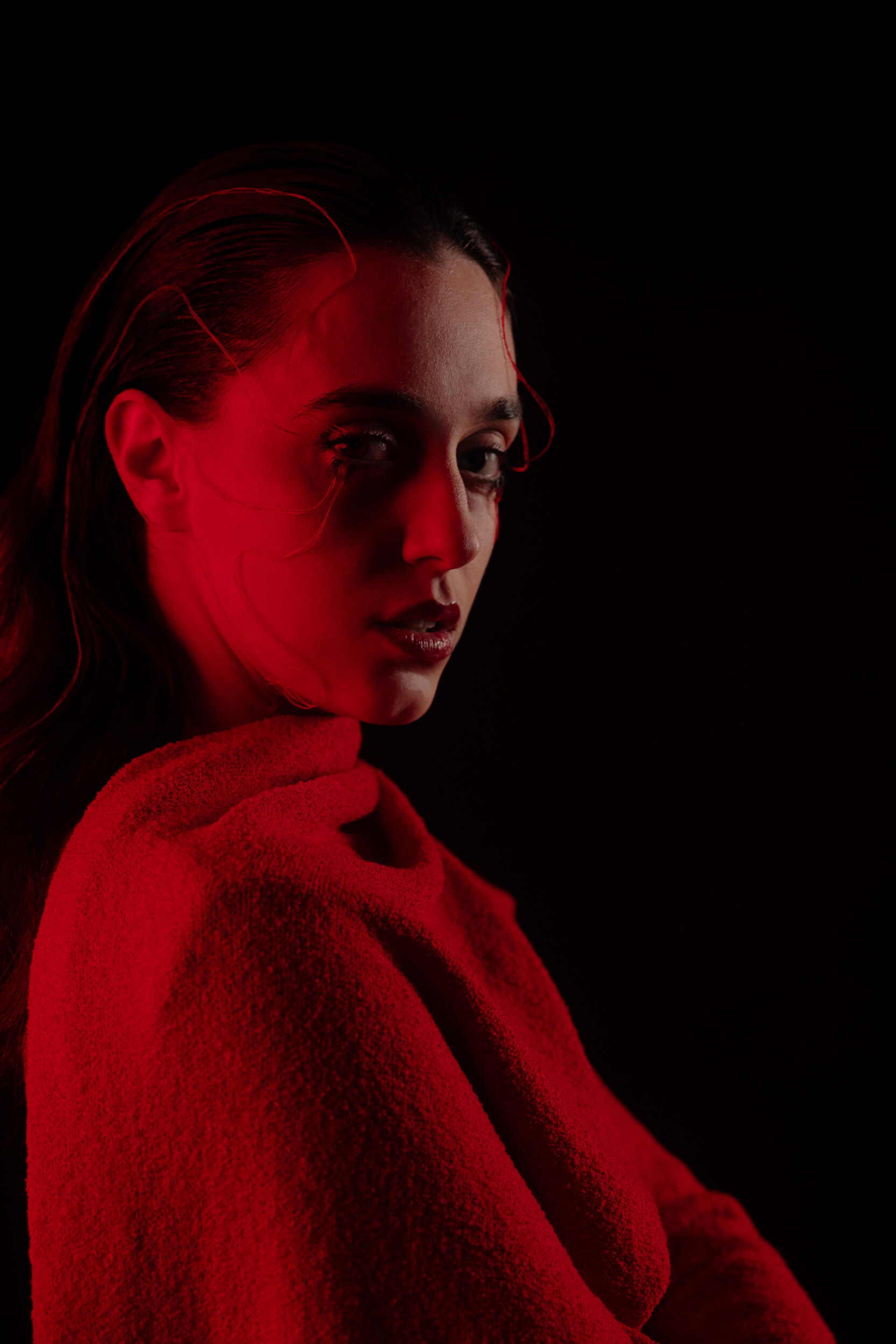
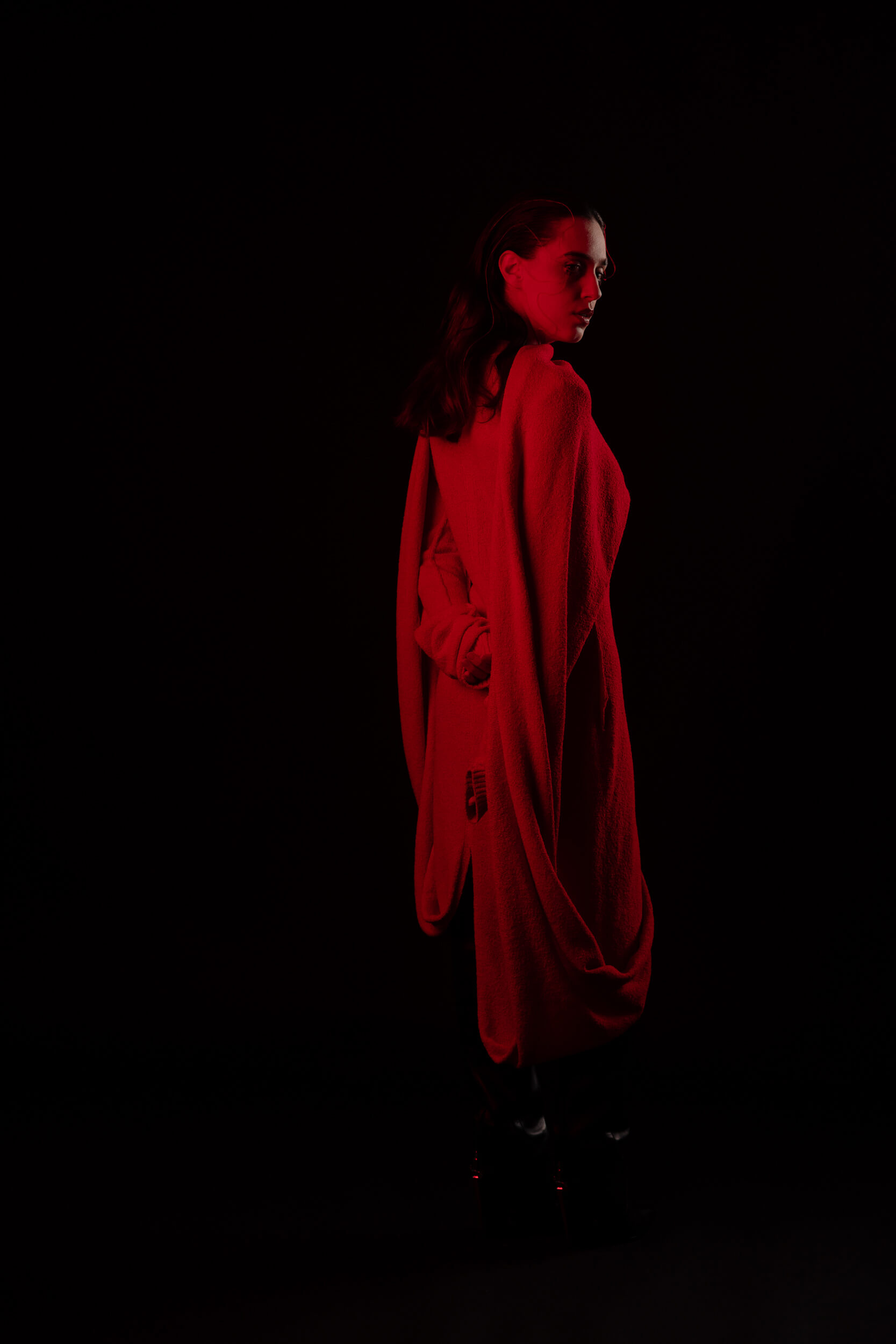
How do you build your characters? Do you start from the body, the voice, emotions, or personal experiences?
I’ve been trained to use different techniques depending on the character. If I notice a particular trait, I’ll use specific tools: a different voice, an accent, a specific physicality.
For “Malamore”, for example, I started not from the body but from an experience—I brought in a small part of something I already knew and then amplified it, allowing it to enter the body. Other times, you can start from a costume or a prop that helps you find an identity.
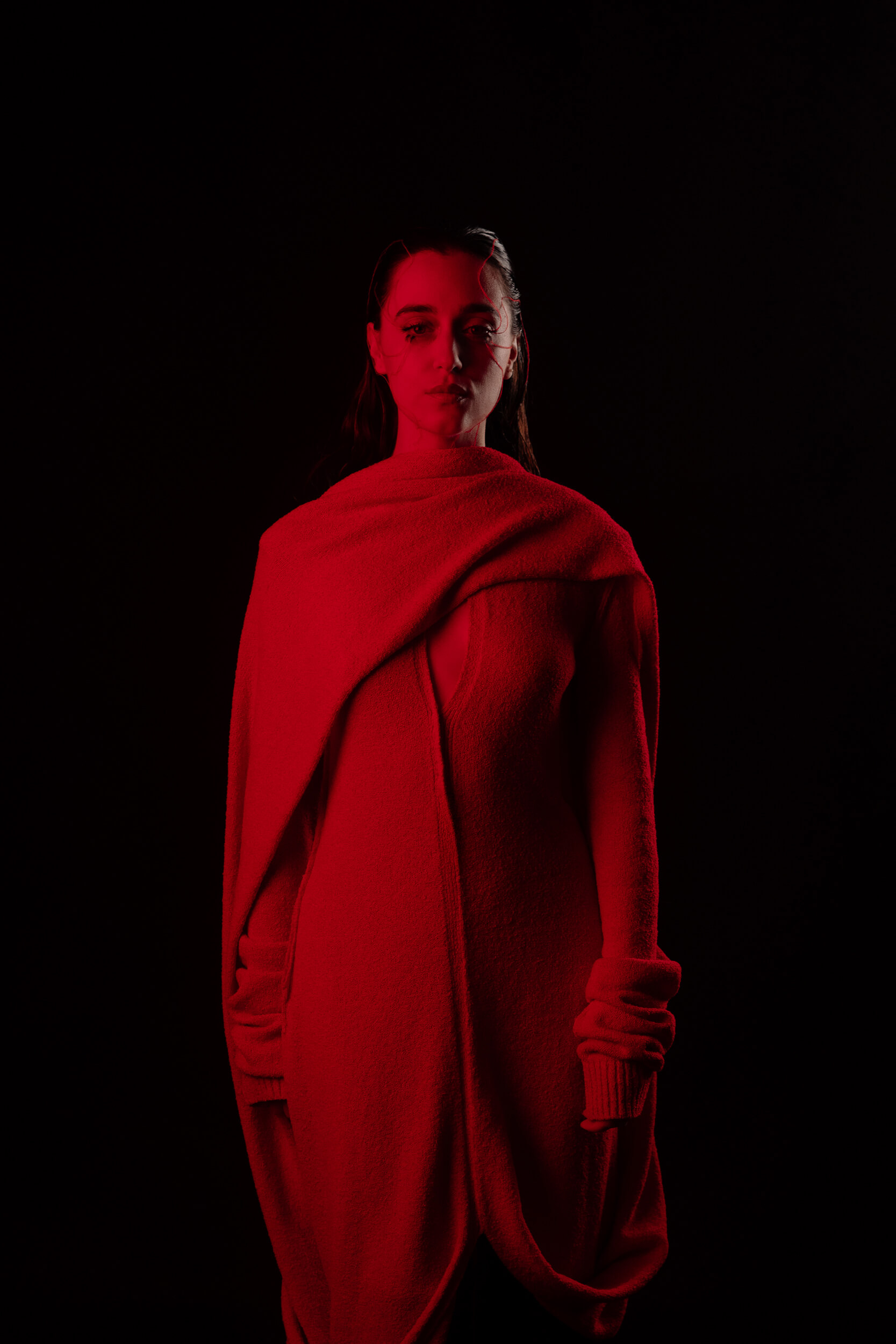
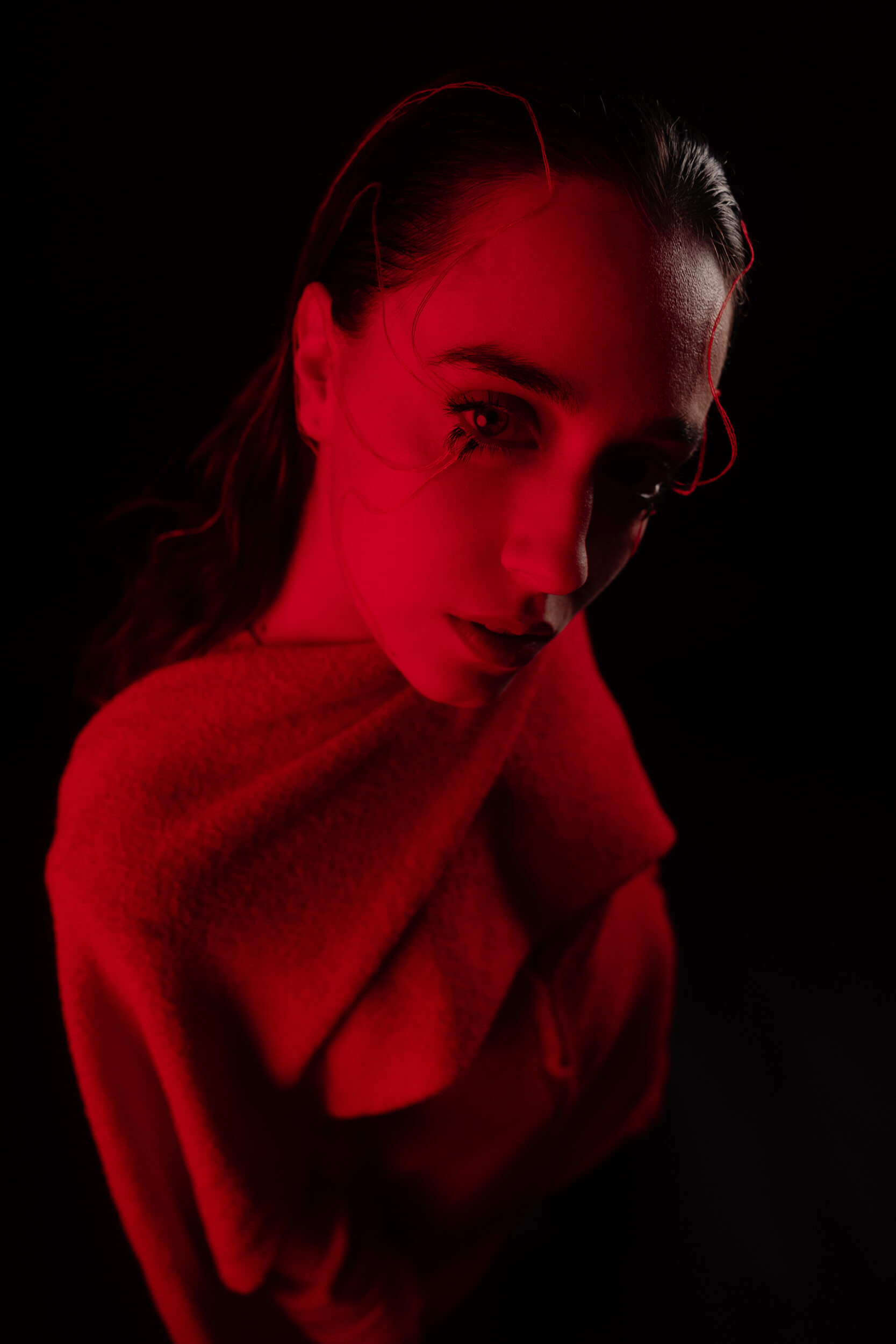
Do you have rituals to get into or out of character?
I don’t have fixed rituals. Usually, I read the script and try to experience what I read as something very close to me, something I already know.
For a play that should premiere in May, for example—since it’s a role very different from what I’ve done so far—I’m doing intense work on body and voice, especially because it’s theatre, which is a completely different language from cinema. I’m experimenting a lot right now, and I’m incredibly enthusiastic—I’m realizing how much I love it.
What moment are you living artistically and personally right now?
A beautiful moment. I’m living a new adventure that stimulates me deeply.
I observe what’s happening inside me very closely, and I try to steal little details that might be useful for the new project I’m working on. In February, I also have a series coming out on Prime Video, Creatives, which was another wonderful journey—a story inspired by real life.
When you work on a new project, you create a temporary bubble, a temporary family. I fill my drawers with all these sensations, which give me joy and pride.
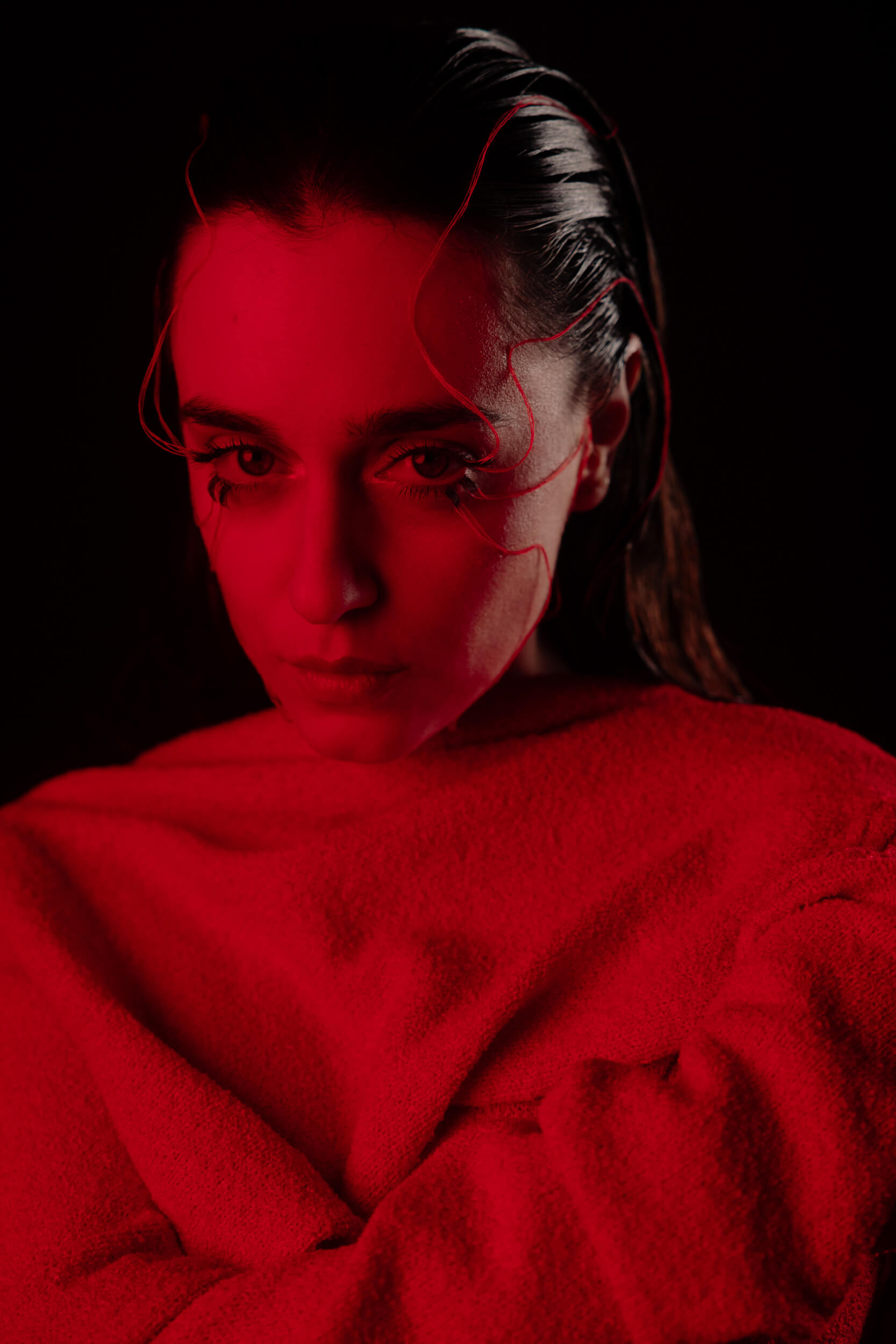
What moves you deeply even outside the set?
Nuovo Cinema Paradiso.
And kindness—when people genuinely think about others and put themselves on the line for someone else. It’s rare. Our generation is very particular: it notices everything, sometimes to the point of becoming hypersensitive. When I think of kindness, I think of real gestures, real relationships—and unfortunately, we’re losing touch with that kind of truth.
What kind of stories do you like to watch as a viewer?
Thrillers. A film like “Gone Girl” is exactly my kind of movie—thrillers that keep you glued to the screen until the very last second. Another film I absolutely love is “The Prestige” by Christopher Nolan.
Have you seen “Shutter Island” with Leonardo DiCaprio?
Yes! I’ve watched it countless times—an incredible film, I adore it.
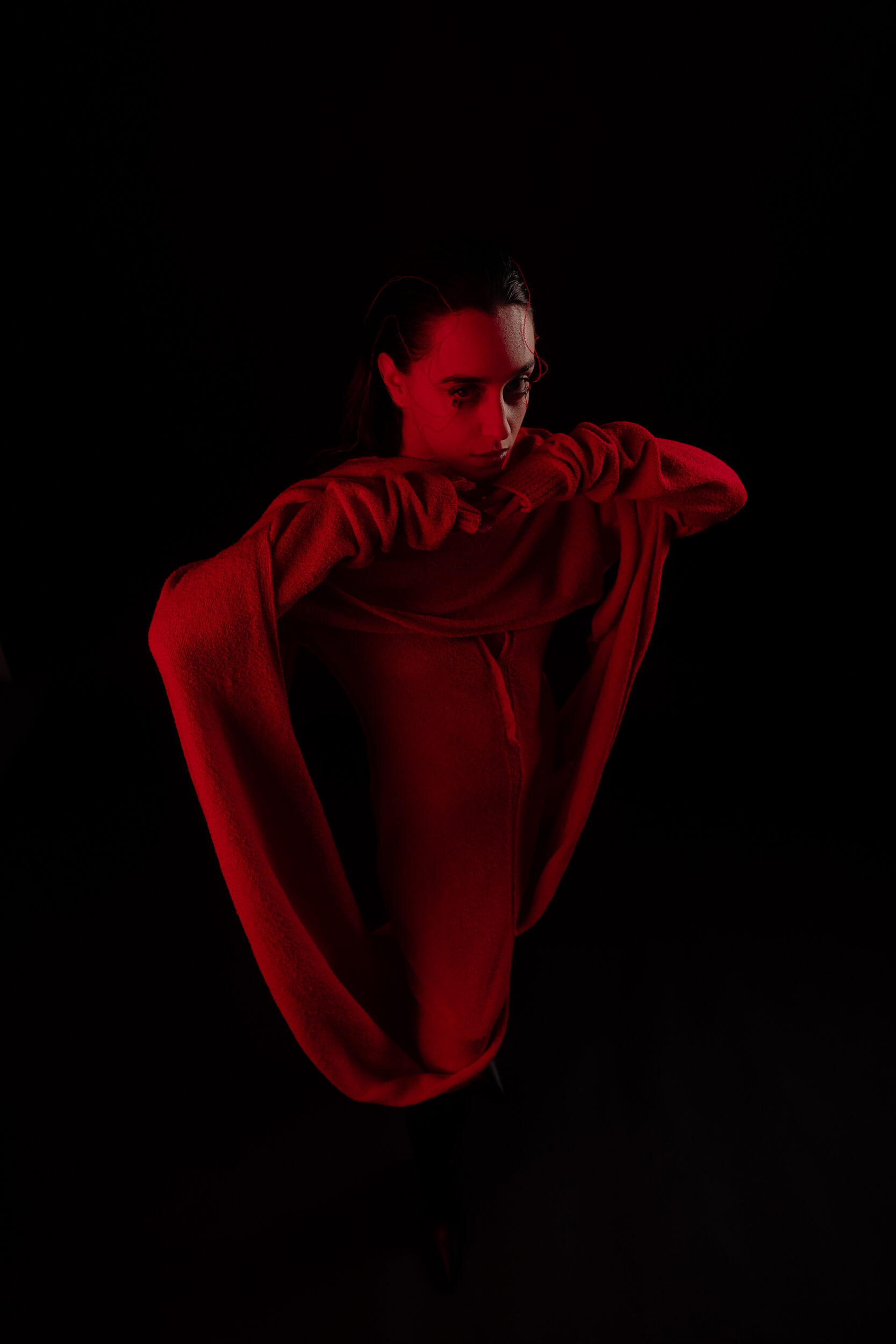
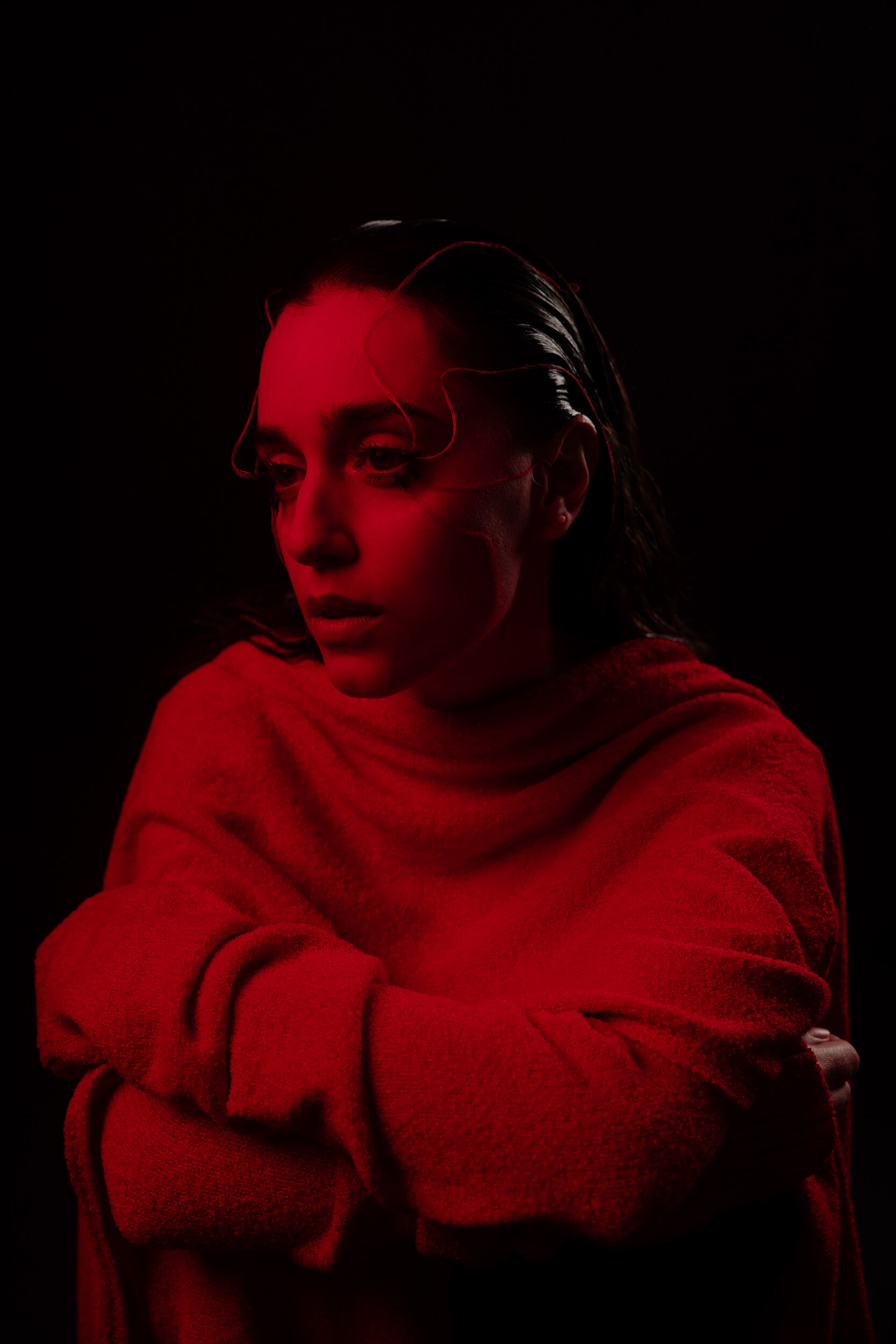
“When I think of kindness, I think of real gestures, real relationships—and unfortunately, we’re losing touch with that kind of truth.”
What’s the last thing you discovered about yourself through your work?
Tenacity. When I was studying, there was a period when I never stopped, and this past year has also been extremely intense. I realized I have an incredible ability to push beyond my limits.
Another thing I discovered is that the well-being of others is fundamental to me—I always try to make people feel comfortable. Sometimes I ask myself, “Giulia, but who takes care of you?” Yet, as Favino once said, “Without the other, I don’t know who I am.” I only truly find joy in life when I’m with others.
What has been your greatest act of rebellion so far?
Deciding to live on my own after high school and not go to university, choosing instead an uncertain path. I moved to Rome and said, “Okay, I’ll give it everything I’ve got, and we’ll see how it goes”—taking a leap into the void that I would take a thousand times over.
Of course, along the way I had doubts and moments when I thought I wouldn’t make it. I still think that sometimes, because this job has wonderful sides and very dark sides, especially during periods of waiting and emptiness—but that’s part of the game.
What is your greatest fear?
Maybe losing myself. Losing focus. I know I have a chaotic side—it’s my strength, but it’s also what I fear most.
What makes you feel safe? And confident?
I feel safe when, after a tough day, I come home to the people I love. My dog makes me feel safe.
I feel confident when I see the other person smile. I have a slightly childlike, mischievous side that makes me feel more confident than looking “put together” with the perfect outfit and makeup. I feel good when I’m in tune with my own energy, and when I see that energy resonating with others.
What does it mean to feel comfortable in your own skin?
Not listening to other people’s judgments. You feel comfortable in your skin when you live without the weight of expectations and judgment.
What is your happy place?
The sunset in Argentario, a place I’ve been going to since I was a child. It’s my happy place because, no matter how many beautiful and distant trips I’ve taken, that’s where I always return—even if just for a couple of days every summer. When I’m there, I realize that it’s truly summer, and that no sunsets are more beautiful. Sunsets have a consoling magic for me.
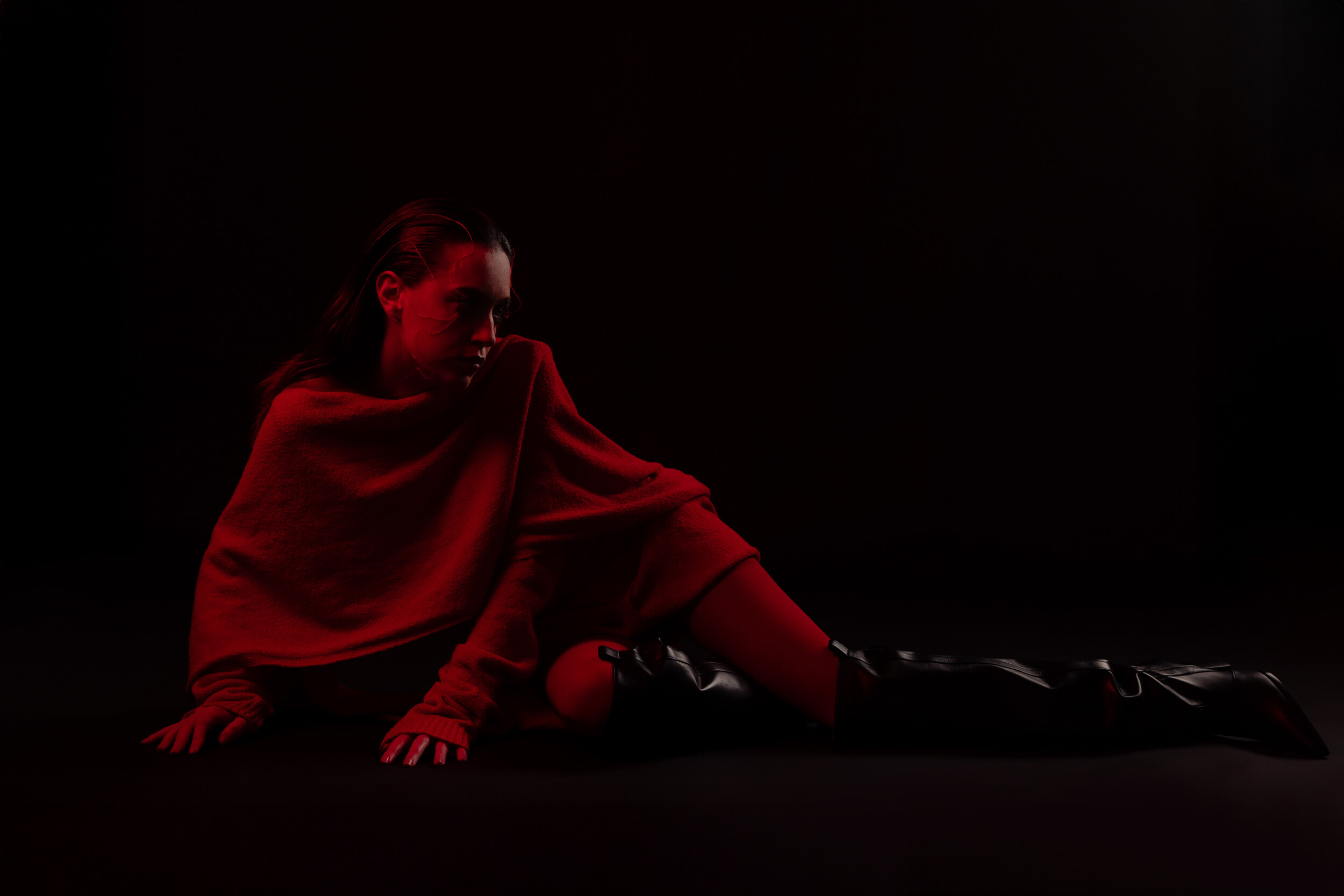
Photos & Video by Johnny Carrano.
Styling by Ilaria Di Gasparro.
Makeup and Hair by Sveva Del Campo.
Thanks to Davide Musto.
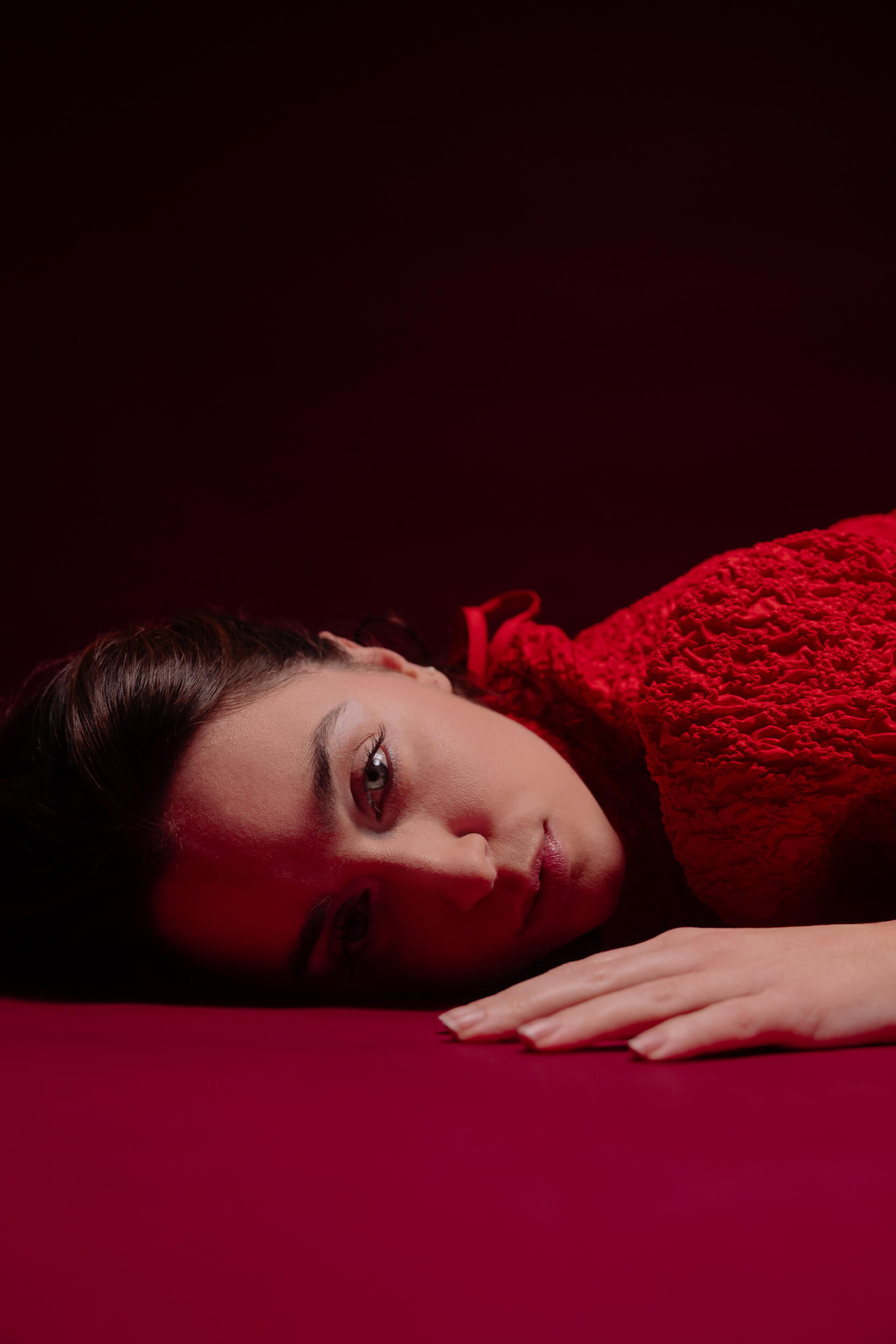
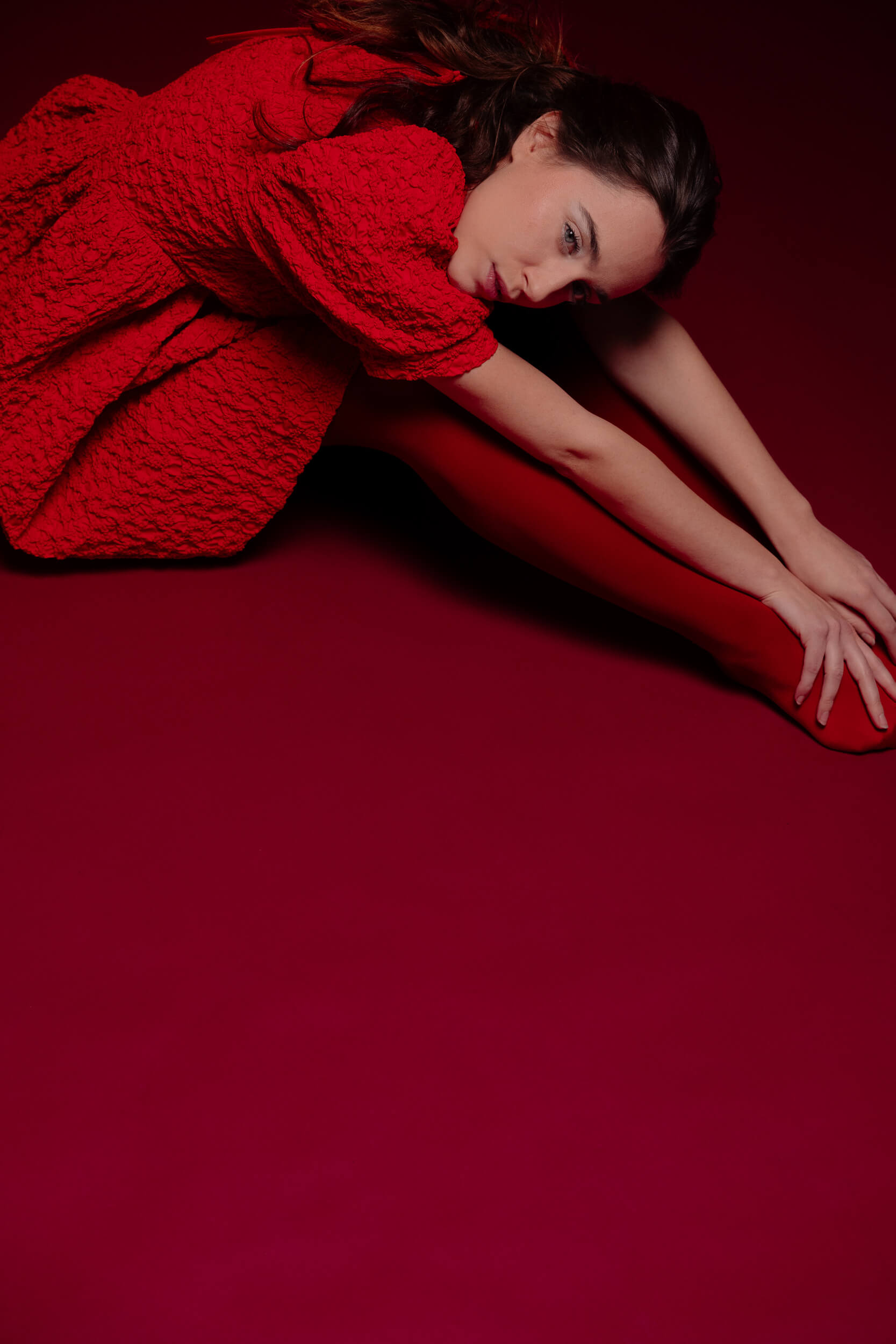
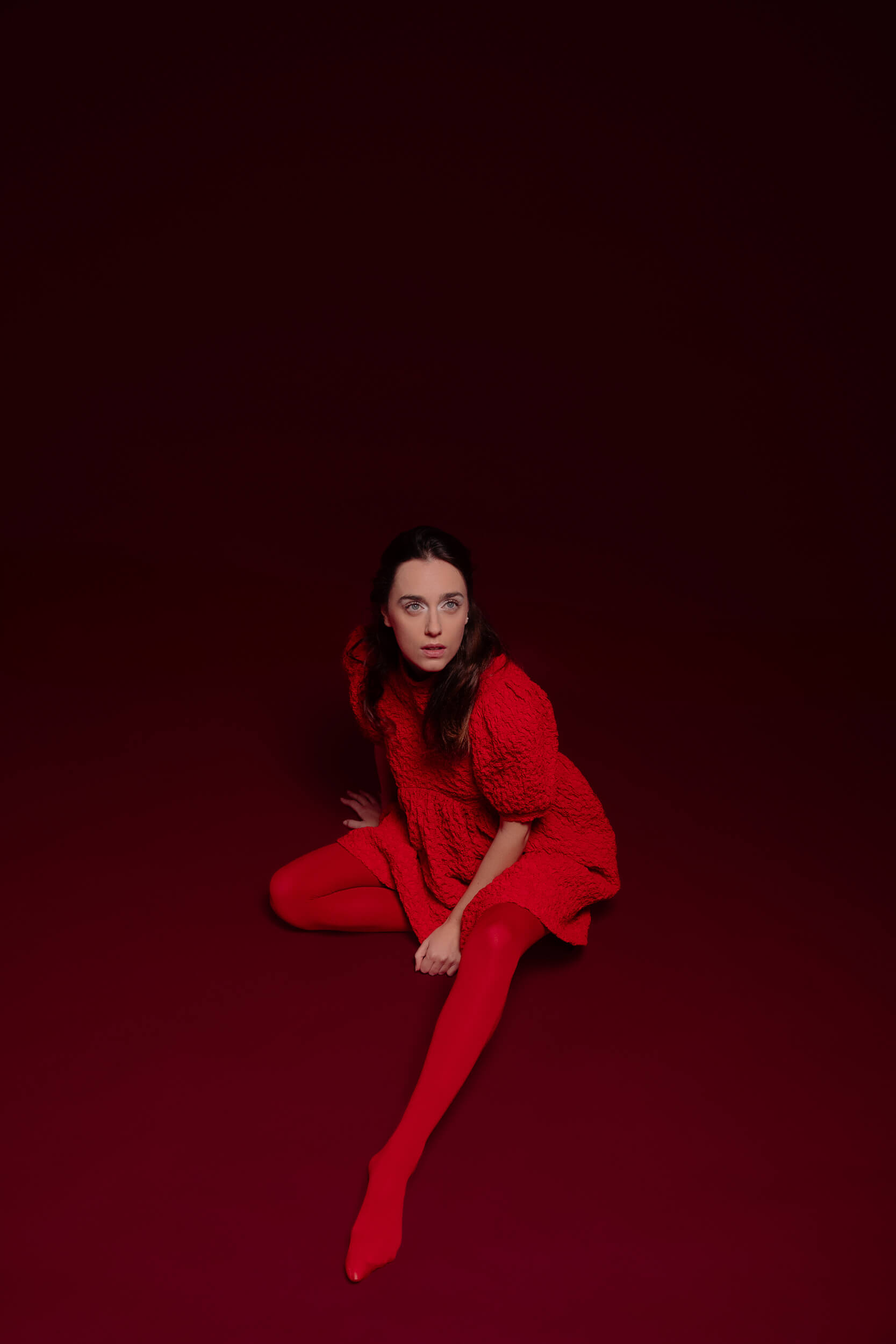
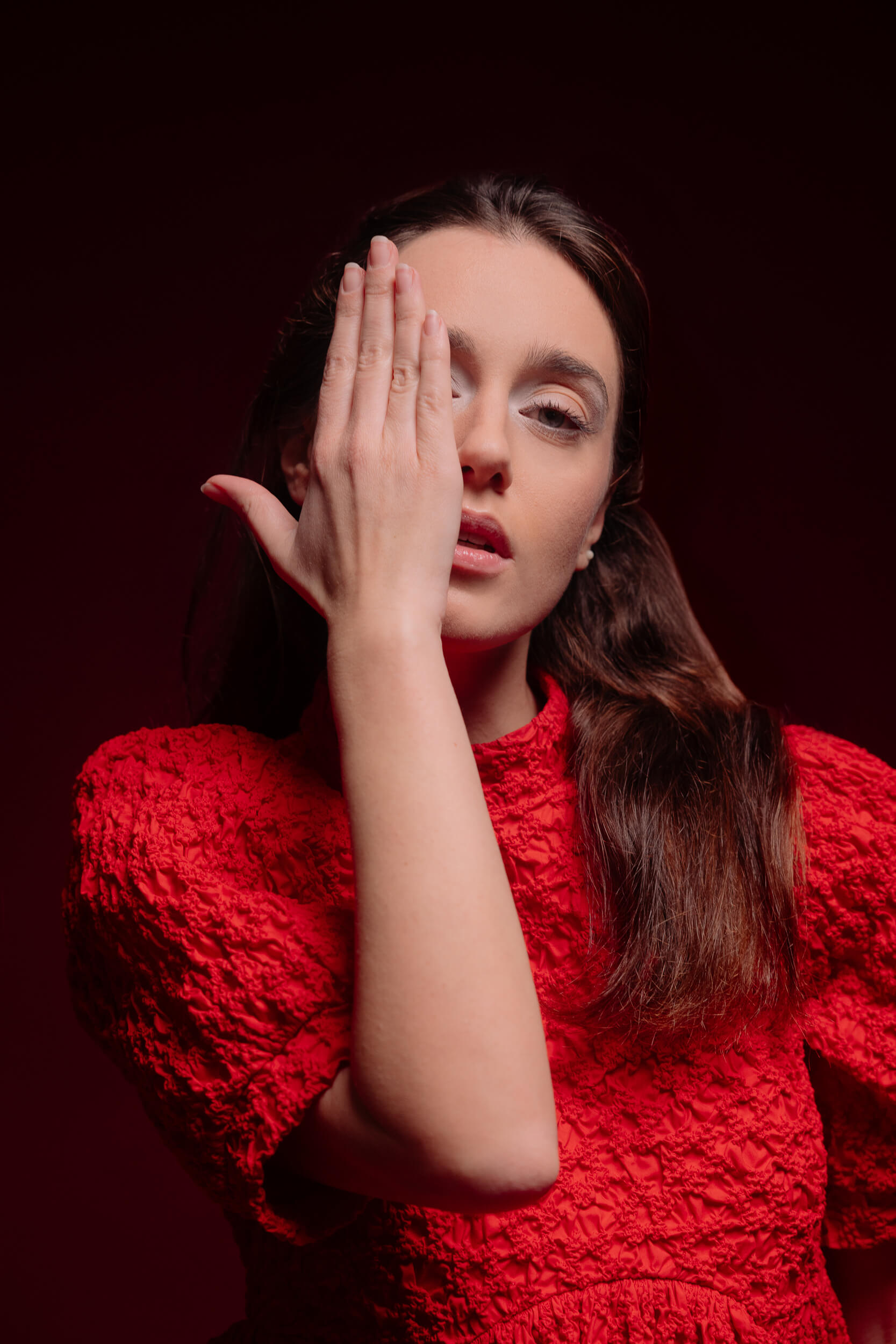
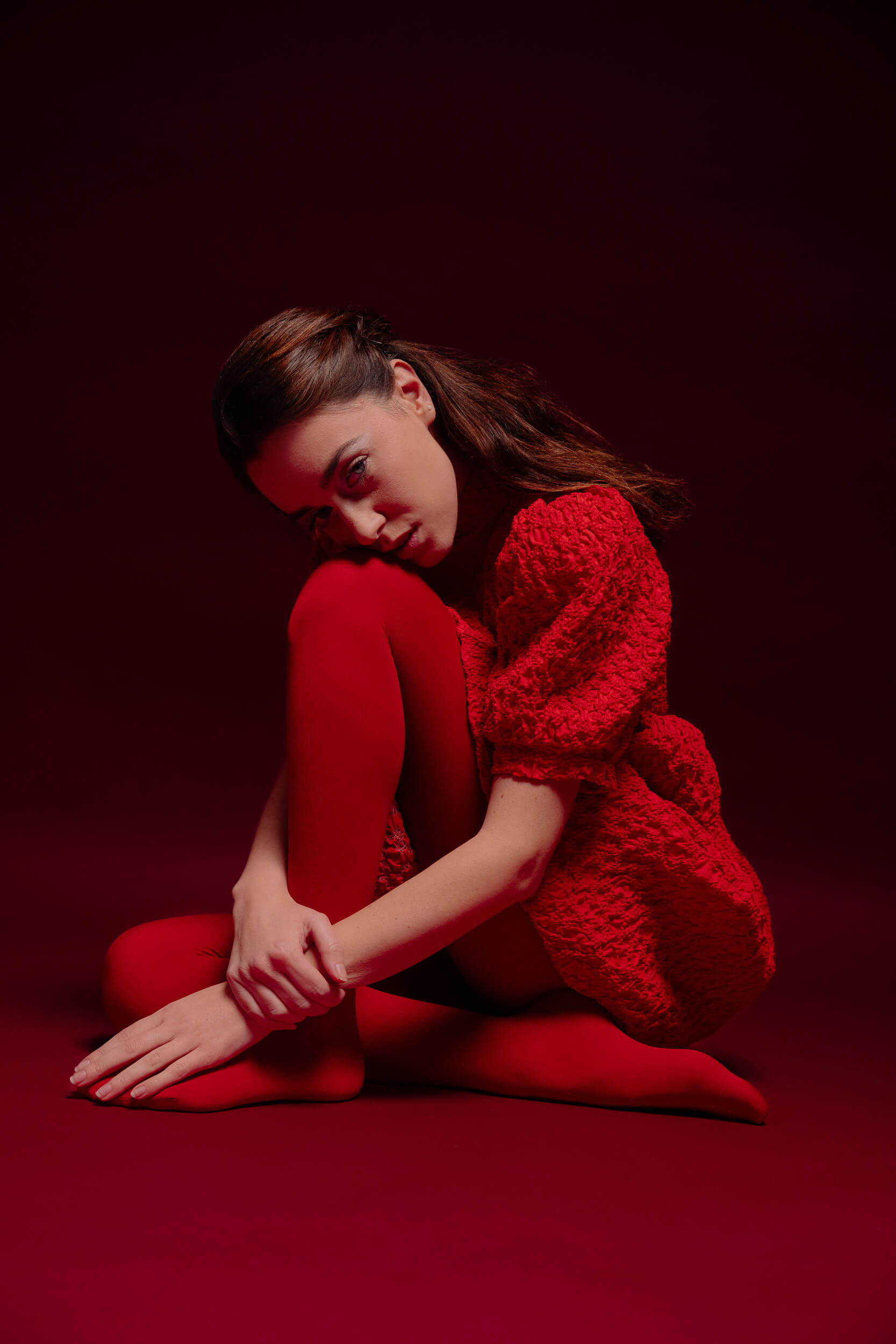
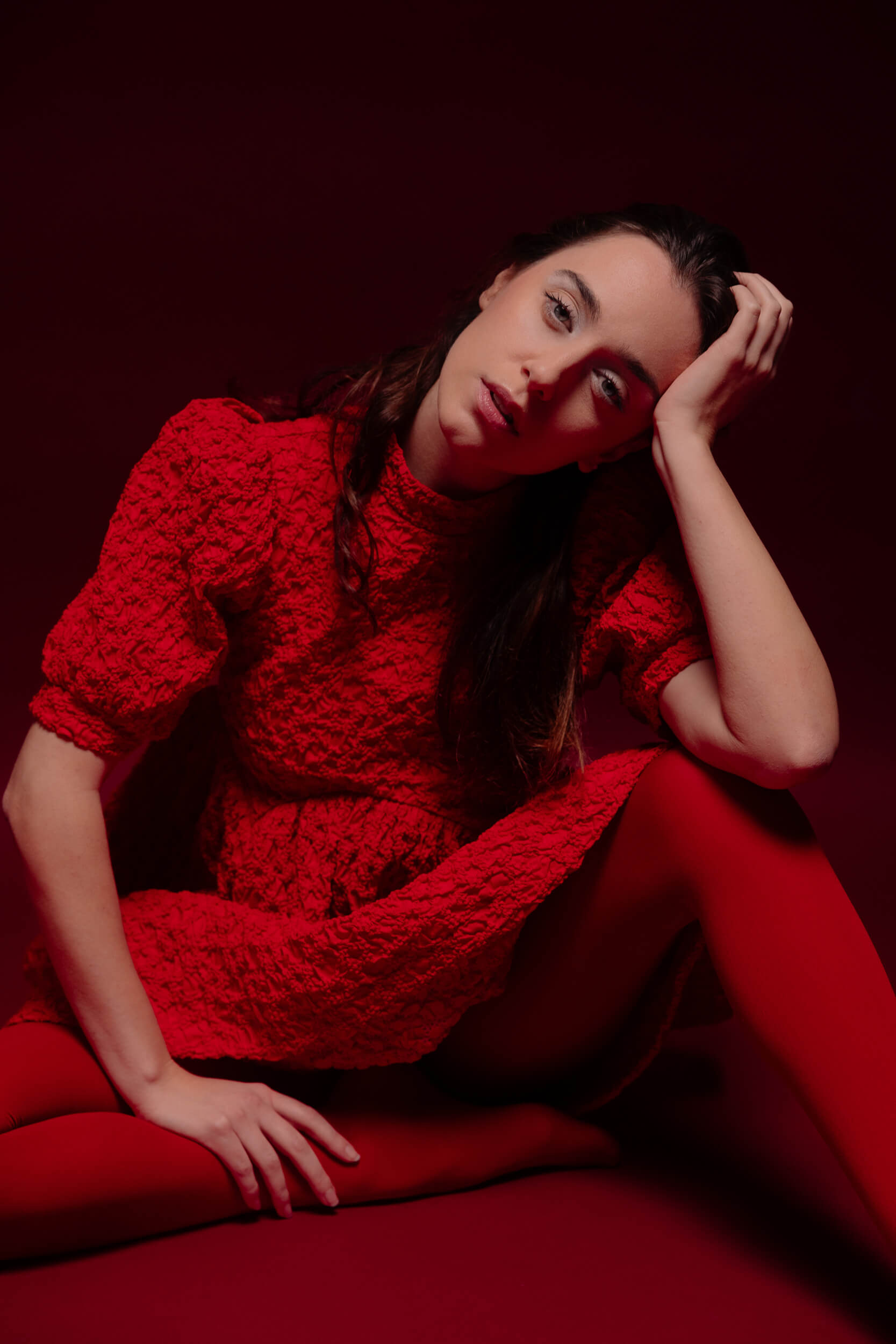
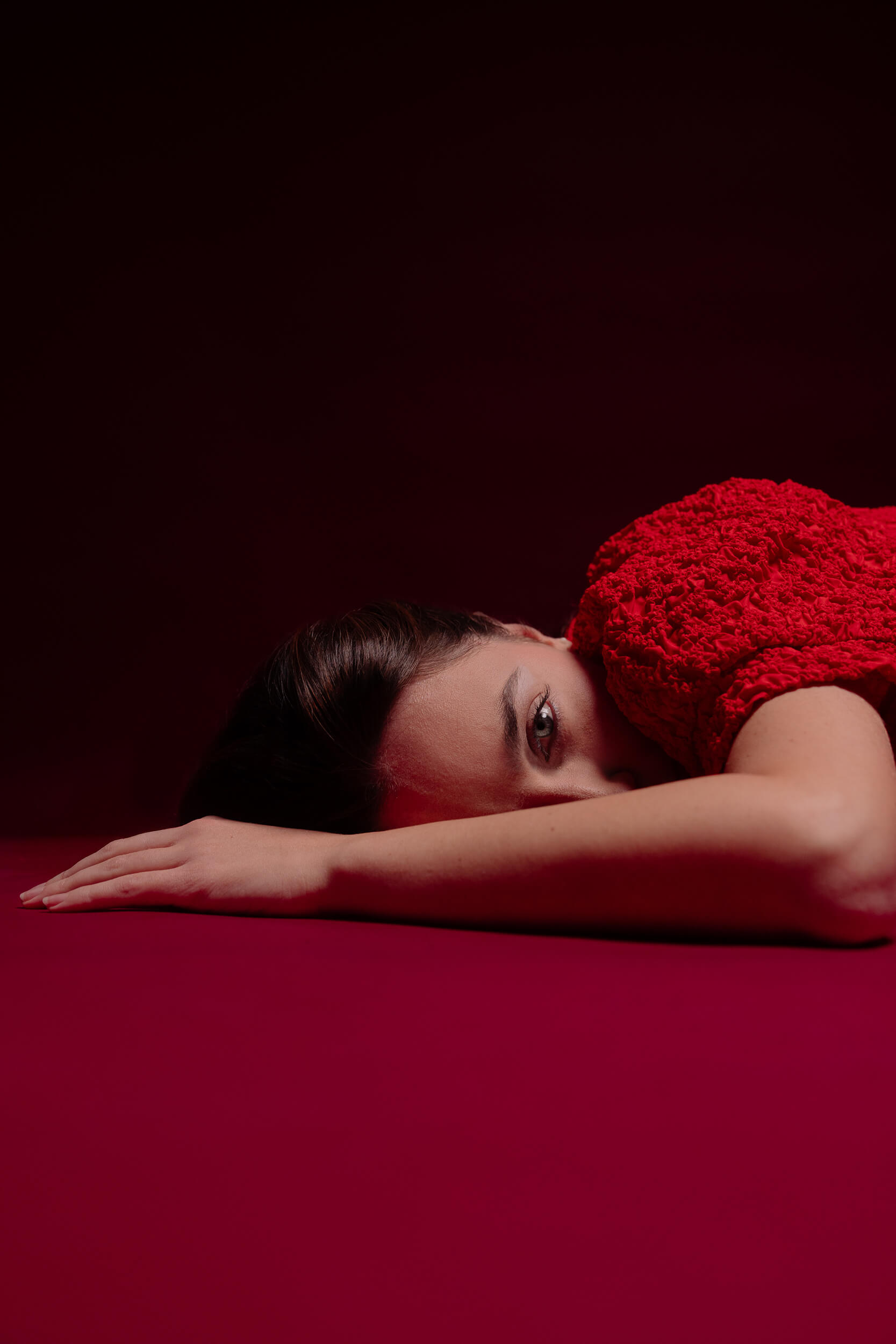
LOOK 1
Dress: Cecilie Bahnsen
Tight: Calzedonia
LOOK 2
Dresso: Issey Miyake via The Ap Archive
Tight: Calzedonia
Shoes: Cesare Paciotti
LOOK 3
Dress: Sportmax
Tights: Calzedonia
Shoes: Cesare Paciotti